{{ 'now' | timezone: 'America/New_York' | date: '%b %d, %Y' }} |
|
|
|
Greetings from the San Juan Islands, where we spend our days crabbing in the cove and
swimming in the lake, and welcome back to In the Room.
It turns out our man Zaz shares our appreciation for the pastoral summer. David is putting up a $68 million bid to save the Mohawk summer camp in Westchester from bankruptcy. This isn’t a business play, just a cause near and dear to the
outgoing dealmaker’s heart. His kids spent their summers there, as did those of more than a few current and former big-time media execs. I’m sure they’re grateful to David. (Disclosure: Through the Air Mail deal, Zaz is on the Puck cap table.)
In tonight’s issue, news, notes, and other observations on the media industry’s most recent pivot to events and experiences—an eternal lurch that picked up some steam in the early teens as VF began to commercialize its Oscar party and the
Times monetized its events center, and has since been turbocharged as brands like MS NOW and, most recently, Hearst combat declines in traffic and audience. As a reminder, this Wednesday send is available exclusively to Puck Inner Circle subscribers. Upgrade here, if you haven’t already.
🎙️ Plus, on the latest episode of The Grill Room, my partner Peter Hamby
spoke to progressive media star Brian Tyler Cohen about the state of the left-wing media ecosystem heading into the midterms. Follow The Grill Room on Apple, Spotify, or
wherever you prefer to listen.
Also mentioned in this issue: Josh D’Amaro, Jimmy Pitaro, Bari Weiss, Nick Thompson, James Murdoch, Chris Berend, Karl Ravech, Ryan Clark, Gianni Infantino, and more. |
-
Disney D-Day: Josh D’Amaro implemented another round of layoffs on Tuesday, cutting hundreds of jobs across Disney Entertainment, Pixar, NatGeo, ESPN, the film studios, and various corporate departments. Most of ESPN’s cuts this time around are tied to its integration with NFL Network, as Jimmy Pitaro noted in a memo, though they also hit on-air talent including Karl Ravech and Ryan Clark. As my partner John
Ourand noted, layoffs have become something of an “annual bloodletting ritual at ESPN” over the past half decade. At Pixar, the cuts were concentrated in production and operation roles related to Disney’s post-pandemic pivot from streaming back toward theatrical. Presumably, the dawn of increasingly powerful A.I. tools was also on D’Amaro’s mind.
Of course, bloodletting is now the status quo in Hollywood, and nearly every mediaco seems to be in a permanent state of
reorganization. The creatives can wail and A.G.s can sue, but there isn’t a legal or emotional antidote to capitalism—and, as D’Amaro and Pitaro recognize, new technologies, formats, and habits must puncture the rhythms of what had long been a chummy industry where success enabled sinecure. No más. As Disney’s stock price over the past decade has suggested, investors have rarely had more options or leverage.
Josh has framed his downsizing effort around a “One Disney” strategy
that seeks to de-silo the Magic Kingdom and centralize its various functions. His strategy also promises a more integrated Disney experience for consumers. The inevitable byproduct is fewer employees.
|
|
|
|
A MESSAGE FROM OUR SPONSOR |
Helping Customers Stretch Their Budgets
Instacart has saved customers over $3 billion, and is helping more families stretch their grocery budgets with deals, discounts, and retailer loyalty programs. Learn More. |
|
|
|
-
Google Z-Day: The Wall Street Journal reports that a “growing chorus of online media companies” are expressing frustration with Google “as A.I. changes
the way people ask questions, siphons off search traffic, and upends publishers’ revenue models.” USA Today, Politico, The Economist, People Inc., and Reuters “are all evaluating how, or even if, they will continue to work with Google.” Yes, I’m sure Google is terrified by this mounting offensive.
In truth, most of these companies have little to no real pull here. Walking away from Google is a tough play to execute beyond a cri de coeur in a friendly
journalist quarter, particularly for organizations whose businesses were built on search. But the episode underscores the broader anxieties of the Google Zero age, and certainly reinforces the thesis that the only durable strategy is owning a direct relationship with the audience. (More on that below.) - And finally…: The World Cup final between Spain and Argentina drew a record-high 62 million viewers on U.S. television across both Fox and
Telemundo. That should give Gianni Infantino & Co. some added ammunition in their coming 2030 and 2034 rights negotiations with Netflix, YouTube, ESPN, Fox, et al.
On a related note, I was delighted to read this Journal item on what Major League Soccer can do to grow its own business, including many
blatantly obvious solutions that tend to get me on the soapbox. Most importantly, lift the salary cap and introduce promotion and relegation! The rest of the world does it. We can too.
|
|
|
|
As recent moves by Hearst, The Atlantic, and others show, more and more publishers
are triaging declining distribution by selling access, not just information. So who wants to go on a cruise with Nick Thompson? |
|
|
|
On Tuesday, Chris Berend, the former chief digital officer of NBC News and alumnus
of CNN, Bloomberg, Esquire, and ESPN, announced that he was taking his talents to Hearst Magazines, where he will become chief content and experience officer—a newly created title that seemed designed to telegraph the 139-year-old publisher’s new priorities. In his new gig, I’m told, Chris will be heavily focused on accelerating a burgeoning membership and events strategy for Hearst’s laggard and declining brands, including Cosmopolitan, Elle,
Esquire, Harper’s Bazaar, and its myriad titles in the home, health and fitness, and automotive categories.
Media is actually a pretty simple business populated and operated by complex and difficult people. Within this milieu, few ideas are truly original. Editorial properties—networks, shows, books, and, yes, magazines—were some of the culture’s first brands, even when the industry recoiled at the term. In the old days, however, many of these businesses
operated with, say, 30-plus percent EBITDA margins and sufficient profitability to effectively relegate any ancillary revenue streams, like events, to the boardroom ghetto. Why would the recently departed Condé Nast C.E.O. Chuck Townsend ever have bothered to convince legendary Vanity Fair editor Graydon Carter to sell a Spotify or Apple activation inside the Oscar party when insertion orders were rolling out of the fax machine for $100,000 a
page? Just sell more pages!
But as social media crippled print, Google dismantled search, and YouTube and Twitter ate into news viewership, mediacos have understandably had to dust off their events playbooks and present them as innovations for a new day—rebranding them as experiences and repositioning them as an antidote to an A.I. future where we’re all shivering alone and naked in the cold, staring at those Scandinavian antidepressant lamps as the machines do everything for
us. |
|
|
|
A MESSAGE FROM OUR SPONSOR |
Helping Customers Stretch Their Budgets
Instacart has saved customers over $3 billion, and is helping more families stretch their grocery budgets with deals, discounts, and retailer loyalty programs. Learn More. |
|
|
|
Moreover, the recent trend toward events also conveniently inverts the challenged unit economics of
the industry. They afford media companies a second or third way to monetize existing talent or a brand while upselling advertisers and consumers—and, quite genuinely, highlighting their differentiation amid the slop-ification of the rest of the industry. As a new generation of media companies have been defined by authenticity, bringing the creator and consumer closer together than ever before, parasocial relationships can be leveraged and networks activated. One surmises that Kara
Swisher is pulling in more profit from Pivot’s live tapings than she did from the multiday spectacle that was Code, even in its heyday. |
Hearst may be relatively late to this party. In recent months, Bari
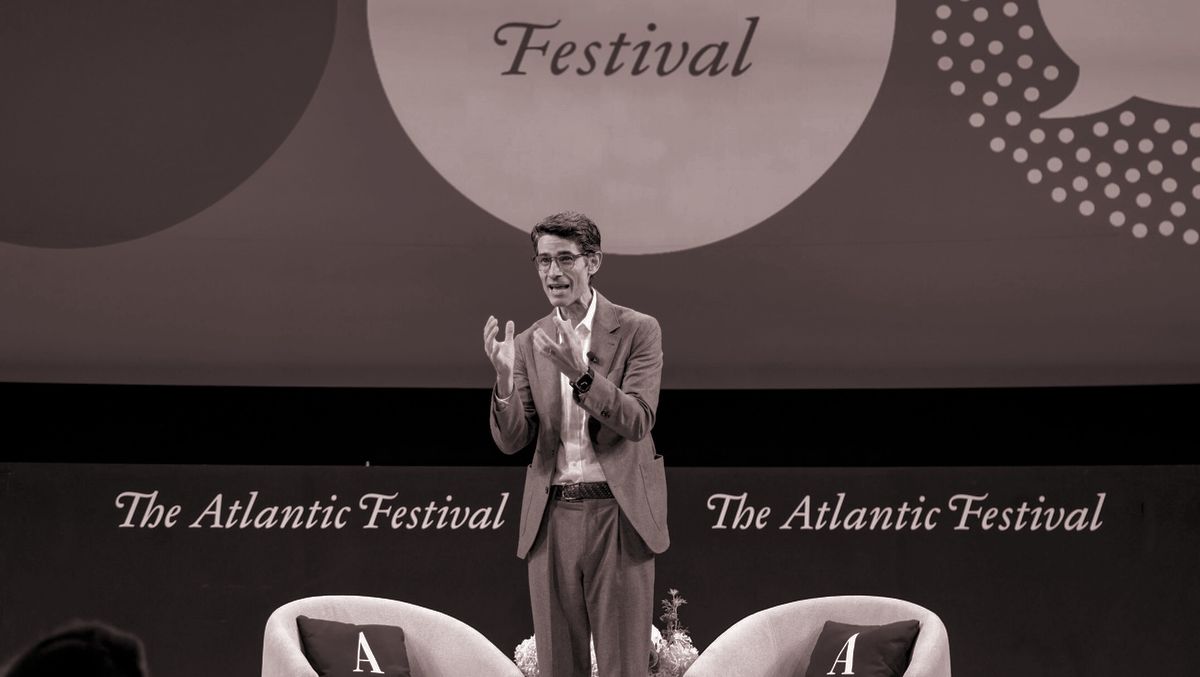
Weiss’s Free Press has launched a new events series for subscribers that includes regional supper clubs, multiday retreats, and an excursions program that will take subscribers “from the battlefields of Gettysburg and Normandy to the Vatican in Rome.” Nick Thompson’s Atlantic has partnered with Seabourn to bring editorial programming onto the luxury cruise line, culminating in a full, 12-day Atlantic cruise from Montreal to Boston—a fortnight-long
torture chamber for some, but intellectual maritime erogeny for others. And I’m reliably told that James Murdoch, who recently acquired New York and the Vox Media Podcast Network, is intent on leveraging those brands across his events portfolio, which includes Art Basel and the Tribeca Film Festival.
Yes, everyone is engaged in this business, including Puck, which puts on scores of upscale events per year—from my partner Leigh Ann Caldwell’s
Power Breakfast series in D.C., where she interviewed Sen. Dave McCormick yesterday, to John Ourand’s and Marion Maneker’s ticketed tentpoles in the sports business and art market alike. (Lauren Sherman, Matt Belloni, and Bill Cohan
also have their own popular convening products; Air Mail has an annual literary awards event; etcetera.) Punchbowl is deeply enmeshed in this game. Ditto Axios, whose founders created the Washington convening playbook at Politico. The Journal, Bloomberg, CNBC, and MS NOW dot the landscape. Oliver Darcy is throwing a Status Summit at the Times Center. Justin Smith, who today announced the board for his forthcoming Silicon Valley live event, has
built Semafor almost entirely around live convening.
But these new initiatives from The Atlantic, The Free Press, et al. aspire to something beyond the tired and ubiquitous conference model that was popularized by Time Inc. back in the day via its Fortune tentpoles and Time 100 gala. Rather than leaving audiences yawning into their lanyards while “thought leaders” drone on from the front of a stuffy auditorium, the new models strive to redefine
the very product and service that media companies are selling. For nearly a century, publishers sold information. Today, they’re selling access to a community—of executives, investors, policymakers, celebrities, or merely to other like-minded subscribers with shared interests.
The pivot to experiences is, of course, a response to the aforementioned broader transformations taking place across the industry. Search traffic is declining and may dissipate entirely in the Google Zero era, and
social media is evolving from a distribution engine into a closed ecosystem. Meanwhile, even the most robust subscription-based companies eventually arrive at a point where growth slows and they’re forced to squeeze more juice out of existing subscribers. And A.I.’s power to generate answers instantly will continue to eat away at companies that simply publish information.
Access, on the other hand, remains scarce and coveted, and journalism businesses, with their own access to newsmakers
and thought leaders, are the obvious conduit. Ostensibly, great journalism remains essential to this effort because it creates the trust, authority, and brand equity that make these experiences desirable in the first place. But the actual editorial product—the article, the package, the show—is increasingly becoming the beginning of the customer relationship rather than the end of it. Truthfully, many of these companies should have been developing these products for decades, even when they seemed
ancillary to the bottom line.
As brands continue to compete for monetizable relationships, the winners may not actually be the companies that publish the best journalism, but the ones that build the strongest ecosystems and best services around it. Along the way, they’ll understand the real truism within the creator economy: In this new era of media, the fundamental unit has evolved from the article or episode to the talent themselves. And elite talent can transcend formats and
monetizable platforms, of which live convening is merely one.
In any event, it will be interesting to see what Chris does with the Hearst portfolio. MotorTrend already runs a successful events series around Hot Rod road shows, drag races, and other “car culture” events. Lifestyle brands like Runner’s World, Bicycling, Good Housekeeping, and Food Network Magazine seem to offer similarly low-hanging fruit. Somewhat counterintuitively, the
most iconic titles—Cosmo, Esquire, etcetera—may be the hardest to reimagine as events businesses, simply because their broad audiences deprive them of unique fandoms. For Hearst, as for any publisher, success in this space is likely to require some serious outside-the-box thinking. Good luck to them. |
|
|
|
Puck fashion correspondent Lauren Sherman and a rotating cast of industry insiders take you deep behind the scenes of
this multitrillion-dollar biz, from creative director switcheroos to M&A drama, D.T.C. downfalls, and magazine mishaps. Fashion People is an extension of Line Sheet, Lauren’s private email for Puck, where she tracks what’s happening beyond the press releases in fashion, beauty, and media. New episodes publish every Tuesday and Friday. |
|
|
|
A professional-grade rundown on the business of sports from John Ourand, the industry’s preeminent journalist,
covering the leagues, players, agencies, media deals, and the egos fueling it all. Plus, the latest intel from Eriq Gardner on the sports legal beat. |
|
|
|
Need help? Review our
FAQ page or contact us for assistance. For brand partnerships, email ads@puck.news.
You received this email because you signed up to receive emails from Puck, or as part of your Puck account associated with {{customer.email}}. To stop receiving this newsletter and/or manage all your email preferences, click here. |
Puck is published by Heat Media LLC. 107 Greenwich St., New York, NY 10006 |
|
|
|
|