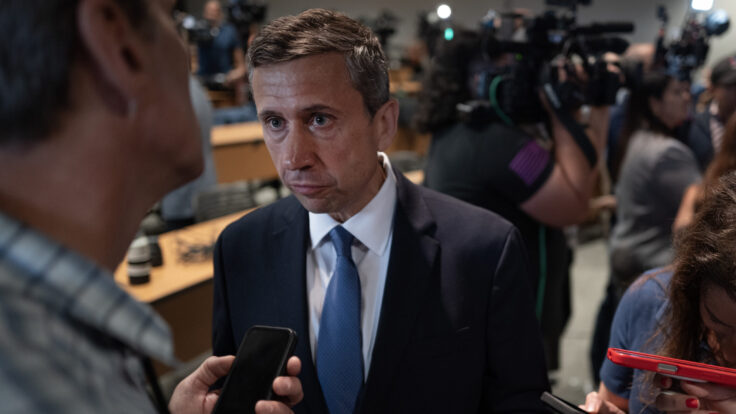
Hello and welcome back to The Best & The Brightest. I’m Leigh Ann Caldwell, writing to you on an especially eventful evening: Defense Secretary Pete Hegseth went on a rant at the annual White House Easter Egg Roll after a second Signal-gate scandal; D.H.S. Secretary Kristi Noem’s purse was stolen in broad daylight; Trump’s attacks on Fed Chairman Jerome Powell caused stocks to once again tumble; and, of course, Pope Francis died, setting in motion a succession battle that may determine the future of the Catholic Church. Happy Monday.
Tonight, my partner Abby Livingston digs into the Dems’ post-inaugural fundraising torpor. Yes, the party has some pep back in its step after the tariff selloff, but the average vulnerable Republican raised 81 percent more than their Democratic counterpart in Q1. Clearly, donor enthusiasm has yet to catch up with the grassroots energy…
|
|
|
|
A MESSAGE FROM OUR SPONSOR
|
For too long, Big Pharma put Americans last – keeping drug prices high in the U.S. and lower in other wealthy countries. While they protect their profits, Americans struggle. Why are we getting a bad deal? Learn more.
|
|
|
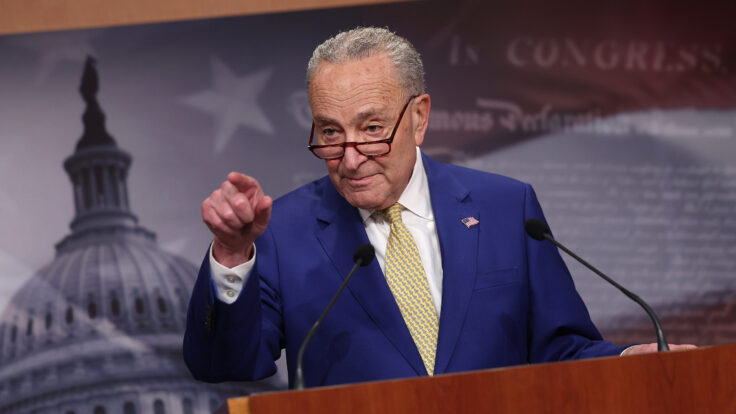
- Hegseth in trouble?: White House press secretary Karoline Leavitt insists that Trump still supports his embattled Defense secretary, even after The New York Times reported that Hegseth dropped details of his Yemen military campaign into a second Signal chain, this time with his wife, brother, and lawyer (who is also one of Trump’s former lawyers). Meanwhile, Hegseth’s inner circle is said to be in chaos after he fired multiple top aides, including senior advisor Dan Caldwell; deputy chief of staff Darin Selnick; and Colin Carroll, the chief of staff to Deputy Secretary of Defense Steve Feinberg. Politico is also reporting that Hegseth’s chief of staff, Joe Kasper, is leaving that post for another position at the Pentagon. On Sunday, John Ullyot, the former chief spokesperson at D.O.D., who resigned last week, published a column describing “a month of total chaos at the Pentagon.”It’s unclear if Republicans will start circling the wagon. I’ve seen no condemnation from Republican members of Congress, who are back home in their districts this week, other than from Rep. Don Bacon, who’s become a kind of one-stop shop for intraparty Trump criticism. Bacon told Politico that sharing attack plans on a second Signal chat, if true, would be “unacceptable.” I’ve reached out to prominent Republican lawmakers in the national security space, and so far, they’re sitting this one out.Democrats, of course, are not holding back, with Chuck Schumer calling for Hegseth’s head, and Jack Reed, the top Democrat on the Senate Armed Services Committee, demanding that the Defense Department’s inspector general open an investigation. (The Trump-appointed acting I.G. is already looking into the first Signalgate.) It’s unlikely that the administration is listening to Schumer and Reed, but it’s hard to imagine Hegseth sticking around much longer. NPR is reporting that the White House is searching for another Defense secretary, which seems like the prudent thing to do.
- Trump’s ever-expanding enemies list: It was never any secret that Trump planned on getting even with those he thinks have wronged him, but the speed and scope of his revenge campaign has been remarkable: Tariffs on nearly 100 countries, freezing billions of dollars in university funding, imposing punitive demands on Democratic law firms, locking out the AP for coverage he didn’t like (even after the courts told him to stop), threatening to cut funding for NPR and PBS, firing top Justice Department career attorneys, blacklisting a political consulting firm because its founder, Jeff Roe, challenged him… Now, Donald Trump Jr. has “exiled” Ullyot, that former Hegseth spokesman, from MAGA following his scathing piece in Politico.
|
|
And now, on to the main event…
|
|
|
|
The party seemed to have renewed pep in its step. Then the Q1 fundraising numbers came in… Donors are still exhausted, exasperated, pissed over Biden, and worse. But the Q2 prospects look better.
|
|
|
In the weeks since Donald Trump’s tariff blitz shocked the markets, the Democrats seemed to regain some momentum. The president’s polling took a hit, Cory Booker uncorked his record-breaking, 25-hour, non-filibuster filibuster, and the party was still basking in its victory in the Wisconsin Supreme Court race, where a Democrat-backed candidate overcame $20 million in campaign spending by Elon Musk, buoying hopes of retaking the House in the midterms. But then the first-quarter campaign fundraising numbers started to circulate, and what they showed for the opposition party was… grim. For the first time in recent memory, House Republican incumbents were outraising House Democrats. By a lot.
Over the past three months, the average vulnerable House Democrat raised $541,000. The average vulnerable Republican, meanwhile, raised $979,000—81 percent more. Only one of those Democrats raised seven figures (online darling Eugene Vindman, the twin brother of Trump impeachment whistleblower Alexander Vindman), while six vulnerable House Republicans made it into the million-dollar club. And while the House campaigns have the highest stakes, since that’s the chamber most likely to flip, the Republican National Committee also outraised the Democratic National Committee, and the Republicans’ Senate campaign arm outpaced the Democrats’ for two of the first three months of the year.
|
|
|
|
A MESSAGE FROM OUR SPONSOR
|
Big Pharma hikes up drug prices every year, most recently on over 800 prescription drugs. But did you know these price hikes are often unjustified? For too long, Big Pharma has put profits over patients. Enough is enough.
Learn more.
|
|
|
|
Understandably, this dismal state of affairs has somewhat unnerved Democratic staffers around the Hill. After all, for the past eight years or so, House Democratic candidates have usually outraised their Republican counterparts. Last cycle, the gap had widened so much that it was barely newsworthy when a Democratic challenger raised more than a Republican incumbent. Of course, Dems’ individual fundraising prowess isn’t always determinative, especially in a world of super PACs and politically frisky billionaires: A financial advantage didn’t save the House for Dems in 2022 or flip it back in 2024.
In conversations with well-wired operatives this week, multiple sources pointed to donor exhaustion, and even lingering anger, over the Biden-Harris debacle, which fundraisers have been happy to express to any Democratic official within shouting distance. It seems “call time”—already the worst chore in politics, in which incumbents block off their calendars to dial for dollars—was that much more miserable for Democratic members during the last three months. “Dems blew more money last cycle than we can even imagine,” said one frustrated Democratic lobbyist. “They need to prove they have a new model, new approach, something better, something effective before I start giving again.”
Aimee Boone Cunningham, a prominent Democratic donor, summarized donor sentiment this way: “It was just one of those things: ‘I need to hear from you what you are going to do differently versus what you did last year, because that thing did not work.’” Currently, her checkbook is closed. “Hopefully,” she said, “we all get over this and figure out where to direct our dollars.”
|
|
The Democratic Party did have a few fundraising bright spots in Q1—though some of those standout candidates have already lost. Gay Valimont and Josh Weil raised $9.9 million and $13.8 million, respectively, in their long-shot special election races in the ruby-red Florida districts formerly represented by Matt Gaetz and National Security Advisor Mike Waltz. Would-be special election candidate Blake Gendebien raised $3 million in his bid to replace Elise Stefanik when she was still Trump’s nominee to be U.N. ambassador; she’s staying in the House now, of course, but Gendebien will likely be her general-election challenger in the midterms.
Meanwhile, Republican House members Juan Ciscomani, Young Kim, Derrick Van Orden, Jen Kiggans, Mike Lawler, and Ken Calvert all raised more than $1 million. The rest of the vulnerable Republican incumbents raised high-six-figure sums, with Scott Perry’s $564,000 being the lowest in the group.
Other than Vindman, the best Democratic fundraisers in vulnerable seats were Josh Riley, David Min, Kristen McDonald Rivet, and Josh Harder, who all raised between $700,000 and $800,000. From there, though, it was a steep drop-off, as incumbent after incumbent posted fundraising hauls in the middling six figures. “Every frontline member should have had a million-dollar quarter,” said a Democratic House chief of staff. “For that not to be the case is a little shocking.”
|
|
|
|
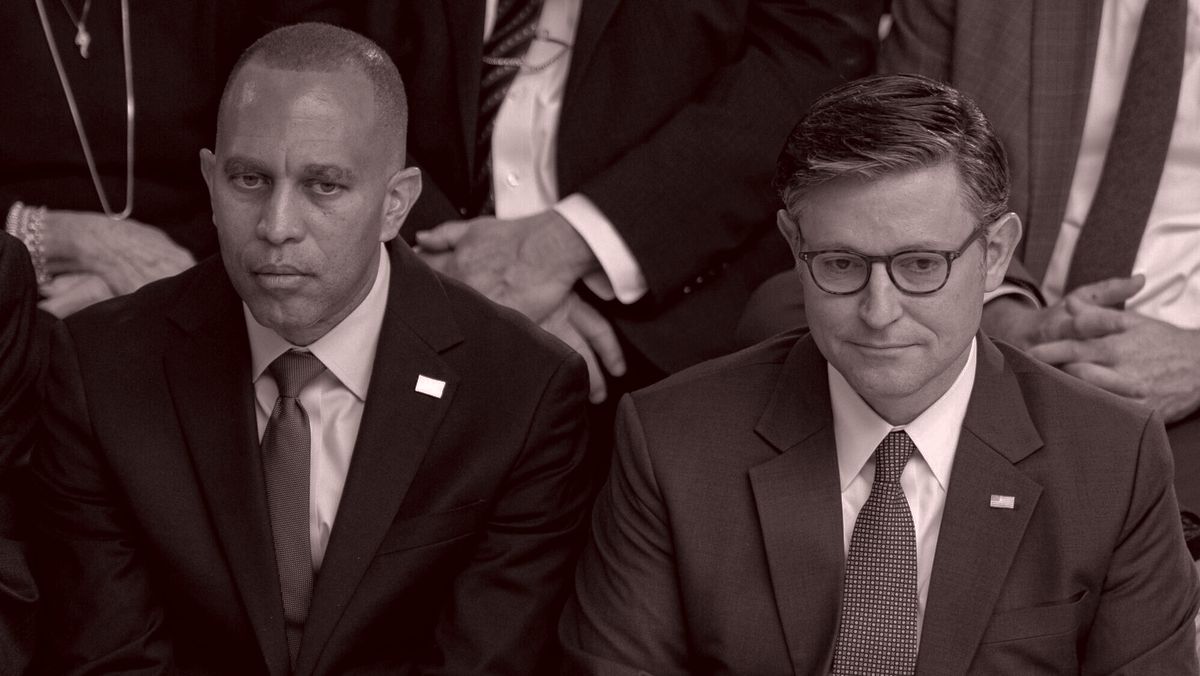
Republican party leadership also lapped their Democratic counterparts in fundraising, albeit with a notable exception. High-ranking members in safe districts can provide major money streams, using their perches to raise funds for their more vulnerable brethren and subsidize TV ads in the battlegrounds through campaign committees. Yes, Hakeem Jeffries ($3.7 million raised) outpaced Mike Johnson ($3.2 million) this quarter. (Though it's worth noting that Republicans and Democrats fundraise differently, and Johnson raised another $29 million over several other accounts while Jeffries shouldered about $20 million worth of D.C.C.C. fundraising as of February.) But it was otherwise a clean sweep for the Republicans: Steve Scalise raised $2.4 million versus Katherine Clark’s $707,000. Tom Emmer ($1,977,000) outraised Pete Aguilar ($662,000). At the committees, Approps chair Tom Cole raised $753,000 versus Rosa DeLauro’s $127,000; Energy and Commerce chair Brett Guthrie raised $1,123,000 to Frank Pallone’s $384,000; Armed Services chair Mike Rogers raised $467,000 versus Adam Smith’s $232,000; and Ways and Means’ Jason Smith raised $1,347,000 to Richard Neal’s $276,000. Over at Financial Services, chairman French Hill raised $1,026,000 to ranking member Maxine Waters’s $19,000.
|
|
Still, the Democratic mood is demonstrably improving as the Trump administration stumbles through its honeymoon. Republicans felt good about their quarter ahead of the campaign-finance filing deadline, but cautioned me that their candidates tend to pick their low-hanging fruit—hitting up big donors and donating to colleagues—earlier and faster than Democrats. Also, senior Democratic campaign hands pointed out that their candidates always tend to have sluggish first quarters in a cycle. Meanwhile, the Democrats’ House campaign arm, the D.C.C.C., basically broke even
with the Republicans’ N.R.C.C. And most of the top House fundraisers this quarter (Jeffries, A.O.C., Raja Krishnamoorthi, and Ro Khanna) were Democrats.
But other than Jeffries, none of the top fundraisers are the type of members who are expected to carry the load for the D.C.C.C. Khanna and A.O.C. pay their committee dues, but their contributions are nominal compared to their coffers and to what’s expected of leadership members. Vindman will concentrate money on his own race, and Krishnamoorthi is widely believed to be stockpiling cash ahead of next year’s Illinois Senate race, should 80-year-old incumbent Dick Durbin decide to retire.
Last week, a chart cataloguing incumbent fundraising so far made the rounds among Democratic Hill staffers. “Folks are gonna get a pass on their Q1s because it was such a shitty period for everyone,” remarked the Democratic House chief of staff after scanning the data. “Q2 will give us a better picture.” Indeed, the widespread assumption among both Republicans and Democrats I spoke with is that while Republicans posted an early fundraising win, the blue wave will crest soon enough.
Boone Cunningham concurred. “I’ve been a Democrat my whole life,” she told me. “I’ll be a Democrat until the day I die. I’m never gonna sit on the sidelines, especially now. I’m not there yet. But I’m not going to unilaterally disarm here.”
|
|
|
|
Join Emmy Award-winning journalist Peter Hamby, along with the team of expert journalists at Puck, as they let you in on the conversations insiders are having across the four corners of power in America: Wall Street, Washington, Silicon Valley, and Hollywood. Presented in partnership with Audacy, new episodes publish daily, Monday through Friday.
|
|
|
|
Unique and privileged insight into the private conversations taking place inside boardrooms and corner offices up and down Wall Street, relayed by best-selling author, journalist, and former M&A senior banker William D. Cohan.
|
|
|
Need help? Review our FAQ page or contact us for assistance. For brand partnerships, email ads@puck.news.
You received this email because you signed up to receive emails from Puck, or as part of your Puck account associated with . To stop receiving this newsletter and/or manage all your email preferences,
click here.
|
|
Puck is published by Heat Media LLC. 107 Greenwich St, New York, NY 10006
|
|
|
|