 |
|
Welcome back to The Best & The Brightest, our daily political email covering the real inside conversations taking place within the White House, Pentagon, on K Street and under the Dome. I’m Tara Palmeri. Tonight, what I’m hearing about the discreet sotto voce preparations in Democratic circles for the remote possibility that Biden, for whatever reason, decides to bow out of the race.
But first…
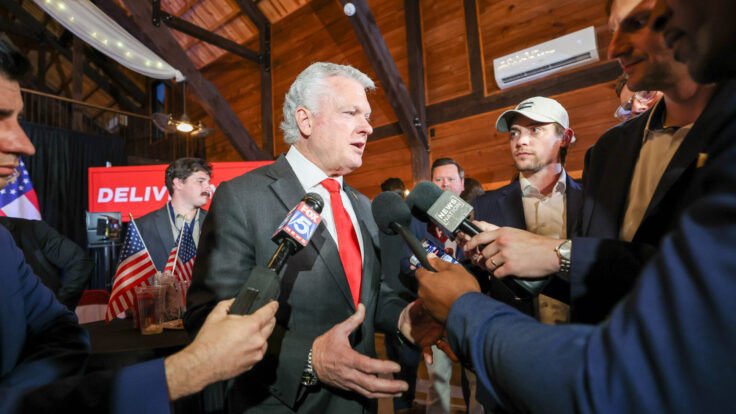
- DeSantis Just Can’t Win: Last week, I noted that Ron DeSantis donors were already leery about his alleged campaign reset. To wit: I pointed out that DeSantis’ schedule in New Hampshire looked remarkably thin for a candidate on a reboot, and a number of the engagements were surprisingly exclusive. Shortly thereafter, NBC published a story that reported significant ticket discounts, awkward encounters, and small crowds. And then former Senator Scott Brown blurted out to a gaggle of reporters at an event for the candidate that he does not agree that DeSantis has Asperger’s syndrome (what!?). Meanwhile, after alienating donors with a 6-week abortion ban, the pro-life organization Susan B. Anthony said that DeSantis hasn’t gone far enough in his policy. Elsewhere, I hear that billionaire Thomas Peterffy just wired Glenn Youngkin another $1 million donation to encourage him to run. That’s $2 million so far, despite Youngkin’s insistence that he’s solely focused on the Virginia midterm elections in November. Here’s some related reading about the Bushies pushing Youngkin to jump in—Charles Koch, Jim and Rob Walton, and Rob Cameron, among them.
|
| And now for Abby’s congressional readout…
|
| The Capitol Hill Cafeteria Report |
|
| An utterly indispensable, high-minded, and, yes, occasionally dishy readout of what our lawmakers are really legislating behind closed doors.
By Abby Livingston
- The Walker-Masters Dilemma: With candidate recruitment season winding down, I checked in with Jessica Taylor, Cook Political Report analyst and the foremost expert on Senate races, on the state of the upcoming Senate race. Democrats are facing a nightmare map: Taylor rates eight Democratic-caucusing seats (Arizona, Ohio, Michigan, Montana, Nevada, Pennsylvania, West Virginia and Wisconsin) as fiercely competitive in 2024, while only two Republican-held seats (Florida and Texas) are even potentially competitive.
The biggest variable in Senate races over the last fifteen years has been whether or not Republican leadership opts to play in their primaries. When they do, they usually win. When they don’t, they lose opportunities in states they probably should win.
Taylor is impressed with Republican recruiting, but “it’s still too early to tell whether that pays off and if they get these nominees through and if these candidates prove to be quality candidates,” she said. Plus, it hardly matters if Republicans land premium candidates, like Tim Sheehy in Montana and Jim Justice in West Virginia, if they later go on to lose their primaries to MAGA kooks, e.g. the Herschel Walker/Blake Masters dilemma.
That was less of a problem a decade ago, back when the national party had the power to determine which candidates win primaries. “But we’re in a post-Trump/current-Trump era when the Republican Party has vastly changed,” Taylor noted. “The question to me is, ‘What types of other candidates get in and where do they get their support from?’” she added, referring to Trump endorsements, grassroots organizations and where the well-funded Club for Growth chooses to play.
|
- Texas’s Joe Manchin: Henry Cuellar, the last member of the Democratic House caucus to oppose abortion rights, nevertheless received the endorsement of the party’s leadership team today, with Hakeem Jeffries, Katherine Clark and Pete Aguilar all giving their blessing to his re-election. Back in May, Cuellar barely won his primary against his former intern, Jessica Cisneros, who was backed by EMILY’s List, Bernie Sanders, Elizabeth Warren, and a number of environmental organizations and labor groups.
The early endorsement reinforces the old guard’s tradition of backing incumbents, however out of step they may be. But I’m also hearing that national Democrats just aren’t that jazzed about intra-party primaries this cycle. In private conversations, there’s a cold-blooded tone among Democratic members as they gear up against a likely Trump-led G.O.P. Moderates and progressives simply seem to be getting along better than in previous years. (Yes, caucus cohesion is always easier when you’re in the minority.)
Cuellar occasionally votes against the party. But generally, he’s a loyal member who pays his D.C.C.C. dues. More importantly, he won by 13 points last fall amid a Republican offensive in South Texas—and despite an F.B.I. raid last year that remains unexplained.
|
 |
| The Biden Edge Case |
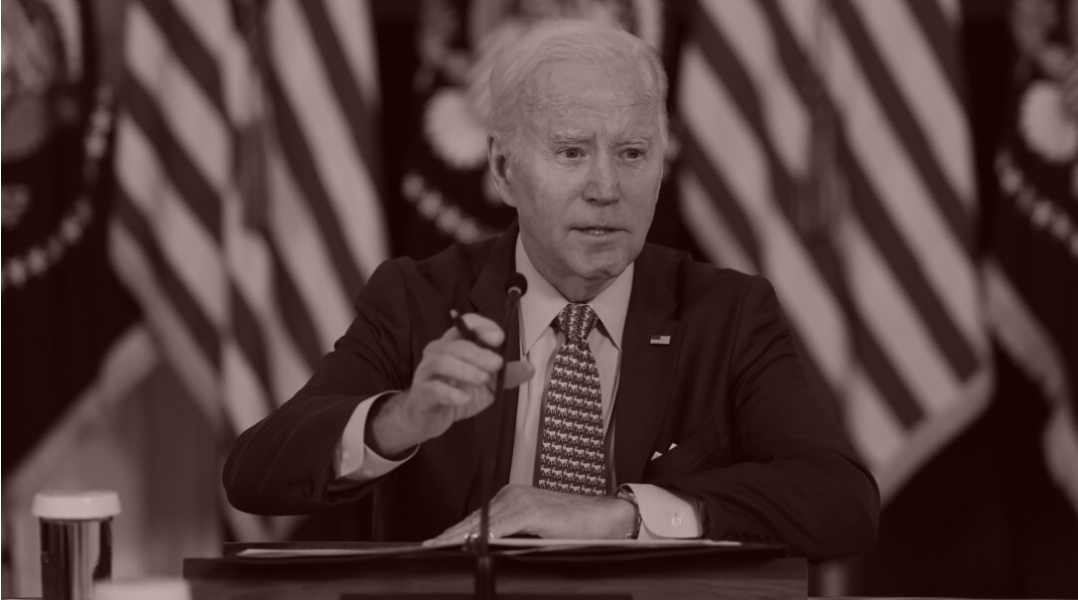
| Yes, of course, Biden is running for re-election. But national politics is a viper’s nest that requires ambitious putative candidates to prepare for even unthinkable, Murphy’s Law-style outcomes. So, what happens if Biden unexpectedly decides to bow out? Exploring D.C.’s increasingly popular hypothetical question. |
|
|
|
| Yes, yes, of course, Joe Biden is running for re-election. He is the sitting president, has passed historic legislation, and he’s the one guy who has proven that he can vanquish Donald Trump, whose Republican primary lead appears increasingly insurmountable despite his third indictment. The White House has largely argued that any doubts about Biden’s political future are ageist, puerile, and absurd. Who cares if he takes the short steps up Air Force One, or needs a note card to remind him to take his seat, they contend. He’s a spry 80-year-old who wears aviators, rides a Peloton, and doesn’t mind being photographed shirtless on a Delaware beach. Inflation is falling. Unemployment is near historic lows.
And it’s an argument that has been persuasive in Official Washington, assisted by the juxtaposition of Trump’s own age (77), and the influence of the very disciplined power brokers who run Biden’s inner circle. The Gang of 500 rejoices over the Biden administration’s policy successes—IRA, CHIPS, etcetera—anointing him the most effective president since L.B.J., and blaming staffers when he trips on stage.
The argument has reigned despite some uncomfortable moments, like that sandbag mishap and the enduring fallout around the Hunter Biden grift, or even softening poll numbers with key constituencies. Just a few weeks ago, there were feverish whispers around D.C. that Michael Scherer, one of The Washington Post’s star reporters, was at work on a critical piece about Biden’s mental acuity and health. Instead, the hotly-anticipated article came out differently, published under the headline: Why Experts Aren’t All That Concerned About Biden’s and Trump’s Ages.
Biden’s image has been managed carefully since the Covid campaign. But the stories about his ageless fervor for working the rope line belie the fact that he’s largely been reluctant to maneuver the bully pulpit. Biden ran under the thesis that the president shouldn’t be generating daily news cycles—but using MSNBC as his primary platform also makes it difficult to sell the message that Americans are reaping the rewards of Bidenomics. It also doesn’t help that his campaign events are often on Friday evenings, limiting his national exposure.
Of course, perhaps that’s exactly where his team wants him, strategically framing this election as yet another referendum on Trump. (White House spokesperson Andrew Bates called the attacks on Biden’s age merely Republican talking points. He also noted that all presidents have used note cards and different stairs for different occasions. “Hell, Bidenomics is such a winner for red states that they keep getting caught trying to take credit for laws they voted against,” he said.)
The age-is-just-a-number line tended to land easily among Democrats who viewed ’24 in existential terms. More recently, though, the town has been shaken by data suggesting that Ron DeSantis isn’t the only candidate suffering from Trump’s legal peril reverse gravity—in particular, a recent Siena/New York Times poll showing Biden tied with Trump at 43 percent in a 2024 rematch.
It’s early, of course, but the poll chips away at the soothing assurances from Biden allies that he alone can beat Trump in a rematch. Biden’s approval rating remains at 39 percent, and polls continue to show that 65 percent of Americans believe the country is on the wrong track. At a private lunch earlier this summer, as the Post reported, Obama warned Biden not to underestimate Trump’s power. Indeed, recent polling and fundraising numbers suggest that the general electorate views Trump’s 78 criminal charges as parking tickets, while his base ingests them like rocket fuel.
Meanwhile, a number of clear-eyed politicians, fundraisers, Democratic operatives and well-heeled donors have been privately whispering that a Biden strategy of relitigating 2020 feels risky, especially when considering that Biden small donor fundraising has been “sluggish,” as the Times put it, and his coalition lacks enthusiasm from young and Black voters. Fortunately for Biden, the number of Democratic voters who coveted a new nominee dropped from two-thirds, last year, to about fifty percent, more recently. But alarms in establishment Democratic circles have nevertheless been blaring over No Labels, the shit-stirring third party group, and gadfly candidates like Robert F. Kennedy Jr. or Cornel West, who could further erode the Biden coalition, or prove to be meaningful distractions as he prepares for another battle with Trump.
“President Biden and Vice President Harris are grateful to have unprecedented early and united support from across the Democratic Party, and are already hard at work assembling the broad and diverse coalition it will take to defeat the dangerous and divisive MAGA Agenda and finish the job for the American people,” said campaign spokesperson T.J. Ducklo. |
|
|
| Once again, it’s worth recalling that Biden is a consequential president who has passed meaningful—perhaps historic—legislation and has spent a half century in politics. His campaign reiterated to me that they have $77 million in the bank and that their small dollar donor list keeps expanding. The Biden campaign also claims to have raised more than any Democratic nominee at this point in the race. This morning, in fact, they announced an expanded finance team, calming donors who were wondering when they were going to name directors. The campaign slogan, “Finish the Job,” is past its soft launch mode and is now being sold as merch.
But despite Biden’s accomplishments, and the diligence of his team to keep the media on message, politics is a profession that rewards operatives for being cynical, preparing for edge cases, and preserving optionality. So, six months from South Carolina, everyone knows that Joe Biden is running for president, and that’s all they will say out loud. But, under the surface, speculation is rampant about how to prepare for the unlikely event that he pulls out, ensuring the Democrats aren’t flat-footed against Trump. “A lot can happen between now and February,” said one former Democratic official. “There isn’t a dinner that doesn’t mention that if Biden drops out before February, everybody is going to run.”
That assumption is based on the reality that Kamala Harris is seen as a weak candidate, who would be primaried despite her role in the administration. And it’s clear that J.B. Pritzker and Gavin Newsom would be ready to take her on. “The D.N.C. is not plotting for Plan B,”a senior Democratic advisor to party leadership clarified. “This is the conversation we’re all having. But there is no secret cabal of insiders—it will all be made up on the fly. There is no more smoke-filled back room anymore. If Pritzker and Newsom are planning, they are smart to do so. You have to go and take power. No one is going to give it to you. That’s why it’s surprising why no A-lister has challenged Biden.”
This late entry possibility would favor candidates who can get on the ballot the fastest. That means already having the cash, the shell of a campaign, and some loyal national advisors. It also means quickly cobbling together state directors, planes, offices, press secretaries, and data scientists. In reality, Newsom and Pritzker are not the only ones who are continuing to quietly remain poised on the sidelines just in case. After all, it would be campaign malpractice to not be ready if the time comes. “These candidates are acting like co-pilots waiting for something to happen to the captain. That’s not an effective path to the presidency,” said former D.C.C.C. chair Steve Israel. “And while I believe very strongly that [Biden] is going to be reelected president, even if that doesn’t play out, he’s going to have a lot of say as to the future. And, you know, I wouldn’t discount that.” |
| Imagining the Possibilities |
|
| Some see an obvious advantage for the party if Biden waits until the last minute to dip out. It would keep the primary confined to a handful of candidates, rather than a 16-person clown show like the campaign in 2020, when the debate stage included everyone from Bill de Blasio to Tulsi Gabbard. Running a presidential campaign is a massive undertaking and it would only be possible for a candidate who could turn on the money spigot fast and operationalize the cash.
Based on my conversations with advisors in the camps who are jockeying themselves, here’s my ranking of who is best positioned to pull off a late entry into the race.
Kamala Harris: It goes without saying that if Biden were not to run for president, the vice president would inherit his campaign and therefore the Democratic machine and the support of the D.N.C. She would presumably have the endorsement of the sitting president and the platform of her office. She also would be able to bypass the issue of money and access to planes. Harris would be supported by Congressional Black Caucus leaders like Jim Clyburn, who would set her up to win the first primary state of South Carolina.
But even with all of the party pillars propping her up, it’s unclear if Harris could win a primary since her poll numbers are anemic. She ran a weak campaign in 2020 and her favorability ratings remain low, even as the White House dispatches her to take on the G.O.P. It’s an awkward hypothetical that no one wants to countenance, but the vulnerability presents the opportunity for her would-be competitors.
J.B. Pritzker: He was among one of the first to endorse Biden and sits on the campaign’s national advisory board, and has made it clear he would never disrupt the Democratic machine by primarying the president. In fact, Pritzker told the Chicago Sun Times: “There’s no plan to do anything other than be governor for the next four years.” His spokesperson Natalie Edelstein backed up that sentiment, noting in a statement: “President Biden has been a steadfast partner and the governor is ready to do whatever it takes to make sure he stays in the White House for another four years.”
That’s all well and true, but Pritzker’s aides are also working to turn on a presidential campaign overnight, I’m told from multiple sources familiar with the situation. As someone who can self-fund—Pritzker has spent $320 million of his own money on two gubernatorial races— I’m told from the same sources that he would be willing to spend up to $1 billion of his own money. (He also has an incredible donor network thanks to his family, which includes former Commerce Secretary Penny Pritzker.) “Monetarily, he’s planning to self-fund a significant majority of it,” said a person familiar with his thinking. “They think they can get up-and-running quickly.” Pritzker also has a number of top national political advisors around him, like Jef Pollock, and has maintained his political organization.
Pritzer may be a billionaire, but he doesn’t come across like a Bloomberg. His supporters think his hefty, football player build makes him seem approachable; and his pro-labor stance could endear him with Black voters, who remember his work on economic empowerment and social justice. Plus, coming from Springfield, not Chicago, gives him broader cultural appeal across the Upper Midwest into the Rust Belt, which is an emerging power center for the party. Wisconsin, Michigan, Minnesota, and Illinois, all led by Republican governors 10 years ago, are now all run by Democrats.
Gavin Newsom: The term-limited governor from California has perhaps been the most overt in his preparation for a Biden surprise, despite his early endorsement in the form of a promise to Jill. Of course, his team officially denies his interest in a White House run. A spokesperson for Newsom pointed me to an article in which he told voters in a red state, who asked if he was there to support Biden or himself, “I guess I should be humbled by that, but that’s not why I’m here.”
But as The Sacramento Bee pointed out this week, he’s surely acting like someone trying to run for president based on his most recent filings, which show that he set up three political action committees. A few months ago, he also launched a super PAC, Campaign for Democracy, to challenge red state Republicans. His 2022 state committee had $17 million on hand at the end of the year but an advisor to Newsom guestimated that he has about $30 million on hand between his various accounts and could easily dip into his vast donor network.
He has his name ID advantages, too, as the governor of a major state. And he’s building on it with a reputation for shit-kicking, from running billboards in red states to sparring with Sean Hannity on Fox News. Now he’s basically begging to be placed on the debate stage, laying out the rules for how he would like to spar with Ron DeSantis (who accepted the challenge Wednesday night), even if it means he’s lowering himself by taking on the No. 2 in the race.
Anyway, these press stunts—his picture-perfect People’s March on Tower Bridge ahead of his inauguration, among them—keep him in the conversation. Newsom also has a fully operational political machine around him, with top national political advisors, like Ace Smith and Peter Ragone. He also recently hired Tim Tagaris, the digital guru behind the Bernie Sanders money machine. And yes, sure, plenty of conservatives have a low opinion of California, but being governor of the state also gives you a massive share of delegates, while essentially exempting Newsom from having to burn money in its expensive media markets.
“Gavin has done a really good job of respecting the president and being the attack dog that others can’t be,” said a Pete Buttigieg ally. “He’s earned respect from people who didn’t trust him before. He’s someone who can play with the national electorate. He’s done well with the national apparatus but the Bernie bros will hate him.” A Biden campaign official pointed out that Newsom raised $10 million for Biden during a two-day swing in California in June.
Pete Buttigieg: There’s no denying that Democratic primary voters were infatuated with Buttigieg and would continue to be so. He has a strong list of small and large dollar donors, like hedge funder Orin Kramer, who have since shifted to Biden but whom he continues to nurture. After running a 2020 campaign, he still has his state party chairs, an intensely loyal staff, and top-shelf political advisors around him, like Lis Smith. He has an operational super PAC called Win the Era, which supports state legislature and local races, maintaining those necessary relationships.
But obviously, it would also be very awkward for him to primary another senior member of the administration. “If you spoke to people in Buttigieg world two years ago, they said we’re not going to run against the first Black female vice president,” said a Buttigieg ally. “Then she slipped a little bit. He’s been really careful about not doing anything to upset the president, but he could flip the switch on in a minute.” Another Democratic politician explained: “Buttigieg has a great list and state party chairs. But they’re not getting ready. They’re not organized in that way.” A source close to Buttigieg said: “He’s fully supportive of the president’s re-elect, has helped with fundraising, and will continue to do whatever is needed to help re-elect the president.”
Gretchen Whitmer: The Michigan governor doesn’t have the national infrastructure or the name ID or even the money, and she’s a co-chair of the Biden campaign. But she shouldn’t be counted out: a couple of weeks ago she launched a super PAC called Fight Like Hell, and it looks like she’s positioning herself, quickly. She raised $38 million for her gubernatorial race against conservative heartthrob Tudor Dixon, and her national team includes Biden advisors John Anzalone and Molly Murphy, who could ostensibly shepherd her into a presidential shape. She would likely earn the backing of Emily’s List, while carrying Michigan, a state that went to Trump in 2016, and perhaps the greater white working-class Midwest, plus the elusive suburban swing voting women. A spokesperson for the governor dismissed the idea that she’s readying to run herself. “Governor Whitmer is laser focused on leading the state of Michigan,” said Stacey LaRouche. “President Biden is running, and the governor has said time and time again that she supports him.” |
|
|
|
| FOUR STORIES WE’RE TALKING ABOUT |
|
|
|

|
 |
|
|
|
Need help? Review our FAQs
page or contact
us for assistance. For brand partnerships, email ads@puck.news.
|
|
You received this email because you signed up to receive emails from Puck, or as part of your Puck account associated with . To stop receiving this newsletter and/or manage all your email preferences, click here.
|
|
Puck is published by Heat Media LLC. 227 W 17th St New York, NY 10011.
|
|
|
|