|
Hello and welcome back to The Best & The Brightest. I’m Leigh Ann Caldwell, here with Julia Ioffe, approximately 24 hours after President Donald Trump launched strikes against three of Iran’s nuclear sites—Fordo, Natanz, and Isfahan—thrusting the United States into the war Israel launched more than a week ago.
It’s been a whirlwind day in Washington: Trump administration officials appeared on the Sunday shows to defend the attack, dubbed Operation Midnight Hammer, even though Iran seemed to pose no immediate threat to the U.S. homeland. It’s going to take some time for the dust to settle, especially as everyone waits to see how Tehran responds. In the meantime, stick with us as we report this story in real time.
In tonight’s issue, Julia—one of the foremost foreign-policy experts in town—and I discuss why Trump struck now, how Israel cleared the path for the U.S. attack, whether Iran will strike back, why MAGAworld is mostly silent, and what Democrats are doing in response.
But first, a quick update on the Big Beautiful Bill…
|
- Thune’s July 4 pressure cooker: The Senate continues to work on its version of the Big Beautiful Bill of tax and spending cuts, with both Republicans and Democrats meeting over the past few days with Senate parliamentarian Elizabeth MacDonough to make sure the bill complies with special Senate rules. The Byrd rules, as they’re known, are requirements for the Senate to move the bill through reconciliation, which requires only a simple majority for passage.The parliamentarian has already said that proposed cuts to the SNAP food assistance program that bar nonpermanent residents and transfer some costs to the states don’t comply with Senate rules. This has left Republicans scrambling to find over $130 billion more in savings. MacDonough also ruled against a provision that would make it harder to get an emergency order against the Trump administration, by forcing litigants to pay a bond before an injunction can be enforced. The Senate Finance Committee, which is responsible for the largest portion of the bill, including Medicaid and taxes, will begin arguing their sections tomorrow.
Since the Senate isn’t done with the parliamentarian process, and since they’re still searching for alternatives to the items that MacDonough has declared uncompliant, it’s hard to see them being able to vote on the legislation before the end of the week, which was their goal. A senior Republican aide told me the Senate isn’t leaving for the July 4 recess—scheduled to start Friday—until it’s done.
|
|
|
|
The latest political intelligence and national security chatter surrounding the U.S. bombing of Iran, the president’s neocon turn, the mental gymnastics of the MAGA base, and the response in Washington, 24 hours later.
|
|
|
|
The day after President Donald Trump launched attacks against three Iranian nuclear sites—at Fordo, Natanz, and Isfahan—his administration is claiming complete and utter success at decimating Iran’s capability to develop a nuclear bomb. Of course, those assessments are likely premature, and we don’t yet know how Iran will respond. In the meantime, I called up my partner Julia Ioffe, among the most expert foreign-policy voices in Washington, to discuss the second-order effects of the U.S. going to war, once again, in the Middle East—from the military ramifications and potential political aftershocks to perhaps the most important question of all: Why now?
|
|
Leigh Ann Caldwell: Julia, why did this attack happen now? Was there an imminent threat against the United States? At a news conference this morning, Secretary of Defense Pete Hegseth said triumphantly that “American deterrence is back,” and that no previous president “could” have done something like this. We all know they could have, they just chose not to. So what changed?
|
|
|
|
A MESSAGE FROM OUR SPONSOR
|
|
Medicaid funding cuts hurt everyone, resulting in closed hospitals and crowded emergency rooms.
|
|
|
Julia Ioffe: That is the question. There was no imminent threat against the U.S. The American intelligence community believed that, while Iran was enriching plenty of fissile material, it was still a ways away from actually getting a nuclear weapon. But, as I wrote on Thursday, that’s not the issue. The reason Israel attacked Iran now, the reason we attacked Iran now, is because we could.
Such an operation would have been impossible—or extremely dangerous—before last fall, when Israel decapitated and defanged Hezbollah in Lebanon, rendering it incapable of stopping Israeli fighter jets en route to Iran or retaliating with the kinds of rocket attacks we saw after October 7, 2023. (They’ve been quite silent in the days since Israel started its strikes in Iran.) Back in October, when Israel took out Hezbollah’s leadership, Iran retaliated by sending missiles and drones into Israel. Israel retaliated for that by taking out a lot of Iran’s missile installations and air defenses.
Then, in December, Bashar al-Assad’s regime in Syria—Iran’s main ally in the region—collapsed. That opened what people have been calling a superhighway in the sky between Israel and Iran, allowing Israeli jets to get to their targets unmolested.
All of that is to say that this had nothing to do with an imminent threat against the homeland, or even Iran closing in on a nuclear weapon. It had to do with a unique, once-in-a-lifetime military opportunity to do what neither the U.S. nor Israel have been able to do diplomatically or through economic sanctions: Make Iran give up its nuclear ambitions for good. There are lots of people in D.C. and in Israel who had come to believe that this was the only way. And, after Israel prepared the ground last fall and winter, they finally had the chance to do it.
Leigh Ann: Still, there was a large, vocal contingent of President Trump’s base—including figures with a line to the White House, like Steve Bannon and Tucker Carlson—that was outright opposed to military intervention in Iran, and deeply skeptical of Israeli efforts to enlist Trump in their war. And Trump himself didn’t seem eager to get involved, at least until very recently. How was he persuaded to change his mind?
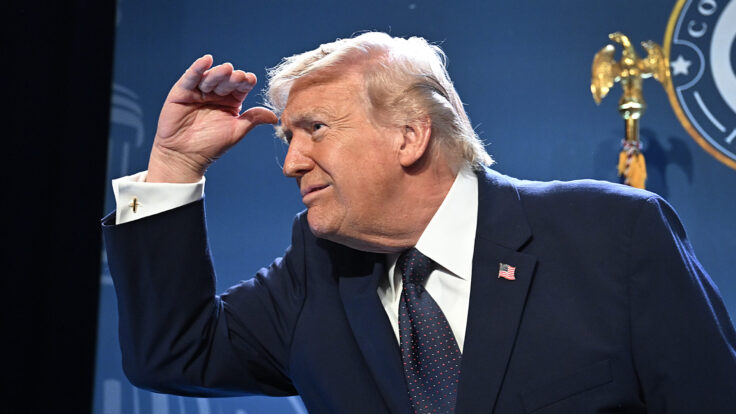
Julia: That’s an entirely different matter. And that, I think, has to do with Trump wanting to be on the stronger, winning team. Given Trump’s experience with Iran, he seems to believe this could be a one-and-done operation that would allow him to put points on the board. Remember, he ordered a drone operation that killed the notorious I.R.G.C. Quds Force commander Qassem Soleimani in January 2020, which many people warned would set off escalating violence. Instead, Iran shot a few missiles at the Al-Asad American airbase in northern Iraq—which caused a lot of T.B.I.s for the troops stationed there, but, for the most part, that was that. Iran is threatening that there will be consequences after the strikes on Fordo, but who knows? This is just the beginning. It could end with some kind of symbolic Iranian retaliation, or it could be the start of a big and messy conflict. It’s just too soon to tell.
|
|
Julia: You mentioned some disagreements on the right, and the possibility of this kind of U.S. operation splintering the MAGA coalition. Last week, we saw Tucker Carlson eviscerate Ted Cruz, and then Trump lash out at Tucker, who was then defended by Marjorie Taylor Greene, and on and on. Now, you see Republicans on the Hill, and prominent MAGA folks like Matt Gaetz and Charlie Kirk, lining up behind Trump (again) and doing all kinds of verbal and logical gymnastics to rationalize how this Middle Eastern adventure—which they were warning against just a few days ago—is different and won’t result in a “forever war.” What is going on there? And do you think the cleavage of the past week will leave any trace? Or can Trump truly do no wrong in his coalition’s eyes?
Leigh Ann: M.T.G. might be the only one with some consistency here. She tweeted, “This is not our fight,” and that “everytime America is on the verge of greatness, we get involved in another foreign war.” But she is mostly on an island right now. Tucker Carlson has been silent. Steve Bannon, a critic of military force, hasn’t said a word since, either.
|
|
|
|
A MESSAGE FROM OUR SPONSOR
|
|
Decisions made in the halls of Congress have devastating impacts on the halls of local hospitals.
|
|
|
I think what happens to the MAGA coalition depends on what happens next in this conflict. If this is really a one-and-done attack by the U.S., and it does actually set back Iran’s uranium enrichment program and weaken the Islamic Republic, the coalition is preserved and Trump comes out as even more of a hero on the right. It could help him in the midterms, too. But if this plunges the U.S. deeper into conflict with Iran; if the U.S. can’t extract itself from Israel’s fight; if U.S. service members get hit; or if there’s some sort of Iranian-backed terrorist attack on U.S. interests at home or abroad—it will greatly divide the coalition. Again, it’s too early to tell.
For now, though, it seems that Republicans and the anti-war MAGA right are giving Trump the benefit of the doubt. Just follow what Vice President J.D. Vance says. He’s been an outspoken opponent of U.S. involvement in overseas conflicts. He’s opposed support for Ukraine in public and in private. (We all saw what he said during the Houthi PC Small Group chat.) But on Meet the Press this morning, Vance insisted that this will “not be some long, drawn-out thing.”
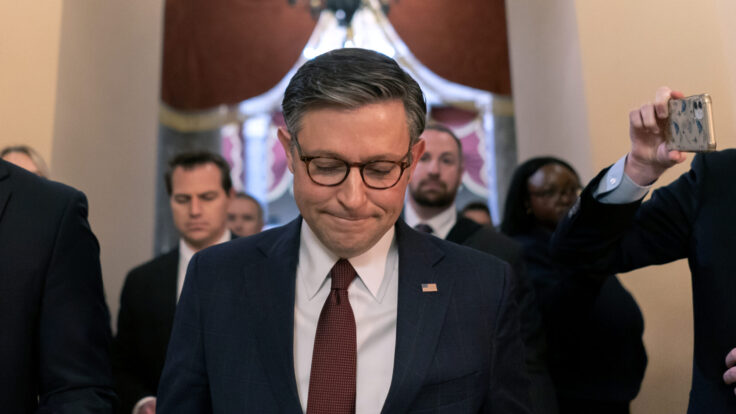
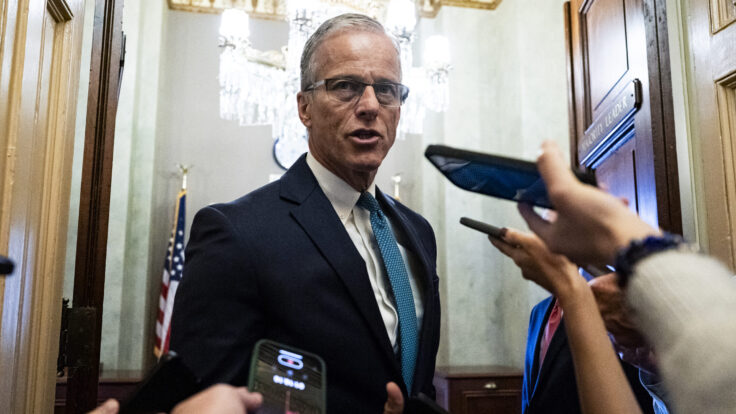
Meanwhile, outside MAGA, the more traditional, hawkish Republicans in Congress are 100 percent behind Trump. Sen. Majority Leader John Thune, for example, said that he stands with Trump, whose actions, he said, were to “ensure a nuclear weapon remains out of reach for Iran.” House Speaker Mike Johnson wrote in a statement: “President Trump has been consistent and clear that a nuclear-armed Iran will not be tolerated. That posture has now been enforced with strength, precision, and clarity.”
Julia: Is anyone besides M.T.G. criticizing Trump?
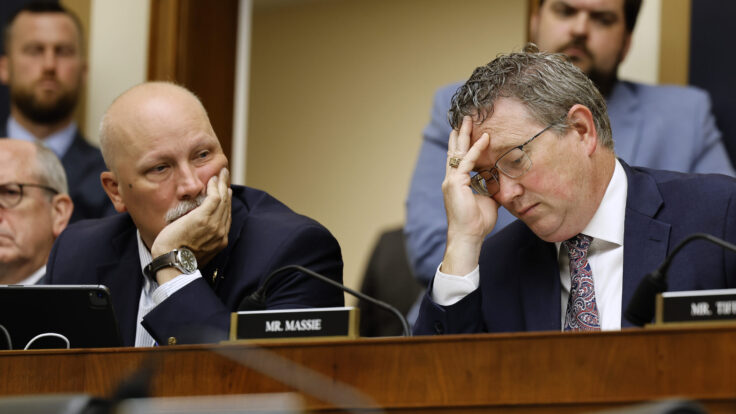
Leigh Ann: Well, there’s Rep. Thomas Massie. He is definitely not part of the MAGA coalition, nor is he a more traditional Republican, but he has also been super consistent in his libertarian brand of politics. He retweeted Johnson’s statement, asking him why he didn’t call Congress back from their Juneteenth recess if there was such a serious threat to national security. Now, Trump’s political operation has reengaged the online mob to call for Massie’s electoral defeat.
|
Leigh Ann: It’s been six years, almost to the day, that Trump decided against hitting Iran, as you mentioned, after they shot down a U.S. surveillance drone. In fact, he called off an attack when the planes were already in the air, saying that a strike “wasn’t really proportional.” On the other hand, this episode shows that while Trump has campaigned on and promised no new wars, he has considered attacking Iran for quite some time.
Which leads to another question I have for you, Julia: Trump supposedly has fewer war hawks working for him now, having done a better job of appointing and hiring like-minded people this term (in contrast to some of his hawkish first-term appointees, like national security advisor John Bolton and others). How much of a role did Benjamin Netanyahu play here?
Julia: It’s wild, if you think about it. Trump fired all the alleged neocons on his N.S.C. (after Laura Loomer pointed them out), then turned around and basically fulfilled a neocon fantasy: attempting to take out Iran’s nuclear program through military force. And his isolationist supporters basically said, Please and thank you. Proof yet again that Trump is not about ideological consistency, and neither is his base—both are about only Trump.
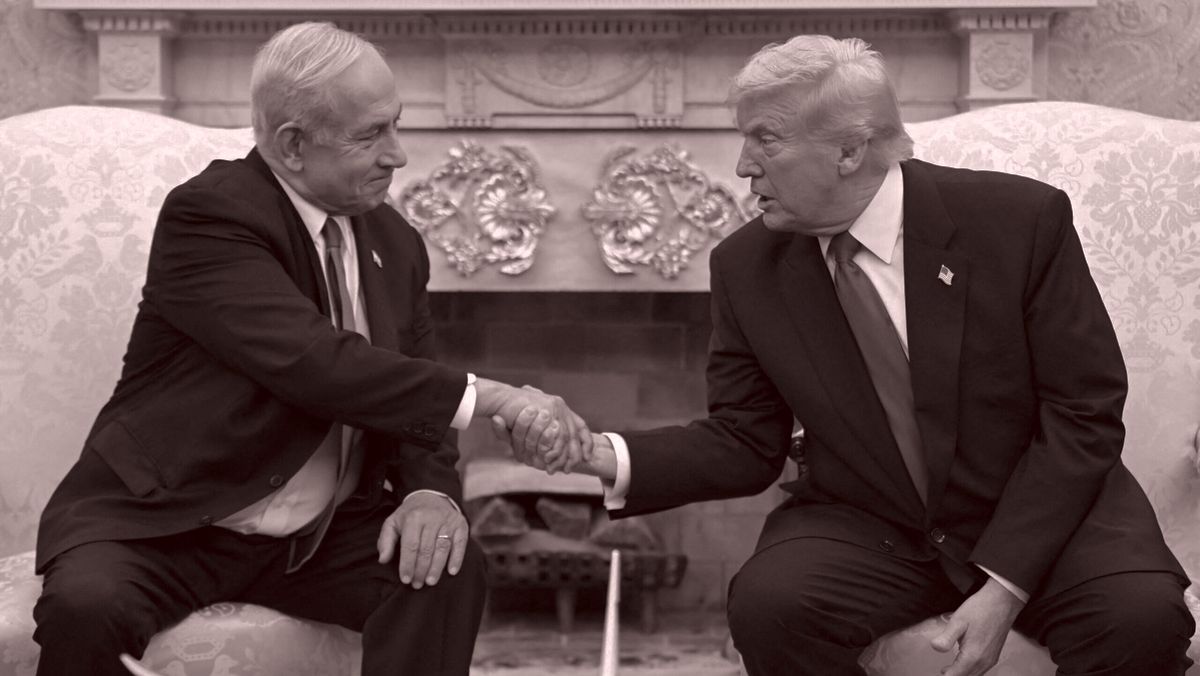
When it comes to Bibi—well, Bibi had his own reasons for doing this, both in terms of domestic Israeli politics and his ideas about his historical legacy. But he prepared the ground for Trump, both militarily and politically. He made the U.S. operation technically possible by having his military take out Hezbollah and, last week, much of what remained of Iranian air defenses. Also, remember: In the months leading up to the Israeli operation in Lebanon, which involved a ground component, there were all these dire warnings that Israel was about to get bogged down in a long war there. But it didn’t. Just like Trump’s decision to take out Soleimani didn’t get the U.S. bogged down in a long war with Iran in 2020. So I think that provided more fodder for telling Trump to disregard the naysayers, which he loves to do anyway.
|
|
|
More importantly, however, Bibi, like so many other world leaders, knows how to manipulate Trump and what buttons to push. He’s been massaging Trump’s ego for years. He clearly wanted him to win in 2024 and made no secret of it. Just recently, he released a really obsequious video in time for Trump’s military parade, wishing him and the Army a happy birthday. He’s been giving Trump credit, and thanking him personally, publicly, and repeatedly for the American military’s help in shooting down Iranian missiles and drones aimed at Israel over the past week. (A lesson that every world leader learned, perhaps, in watching Volodymyr Zelensky get dressed down in the Oval Office this spring.) As I wrote a few days ago, this was all part of a campaign to give Trump credit for the Israeli operation—and either make him want to finish the job, or box him into doing so.
Speaking of neocon fantasies, it really is mesmerizing how Trump has managed to portray Democrats as being both warmongers and—that old Republican talking point—weak on national security. By cozying up to Russia and attacking the national security establishment, he has also turned Democrats from dovish skeptics of George W. Bush’s wars and wiretapping into defenders of the deep state. Now, with Democrats protesting Trump’s unilateral strike on Iran, he’s still insisting that he’s the anti-war president. You almost have to hand it to him.
|
Julia: Along the lines of this, shall we say, ideological flexibility, I’m wondering: Why does Israel continue to be the exception to the anti-interventionist mood on the right? And am I right to be a little bit nervous about this, as a Jewish person?
Leigh Ann: I sure hope you have nothing to be worried about as a Jewish person. But what I can say is that some on the deeply Christian right—including Speaker Johnson and the U.S. ambassador to Israel, Mike Huckabee—have viewed Israel in religious terms (in which I am no expert) that involve the second coming of Jesus Christ. This has been a critical element of why Israel is so important to Republicans. It was interesting that M.T.G. defended her position against attacking Iran last week by saying it does not mean she is antisemitic.
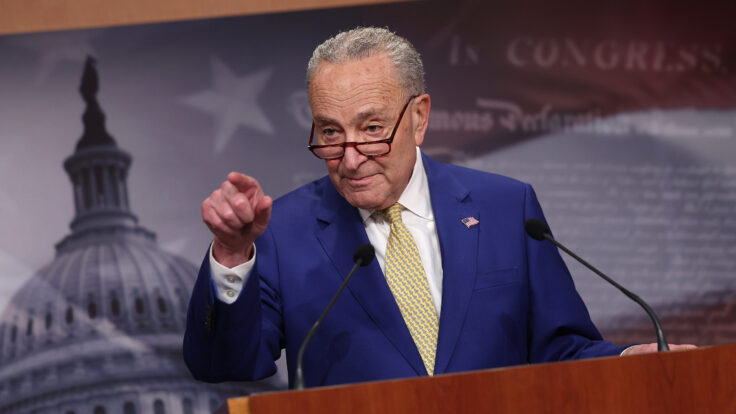
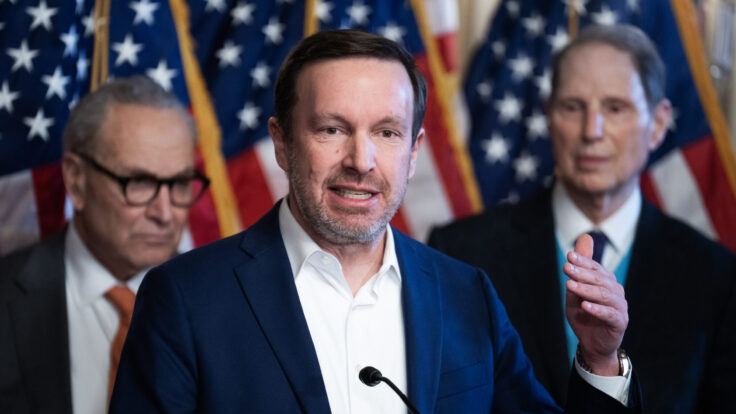
Democrats’ response has been quite interesting, too. They have varying beliefs on whether the bombings were justified, but are now rallying behind the position that Trump acted illegally by failing to seek congressional authorization—which allows them to avoid saying whether they support the attack or not. This includes leaders Hakeem Jeffries and Chuck Schumer, both staunch supporters of Israel who had previously been criticized for their silence ahead of the strikes, including on the authorization question. Now, though, Schumer has put out a statement saying that no president should be able to “unilaterally march this nation into something as consequential as war,” and will sign on to Sen. Tim Kaine’s resolution “to direct the removal of United States Armed Forces from hostilities against the Islamic Republic of Iran that have not been authorized by Congress.” Jeffries said in a statement that Trump “misled” about his intentions and “failed” to seek congressional authorization. There’s also, inevitably, Rep. Alexandria Ocasio-Cortez, who said that Trump’s actions are unconstitutional and would justify impeachment. (That could set off an entire separate debate among the fractured Democratic Party that we can get to another day.)
The Constitution, of course, says that Congress declares war. But the War Powers Act of 1973 gives the president wide latitude to strike another country, requiring congressional notification within 48 hours and allowing limited military actions for 60 days. The administration will likely point to this. But it’s unclear whether the administration gave the same type of notification to Republican leaders as Democratic leaders. An aide to Schumer called the notification they got on Saturday night “perfunctory.” (As I’ve reported in this space before, the administration provides lopsided information to the different parties in Congress, often cutting Democrats out or providing the bare minimum.)
The Trump administration, including Vance and Hegseth, have insisted that the operation falls within the confines of the law. Hegseth told reporters that they notified congressional leaders of the attack once the pilots were safe, and Vance said that the attack was targeted, not aimed at regime change. The administration will also hold an all-senators classified briefing on Tuesday, and point to that as keeping Congress in the loop. (Interestingly, Congress used to include a measure in its annual defense authorization bill that prohibited the use of force against Iran. Republicans stopped including it when they took control of Congress in 2023.)
The reality is that presidents of both parties have bombed other countries without Congress. President Obama didn’t seek congressional authorization when he directed the military to engage in attacks against Libya. Republicans (and some Democrats) were outraged then.
|
|
|
Need help? Review our FAQ page or contact us for assistance. For brand partnerships, email ads@puck.news.
You received this email because you signed up to receive emails from Puck, or as part of your Puck account associated with . To stop receiving this newsletter and/or manage all your email preferences,
click here.
|
|
Puck is published by Heat Media LLC. 107 Greenwich St, New York, NY 10006
|
|
|
|




_01JY75NY2T5QA676ZF7VT30N67.png "Coalition to Strengthen America's Healthcare")
_01JY75P0TDPHGP5PE4ASQHTYN2.png "Coalition to Strengthen America's Healthcare")