| Julia Ioffe: What exactly does South Africa allege?
David Scheffer: South Africa is alleging the entire corpus of the Genocide Convention and its application, namely that Israel has failed to prevent genocide against Gaza and that it is committing genocide against Gaza. It is a very fulsome application. South Africa is not asking the I.C.J. to make a finding of a failure to prevent, or a commission of, genocide. They are asking the I.C.J. to direct Israel through what are called provisional measures to do what is necessary to prevent and not commit genocide in Gaza, to take those measures while the I.C.J., over a much longer period of time, considers the merits of South Africa’s allegations. For a commission of genocide, one needs to establish that both the genocidal act has occurred and that it has occurred with the specific intent to destroy all or part of a national, racial, religious, or ethnic group. The dolus specialis, we call it—the specific intent to do that. That’s why, particularly on a merits stage, it takes time to put those two together: the genocidal acts, and the mens rea of the specific intent.
So, South Africa is asking not for a finding of genocide, but for an injunction to stop Israeli military action in Gaza?
Yes. “Provisional measures” is their way of saying injunction.
Why South Africa?
South Africa is a state party of the Genocide Convention. Israel is a state party of the Genocide Convention, and the Genocide Convention is a human rights convention which recognizes what we call erga omnes, which just means that, when you are a party to the Genocide Convention, you owe obligations to all parties of the Genocide Convention. And if you violate your obligations under the convention, then any party in the treaty has standing to call you out on it and to bring an application before the I.C.J.
South Africa is a logical candidate for this, in part because I think, politically, South Africa has had its apartheid experience, and it actually alleges in the application that there is a context between Israel and the Palestinians that feeds into the genocidal acts and intent. Part of that context is what South Africa alleges is the commission of apartheid against the Palestinians for decades. And that feeds into how you establish specific intent to commit genocide, because, as they’re alleging, Israel has treated the Palestinians under apartheid in such a discriminatory manner.
Also, I think South Africa would like to be seen as a real leader in the Global South. But furthermore, in terms of strategy, they would prefer to see a non-Arab state take the lead in a case like this. And of course, South Africa is also joined in this application by other parties: Bangladesh, Bolivia, the Comoro Islands, and Djibouti, none of which are Arab states. It’s an interesting combination, and you see that there’s some strategy there.
A lot of the things that the applicants are alleging aren’t really in dispute. Thousands and thousands of Palestinians have been killed. Hundreds of thousands of homes have been destroyed. Pretty much the entire population of Gaza has been displaced. We know all this, but how is that genocide rather than a horrific way of waging war? And where does one tip into the other?
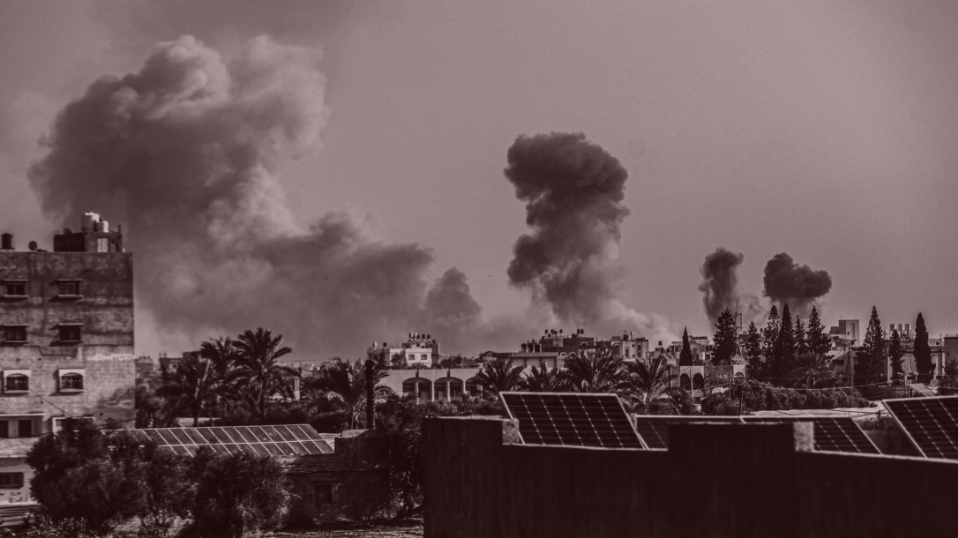
The application disgorges an enormous amount of publicly available information about what has happened in Gaza. We all know that it’s a humanitarian catastrophe of some dimension in Gaza right now. I don’t want to diminish the importance of that. But nowhere in South Africa’s application is there any recognition that there is a war taking place. This is not a genocide like Rwanda or of the Rohingya or the Yazidis in recent times, where these were just authoritarian regimes that went after populations that were not attacking them. These were just slaughters.
But this is a war. There is an act of self-defense by Israel. Now, that does not mean that Israel has clean hands on absolutely everything it’s done, absolutely not. As I said from the beginning, target by target, day by day, you have to meet a legal standard. But it is astonishing to me how the application by South Africa tends to ignore almost the entire context of this, which is that these deaths, injuries, and destruction and humanitarian situations are erupting in the context of a war.
And there is no recognition in the application that Israel has any justification for responding to the October 7th atrocities at all. There’s no reality check in this application about the fact that everything needs to be gauged against the laws of war, not just human rights principles, not just even international humanitarian law. It has to be seen in the context of war.
There’s also no recognition in the application that Israel has any right of self-defense. It’s never stated. It’s a major principle of international law that Israel has the right of self-defense. The question is: How is Israel exercising that right? Yes, the Genocide Convention applies during wartime, but you cannot isolate the war from the genocide. You have to examine both at the same time.
To be fair, there is a kind of pro forma box-ticking, where they mention the attacks of October 7th in the application and then say that they are against hostage-taking and the targeting of civilians and that bombs are continuously going out from Gaza into Israel.
The acknowledgment of October 7th and of the hostage taking and of Hamas missiles still being fired into Israel—those acknowledgments are so, well, perfunctory. They are presented without any analysis or any recognition that this is part of what has to be analyzed as well in terms of the Genocide Convention, because it’s the right of self-defense which triggers a combat situation. And nowhere in the document—or nowhere that I can find—is there even any suggestion that the total number of Palestinian casualties includes a certain percentage of Hamas militants. There’s no breakdown at all, as if the Israeli attack on Hamas and the militants is irrelevant to the entire equation.
Does this complicate things at all??
The International Court of Justice is only to a certain degree a fact-finding court. It does not really have the capacity to independently investigate a huge amount of data and of evidence. Typically, its cases require some evidence, but not of the character associated with a massive war and humanitarian situation, as we find in Israel and Gaza. So therefore to ask the I.C.J. to render a finding that genocide is occurring or has occurred is a very heavy lift for the I.C.J. Contrast it to a criminal court such as the I.C.C., which requires the production in the courtroom of an enormous amount of verified evidence, all of which has to be verified by the court: witness statements, depositions, documents, all sorts of evidence. And since this is a criminal issue—the Genocide Convention—this would be difficult for the I.C.J. to do as as they would do in a criminal court with a single defendant. Here we have an entire state, the state of Israel.
The precedents in the I.C.J. bear out the following: the I.C.J. is very reluctant to reach a finding of genocide unless it can point to a criminal conviction of a leader of that state who has been convicted of the crime of genocide.
How do you think this hearing will shake out? What do you predict the I.C.J. will do?
In this situation, the determination of the facts, particularly given that here we have the context of a war being waged between Israel and Hamas, as well as the enormous amount of clarification that would be required for all of the evidence produced in the public realm—you know, courts don’t just convict on the basis of news articles—all of that has to be reviewed and taken into account.
So I think that what the court may end up doing here is, they can issue provisional measures, but they will not go to the merits at all. It will not conclude that Israel is conducting genocide—it just will not go there—but it may issue a provisional measure that says that Israel should not take any steps that would violate the Genocide Convention. I mean, all of us are not supposed to take any steps that violate the Genocide Convention. And they’ll probably say that Israel has to preserve all the evidence on everything that it’s done in terms of targeting. I think they might say something like that.
So let’s say the court issues these provisional measures. Are they enforceable?
Only the Security Council could enforce them through a Chapter VII resolution. And even then, Israel could or could not comply with the Security Council resolution under Chapter VII.
Let’s say the I.C.J. issues provisional measures saying, “Stop this military action because it’s killing all these civilians, which is tantamount to genocide,” and then the U.N. Security Council votes on a resolution saying, “Israel, you have to abide by this.” Then what happens?
Possibly nothing. I mean, Israel has not complied with many Security Council resolutions or General Assembly resolutions.
I doubt that the court will simply say, “Stop fighting,” because that would deny Israel the right of self-defense. And you have to be positive that Israel will make that argument on Thursday. They have the right of self-defense, and the court cannot instruct them to literally stop exercising the right of self-defense, which does, in Israel’s mind, require a certain amount of military force. The question is: How much force and in what manner and character, etcetera? In other words, will the court be the messenger for the ceasefire crowd? I don’t think so.
What do you think Israel will argue in its defense?
They could use a legal principle called “unclean hands” as an affirmative defense—namely, that South Africa is de facto presenting this as a surrogate for the state of Palestine. The problem is the state of Palestine has unclean hands because Hamas, which is part of the state of Palestine, committed the atrocities of October 7th, and, in law, if you yourself are the perpetrator of, in this case, literally the same crime that you’re accusing the other party of committing in your application, your suit is greatly weakened.
And while South Africa is not the perpetrator of genocide by any means, it’s the de facto representation of the interests of the state of Palestine in bringing this case to the I.C.J. Israel could say, “You don’t even recognize it in the application other than to say October 7th happened. You never identify October 7th as possibly even falling within the realm of genocide? You don’t even put that in writing in your application? And yet it’s obvious that it does!”
I would not be surprised if some judges on the I.C.J. ponder the imbalance in this application and the failure to recognize the character of what happened on October 7th as if not genocide, then possibly genocide. South Africa could have helped its case by first recognizing the significance of October 7th, not just as a throwaway comment, and then move from there to its concerns about Israeli conduct in Gaza.
Also notice, by the way, that the Israelis did not select an American to represent them in front of the court. And I think probably for good reason. The United States is so deeply tied to Israel in this entire conflict, in so many ways. It might be misleading to have an American literally representing Israel in front of the I.C.J. It’s much safer to have a barrister like Sir Malcolm Shaw, who is held in high respect by all the judges on the bench at the I.C.J.
You said Hamas may have committed genocide on October 7th. Do you think a terrorist attack like that can constitute genocide or an attempt at genocide?
Yes, I think it can. Now, that doesn’t mean that if I’m presented with all the facts and everything, I would conclude as a judge that genocide occurred on October 7th. That’s what makes a discussion about “Is it or is it not genocide?” so difficult, because it is a fact-based judicial decision where you have to bring together the acts with a specific intent to destroy all or a substantial part of a population.
I do think that there is a strong case that Hamas was seeking to destroy a rather sizable proportion of the Israeli population on October 7th. They seem to have had an agenda that even went beyond the kibbutzim to move into other parts of Israel, and there seems to be documentary evidence of that.
I’m comfortable with using the word “genocide” for October 7th, recognizing that—and I’m sorry to say this—I’m the one who created the word “atrocity crimes” in 2002 in order to liberate us a little bit from having to rush to these kinds of determinations [of genocide]. It’s a little easier just to say “atrocity crimes,” but saying “atrocity crimes” is enough to get me moving.
You hear the word “genocide” thrown around so much these days when people might mean “war crimes” or “ethnic cleansing,” like in some of these recent statements about the “voluntary” immigration of Gazans, which is insane. Are people confusing the terms?
There is a considerable amount of sloppiness in how people describe this crime. That said, we do not want to hamstring people from describing what is awful as being awful and illegal, right? I don’t think we can impose strict discipline on everyone to use the proper term legally. Because at the end of the day, it would be a court that would make that determination. Or a government could make that determination based upon a great deal of investigation. For example, the U.S. government determined that genocide was happening in Darfur. South Africa has the right to call it genocide if that’s what it believes is taking place and then presents a lot of information that it believes supports that allegation. But at the end of the day, that does not mean that Israel is literally committing genocide. It will have to be a court that would make that final determination, just as the International Criminal Court, the I.C.C., has yet to make a determination on genocide in Darfur because [Omar] al-Bashir has not been arrested and transferred to The Hague yet to stand trial on that charge.
Why use the term “genocide” when “atrocity crime” will do?
I think genocide is a very powerful word. You get everyone’s attention. South Africa could just as easily say, “We clearly think atrocity crimes are occurring now in Gaza. We’re not prepared yet to say whether it’s genocide or not.” But they did make a determination: They want to call it genocide. And they’re free to do so. I don’t blame them.
But in the court of law as well as in the court of public opinion, I think it’s very important that we not embrace that word in this particular conflict until there’s a better understanding of what is occurring in terms of warfare and of the humanitarian plight of the Palestinian people.
At the same time, as I have pointed out, Hamas could stop it all tomorrow by surrendering. Hamas has the power to prevent genocide. It has had the power to prevent genocide even after it, itself, probably committed genocide on October 7th. It had the power, after October 7th, to subject none of the Palestinian population to what South Africa describes as genocide. Hamas had the power and it did not use that power. Hamas has no right to fight on. It has no right of self-defense. And furthermore, by virtue of the fact that it continues to fight, it brings an enormous amount of suffering and destruction upon the Palestinian people, all of which it could stop by simply surrendering.
There are those who say that “resistance is justified” and that Palestinians have the right to liberate themselves “by any means necessary.” From the point of view of international law, is that true?
The right of self-determination is a steadfast, peremptory norm of international law. It’s what we call jus cogens. No one’s denying the right to advocate for self-determination. But we’re no longer in a world where the achievement of self-determination can be legitimately undertaken by violating human rights law or the U.N. charter. The classic example would be the Scottish National Party. They want self-determination for Scotland. Do they have the right to raise an army and invade England for that purpose? No. International law would never embrace that.
Certainly during the colonial period, there was some acceptance of using force in order to free nations from colonial power. But international law has advanced since then, and customary international law strictly prohibits using those kinds of illegal steps—i.e., violating conventions like the Genocide Convention, the Geneva Conventions—in order to achieve that objective. Now, I’m sure that there’ll be a scholar or two that will come back and say, “Oh, no, no, actually, technically, I don’t see that, that that’s actually prohibited under international law.” But that’s a sort of an explanation that defies all rational interpretation of international law in the year 2024. Otherwise, one is inviting an enormous amount of violence on planet Earth.
Last question. Israel, as you say, has ignored so much coming out of the U.N. Their response to this kind of stuff tends to be, “Okay, another day, another war crimes accusation from antisemites.” Why do you think Israel is actually responding to this application and sending someone to argue on its behalf?
I think Israel has undermined its argument somewhat by not being clear throughout this war about why it is striking the way it is striking, why it is targeting the way it is targeting. It issues a very general statement to the effect of, “We are always cognizant of international humanitarian law. We want to distinguish between civilians and combatants. And we’ll come back and say the same thing tomorrow.” What they should be doing is providing far greater clarity as to why the force that they have used was necessary for military purposes. If they drop a 2,000-pound bomb, why was it necessary to drop a 2,000-pound bomb? Well, Israel might say it was in order to destroy a tunnel. Okay, but did you realize that 300 civilians were in the building on top of that tunnel? You have to explain yourself.
They have not been doing that, which is somewhat arrogant. It is also ill-conceived because the world is watching. It wants to understand what Israel is doing when there is such a huge humanitarian impact to what they’re doing. Israel also needs to understand that the world is looking at the totality of this. Even if they could claim individual strikes are legal because they’ve gone through this analysis, strike by strike, when you have a total result that appears to be what we see in Gaza, they need to explain to the world far better than they have.
I think one of the interesting things about the Israel-Hamas war is that it demonstrates that the world is not only watching, but the world knows enough now about atrocity crimes and what has happened in the last 30 years to understand that individuals can be held accountable under international criminal law and that these crimes cannot be committed secretly. They are being committed publicly because the world watches them, and the world understands more now than it did 30 years ago about the character of these crimes. The Israeli Defense Forces, while having the right of self-defense, always need to bear that in mind. |