Hello and welcome back to The Best & The Brightest. I’m Leigh Ann Caldwell. Don’t
be fooled. Happy Passover.
Naturally, everyone in Washington is talking about Kristi Noem’s luckless husband. Maybe Noem is happy that at least people aren’t talking about Corey Lewandowski or the $200 million taxpayer dollars she blew on her D.H.S. vanity project.
Today, I take a look at the preemptive post-midterm jockeying for House Republican leadership positions. Republicans are already contemplating life in the minority—not fun—and
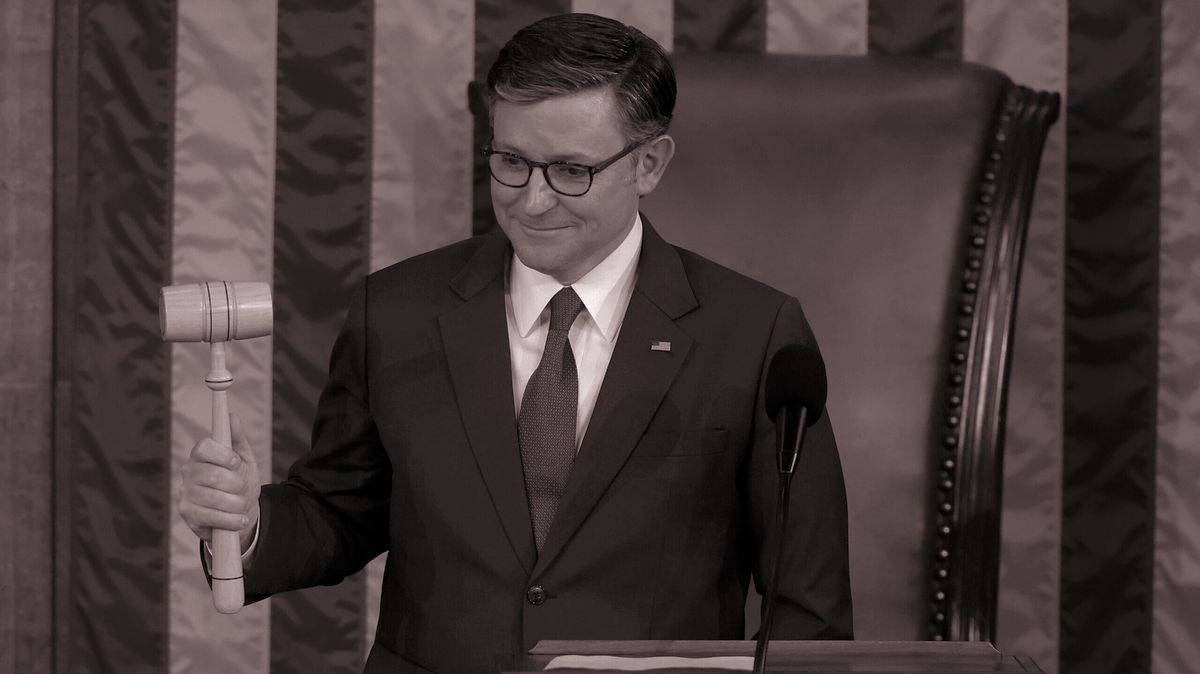
who their leaders will be. Speaker Mike Johnson has been able to hold on to his position longer than most critics and supporters alike thought possible. But several Republicans predict that if they lose the House, it will be the end of the road for his leadership in the conference.
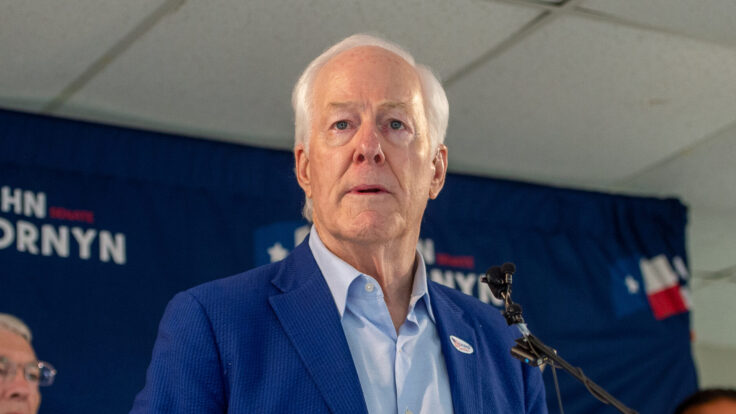
Also mentioned in this issue: Mike Lee, John Thune, Ted Cruz, Rand
Paul, Donald Trump, Tom Emmer, Steve Scalise, Jim Jordan, August Pfluger, Kevin McCarthy, Newt Gingrich, Dennis Hastert, Paul Ryan, Vern Buchanan, Drew Ferguson, Dusty Johnson, Marjorie Taylor Greene, Elise Stefanik, and more… |
- And
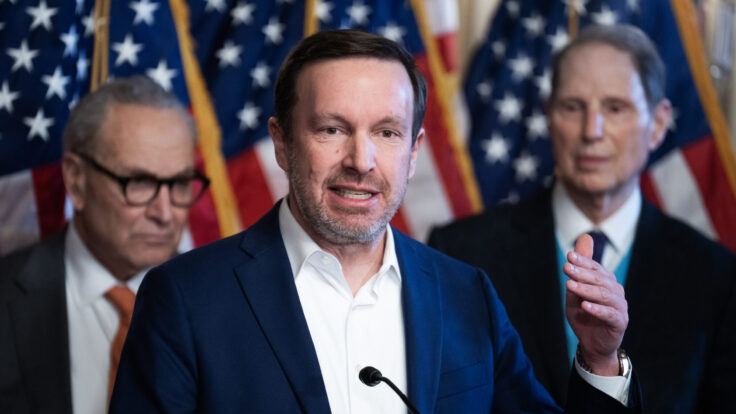
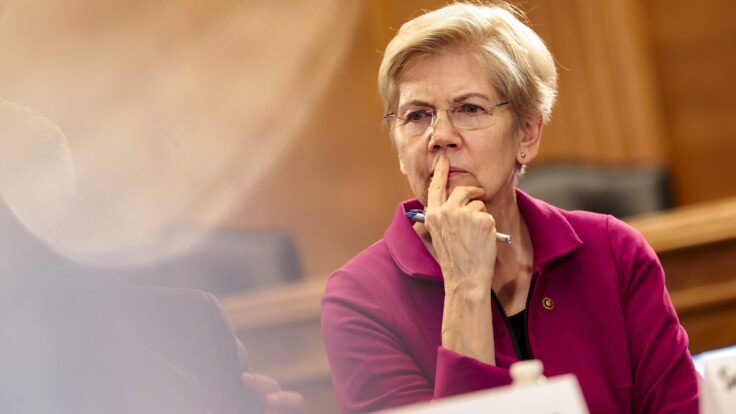
the most hated senator is...: For a while it was Ted Cruz. For much of the second Trump administration, it’s been Rand Paul. Now, Mike Lee is emerging as the most despised senator in the Republican conference. “[John] Thune needs to shove Mike Lee in a locker,” one Trump ally in the Senate told me.
The Utah Republican has been agitating to pass the SAVE America Act—President Trump’s
pet voter ID bill—and to alter the filibuster to do it, even if that means instituting a weeks- or months-long talking filibuster. Of course, Thune has said repeatedly that he doesn’t have the votes for that. But Lee continues to fundraise off the issue and to castigate his colleagues via his endless online trolling. What has truly infuriated Senate Republicans, however, is that Lee has raised expectations among an uncompromising base that it’s possible to pass the bill, and that failure would
be a dereliction of duty. In reality, it’s difficult to find a senator who believes there are enough votes to change the filibuster or pass the bill.
For all of Lee’s public saber-rattling, though, he has made little effort to build internal consensus. He has not pressed the case for the SAVE Act or a talking filibuster during the multiple closed-door lunches that Senate Republicans hold each week, according to a Republican source. On the contrary, when Republicans have raised
questions in these private settings, Thune has yielded to Lee—but Lee hasn’t engaged. Nor has he attempted to manage what would be a complicated Senate floor process—which would be a sign that he was actually serious about the issue—sources say, reinforcing the view among colleagues that he is cynically engaged in an attention-seeking, money-driven effort to raise his profile.
Lee has also called for the Senate to remain in session during the two-week recess to pass D.H.S. funding and
continue working on the SAVE America Act—or, failing that, for Trump to summon Congress back to Washington. Yet even as he harangues his colleagues to return, Lee himself has left town. One Trump ally speculated to me that Lee may believe his posture will help him get nominated for the next open Supreme Court seat. That would be a unanimous confirmation, one G.O.P. Senate aide joked, because people want him out of the Senate.
|
|
|
|
146 dogs fostered in 6 hours. And it all started with one Facebook post. When a truck crashed into Kanawha Rescue, 146 dogs needed homes — fast. The community mobilized on Facebook, Instagram and WhatsApp, and fostered every dog in just 6 hours. Over 3.5 billion people connect to what matters every day across Meta apps.
Learn more. |
|
|
|
- Johnson
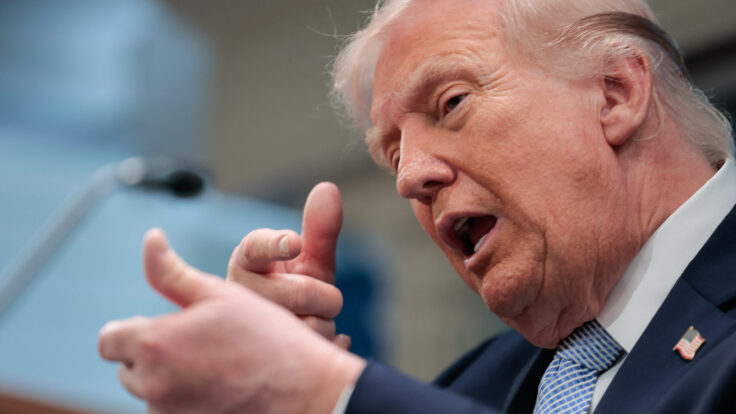
and Thune’s ICE-capades: It looks like the D.H.S. shutdown might end soon. In a Truth Social post today, Trump gave Congress a deadline of June 1 to pass funding for the department, essentially calling on the House to take up the bill they initially torpedoed after it was unanimously passed by the Senate. In the end, everyone lost: Sure, Johnson caved by taking up the Senate bill, but Senate Republicans’ problems aren’t over, and Democrats were shut out entirely.
Shortly thereafter,
Speaker Mike Johnson and Leader John Thune provided more details about their plan. Republicans would proceed on “two parallel tracks: through the appropriations process and through the reconciliation process.” In practice, that means advancing the Senate bill that zeroes out funding for ICE and Customs and Border Patrol, while simultaneously pursuing a party-line reconciliation bill that would fund those agencies for three years—the remainder of
Trump’s term—which would void any Democratic leverage to make changes to D.H.S. and C.B.P. But reconciliation is not easy. They’ll have to find money to pay for it, and Republicans will face an onslaught of tough votes on Democratic amendments.
|
Now on to the main event… |
|
|
|
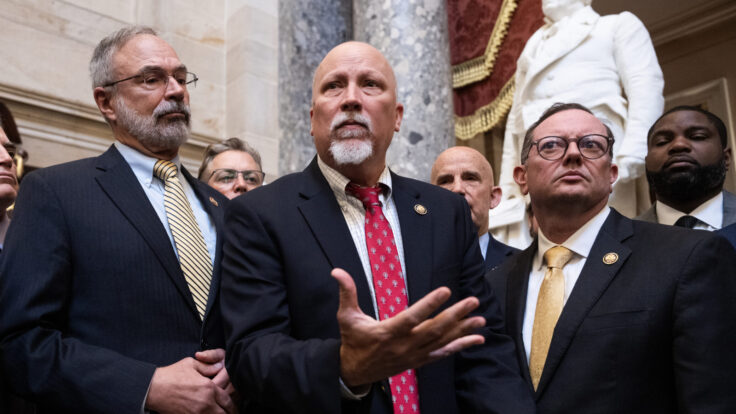
Speculation is building around who could replace Mike Johnson as Republicans’ leader in the
House if and when the party finds itself in the minority. And there are already four names on the theoretical shortlist. |
|
|
|
It’s that time in the cycle—seven months before the midterms, in a less-than-ideal political environment—when
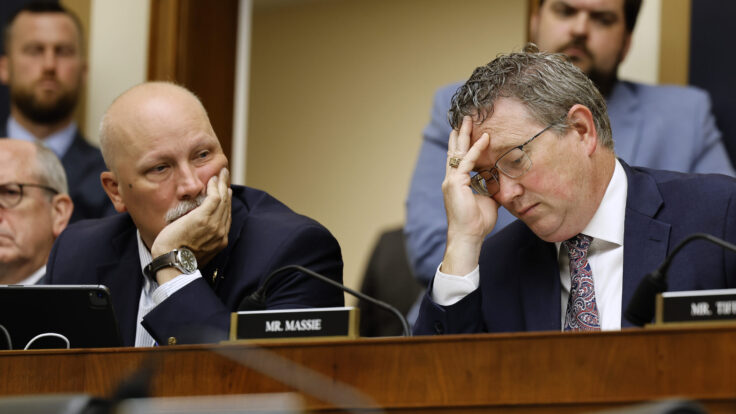
angsty House Republicans begin contemplating life in the minority. It’s a grim picture: Committee chairs become ranking members without subpoena power, legislating is downgraded to messaging, staff budgets shrink, and leadership slots evaporate. Naturally, against that backdrop, Republican chatter about the fate of Speaker Mike Johnson has only intensified.
Johnson, the happy warrior capable of spinning nearly any question or contradiction into a polished defense, has managed to hold the
speakership for two and a half years, a feat that has surprised both critics and allies. He is, after all, an accidental speaker—the only member willing to step forward after an unruly conference deposed Kevin McCarthy and rejected Majority Leader Steve Scalise, Whip Tom Emmer, and Judiciary Committee Chair Jim Jordan. Exhausted by infighting and endless ballots, Republicans begrudgingly settled for Johnson. In the end, he’s
been the rare rebound who lasted. |
|
|
|
Meta apps connect over 3.5 billion people to what matters every day. When a truck crashed into Kanawha Rescue, 146 dogs needed homes — fast. The shelter posted a plea for help on Facebook. “Word spread on Facebook, Instagram and WhatsApp,” says Devon. “Our community fostered every dog in just six hours — and I got my new pup, Jane.” See Kanawha Rescue's story. |
|
|
|
But the job has taken its toll. Johnson entered the role with little awareness of its demands:
chaperoning a divided conference, serving as therapist and school principal to more than 200 members, keeping up with the relentless fundraising obligations—and fielding constant late-night phone calls from the insomniac-in-chief. He has often been more adroit at managing up than down, an essential skill for a man whose political power derives almost entirely from the president’s approval. Of course, his resilience has come at the expense of Congress itself. With the exception of the One Big
Beautiful Bill, his legacy will likely be defined by his decision to make the institution less relevant than ever.
Despite the strain, Johnson is “focused on winning the majority, and I don’t think he spends one second thinking about being in the minority,” a person familiar with this thinking told me. Much, however, depends on the outcome of the midterms. Amid rising energy prices, a destabilizing war with no apparent off-ramp, and persistent cost-of-living concerns, the outlook for
House Republicans is bleak. If the party loses power, many expect a leadership shake-up.
History is not on Johnson’s side—speakers rarely survive the loss of a majority. Republicans hadn’t even lost in 1998 when then-Speaker Newt Gingrich resigned following an underwhelming midterm performance. Dennis Hastert stepped down after Republicans lost control in 2006, and Paul Ryan retired ahead of anticipated G.O.P. losses in 2018. Johnson, who
was elected largely because he had few enemies, has endured a fraught tenure largely because he also has few friends. And several of his confidants, including Vern Buchanan and Dusty Johnson, are retiring at the end of the year. (His B.F.F. Drew Ferguson retired last cycle.)
Internal opposition to Johnson has also been persistent. Rep. Marjorie Taylor Greene attempted to vacate him not long after his leadership election,
only to be thwarted with Democratic support. She tried again, and failed again, as her final act in Congress. Rep. Elise Stefanik further riled up skeptics after Johnson played a role in derailing both her nomination as U.N. ambassador and her short-lived run for governor of New York.
Still, Johnson’s speakership has exceeded expectations. One of his most politically astute moves was aligning early with Trump during the latter’s comeback bid, positioning
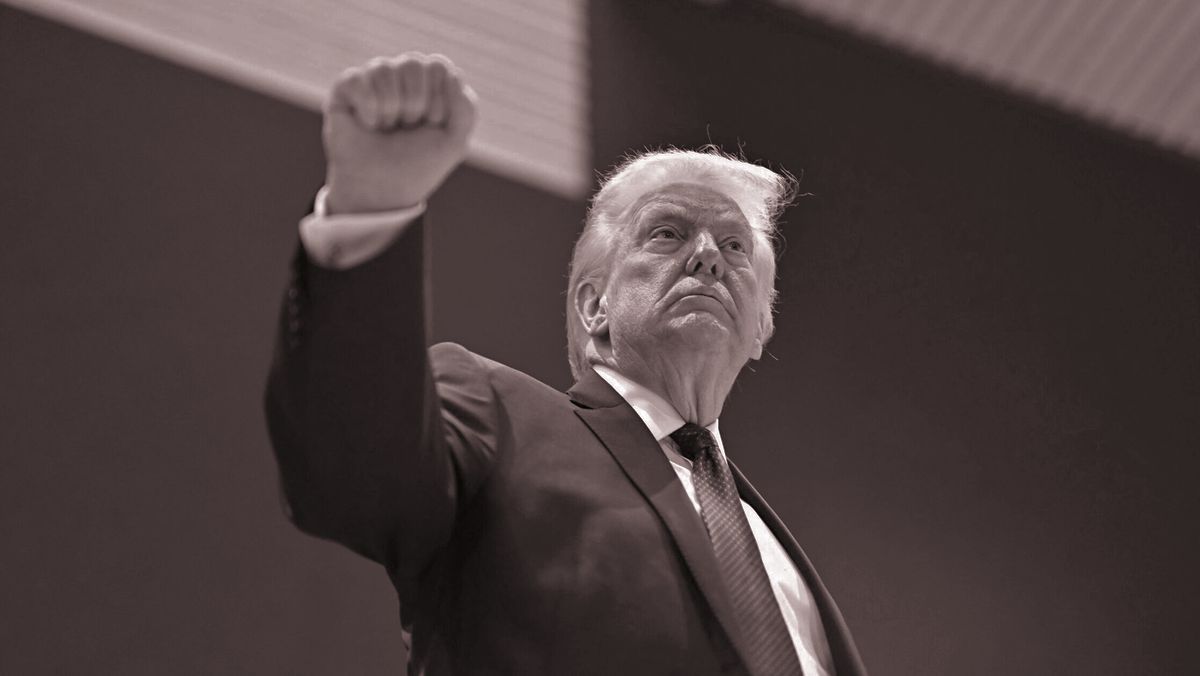
himself as a loyal partner and defender. That alliance proved decisive in 2024, when Trump personally called holdouts to secure Johnson’s reelection as speaker. Johnson has raised more money than any speaker before him—a whopping $82 million in 2025—which plays extremely well with members. And he’s gotten Trump’s agenda passed through a narrowly divided House, albeit with the strength of Trump’s influence.
But that same close alignment with the president is now generating backlash. Some
Republican members grumble that Johnson has prioritized his standing with Trump over protecting the rank-and-file, effectively handing power to the White House through mechanisms like rescissions and trade policy, as I’ve documented repeatedly.
“Members are increasingly frustrated at how Congress is ceding its authority to the executive and are viewed simply as a whip number,” one senior Republican aide told me this week. “If the majority flips, Johnson will be gone.” (Johnson’s office declined to comment for this story.) |
|
|
|
Even Trump may not be able to save him. While the president has defended Johnson in public time and again,
leadership elections in the minority are conducted by secret ballot—shielding members from presidential pressure. The dynamic that preserved Johnson during the chaotic 15-round public speaker vote in 2023 would no longer apply: Trump would be in the dark. |
If Johnson stumbles, plenty of Republicans are eager to take the reins. Scalise, Emmer, and Jordan would no
doubt put themselves forward again as contenders. Each would enter the race having had nearly three years to repair relationships, strengthen their standing within the conference, and burnish their Trump bona fides.
Scalise, a fellow Louisianan and longtime mentor to Johnson, has spent a decade in leadership—experience that could prove an asset or a liability, depending on the mood of the conference. Ditto his close relationship with Johnson. Scalise has also cultivated a strong
relationship with Trump and is himself a prolific fundraiser, having brought in $35.5 million during the off-year of 2025. He has survived both a 2017 shooting at a congressional baseball practice, as well as cancer diagnosed in 2023, and while his health has stabilized, some members remain concerned about it. Still, his deep support among Southern Republicans gives him a robust base of influence.
Emmer, meanwhile, has built extensive relationships across the conference through his tenure
as N.R.C.C. chair during the 2020 and 2022 cycles, and as whip. Though Trump helped derail Emmer’s previous speaker bid, the president now frequently points to him as a reliable fixer. “He gets [problems] solved,” Trump said at the recent G.O.P. retreat. “I would think given his close relationship with Trump, Emmer would make the most sense,” a Trump ally told me. Emmer has faced resistance from social conservatives over his past vote for the Respect for Marriage Act, which federally recognized
same-sex marriage, though he has since taken strongly anti-trans positions. He is widely regarded as a straightforward operator—something members appreciate in tense moments—and another strong fundraiser, having rustled up nearly $30 million this cycle.
And then there’s Jordan, the founding member of the House Freedom Caucus turned team player, who remains a significant contender. Though he was once closely aligned with Trump, his relationship with the president has been less prominent of
late. Jordan has also engaged in some notable shifts. Over the past three years, he’s evolved into a major N.R.C.C. donor after initially refusing to support the committee, and has spent the past two years campaigning for his colleagues, even the ones who aren’t ideologically aligned. Perhaps most striking is his reversal this past month on FISA, the Foreign Intelligence Surveillance Act, which he had long criticized on civil liberty and privacy grounds. He now supports a clean extension,
echoing Trump’s position, after years of demanding strengthened guardrails.
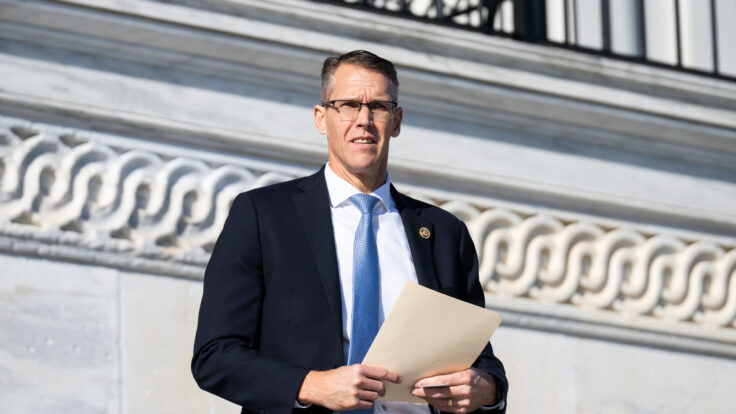
I’m also told there may be dark horse candidates. Among them is Texas Rep. August Pfluger, chair of the Republican Study Committee, historically a stepping stone to leadership, including for Scalise and Johnson. One well-placed Republican source described Pfluger as highly ambitious, noting that colleagues believe he is already maneuvering for a leadership slot. (His office did not respond to
requests for comment.) And the jockeying is only just beginning. |
|
|
|
Join Emmy Award-winning journalist Peter Hamby, along with the team of expert journalists at Puck, as they let you in on the
conversations insiders are having across the four corners of power in America: Wall Street, Washington, Silicon Valley, and Hollywood. Presented in partnership with Audacy, new episodes publish daily, Monday through Friday. |
|
|
|
Unique and privileged insight into the private conversations taking place inside boardrooms and corner offices up and down Wall
Street, relayed by best-selling author, journalist, and former M&A senior banker William D. Cohan. |
|
|
|
Need help? Review our
FAQ page or contact us for assistance. For brand partnerships, email ads@puck.news.
You received this email because you signed up to receive emails from Puck, or as part of your Puck account associated with {{customer.email}}. To stop receiving this newsletter and/or manage all your email preferences, click here.
|
Puck is published by Heat Media LLC. 107 Greenwich St., New York, NY 10006 |
|
|
|
|



_01KJAZQ9QGMZDGW0VZDD2Z69GS.png "Meta")