 |

|
|
Welcome back to The Best & The Brightest. I’m Peter Hamby.
|
|
In today’s edition, my candid conversation with Vice President Kamala Harris, whom I interviewed over the weekend for my Snapchat show, Good Luck America. Harris and I met up in Arizona, where she was campaigning on abortion rights ahead of November. But in our conversation, I was struck by her empathetic tone on Gaza, and her acknowledgement that the Biden campaign can’t talk about the economy “like an econ lecture.” But more than anything else, having spent time with her in the past, I was impressed by what felt like a newfound confidence and her obvious growth as a politician. More on that below…
But first, here’s Abby Livingston with the latest chatter from Capitol Hill…
|
|
A MESSAGE FROM META
|

|
|
The world faces a shortage of skilled tradespeople.
Today, students at the skilled trades school RSI use the metaverse to gain hands-on welding experience and develop the exact muscle memory they need.
Making quality training more accessible helps combat a global shortage of welders.
Explore the impact of the metaverse.
|
|
|
| TikTok Wars & Johnson’s Margin |
|
This week, the Hill is facing yet another lineup of controversial hearings, paralysis over Ukraine, and looming government funding deadlines. But remarkably, Congress is attempting something new: passing ambitious legislation that would essentially force TikTok’s Chinese parent company to divest the app or else find it banned in the U.S. Here’s why many on the Hill want to move fast, and why Ken Buck has delivered leadership its latest curveball:
- Reality Bytes: One of the more fascinating aspects of Capitol Hill’s TikTok debate is how much more urgently the House is moving than the Senate. In the lower chamber, leaders from both parties are doing everything they can, politically and procedurally—and with the help of classified intelligence briefings—to pass their bill as quickly as possible.
Interestingly, the House legislation—which is expected to pass with the two-thirds vote needed to fast-track it—got a lukewarm reception in the Senate. Commerce Committee Chairwoman Maria Cantwell took issue with the House’s version, as did several other senators. These concerns are thoughtful, and consider potentially unforeseen consequences. After all, that’s what the “saucer” of the Senate is supposed to do.
But in some ways, the approach feels out of place in 2024. House leaders’ stated aim is to move faster than TikTok’s well-heeled opposition. I also get the impression that this newfound alacrity comes from the House’s recognition (and fear) of its own inherent instability—to say nothing of Trump’s recent decision to enter the fray by reversing his previous anti-TikTok position after a meeting with G.O.P. megadonor Jeff Yass, who has a 10-figure stake in ByteDance, the app’s parentco.
For now, plenty of conservative Republicans are openly defiant in their support for a TikTok divestment, but it’s still early. Recent history has taught us that a bipartisan consensus can quickly disintegrate once interest groups and Trump get involved. House members seem to understand this, but the Senate might need another lesson—even after last month’s immigration reform debacle.
- Bucked up: Colorado’s Ken Buck is resigning from the House, further eroding Mike Johnson’s wafer-thin majority and making him the sixth rep this term to step down. Members have cited a number of creative reasons for leaving mid-term—health/family issues, a new job, getting ousted as speaker—even though only the former has been considered legitimate in the past. It’s unclear whether early exits are becoming more socially acceptable, or if many members are simply out of fucks to give. Many signs point to the latter, especially given that each Republican resignation boosts the odds that control of the chamber could flip before next January. And if resignations continue into the spring and summer, some jurisdictions are going to dispense with the cost and hassle of a special election and just wait until the general, meaning that these seats could stay vacant for months.
As things stand now, Buck’s exit will reduce the G.O.P.’s margin to five, 218-213, before next week’s special election to replace Kevin McCarthy. If a single candidate in the safe Republican district can clear 50 percent of the vote, that person wins the seat outright. If no one captures a majority, the seat will stay open until May, when the top two vote-getters face off in Round 2. And it will get even worse for Republicans: Democrats will likely pick up a seat in another upstate New York special election in late April.
|
 |
| The Kamala Comeback |
| A candid conversation with Vice President Harris as she reclaims the campaign spotlight alongside Joe Biden and fights to change the narrative surrounding her own place in the White House. |
|
|
|
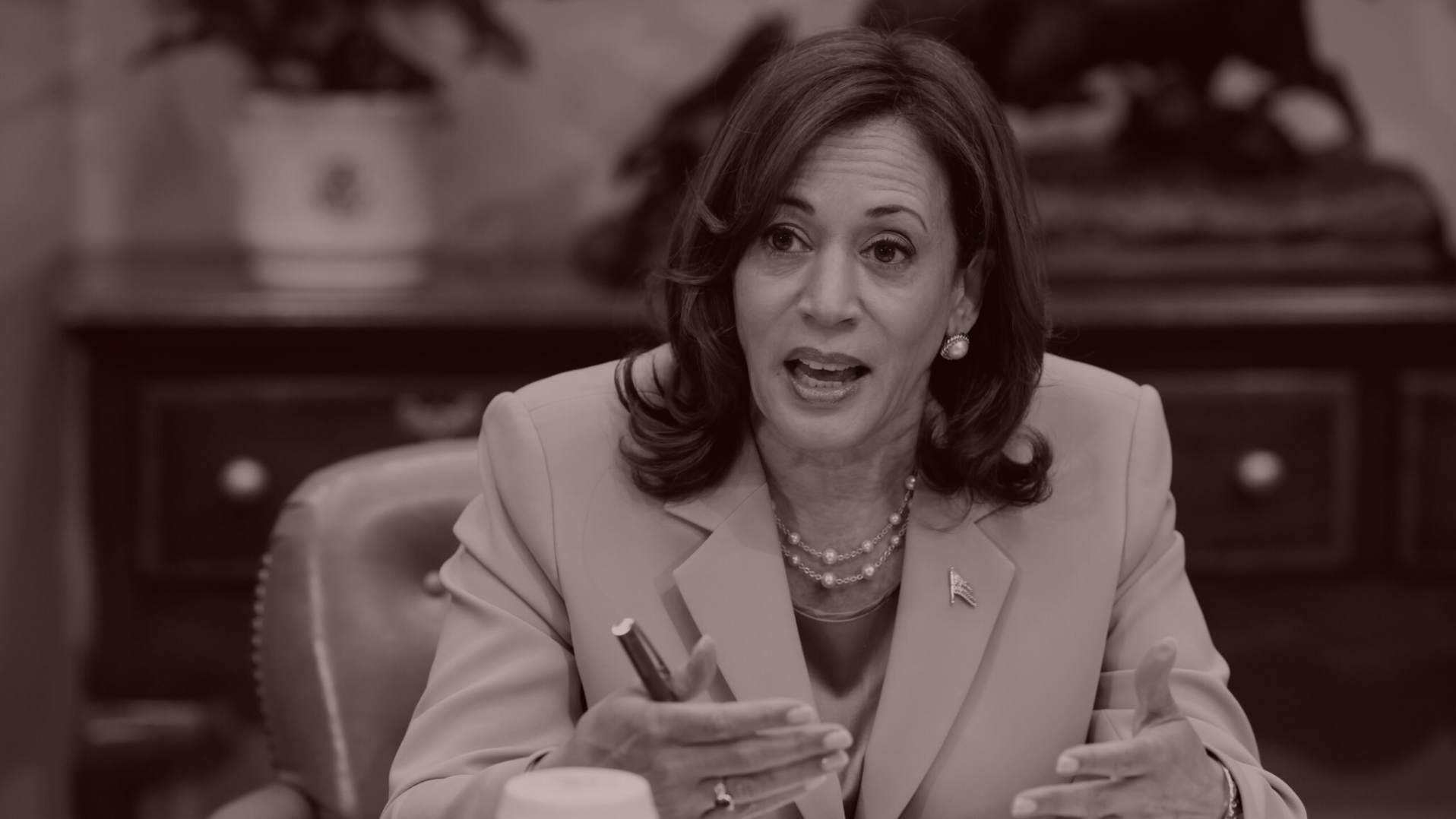
| Kamala Harris was loose and punchy when I caught up with her last Friday afternoon in Phoenix. Maybe it’s because a fiery President Biden surpassed expectations in the previous night’s State of the Union address, temporarily calming Democratic fears about his age and re-elections chances. Maybe it’s because Harris was also on the way home to Los Angeles for the weekend. Or maybe—as my partner Matt Belloni reported—she was hyped to hit a schmoozy Oscars pre-party on Saturday at the house of CAA C.E.O. Bryan Lourd, where she was fawned over by J.J. Abrams and Barry Diller.
Whatever the reason, the vice president was as confident and no-bullshit as I’ve ever seen her, a far cry from the early days of the administration, when she came off as cautious and insecure in the job, as Veep-y as it gets. I was interviewing Harris for my Snapchat show, Good Luck America, on a range of topics including abortion, the cost of living, the war in Gaza, and the work she and the president need to do to win over Black and Gen Z voters. (The interview is airing today, Tuesday, and Wednesday on Snapchat—please go check it out).
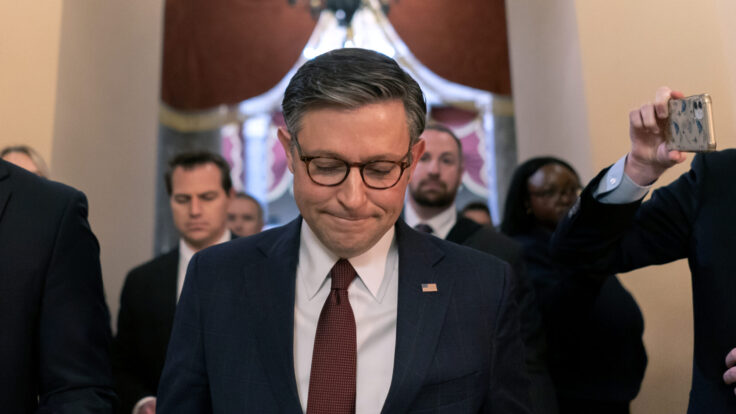
Biden’s speech, she told me, was a shot in the arm for an administration grappling with historically low approval ratings in a reelection year. “We’ve got momentum,” Harris said. We chatted, too, about how the online reaction to the address and attendant pomp and circumstance made for maybe the best internet day of the Biden presidency. Across social media, viewers were roasting House Speaker Mike Johnson’s sour-faced reactions, Biden’s slack-jawed expression upon seeing Marjorie Taylor Greene’s clownish MAGA outfit, and Katie Britt’s cringey SOTU response from a dark, completely empty kitchen in Alabama. Almost all the reaction online was pro-Biden, much to the White House’s pleasure. “We’re meme-able,” Harris joked. She also laughed when I asked about her rapport with Johnson before and during the speech. “Full of chemistry,” she deadpanned.
Harris was in Arizona, one of the nation’s swingiest swing states, as part of the administration’s post-SOTU push to sell its accomplishments to a wary (and weary) American public. In the first year of the Biden administration, the V.P. was tasked with slowing the tide of U.S. border crossings, But recently, Harris has been handed a less fraught portfolio: hitting the campaign trail to mobilize women and younger voters around the fight for abortion rights, arguably the Biden campaign’s most powerful cudgel in their battle with Donald Trump this year.
At a south Phoenix community center, flanked by massive signs reading “Trust Women” and “Fight for Reproductive Freedoms,” Harris addressed about 200 Democrats, most of them women, many of them Black and Latina. It was a 15-minute speech about abortion, abortion, abortion—and almost nothing else. “There is nothing hypothetical about this moment,” she said. “Today in America, one in three women of reproductive age lives in a state with an abortion ban. That number is even higher for Latinas. Forty percent of Latinas live in a state where abortion is banned, including right here in Arizona.” (N.B.: Abortion isn’t totally banned in Arizona; Republican legislators banned the procedure after 15 weeks.)
In our conversation, I pressed Harris on what the administration can actually do to protect abortion access at the federal level, given that the policy fights are mostly playing out in the states following the demise of Roe. v. Wade. She admitted it’s all contingent on Democrats keeping the White House and Senate, and winning back the House—a tall order for the party this November. “What the court took away, Congress has the power to put back in place,” she said. “If we have the votes in Congress and they pass a bill, Joe Biden will sign the bill and put back into place a law, a federal law, a national law that protects reproductive choice. And that’s really the bottom line. We have an election coming up in about eight months, and who sits in the White House matters.” |
|
A MESSAGE FROM META
|
|
|
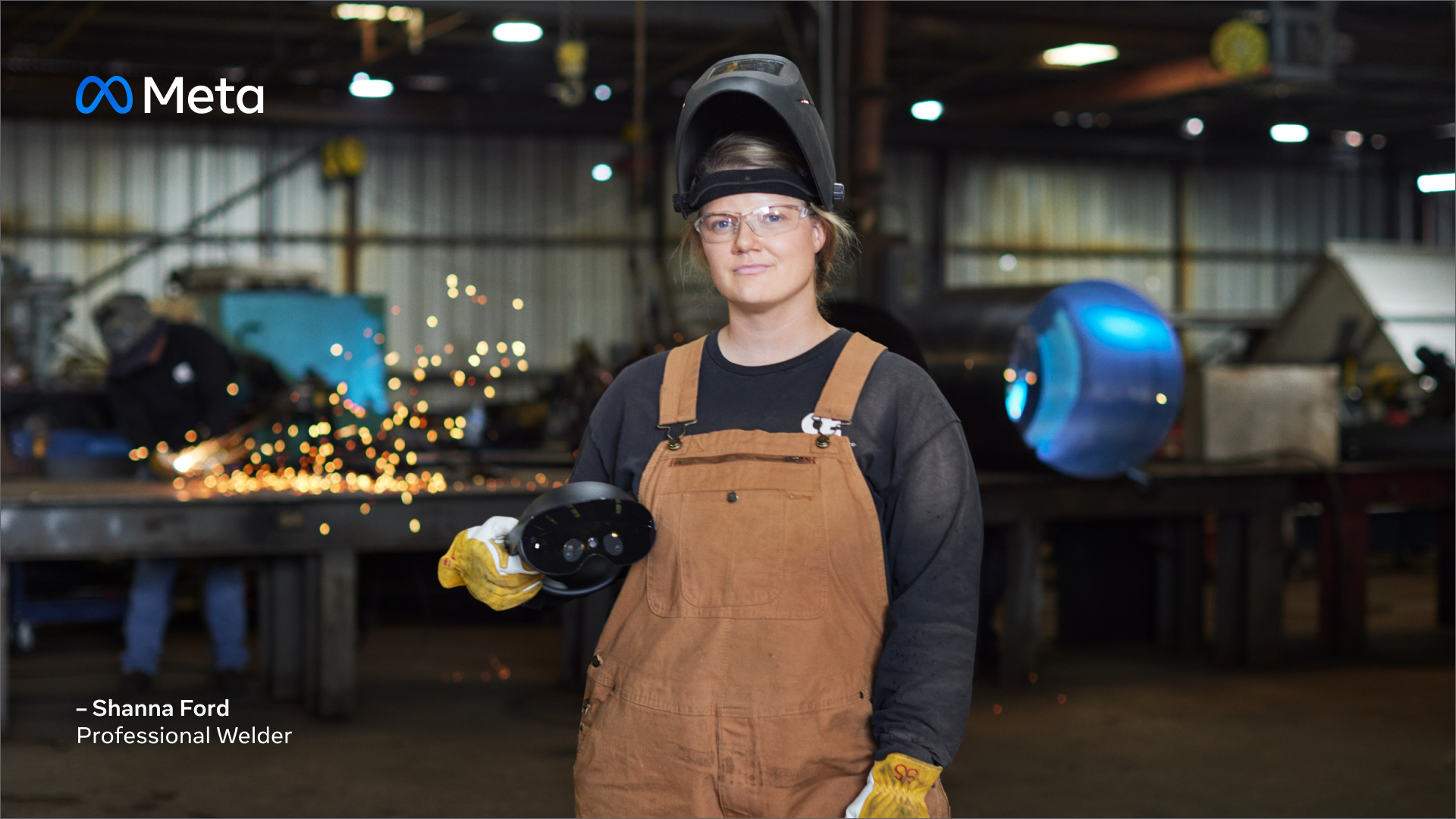
“The more muscle memory that you have, the smoother your weld is.”
Shanna Ford gets high-quality welding practice with a VR training platform powered by ForgeFX. When training is more accessible, welders can practice over and over again to improve their skills and advance their careers.
Discover other stories.
|
|
|
|
|
| The crowd, I noticed, was composed mostly of local elected officials, Democratic Party staffers, and various community leaders and activists, including several people involved in the effort to get a measure protecting abortion access on the Arizona ballot this November. Everyone in the room seemed to know each other. With the administration’s events being hounded by pro-Palestinian protestors since the attacks of October 7, Biden and Harris staffers have kept details of their travels mostly private, inviting only hand-picked local Democratic leaders in hopes of avoiding gatecrashers screaming about the war in Gaza. It mostly worked on Friday. Only one protester managed to sneak into the Harris event, yelling out midway through her speech, “What about the women in Palestine having C-sections without anesthetic?” The woman was quickly shouted down and escorted out.
Keeping campaign events invitation-only seems unsustainable in an election year, though. And two core voting demographics crucial to Biden in November—younger voters and Black voters—continue to express frustration with the administration’s ongoing support for Israel’s war against Hamas. Even as he pushes for a ceasefire and increased humanitarian aid to the Palestinians, Biden has at times come off as tone-deaf regarding the misery in Gaza, where an estimated 30,000 people have died. Harris, it’s been reported, has been a strong advocate for the Palestinians in White House meetings. And she sounded that way when I asked her about the war.
I was curious about her response to leaders from the A.M.E. Church—perhaps the nation’s most prominent Black Christian organization—who recently called the war “a mass genocide” and advocated ending U.S. aid to Israel. Harris was clearly pained when discussing the conflict. “Our position began with, and we maintained that, Israel has a right to defend itself, but how it does so matters,” Harris told me. “In the weeks and months since October 7, we’re now seeing a humanitarian catastrophe in Gaza. How could anyone who has any level of empathy not be deeply pained by what we are seeing in terms of the human suffering that’s happening in Gaza? I hear and understand everyone's frustration. I recently called for a ceasefire for at least six weeks while we aim to, and hopefully will, get a hostage deal.”
She continued: “Palestinians have a right to self-determination. They have a right to dignity, and we’re going to have to work on that. Emotions are high, understandably. We’re seeing incredible suffering. What I hope is that we can all agree on certain principles that are a priority for all of us. I believe everyone wants—I certainly do want—this conflict to end as soon as possible.”
Of course, as we saw in Michigan, voters are willing to turn out—or not—over the administration’s approach to the crisis in Gaza. But Harris and Biden face a serious enthusiasm gap in this election: Key voting demographics—crucially, those same young voters and Black voters—simply aren’t as excited to cast ballots as they were four years ago. There are myriad reasons behind this, including a sense that the current administration has not followed through on certain key promises, and a pervasive impression that the economy simply isn’t doing well, thanks to pocketbook pressures like the rising cost of rent and high grocery prices.
When I prodded Harris about the administration’s narrative problems, she recognized that they represented a challenge: “No one wants to hear an econ lecture, and I appreciate that,” she told me. “We have actually corrected a lot of what was heading in a really bad direction during Covid in terms of unemployment. Unemployment is at historic, record lows. Wages have now outpaced inflation. Those are the facts. However, that doesn’t mean that people are still not struggling. Affordable housing is one of the biggest issues of our time. Part of why we are seeking re-election is to really take that on in a significant way.” |
|
|
|
|
| Harris has been more visible lately, championing issues that play to her strengths, with direct appeals to women and voters of color on issues they care about. In this election year, she is clearly starting to feel more comfortable in her twin roles as vice president and the president’s top surrogate on the campaign trail. I was struck by her comments and positioning on Gaza, which feel authentic to her, but also politically astute—a way, perhaps, for the administration to deflect some of the scrutiny on Biden and his national security team, and to show a little more empathy toward the Palestinians. Whether she can heal the wounds opened up by the war in Gaza, with constituencies that she can relate to perhaps more than Biden, won’t be known until November. But my biggest observation about Harris after leaving her in Arizona was that—as a politician—she’s better than she’s ever been.
My last question for Harris, of course, was whether she’s ready to step into the job of president, whether that time comes after a second Biden term, or sometime before. Her answer was basically: Duh. She told me she’s met with more than 150 world leaders—“presidents, prime ministers, chancellors, kings”—a crash course in foreign policy experience over the last three years. With apologies to the likes of Gretchen Whitmer and Gavin Newsom, would any other ambitious Democrat in the party bring those kinds of credentials to a future presidential campaign?
Harris is not perfect, but her profile and stature have changed fundamentally since 2020, when her listless White House campaign left many Democrats‚ and many in the media, underwhelmed. And despite her early whiffs as Biden’s vice president—which I’ve documented, as have many other reporters—she’s now got a bounce in her step that feels new. “I’m the 49th vice president, the first one that looks like me, so maybe people are trying to wrap their heads around that, too,” Harris told me. “But every vice president understands the seriousness and the significance of this position, which is to be ready. The president can be in one place at one time doing many things, certainly. But the vice president is there to serve, as somebody who can be there when the president can’t.” |
|
|
|
| FOUR STORIES WE’RE TALKING ABOUT |
 |
|
 |
| Matches Murmurs |
| Scrutinizing the retailer’s dreadful bankruptcy. |
| LAUREN SHERMAN |
|
 |
| NFL Fantasies |
| An inside account of Roger Goodell’s plan for an 18th game. |
| JOHN OURAND |
|
 |
| Britt V.P. Odds |
| Plus, a post-mortem on Biden’s punchy SOTU speech. |
| ABBY LIVINGSTON |
|
|
|

|
 |
|
|
|
Need help? Review our FAQs
page or contact
us for assistance. For brand partnerships, email ads@puck.news.
|
|
You received this email because you signed up to receive emails from Puck, or as part of your Puck account associated with . To stop receiving this newsletter and/or manage all your email preferences, click here.
|
|
Puck is published by Heat Media LLC. 227 W 17th St New York, NY 10011.
|
|
|
|