 |

|
|
Welcome back to The Best & The Brightest. I’m Abby Livingston, filling in for Peter Hamby while he prepares something extra special for your inboxes tomorrow.
In tonight’s edition, a readout on how Biden’s SOTU speech is reverberating through the Capitol (and, of course, how Republicans are processing Katie Britt’s whispery, theater-camp response).
But first….
- Why does everybody hate TikTok?: As everyone knows, the House now is expected to move forward on legislation that would essentially ban TikTok in the U.S., unless the app is spun off from its Chinese parent company, ByteDance. Obviously, it was a big deal that the House Energy and Commerce Committee voted unanimously last week to move the legislation forward. Almost nothing happens unanimously in Washington these days.
My sources in the committee were justifiably defensive about this framing, arguing that Energy & Commerce has been passing bipartisan, albeit less intriguing, bills all term. Moreover, this legislation has been in the works for more than a year. And while Democratic members nearly always bring up TikTok’s ability to shape perception of the Israel-Gaza war, they have also repeatedly told me they were on this track prior to October 7.
Regardless, a key catalyst here appears to have been the classified briefing held by administration officials just prior to the committee vote. Whatever was said in that room clearly motivated members. TikTok, whose comms strategy is led by the formidable former top Disney flack Zenia Mucha, subsequently launched a campaign to encourage its users to call their congressional offices to stop the “ban” on the app. But the tactic quickly and obviously backfired, enraging members and only confirming their suspicions about TikTok’s undue power over young people—including minors who can’t vote.
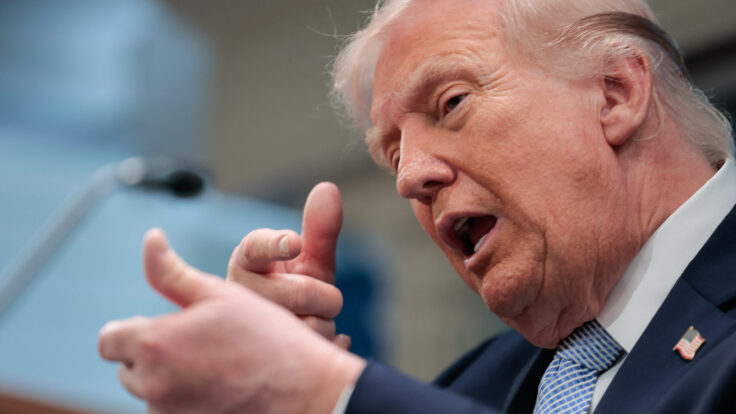
Will it matter that Donald Trump has apparently reversed his anti-TikTok stance, after a friendly meeting with Republican megadonor and ByteDance investor Jeff Yass? After a round of calls on Monday, my sources were uncertain about whether he can derail the bill, itself. Source after source credited the bipartisan teams of Mike Gallagher (R-WI) and Raja Krishnamoorthi (D-IL) on the China select committee, and Cathy McMorris Rodgers (R-WA) and Frank Pallone (D-NJ) at Energy & Commerce, for their lockstep approach. Enjoy it while you can—both Gallagher and McMorris Rodgers are retiring this year.
|
| And now, fresh legal notes from my partner Eriq Gardner on Trump’s upcoming criminal trial in New York… |
|
A MESSAGE FROM META
|

|
|
Cataracts are the primary cause of avoidable blindness.
FundamentalVR and Orbis International created a VR training platform that helps surgeons practice cataract surgery.
As a result, more surgeons have access to the training they need to treat cataracts around the world.
Explore the impact of the metaverse.
|
|
|
- Trump’s “catch and kill” strategy: In just two weeks, Donald Trump is set to begin the first and most salacious of his upcoming criminal trials—facing down a New York jury over 34 felony charges regarding his hush money payments to porn actress Stormy Daniels. The basic facts of that case are largely undisputed: In October 2016, just before the presidential election, Trump instructed Michael Cohen, his erstwhile lawyer, to arrange a $130,000 payment to buy Daniels’ silence about an alleged affair.
More crucially, however, was the intent behind the payment. Manhattan District Attorney Alvin Bragg contends that it was to hide “damaging information from the voting public during the 2016 presidential election”—essentially escalating a dispute over falsified business records to a felony. (Cohen already served time in prison for his involvement.) Trump’s attorneys argue that it was simply to save face.
Of course, the scandal may not end there. Bragg is now vying for permission to introduce evidence about “catch and kill,” an age-old practice prevalent in certain sketchy corners of the media industry, wherein a publisher might use a non-disclosure agreement to acquire sensitive information, and then bury those secrets to shield someone. To wit: Trump allegedly worked with American Media Inc., the publisher of the National Enquirer, to catch and kill multiple accusations of extramarital affairs. AMI has admitted to making payments to individuals, like former Playboy playmate Karen McDougal, to unlawfully influence the 2016 election—a revelation that led to a non-prosecution agreement with the Department of Justice. AMI president David Pecker, who previously testified before the grand jury, may be called upon again to shed light on these past dealings with Trump.
Trump’s legal team—led by attorneys Todd Blanche and John Lauro—is arguing that “catch and kill” has no place at trial. They contend that the term will prejudice the jury and, at least for now, that these other hush deals are too unlike the payment to Daniels to be relevant. (It’s unsurprising that their first impulse is to ensure the jury doesn’t hear about uncharged conduct. That’s Defense Lawyering 101.)
Prosecutors, meanwhile, want testimony about “catch and kill” in order to bolster their case about Trump’s motives. They believe it shows a modus operandi and relates these transactions to each other. Perhaps most importantly, it’d allow for the introduction of AMI’s admission of an election crime in the payoffs. Should this topic be deemed relevant by Judge Juan Merchan, Trump’s legal team may need to pivot. —Eriq Gardner
|
|
|
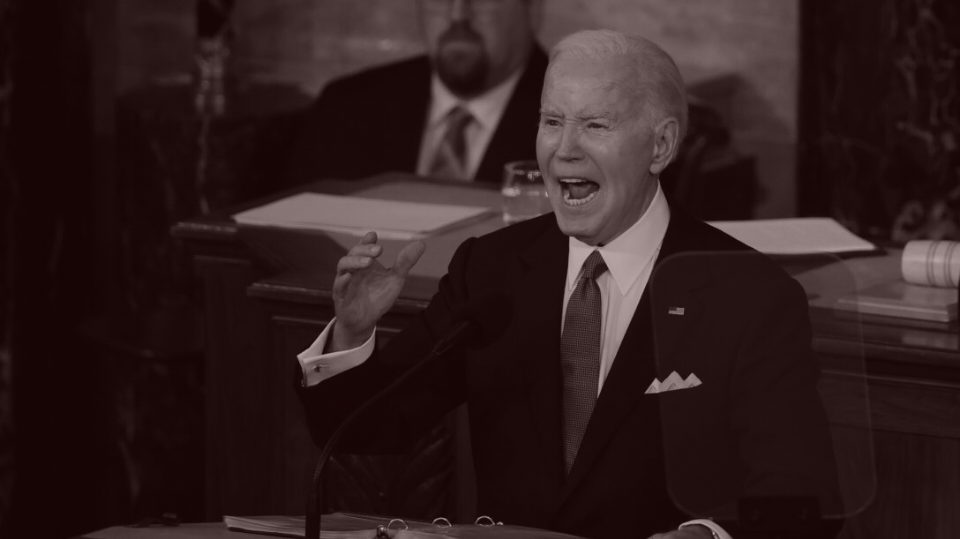
| It’s been four whole days, and Joe Biden’s surprisingly punchy State of the Union address is still reverberating among Democrats in Washington. Yes, the agitation is partly due to the president’s spontaneous usage of the word “illegal” in a back-and-forth with Marjorie Taylor Greene—a gaffe that bothered almost nobody outside the Congressional Hispanic Caucus and younger progressives, and the White House officials who were tasked with cleaning up the mess. But for most Democrats, the speech was a smashing success (and, honestly, an enormous relief). In conversations with two members, each independently volunteered the word “electric” when describing the mood inside the chamber.
Republicans argued to me that Biden’s SOTU speech will likely be the high-water mark of his campaign. Perhaps that is true—yes, yes, November is light-years away—but the speech seems to have catalyzed a fundamental shift among Democrats on Capitol Hill. A week earlier, it wasn’t uncommon to hear doubt, even despondency, among the president’s allies. And there are still plenty of Democrats who fret about Biden’s underwhelming polling, worryingly high unfavorables, and the sandbag of it all. After his address, however, there’s a real sense not only that the election is winnable, but that Biden is the candidate to win it.
Many members told me that his performance felt akin to a rousing, the-game-is-on-the-line locker room speech, and that they’re ready to go full Braveheart. Sure, most members have no impact on presidential elections, but they can help with voter mobilization in tight swing states, serving as eyes and ears on the ground and playing the role of campaign surrogate. Anyway, a dark cloud has begun to lift…
Of course, the combination homerun/cringe-inducing speech is pure, vintage Biden—just not exactly the guy we’ve been observing for the past three years in the White House. For most of his presidency, given Biden’s history of verbal blunders, he’s been notably on-script and uncontroversial. The “illegal” gaffe happened during an impromptu riff, (and I’m hearing tensions within the C.H.C. have calmed since he apologized), but his improvisational handling of hecklers also made for one of the finest moments of his presidency. It will be intriguing to behold whether the Biden camp continues with the “Let Bartlet Be Bartlet” mantra. |
|
A MESSAGE FROM META
|
|
|

|
|
“VR let me practice hundreds of times before I operated on a patient.”
Dr. Baid used FundamentalVR and Orbis International's VR platform for additional training in a hands-on environment.
In the past year, Dr. Baid has performed 300 life-changing surgeries to preserve her patients' vision.
Discover other stories.
|
|
|
|
|
| Meanwhile, of course, the other D.C. chattering class obsession was the cartoonishly melodramatic State of the Union rebuttal delivered by Republican rising star Katie Britt, whose whispery, theater-camp performance—and the inevitable parody on Saturday Night Live—prompted more than a few hyperbolic conversations around the Capitol about whether her political career is over.
I doubt it: Britt, the new junior senator from Alabama, is 42 years old, talented, telegenic, and a suburban woman in a party that is notably underwater with… suburban women. It’s precisely why she was tapped to deliver the SOTU response. The internet will never forget, but the G.O.P. will give her another chance. Alas, this has happened before: A water bottle did not diminish Marco Rubio’s viability for the presidency (Trump and Chris Christie did that). Likewise, Bobby Jindal’s presidential run wasn’t derailed by his disastrous and widely panned rebuttal in 2009—although it certainly should have telegraphed earlier why Jindal was doomed to fail on a national level.
However, like many political observers, I was deeply puzzled by the execution. Britt almost certainly did not wake up on Thursday morning, pull out her laptop and ring light, and decide to deliver the response from her kitchen. A lot of people were surely involved in prepping her, and I wondered whether the setting reflected a chronic problem in politics: male consultants making decisions without feedback from their female peers. (I was wrong.) But one smart, plugged-in friend in politics pushed back on Friday morning, and wondered if the kitchen setting might actually bolster Britt’s standing where it matters. “The only thing that is breaking through is that the elite is making fun of a woman being in the kitchen,” the friend texted.
It is also remarkable that these SOTU responses still take place without an audience. In an attempt to avoid Jindal’s terrible optics, then-Virginia Gov. Bob McDonnell course-corrected the following year by delivering his response from the state Capitol—a setting that put him on near-equal footing with Obama, visually at least, and allowed him to adapt to the audience reaction in real time. It’s not a mystery why Britt opted for her kitchen, but an empty room is an unforgiving arena. |
|
|
| It’s conceivable that the Britt incident could have made the Sunday shows, and that would have been the end of it. But on Friday night, independent journalist Jonathan Katz delivered a devastating fact check on TikTok of her portrayal of a sex-trafficked migrant, during which Britt indirectly blamed the Biden administration for crimes that were committed outside of the United States, and during the George W. Bush administration. Still, this development took place heading into the weekend. What’s given this story real legs is the now-viral Scarlett Johansson send-up, which might end up rivaling Tina Fey’s Sarah Palin impression in its pop-culture breakthrough potential.
But even if this past week has no lingering effects on Britt’s trajectory, the sloppiness of this whole debacle—and specifically surrounding the border anecdote—speaks to much larger dysfunction within the Republican Party, and explains why these sorts of missteps and missed opportunities continue to stack up. The political class consensus is that the people around Britt failed her. But Britt is not the usual freshman senator—the former business executive or ex-governor or football coach who’s still figuring out where the bathroom is. She spent years as a Hill staffer, rising to serve as Senator Richard Shelby’s chief of staff.
Outside of perhaps some committee and House leadership roles, Senate chiefs tend to be the best and the brightest staffers on Capitol Hill. It’s the job then-political wunderkind Tim Russert held when he worked on the Hill, and plenty of other public and behind-the-scenes political stars have served in the same post. Besides leading a statewide political operation, one of the main obligations of a chief is to keep their boss out of this kind of trouble.
Whether or not the average American cares about a politician getting called out on a tall tale, it’s amazing this speech was not thoroughly fact-checked beforehand, especially given the platform. Granted, Trump has single-handedly obliterated the capacity for outrage over mischaracterizations. And it’s not to suggest that partisans have an altruistic devotion to fidelity in politics. On the contrary, the reason politicians traditionally fret over these landmines is because getting called out for an error—intentional or not—creates a distraction. (Britt attempted to spin the micro-scandal during a softball interview with Fox News, but her explanation was unconvincing.) Also, given how dysfunctional things are on the border, it’s a wonder this story even felt necessary.
Whether this will affect Britt’s standing in the Trump veepstakes remains to be seen, but it seems obvious that she still has a good chance at holding a lifelong seat in the Senate if she so desires (she’s a Republican from her home state, after all, a trait that’s becoming less and less common in G.O.P. senators and nominees). As a freshman, she landed a coveted slot on the Senate Appropriations Committee, and it’s completely reasonable to anticipate that in 20 or 30 years, she might be serving as chair, wielding the kind of power that Shelby enjoyed at the end of his career. Voters may have even forgotten this speech by then. |
|
|
|
| FOUR STORIES WE’RE TALKING ABOUT |
 |
| A.I. Judgment Day |
| On Hollywood’s burgeoning A.I. filmmaker insurgency. |
| BARATUNDE THURSTON |
|
 |
|
 |
|
 |
|
|
|

|
 |
|
|
|
Need help? Review our FAQs
page or contact
us for assistance. For brand partnerships, email ads@puck.news.
|
|
You received this email because you signed up to receive emails from Puck, or as part of your Puck account associated with . To stop receiving this newsletter and/or manage all your email preferences, click here.
|
|
Puck is published by Heat Media LLC. 227 W 17th St New York, NY 10011.
|
|
|
|