{{ 'now' | timezone: 'America/New_York' | date: '%b %d, %Y' }} |
|
|
Hello, and welcome back to The Best & The Brightest, your daily political dispatch from Puck. It’s
foreign policy Thursday and I’m your host, Julia Ioffe.
Tonight, news and notes on Jared Kushner, and how the nepo baby that D.C. loved to hate became its diplomatic golden boy.
Also mentioned in this issue: Steve Witkoff, Vladimir Putin, Kirill Dmitriev, Ivanka Trump, Benjamin Netanyahu, Mohammed bin Salman, Roman
Abramovich, John Bolton, Fiona Hill, Mike Pompeo, Mohamed bin Zayed, Hunter Biden, Ron Dermer, Larry Fink, and many more…
But first, here’s Ian on the Bernie data center backlash and Dylan with a Washington media scandalette… |
|
|

| Ian Krietzberg
|
|
- The great data center
slowdown: The global A.I. revolution may have met its match: local NIMBYs. Major A.I. developers, desperate to rapidly scale their compute, are racing to build more data centers, loaded with more chips and using lots more electricity and water. But even in places where power is abundant and local governments are eager to play ball, some communities are
resisting. On Tuesday, the city council in Lewiston, Maine, unanimously rejected a proposal to build a $300 million A.I. data center in an abandoned mill complex. The proposal, made public on December 11, sparked an intense wave of local organizing and public outcry. One councilmember told the Portland Press Herald that it
generated more feedback than he’d ever seen on any topic.
Similar situations have played out in Wisconsin, Virginia,
Indiana, and Arizona over the past few months. Michigan’s Green Charter Township recently
approved a one-year moratorium on data center construction—a move that was called for in a recent letter to Congress on behalf of hundreds of environmental groups. Just this
week, Sen. Bernie Sanders called for a total moratorium on new data center construction.
The pushback is making a dent. All told, around $100 billion worth of data center projects were shelved or delayed in the second quarter of 2025
alone. Suffice it to say, people don’t want data centers in their backyards. A few weeks back, a source in the electrical industry told me that power won’t be the limiting factor for data center operators. Instead, it will be the lack of positive engagement with local communities.
|
|
|
A MESSAGE FROM OUR SPONSOR |
Wells Fargo is committed to supporting military and veterans through housing, small business initiatives, career transition, and financial
opportunity. That’s why we’ve donated $138 million in grants to nonprofits supporting military and veterans since 2015, including: |
• Donating
more than 400 mortgage-free homes, valued at over $60 million, to support veterans and their families in all 50 states. • Donating more than 135 vehicles and financial mentorship, valued at more than $4.5 million, to veterans and military nonprofits nationwide. |
|
|

| Dylan Byers
|
|
- The Gulf of Semafor: A
few weeks ago, Semafor co-founder and editor-in-chief Ben Smith found himself ensnared in an old-school, journo-versus-journo pissing match on X. Ben had promoted a benign-if-unwary Semafor essay noting that Saudi Crown Prince Mohammed bin Salman had effectively outrun his association with the murder of Jamal Khashoggi—a largely unassailable point, at least on a geopolitical level, given his recent White House visit. Moments later, however,
The New Yorker’s Isaac Chotiner had a bone to pick. “You would have to be brain-dead to read this piece,” he tweeted, “and not immediately wonder who is funding Semafor Gulf.”
Semafor Gulf, which launched last year, is the startup’s newest vertical and an increasingly important part of its P&L—and also, perhaps, a harbinger of its future. Justin Smith, the company’s C.E.O. and co-founder, had always ostensibly conceived of Semafor as a globally
minded media enterprise. And three years in, Semafor has distinctly taken on more of Justin’s characteristics. After initially overhiring and over-raising, the company unabashedly markets itself now as an events-first media company. Meanwhile, for students of Ben’s career, it’s hard not to wonder about the company’s fascination with the Middle East—especially for a guy who’s admittedly more Ditmas than Abu Dhabi.
For his part, Justin isn’t shy about his deals in the Gulf. He recently
posted a photo on LinkedIn with the chairman of Dubai Chambers, an Emirati business group, touting Semafor’s partnership with the organization. He also used the occasion of Semafor Gulf’s recent expansion to tout a sponsorship deal with First Abu Dhabi Bank. Arguably, these partnerships are no different than those that Semafor and its rivals establish with the likes of Bank of America or Goldman Sachs here in the States. But in a region where all money invariably leads back to the monarchies,
and as U.S. audiences continue to adapt to the American business community’s sudden embrace of Gulf financing, these relationships are bound to draw greater scrutiny… [Read more]
|
|
|
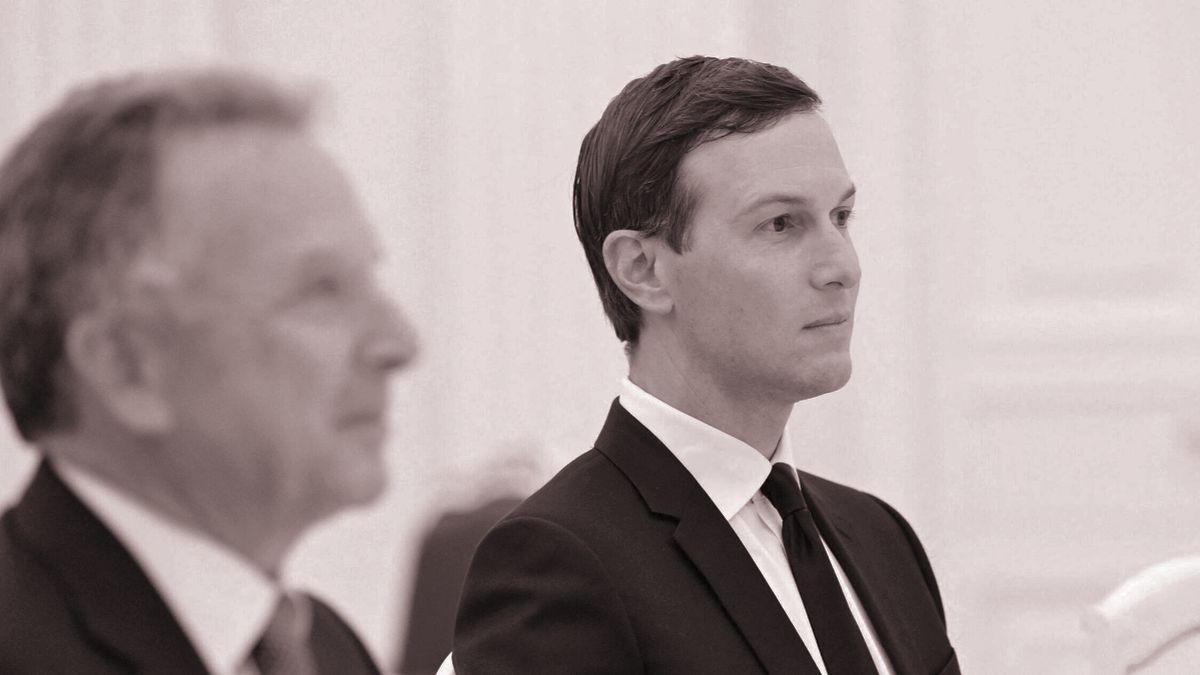
Jared Kushner has quietly reemerged as an off-the-books diplomat in Trump’s second term,
securing a ceasefire in Gaza and now negotiating with Putin to end the war in Ukraine. And foreign-policy types, who often disdained Kushner during Trump I, are mostly happy to have him back. |
|
|
Earlier this month, when White House special envoy Steve Witkoff flew to Moscow for the
sixth time to negotiate an end to the war in Ukraine, the longtime real estate developer was joined by another self-styled dealmaker: Jared Kushner. The two men dined at a restaurant just outside the Kremlin walls, where they sampled the crab and the venison. Afterward, Kirill Dmitriev, the head of Russia’s sovereign wealth fund, took the
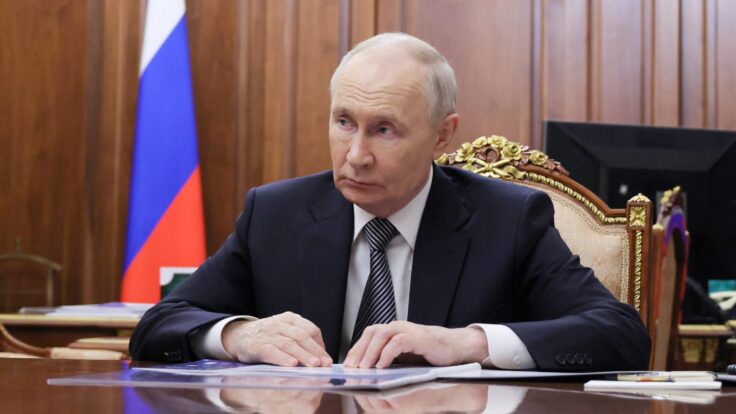
American duo for a stroll through Red Square before eventually ushering Kushner and Witkoff into a five-hour meeting with Vladimir Putin.
The stated purpose of the trip was for Witkoff to present the Russian president with a revised peace plan—but, as everyone in Washington understood it, Trump’s son-in-law was actually in charge. In recent months, Kushner has quietly enjoyed something of a political revival. Mocked during Trump I as an unqualified
nepo-hire, Kushner largely disappeared from public view after January 6, along with his wife, Ivanka Trump. He leveraged the connections he’d made throughout the Middle East, while helping to negotiate the Abraham Accords, to raise billions of dollars from the Saudis, Qataris, and Emiratis. In interviews, he was adamant that he had no desire to return to politics.
And yet, four years later, with the Capitol insurrection old news and the insurrectionists pardoned by his
father-in-law, Jared was very much back. Kushner, who got the Gaza ceasefire over the line, was hoping he could do the same for the war in Ukraine. After all, it seemed pretty obvious that Witkoff was badly out of his depth. One person I spoke to referred to Kushner’s appearance on the Ukraine-Russia portfolio as “babysitting.” Another person, who is close to Kushner, was more charitable. “Jared’s capabilities are in a different league than Witkoff’s when it comes to actually getting things
done,” this source told me. Trump himself was far blunter, admitting that Witkoff “knew nothing” about Russia. |
|
|
A MESSAGE FROM OUR SPONSOR |
Wells Fargo seeks broad impact in our communities. That’s why we’ve donated $138 million in grants to nonprofits
supporting military and veterans through small business initiatives, housing, and more since 2015. What we say, we do. See how. |
|
|
Kushner, for his part, was already familiar with both Putin and Dmitriev. In June 2019, he and Ivanka sat in
on a meeting between Trump and Putin at the G20 in Osaka. Kushner had already been hard at work on the Abraham Accords, and the Kremlin was eager to take advantage of the financial opportunities such an agreement could create. “The Russians wanted to be in on it,” one participant in the meeting recalled, and they knew that Kushner was the point person. Putin turned to Kushner and said, in English, “Jared, you can meet with my guy, Kirill.”
From that point onward, Kushner and Dmitriev
worked together frequently on the Abraham Accords. It was a natural fit: Both were educated at Harvard; both had experience in the world of New York business. And Dmitriev, a veteran of Goldman Sachs, knew how to handle high-net-worth individuals like Jared and Ivanka, who socialized with Roman Abramovich and his then-wife
Dasha Zhukova, who herself went on to marry Stavros Niarchos and whose mother went on to marry Rupert Murdoch. So it makes sense that Kushner and Dmitriev are now the two point men negotiating between Washington and Moscow. They speak the same language. Unfortunately, however, that is not the limiting factor in these negotiations. |
The Abraham Accords, signed in September 2020, were immediately pooh-poohed in certain corners of Washington
and the Middle East for being thin and cynical, and for bypassing the Palestinian issue. In D.C., Kushner was ridiculed as an upward-failing dimwit whose father bought his way into Harvard—a reputation that plagued him for much of his run during Trump I.
But power has a way of changing how people here feel, especially when it is so ruthlessly and effectively asserted. Nearly a year into Trump’s second term, NatSec D.C. has become surprisingly bullish on Jared. Gone are the jokes about
meritocracy. Gone are the cracks about his wooden demeanor and reedy voice. Suddenly, in the eyes of this community, Jared is very smart and savvy, a hard-nosed pragmatist with a magic human touch. Meanwhile, the Abraham Accords are now seen as a monumental success, and the Gaza ceasefire as a brilliant diplomatic coup that only Jared could have pulled off. The fact that he’s Trump’s son-in-law is an asset, the meatiest kind of wasta one can have. “When he says something to a leader
abroad, he knows he’s either speaking for the president or that the president will back him up,” one former Democratic foreign policy official said. “That’s huge.”
Other Democrats, and even some Biden administration officials, feel the same way, though none would commit to saying so on the record. (No one likes a partisan scab, and everyone in this town has a 10-year plan.) “I think he has to be given quite a lot of credit for the role he’s played, especially on the Gaza
deal,” the former Democratic foreign policy official confided. Another former Democratic official praised his emphasis on pragmatism over values. One Democratic foreign policy insider even confessed that they thought Kushner was the greatest American diplomat in a generation. “I’d rather have Jared in there than a lot of other people,” said another.
To be sure, not everyone feels this way. “It does feel scary that so many people think that he’s the adult in the room on very adult stuff,”
a former senior Democratic official told me. “That’s not the adult I would’ve picked,” said John Bolton, Trump’s former national security advisor, who worked extensively with Kushner during Trump’s first term. “How about picking an adult that actually knows something about Russia and Ukraine, how about that?”
But Kushner’s role this time around is different. In Trump’s first term, Jared and Ivanka were official advisors to the president, with real roles, titles, and
security clearances, albeit limited ones. Jared had an office in the West Wing, where his desk was decorated with only one thing: a photograph of his grandparents, who had survived the Holocaust.
Back then, his gambit to be a diplomat was still mostly speculative; his lack of experience was palpable. He didn’t know what the C.I.A. could do to help him prepare for negotiations—or much of what they did at all. “It didn’t even occur to him that the government could do anything useful,” one
former Trump official told me. Jared tried to make up for his greenness by bringing in a bunch of young men he knew from Harvard.
He also stepped on the toes of other, more experienced Trump officials and cabinet members. Fiona Hill, Trump’s first N.S.C. senior director on Russia, recalled in her
book
that Jared and Ivanka were oblivious to Putin’s menace on a 2017 phone call with Trump and uninterested in her opinion, despite her expertise on the Russian president and the fact that she was the only Russian-language speaker in the room. Mike Pompeo was often furious at Kushner for meddling in his portfolio. Steve Mnuchin, Trump’s first Treasury secretary, loathed the fact that Erdoğan’s finance minister—who also happened to be the Turkish
president’s son-in-law—would simply call Jared, not Mnuchin, when he wanted something done. Mike Pence used to call this “the son-in-law channel.” |
|
|
But the experience of trying his hand at diplomacy paid off, quite literally. The relationships Kushner made
during negotiations with Gulf leaders like Mohammed bin Salman of Saudi Arabia and Mohamed bin Zayed of the United Arab Emirates yielded massive investments in Affinity Partners, the private equity business that he set up after his father-in-law left office. “He raised all his money on the back of his position,” said the source close to Kushner. “It wouldn’t have happened otherwise, that’s clear.” Many of the young Harvard men followed him to Affinity. After
helping to renegotiate NAFTA, Kushner is now an investor in a Mexican infrastructure company. “What a coincidence!” snarked a second former Trump official. |
When Trump was reelected in 2024, he wanted Jared to be his secretary of State, according to the source close
to Kushner. But Kushner was reluctant. “He didn’t want the children to see and absorb the portrayals of how he and Ivanka are terrible,” this person said, especially now that his kids were older. “He was explicit with his father-in-law. He said, I’ll be involved informally, I’ll help you in the background. If you force me to do it, I’ll do it. But you know my view.” (A White House official denied that such a discussion occurred.)
But Trump insisted Jared get involved. This time,
Jared has no formal role in the U.S. government and isn’t subject to congressional oversight, such as it is these days. No one seems to know whether the man negotiating some of the most sensitive geopolitical matters on behalf of the United States has a security clearance. (“He’s not getting intelligence briefings, so I don’t think so,” the White House official explained.) His unofficial status also means he doesn’t have to file financial disclosure forms or divest himself of assets that would
present a conflict of interest, something the White House confirmed. In fact, while he was negotiating the Gaza ceasefire, he was also helping to take private Electronic Arts, the giant video game company, in a $50 billion deal alongside the Saudi sovereign wealth fund.
The G.O.P. went hog wild about Hunter Biden making a few hundred thousand dollars at Burisma, but hasn’t batted an eye about Kushner pushing the Qataris on Hamas, all while negotiating live business deals
with Qatar’s sovereign wealth fund. Kushner also has extensive investments in Israel—and Ron Dermer, the former Israeli ambassador to the U.S. and Bibi confidant, is rumored to be joining Affinity Partners in the near future. (The White House official denied this and referred me to Affinity Partners, who did not respond to a request for comment.) Now that he is on the Ukraine-Russia negotiations, it’s been
reported that Kushner has brought in Larry Fink, the C.E.O. of BlackRock, to work on an economic deal with Ukraine.
When asked about potential conflicts of interest, the White House official challenged me to name a specific one, but dismissed the examples mentioned above. “If you can’t list
a specific instance where he was doing something that was not in the American people’s interest, then it’s just speculation,” the official said. “Everything that Jared has done in America’s interest has undoubtedly been in America’s interest. He’s brought peace to an unfortunate conflict and brought peace to a region that’s been in conflict for thousands of years.”
After five hours at a large white table with Putin, however, Kushner came away empty-handed. He and Witkoff decided to use
what had worked before, and essentially copied parts of the Gaza peace plan into the Ukraine peace plan. But not all wars are created equal, and a real diplomat can discern that.
Netanyahu could be cornered and cowed because he’s the junior partner in the U.S.-Israel alliance. But Vladimir Putin has no such restrictions. Bibi could be pushed because Israel’s deepening diplomatic isolation has made it even more singularly dependent on the U.S., while Ukraine has allies in Europe who now
foot the entire bill for its self-defense. And Jared, always looking for a financial angle, clearly misread his negotiating counterpart: For Putin, the war in Ukraine has always been about things money can’t buy, such as an eschatological, civilizational battle against the decadent West, and his own place in history as one of Russia’s greatest leaders. The fact that the West tries to punish him through sanctions—that is, money—merely proves to him the inferiority, the smallness and
meanness of their thinking. So when Kushner and Witkoff arrived on Putin’s own turf to play up their business and dealmaking bona fides, telegraphing the president’s eagerness to get over Ukraine so they can get back to making money, the Russian leader knew exactly what to do with them. |
That’s all for me for this week, friends. Have a happy Hanukkah and a merry Christmas, if you’re celebrating,
and I’ll see you back here soon.
Julia |
|
|
Join Emmy Award-winning journalist Peter Hamby, along with the team of expert journalists at Puck, as they let you in on the
conversations insiders are having across the four corners of power in America: Wall Street, Washington, Silicon Valley, and Hollywood. Presented in partnership with Audacy, new episodes publish daily, Monday through Friday. |
|
|
Need help? Review our
FAQ page or contact us for assistance. For brand partnerships, email ads@puck.news.
You received this email because you signed up to receive emails from Puck, or as part of your Puck account associated with {{customer.email}}. To stop receiving this newsletter and/or manage all your email preferences, click here.
|
Puck is published by Heat Media LLC. 107 Greenwich St., New York, NY 10006 |
|
|
|



_01KC5C4PVGV16M8QD5S92JQNGF.jpg "Wells Fargo")
_01KC5C4PGZYYGBKRVHWK148K78.jpg "Wells Fargo")
_01KC5C4P5K8BYS34NWZS83XAN9.jpg "Wells Fargo")