{{ 'now' | timezone: 'America/New_York' | date: '%b %d, %Y' }} |
|
|
Welcome back to The Best & The Brightest, and merry Christmas Eve eve. I’m Peter
Hamby. We’ll be off the rest of the week, but back in your inbox on Sunday.
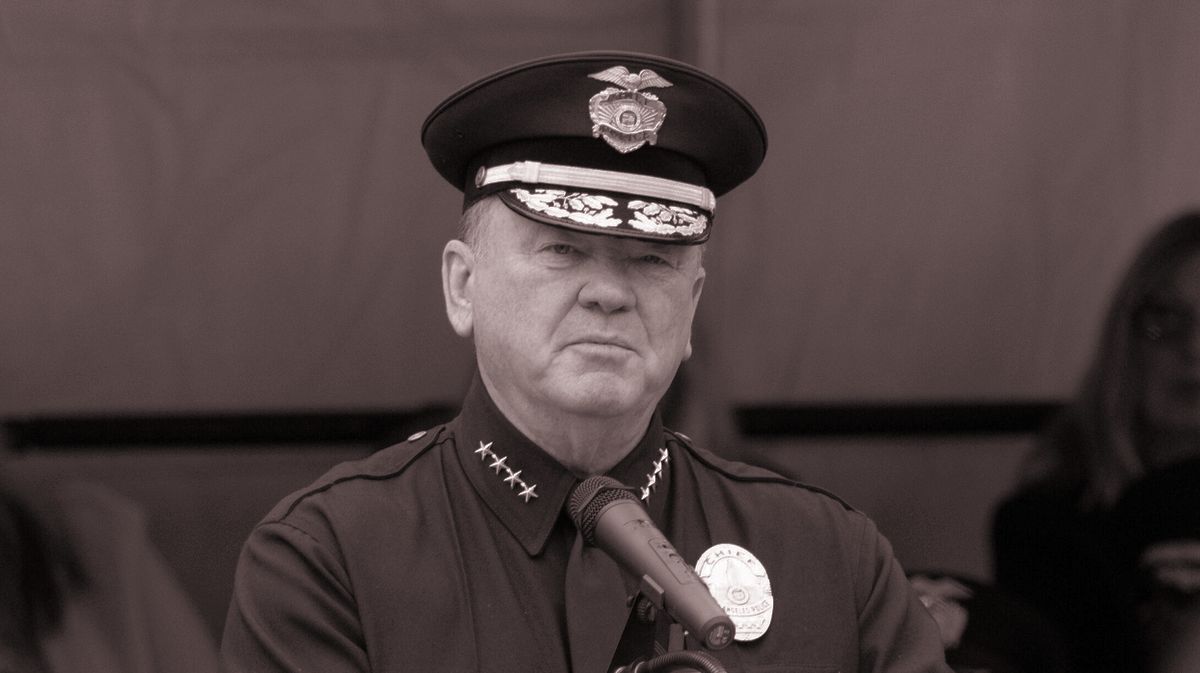
In tonight’s issue, I’m demonstrating the old adage that all politics is local, in conversation with Chief Jim McDonnell of the LAPD. My hometown, of course, was the site of the president’s first experiment with sending the military into blue cities, and has been a central focus of the administration’s deportation campaign. We also discussed how the reality of urban crime stacks up
against the Fox News narrative, whether L.A. is ready for the World Cup and Olympic Games, and his department’s own interactions with ICE.
Mentioned in this issue: Jim McDonnell, Donald Trump, Bill Clinton, Angel Ureña, Ben Sasse, Mike Johnson, Jeff Flake, Adam Kinzinger, and many more… |
|
|
A MESSAGE FROM OUR SPONSOR |
We’re working to prevent disease before it starts. Too often, patients face barriers in getting the care they need. UnitedHealth Group is helping to remove these barriers while prioritizing new preventive care approaches that help keep patients healthy. |
|
|
But first, here’s Abby with the biggest news on the Hill… |
|
|

| Abby Livingston
|
|
- Strange bedfellows: It’s
an odd political moment indeed when Donald Trump finds himself extending his sympathies to Bill Clinton, but that’s what the Epstein files have wrought. On Monday, Trump called Clinton’s appearances in the latest release a “terrible thing” and mused that “you probably have pictures being exposed of other people that innocently met Jeffrey Epstein years ago,” including “highly respected bankers and lawyers and others.” The Clinton camp, for their
part, called for more disclosure. “What the Department of Justice has released so far, and the manner in which it did so, makes one thing clear: someone or something is being protected,” Clinton spokesperson Angel Ureña said in a statement. “We do not know whom, what or why. But we do know this: We need no such protection.”
Trump, of course, has used nearly every lever of government to restrict the disclosures. And the Justice Department, helmed by two of his former
personal lawyers, has been playing defense. On Tuesday afternoon, the department released a statement disputing the validity of an alleged jailhouse letter from Epstein, supposedly written days before his 2019 suicide, to convicted child abuser/sex offender/gymnastics coach Larry Nassar, claiming that “the president shares our love of young, nubile girls.” (“The FBI has confirmed this alleged letter from Jeffrey Epstein to Larry Nassar is FAKE,” the department
wrote on X. “This fake letter serves as a reminder that just because a document is released by the Department of Justice does not make the allegations or claims within the document factual. Nevertheless, the DOJ will continue to release all material required by law.”) - Ben Sasse’s tragic diagnosis: This morning, former Nebraska Sen.
Ben Sasse announced on social media that he has stage-four pancreatic cancer. The 53-year-old called the disease a “death sentence” but said: “I already had a death sentence before last week too—we all do.” Sasse, who was elected to the Senate in 2014 and served nearly a decade before resigning, is a popular figure in political circles, and a succession of well-wishers ranging from Speaker Mike Johnson to journalists to former colleagues like Jeff
Flake immediately responded to his poignant letter with their condolences. “Damn it,” ex-Rep. Adam Kinzinger wrote on X. “God bless you man.”
|
|
|
And now, here’s McDonnell… |
|
|
A candid conversation with L.A. police chief Jim McDonnell about the complicated reality of
ICE raids, hyperbolic crime narratives, and preparing for the World Cup and 2028 Olympics in the second Trump era. |
|
|
For a local official, the chief of the Los Angeles Police Department sure has been top of mind for the
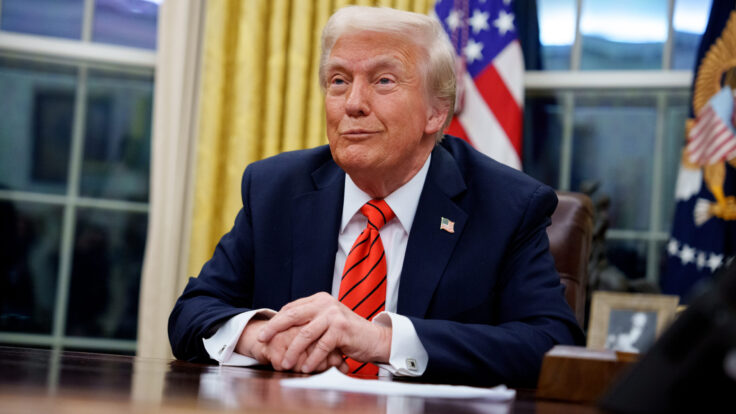
president of the United States this year. Jim McDonnell, who has been in the job for just about a year, had to publicly fact-check Donald Trump a few months back, after the president claimed the chief had asked for the National Guard to be sent to Los Angeles to quell unrest after ICE descended on the city. “We don’t need the National Guard, and they are not here to help us right now,” McDonnell said in June.
Lately, too, Trump has been talking about
using his power to move World Cup games out of Democratic-led cities like L.A. because of “safety issues”—and he made the same vague threat about the 2028 Olympic Games. Crime and public safety, of course, are two of Trump’s favorite topics—convenient political cudgels to wield against Democrats who have long been perceived as soft on the issue, even as violent crime rates fall in most big cities, including Los Angeles.
For all of these reasons, like other police chiefs in big American
cities, McDonnell suddenly faces the twin burdens of dealing with national political narratives alongside the day-to-day grind of urban policing. That’s not to mention the lingering reputational fallout, even five years later, from the Black Lives Matter protests of 2020 and the divisive fights over race and policing that ensued. I spoke to McDonnell the other day for my Snapchat show,
Good Luck America, about these issues, and asked him about ICE raids, Trump’s inaccurate crime spin, how to approach homelessness, and whether Los Angeles officials are doing enough to prepare for
the World Cup and Olympics. “Absolutely not,” McDonnell told me, in his flinty New England accent. Read our conversation, lightly edited, below… |
Peter Hamby: President Trump continues to claim that you specifically asked
for the National Guard to come to Los Angeles during the ICE demonstrations this summer. He said it again just a few weeks ago. Is that what happened?
Jim McDonnell: No. We have a system to request mutual aid, and it goes from our department, our city, to the sheriff, who then makes notification to the state, and then they would send in the National Guard if appropriate. At the sheriff’s level, we have eight agencies that are around Los
Angeles. We do that on a fairly regular basis for major incidents. So that would all be exhausted before we would ask for anything from the federal government. |
|
|
A MESSAGE FROM OUR SPONSOR |
At UnitedHealth Group, we’re reshaping care with a new approach: Helping physicians focus on patients and prevention,
instead of paperwork. See how we’re helping patients live healthier lives with a new model for health care. |
|
|
He also keeps characterizing large cities—New York, Chicago, Los Angeles, Baltimore—as these
dystopian, crime-ridden hellscapes. That’s been his justification for a variety of executive orders, and for sending troops. My understanding is that violent crime, not just here in L.A. but in most big cities, is actually on the decline, including homicides.
Violent crime, particularly homicides, is down across the country. I hear from people all the time that, you know, I’ve never seen L.A. worse than it is today—that it’s dangerous,
and so forth. I try to provide some context. Go back to 1993, Los Angeles had just under 1,100 homicides. Today, and the year is almost over, we’ve got 212. That’s 900-plus fewer homicides each year in Los Angeles. So, we have a lot to celebrate on that front. We’re never happy. We always want to drive it down as far as we possibly can. But the reality is that it is so much safer today.
I don’t think our officers, or our relationships with the community members, are getting
enough recognition for that. It took a lot of work to be able to do that dramatic of a reduction in gang violence, and so many other different types of violence, through education, through intervention, as well as just developing a network of relationships in communities. That has been proven to be very powerful.
But the perception is still everywhere. And crime is a political issue nationally. Where does the perception come from? Politicians? Viral clips? Fox News? Local
news?
I think it’s all of the above. In your business—news media—you go out there and you go where the action is. For instance, the unrest we had here [over the summer] was all confined downtown within one square mile. But if you were to watch the news and try to get an assessment of what was happening in Los Angeles, you would have thought the whole city was upside down. Likewise, with the fires we had in the Palisades: They were horrific, but
they were in one part of the city. People were going about their business and other parts of the city, largely unaware of what was happening on the Westside.
It’s just the nature of news, the nature of social media. The focus is where the issues are, and that then becomes the story, the narrative. And so we need to do a better job on my side of being able to clarify that narrative. |
We have the World Cup coming up in a few months here in L.A. and the Olympics in 2028. You went
before the City Council here the other day and asked for more money to hire more officers. You said we’re, quote, “bleeding out” on the staffing front. You also said, “If you knew what I know about the potential threats in the years ahead, we wouldn’t be having this conversation today.”
The City Council was kind of resistant at certain moments to your hiring requests, which are also the requests of the mayor. Do you think the city is
doing enough when it comes to providing the money to hire more cops ahead of the World Cup, ahead of the Olympics, to keep the city safe?
Absolutely not. When we’re fully deployed at 10,000 officers, we have half the officer-to-population ratio as New York, and less than half of what Chicago deploys per capita. We’re a very lean organization to begin with, and currently we’re down 1,400 officers. I was given budget approval to hire 240 new
officers this year. We have done that. We went back, as you mentioned, to ask for additional funding to be able to hire another 240. But even at that, this year I’m going to lose between 500 and 600 officers due to attrition, retirement, or other reasons. And so even if we were to get what we’re asking for, we’re still probably negative 150 to 200. Two and a half years out from the Olympics, [that is] not the place that I think most any city would want to find themselves.
Are
these simply budgetary concerns and City Council members looking at line items? Or is there something more cultural and political in the water on the left, where you have members who just don’t think cities need more cops?
There’s certainly that. We start with a three-to-four-vote deficit anytime we go before the council with folks that don’t believe that there should be police, or certainly not additional police. And so that’s always very
frustrating for us. There are certainly political reasons, but the fiscal reasons are very real. We started off this budget year with a billion-dollar deficit in the city. We’re the largest part of the city budget. So we did get hit pretty hard.
But moving forward, my hope is that the City Council takes a fresh look at this issue and realizes that the eyes of the world are going to be on Los Angeles, both several months from now with the World Cup, and less than two and a half years away
with the Olympics. The largest Olympics in the history of the world will be here—a tremendous opportunity for Los Angeles to showcase what we have. But if you don’t do it appropriately, then it could be a different outcome. |
|
|
I know the police here don’t deal with civil or criminal immigration enforcement, but what are you
learning from half a year of ICE raids in the city? I was at a car wash the other day in Venice and two cars pulled up, and three masked people got out with two weapons on them—a rifle and a smaller gun. In the middle of the day! If it’s 11 a.m. and ICE shows up at your car wash, whether you are an immigrant or a customer, that’s scary. You’ve got to be concerned that that’s a little disruptive too, right? As a matter of public safety?
Whether
it’s an immigrant community or a more affluent community, or car washes and other service providers who have had people arrested by immigration enforcement agents, that does have a chilling effect. The [agents] are doing their job—they are lawful federal agents engaged in their duties. So when we get out there, our role is not to assist them, not to get in their way, but to be able to make sure that everybody stays safe in that environment as best we can. I think we’ve walked that middle line as
well as we could this past year. It’s something that we don’t engage in, but they have a legitimate reason to do what they’re doing. So we’re respectful of that as well. |
President Trump issued an executive order calling for the civil commitment of mentally ill people
living on the street. Basically, if a homeless person poses a risk to themselves or the public, they can be arrested and later put in a psychiatric facility even if it’s against their wishes.
California has its own laws on this, but what is the appropriate way for police to respond? Not every homeless person in L.A. is mentally ill, but plenty are, and some might pose a danger. What do you think is the best solution for mentally ill
people living in the streets?
Very good question, and a very difficult answer in the big picture. Police officers end up dealing with the problems and the dysfunctions of every other part of society. They’re dealing with people who have mental health issues. When [someone is] acting out on their mental illness and becoming violent or going in that direction, that’s when people call the police. Our teams roll out there and do as good a job as they
can trying to deescalate the situation and to be able to get the person in distress help. We have med teams—mental evaluation teams—that pair up police officers with a mental health clinician. Those to me are probably the best investment any city can make. There is a dire need for more facilities that can deal with people in a mental health crisis.
From a big-picture standpoint, certainly what we’re doing now is not the right answer. We have 60,000–70,000 unhoused people in Los Angeles
County. It’s not a humane way to deal with this issue. These are people out there that are dealing with whatever problems they have, and we’re leaving them on the streets to be victimized by others and to live in a way that people shouldn’t be living in Los Angeles or in the United States.
We need to refocus where we are, take a step back. Don’t rely on police to be able to handle all problems in society, but appropriately fund and hire the right people to be able to deal with people in a
mental health crisis, to get them off the street and into an environment that is therapeutic and not jail. Jail is not a therapeutic environment for somebody who’s dealing with mental health issues. I think we’ve tried to use what we have, which is the jail system, to deal with something that nobody really wants to take on and deal [with] more effectively or humanely. My hope is, as we move forward, that there becomes an appetite for that. |
|
|
Join Puck’s chief political columnist, John Heilemann, as he roams the corridors of power and influence in America on this
twice-weekly interview show, taking you beyond the headlines with the people who shape our culture: icons and up-and-comers, incumbents and insurgents, moguls and machers in the overlapping worlds of politics, entertainment, tech, business, sports, media, and beyond. The conversations are rich and revealing, unrehearsed and unexpected… and reliably impolitic. A Puck-Audacy joint, new episodes drop every Wednesday and Friday. |
|
|
Unique and privileged insight into the private conversations taking place inside boardrooms and corner offices up and down Wall
Street, relayed by best-selling author, journalist, and former M&A senior banker William D. Cohan. |
|
|
Need help? Review our
FAQ page or contact us for assistance. For brand partnerships, email ads@puck.news.
You received this email because you signed up to receive emails from Puck, or as part of your Puck account associated with {{customer.email}}. To stop receiving this newsletter and/or manage all your email preferences, click here.
|
Puck is published by Heat Media LLC. 107 Greenwich St., New York, NY 10006 |
|
|
|



_01KCPX1GAC6X6R69PYDT17MG57.png "United Health Group")
_01KCPX1FPC0JZVHCMS1ZV87HPC.png "United Health Group")
_01KCPX1H98VT1VZ38F7MA9Q3M6.png "United Health Group")
_01KCPX1GS6BD7PN5N0H0J8258Z.png "United Health Group")