 |
 |
| Welcome back to The Best & The Brightest, I’m Peter Hamby. In today’s issue, a closer look at the mounting anxiety in Democratic circles about Biden’s weakness with independents and even some voters in his own party—and why the obvious fears about a third-party challenger (Joe Manchin? Larry Hogan?) might actually be misplaced.
But first… a few words from my colleague Abby Livingston, on the Manchin problem and more. |
| The Capitol Hill Cafeteria Report |
|
An utterly indispensable, high-minded, and, yes, occasionally dishy readout of what our lawmakers are really legislating behind closed doors.
By Abby Livingston
- No Labels, Mo’ Problems: If there’s anything that can unite Democrats these days, it’s a shared hatred of No Labels. Politico’s Burgess Everett reports that the centrist Third Way group and the liberal MoveOn have formed an unlikely alliance to brief Democratic Senate chiefs this month about how No Labels’ push for a third party challenger to Biden could end up being a Trump-electing spoiler. The nexus of anxiety is Joe Manchin, the centrist Democrat from West Virginia, who is openly mulling a run as No Labels’ standard-bearer.The angst is ricocheting up and down Pennsylvania Avenue: Democrats are as desperate for Manchin to run for reelection in the Senate as they are for him not to run for president. West Virginia, after all, is the most likely seat to fall to the Republicans next year, and it’s especially hard to see any scenario whereby Democrats hold this seat if Manchin retires, runs for governor instead, etcetera. G.O.P. operatives that I’ve spoken with say they are confident this race is already over no matter what Manchin decides. Moreover, it’s widely assumed Gov. Jim Justice will be the Republican nominee. I’ve spent quite a bit of time in West Virginia, and I am struck by the regard for him, dating back to his rescue of The Greenbrier, the classic resort and source of state pride.
As one would expect, the Democratic worldview is quite different. Manchin is the last of a local Democratic dynasty in a state where political brands have outsized power. (See Manchin’s Republican colleague, Shelley Moore Capito, whose family members are running for practically every office available in the state right now.) And there are no assurances that Justice will be the nominee. He likely has a bloody primary ahead against his top rival, Rep. Alex Mooney, a Maryland transplant and Freedom Caucus member who will have Club for Growth money to spend.
Anyway, I wouldn’t wait for Democrats to put the screws to Manchin: It’s my sense they’re treating the dilemma gingerly and want to give him space. Pressure here is counterproductive.
- Weymouth’s 4th Party: In related news, I hear Manchin attended Lally Weymouth’s Fourth of July weekend party in Southampton. The annual event is one of the most coveted invitations in New York, which is no surprise given that Weymouth is the daughter of the ultimate D.C. hostess, the late Washington Post publisher Katharine Graham. Also in attendance: Elaine Chao, Andrew Cuomo (!), fellow Southamptonite Bob Kraft, Chuck Schumer, Wilbur Ross, and former House members Barbara Comstock, Gwen Graham (of the Florida branch of the Graham family), Peter King and Carolyn Maloney.
- Harper vs. Slotkin: Finally, a quick note on the Senate Democratic primary in Michigan, which kicked off Monday with TV star Hill Harper formally challenging Elissa Slotkin. My colleague Tara Palmeri forecasted this months ago, and as such, I’ve been surprised by the lack of awareness of Harper on Capitol Hill. Among Democrats, the assumption is that the nomination is Slotkin’s to lose.The timing of Harper’s launch was an open secret: In what appears to be campaign mischief, the Slotkin campaign stepped on the announcement with the release of her quarterly fundraising numbers. And Harper will have some catching up to do: Slotkin raised $2.8 million this past quarter, adding toward a total of about $5.8 million.
Two things I’m watching on the Harper front: how much of the Hollywood donor base financially supports his campaign, and whether any of his former Harvard Law School classmates—including Barack Obama—join in.
And now onto… |
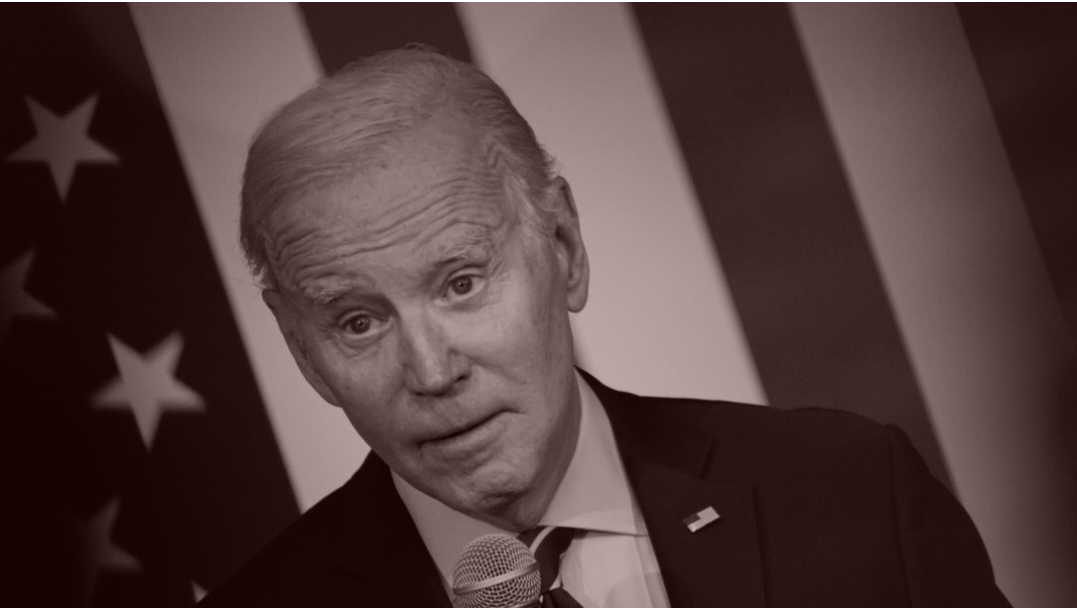 |
| Biden’s “Double-Hater”-itis |
| There’s one simple rule of presidential politics: If you lose independents in swing states, you lose the election. And Biden is increasingly vulnerable. |
|
|
|
| It’s Xanax season for Democrats. The presidential election is more than a year away, but Joe Biden’s party is starting to worry more and more about his re-election chances in 2024. Maybe it’s summer boredom, but the anxieties are real—about Biden’s creaky age, his frustratingly low approval ratings, or his inability to communicate what should be a series of popular achievements to an electorate that has cared less and less about politics since Donald Trump left office. Those plot points are all contributing to the stress. But a new threat is raising everyone’s blood pressure: The possibility that one or more third party candidates will upend Biden’s re-election chances.
Even Alexandria Ocasio-Cortez—not exactly a Biden superfan—raised the alarm about third parties last week, as she endorsed Biden while appearing on Pod Save America. “We have to be very concerned because the risk of fascism in this country is here, it is real, and we cannot risk it,” she said. “Especially in critical electoral college states that are decided by tens of thousands of votes. We need to be careful about that.”
Cortez was coming at the topic from a funny spot. Her pal from the Bernie-verse, the social justice activist and author Cornel West, is running for the Green Party nomination next year, with some help from Jill Stein, the leftist who helped derail Hillary Clinton’s 2016 campaign by picking off protest voters who disliked both Clinton and Trump. Ocasio-Cortez offered some polite words for West, but said it’s imperative for progressives to line up behind Biden. “The United States has a winner take-all-system, whether we like it or not,” she said. “We have to live with that reality.” |
| A MESSAGE FROM OUR SPONSOR |
|
 |
| At Chevron, we realize carbon capture and storage is a critical step in helping enable progress toward global net zero. That’s why we’re developing and deploying the technology in our facilities, while also working with partners to scale it to other industries, like cement and steel. Our target is to reach 25 million tonnes of CO2 per year in storage and offsets by 2030, the equivalent to the emissions of 3.1 million homes annual energy use. Part of supporting our efforts is our proposed Eastridge CCS project in the San Joaquin Valley, which is projected to capture up to 300,000 metric tonnes of CO2 per year. Also, through our partnership with Svante, we’re working to reduce the cost of carbon capture and help scale the technology. Moving closer toward global net zero by developing and deploying carbon capture and storage, that’s energy in progress.
|
|
|
| Ocasio-Cortez’s main concern in the interview—and an object of obsession among Democrats and the press in Washington right now—is the dark money centrist group No Labels. The outfit, a longtime darling of rich donors who seem to be blissfully ignorant about the electoral college (or blithely arrogant that they can create their own rules), is working defiantly to get on the presidential ballot in big battleground states, whispering about recruiting moderate pols like Joe Manchin or Larry Hogan to run as their standard-bearer. With Biden’s poll numbers slumping among independents and casual voters, a No Labels candidate could, in theory, be a natural home for the khaki-wearing moderate suburbanites who moved away from Trump in 2020, helping Biden win the White House.
Politico reported Monday that both the progressive group MoveOn and centrist group Third Way are planning to brief Senate Democratic staffers this month about the electoral college threat posed by No Labels. Those two groups aren’t natural ideological allies, but they seem distressed enough to band together. They’re almost certain to bring up a recent poll from NBC News showing that 44 percent of registered voters say they would be willing to support a third-party or independent presidential candidate if Biden and Trump are the two major party nominees in 2024. Buried in that poll was another number that should worry the White House: Among Democrats, 45 percent say they’d consider backing a third-party or independent presidential candidate—compared to only 34 percent of Republicans.
In other words, while Trump still inspires loyalty within his party, Biden does not—especially among the young people and voters of color who were a central part of his winning coalition in 2016. Another survey from YouGov last week found that only 62 percent of Black voters approve of Biden’s performance as president—a turd of a number for a Democrat—and only 35 percent of Hispanic voters approve of the job he’s doing. Biden, alarmingly, is also losing independents in hypothetical head-to-head matchups with the twice-indicted Trump, the most unpopular politician in modern American history. Alas, there’s one simple rule of presidential politics: If you lose independents in swing states, you lose the election. In a close race, a third party challenger—or several of them—could be disastrous for Biden. |
|
|
| Doug Sosnik, the veteran Democratic strategist, penned a memo in June identifying a category of swing voter that should spook the West Wing. “People who have a negative view of both Biden and Trump are perhaps the most important group of swing voters in the upcoming election,” Sosnik wrote in the memo, which was published by Politico. “This is not an insignificant voting bloc. In an ABC/Ipsos poll taken after Trump’s most recent indictment, a majority of the country had a negative view of both Biden and Trump, with only 31 percent having a favorable view of both candidates.” These “double doubters,” as Sosnik labeled them, are the kind of voters who disliked both Clinton and Trump back in 2016, either staying home or voting for third party candidates like Stein or Gary Johnson that November, helping Trump win narrowly.
Another memo last year from Democratic pollster Aliza Astrow, writing for Third Way, made the case that while “Double Haters” can’t be pinned down ideologically, most evidence suggests they would lean Democrat if given the choice. Exit poll data from 2020, she wrote, showed that people who voted third-party in 2016 went on to support Biden in 2020 by a huge 35-point margin. “Whether these voters determined the outcome in 2016 is up for debate, but it is clear that these mercurial voters joined Biden’s coalition in 2020, helping solidify his victory,” Astrow said.
The memos, the meetings, the bad polls: All of them are flying around at a time when the click-hungry media has to spend the summer without an entertaining Democratic primary to cover for the first time in more than a decade. So, they’re lavishing attention on younger Democrats outside Washington—Gavin Newsom and Gretchen Whitmer among them—who are happy to get some national headlines while Biden occupies the Oval and talks about the CHIPS Act.
There’s also Robert F. Kennedy, Jr., bench-pressing shirtless at my local Gold’s Gym in Venice despite clearly skipping leg day. The conspiratorial Kennedy won’t be the Democratic nominee, but his very existence is giving people permission to talk about a nominee other than Biden. Kennedy, too, is leaning into non-traditional media outlets watched and listened to by the kind of casual news consumers who may or may not vote in elections. The very same voters, in fact, who might have cast ballots for Johnson or Stein back in 2016. |
|
|
|
|
| The good news for Democrats is that, unlike 2016, they are getting ahead of the problem, much like they did in 2019, when wannabe independent candidate Howard Schultz was shamed out of running for president because he almost certainly would have helped Trump win. Looking at recent history—and the realities of elections—is actually a good way to calm nerves. One factor to keep in mind: Cycle after cycle, in both national and statewide elections, polls always show an appetite for independent challengers and third party candidates. Voters love to say they hate partisanship and politicians—this is literally the No Labels fundraising pitch—but third party candidates almost never live up to their expectations.
Go back and look at pretty much any poll from any race in the closing weeks of a campaign: Third party candidates sometimes look like spoilers, but they almost always finish with a lower share of the vote than the polls predicted. Gary Johnson was polling around 10 percent at certain moments in 2016, but his final vote share was only 3 percent.
That NBC News poll showing 44 percent of the electorate would consider voting third party next year? That number is actually lower than it was in 2016 (46 percent) and about the same as it was when Obama was seeking re-election 2012 (40 percent)—a year when almost no one was talking about third party candidates at all. Worried Dems could also do themselves a favor by looking at that 2012 campaign. Right now, Biden’s approval ratings among Democrats are higher than Obama’s were at this point in 2011—the year before he won re-election.
History is a useful guide in another way. Something very important changed for Democrats between the 2016 and 2020 elections that diminishes the threat of protest voters: the stakes. Trump’s victory in 2016 made politics existential for the same constituencies that sat on the sidelines or voted third party in 2016—young people, progressives, Black voters, and independents. You might have forgotten that there were third-party candidates on the ballot in 2020—and Biden still won. The Libertarian nominee in 2020 won 2 million votes! The Green Party, too, was still on the ballot in the same swing states where Clinton fumbled the bag in 2016.
But third party vote share still collapsed in 2020 because the voters Democrats depend on understood they needed to get in the game—not stay at home and whine about politics being lame. A similar phenomenon played out in last year’s midterms, when independents and Democrats were meh on Biden, but showed up anyway in November to vote down Trumpy candidates in the states where it mattered.
Biden has a lot of work to do to stir up enthusiasm and remind voters of the choice on the ballot once the election rolls around next fall, when people start to actually pay attention. Yes, sure, it’s possible we might see a replay of 2016—or even 2000, when a few protest votes for Ralph Nader altered the course of human history. Back then, however, Nader was palling around with Rage Against The Machine and the Indigo Girls as he made a play for disaffected youth vote. These days, a protest vote in the year 2024 feels like a deeply, deeply uncool thing. Even if Biden isn’t sending a thrill up anyone’s leg. |
|
|
|
| FOUR STORIES WE’RE TALKING ABOUT |
 |
|
 |
|
 |
|
 |
| ESPN Anxieties |
| Notes on the network’s uncertain trajectory. |
| DYLAN BYERS |
|
|
|
 |
 |
|
|
| Need help? Review our FAQs
page or contact
us for assistance. For brand partnerships, email ads@puck.news. |
| You received this email because you signed up to receive emails from Puck, or as part of your Puck account associated with . To stop receiving this newsletter and/or manage all your email preferences, click here. |
| Puck is published by Heat Media LLC. 227 W 17th St New York, NY 10011. |
|
|
|