Hello, and welcome back to The Best & The Brightest. I’m Leigh Ann
Caldwell.
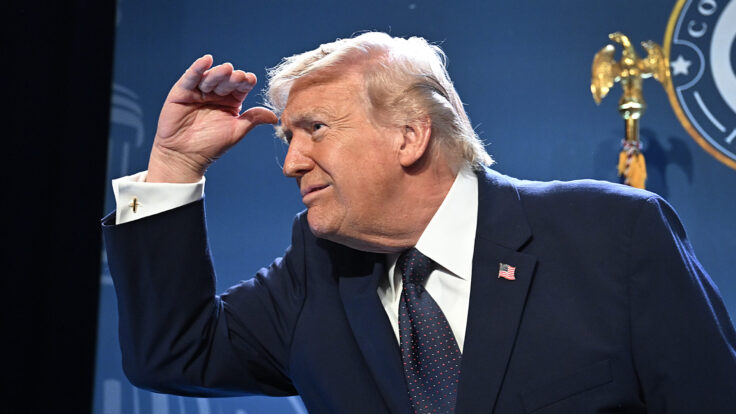
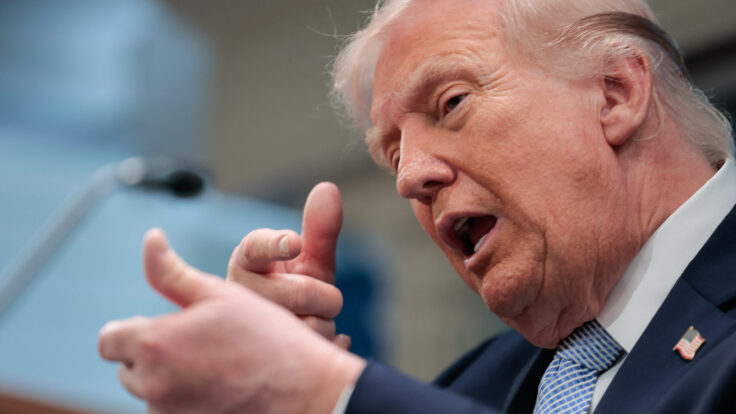
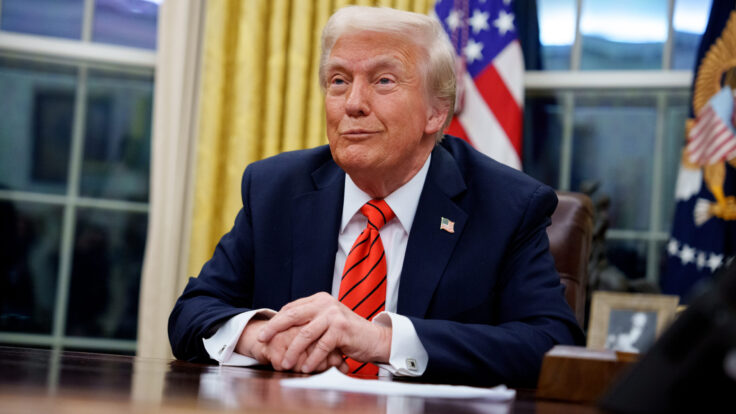
From the moment he returned to office, President Donald Trump has touted cheap gas as central to his economic strategy. Indeed, by Trump’s own admission, his first regime-change adventure in Venezuela was almost entirely about seizing that country’s oil. So it was a little whiplash-inducing to see his administration charge into Iran with seemingly little thought to the consequences of shutting down the Strait of Hormuz.
Earlier today, as the war
pushed oil prices above $100 a barrel, Trump called the disruption “a very small price to pay for U.S.A., and World, Safety and Peace.” This, naturally, failed to calm the markets, so by the afternoon he tried again, telling CBS News that the war “is complete, pretty much.” Mission accomplished? We’ll see.
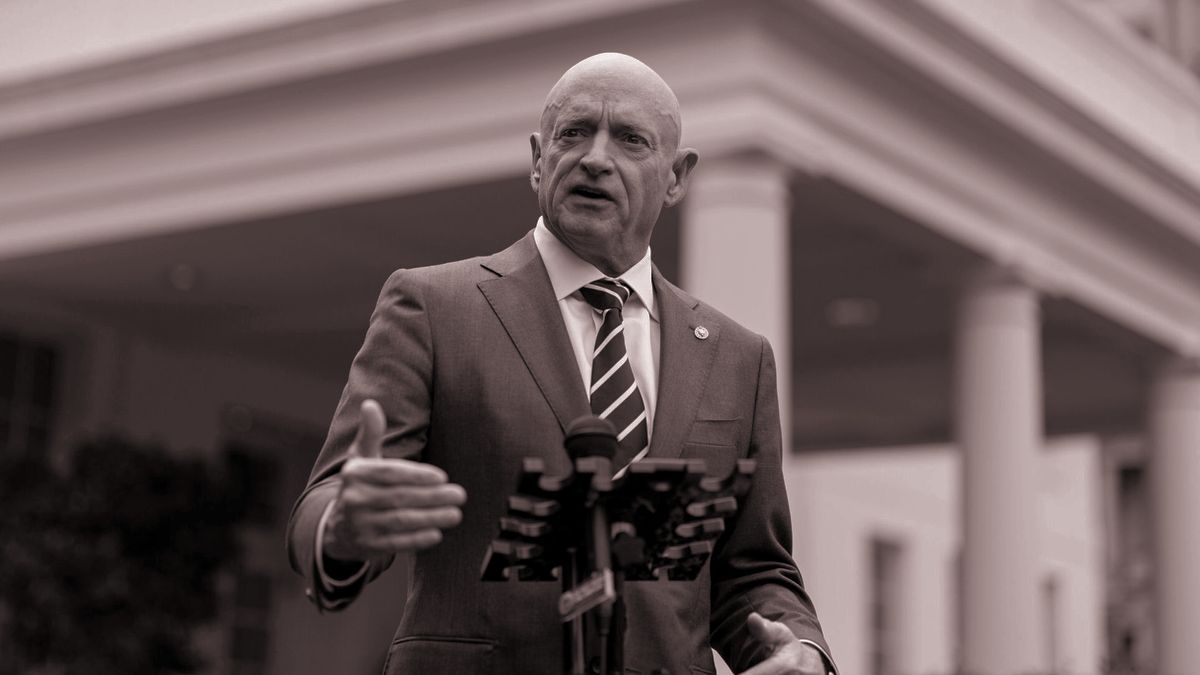
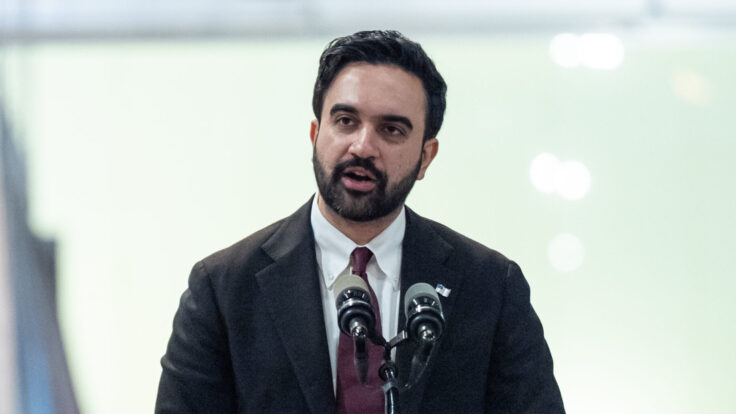
In tonight’s issue, John Heilemann has a very dishy and insightful interview with Senator Mark Kelly, the former Navy
pilot and astronaut, about how the U.S.–Israel war against Iran could spiral out of control. Plus, Abby has an update about the new number that everyone’s obsessing over as the midterms approach.
Also mentioned in this issue: Darrell Issa, Steve Daines, Ryan Zinke, Pete Hegseth, Rubio, Bibi Netanyahu, Ali Khamenei, Mojtaba
Khamenei, and… Bob Dylan. |
|
|
|
Instagram Teen Accounts: Automatic protections for teens
Instagram Teen Accounts have built-in protections for who can contact teens and the content they can see. Now, content settings are inspired by 13+ movie ratings, with a stricter setting available for parents who prefer extra controls. Nearly 95% of parents say Instagram Teen Accounts help safeguard their teens. We will continue adding features to help protect
teens online. Learn more |
|
|
|

| Abby Livingston
|
|
- The new blue wave math:
The “generic congressional ballot,” which tracks party preferences rather than specific candidates, is one of the most influential polling tools in Washington—prophesying both how the midterms are likely to net out, and helping inform whether on-the-fence members ought to hang up their cleats. Nate Silver’s weighted average currently has Democrats up by about
five and a half points.
That’s actually less than at this same point in 2018, before the last blue wave. But as a Republican consultant pointed out, the generic ballot doesn’t need to reach that same level for the House to flip—Republicans had about a two-dozen seat buffer in the chamber back then, not the single-digit margin of today.
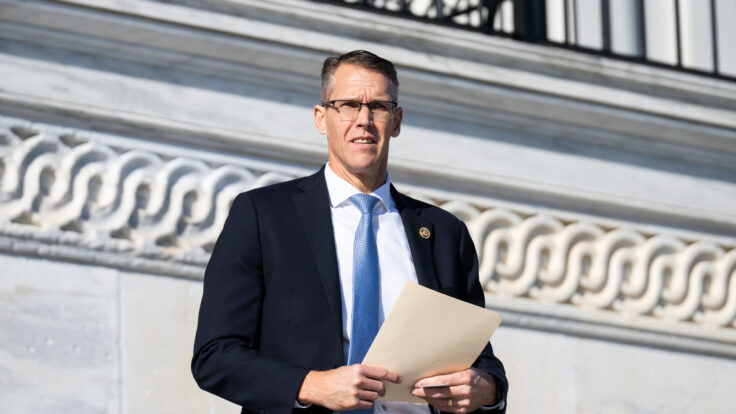
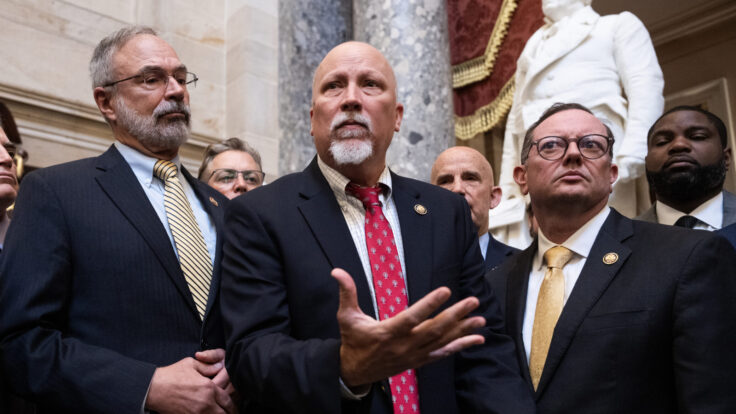
Meanwhile, several Republican sources have told me that some House members are still eyeing the political environment and considering whether to stay in Congress at all. California Rep. Darrell Issa, who announced his retirement on Friday, isn’t the only veteran member who was around in 2018 and isn’t keen to return to the minority. Sen. Steve Daines and Rep. Ryan Zinke just withdrew from their races too, right before Montana’s filing
deadline.
Republicans tell me they do not expect these to be the last of the eleventh-hour retirements. Insiders are watching Pennsylvania and Tennessee, whose filing deadlines are on Tuesday, followed by Iowa, Nevada, Utah, and Colorado over the next two weeks.
|
|
|
|
The Arizona senator, retired naval aviator, and potential ’28 contender denounces the
strategic incoherence of Trump’s latest regime-change adventure and explains why the Venezuela model does not apply in Iran. |
|
|
|
At the dawn of the second week of the most deadly and perilous military adventure yet undertaken by
Donald Trump, the picture of where the war with Iran might be headed is as cloudy, confusing, and contradictory as the rationales that Trump and his team have put forward for starting it in the first place. On the one hand, the signs that the war is intensifying are abundant and unmistakable: a rapidly escalating casualty count now approaching 2,000 dead in the region, hundreds of them children, as well as seven U.S. soldiers; spiking oil prices and wildly gyrating financial
markets around the world; the installation, in the wake of the killing of Ayatollah Ali Khamenei in a U.S. airstrike, of his equally radical and theocratic son, Mojtaba Khamenei; and the White House’s refusal to rule out the possibility of the reinstitution of a military draft to fight the war. On the other hand, there is Trump, who told CBS News on Monday afternoon that “the war is very complete, pretty much”—a comment that, despite its brevity and typically mangled syntax, caused markets to rally before the close of trading.
Arizona Democratic Senator Mark Kelly knows a thing or two about the fog of war, having logged 25 years of active duty as a U.S. Naval aviator, rising to the rank of captain and completing 39 combat missions in Operation Desert Storm. But Kelly’s
view of the Trump administration’s case for war, as well as its operational and strategic competence, are anything but foggy. “They’re flailing around,” he said on Morning Joe late last week. “They don’t seem to know what they’re doing or why they did this.” |
|
|
|
Instagram Teen Accounts: Automatic protections for teens
Instagram Teen Accounts have built-in protections for who can contact teens and the content they can see. Now, content settings are inspired by 13+ movie ratings, with a stricter setting available for parents who prefer extra controls. Nearly 95% of parents say Instagram Teen Accounts help safeguard their teens. We will continue adding features to help protect
teens online. Learn more |
|
|
|
I talked to Kelly soon thereafter for last Friday’s episode of my Impolitic podcast. The assessment
he offered me was even more scathing. Kelly reserved special scorn for the conduct of Pete Hegseth, with whom the senator is embroiled in a legal battle over the defense secretary’s efforts to downgrade his retirement rank and pay over a video in which Kelly and a handful of other Democrats in Congress told current service members that they were under no obligation to follow illegal orders. (A federal court recently shot down Hegseth’s move as flagrantly unconstitutional;
Hegseth has appealed.)
Kelly and I discussed that matter, as well as his fears that the strategic incoherence of Trump and his team could lead to something far bloodier and more destabilizing than what we’ve seen so far—and whether, as many expect, he’ll be running for president in 2028. As always, the following has been edited and condensed for clarity, but you can listen to the whole thing
here. |
John Heilemann: You’ve said that the administration doesn’t seem to know
what they’re doing in Iran, or why they did this—that they’re flailing around without a strategic goal. Secretary Rubio suggested Israel was about to attack and forced our hand, and Trump then insisted, no, actually, he forced Israel’s hand. It’s easy to laugh at all this, but there are moments when I can’t believe the utter incoherence of the person who’s in charge of American national security. I wonder if you agree.
Sen. Mark Kelly:
Yeah, I agree. We can’t laugh about it, because we’ve got thousands of American servicemembers and U.S. citizens at risk in the region, and the possibility at some point of a much bloodier war that could go on for years because of this incoherence.
What I hear in all of this is ego. Trump didn’t like the implication from the day before—that Secretary Rubio said we followed another country into this, that our hand was forced in any way. So I think it’s the president’s ego.
He always has to be the center of any discussion. But what matters here is what’s next. Of course, how we got here is always going to be relevant—but right now, what is the strategic goal, and how does this make Americans safer and help them pay their bills?
There’s a theory that Bibi Netanyahu has had Trump under his thumb for the entirety of Trump 2.0. Do you buy the idea that Netanyahu pushed Trump into this?
First of all, I
think Israel needs to make decisions that are in Israel’s best interest, and we should make decisions that are in our best interest—our national security interest, the safety of the American people, and what’s going to keep our economy strong. That needs to be the first consideration. Israel being our only democratic ally in the region, those relationships do matter. But the president’s job here is to protect and defend our country and make decisions that are in the best interest of the American
people. I want this president, and every president, to have that at the front of [their] mind. Even when we’re looking at Ukraine. I’m a strong supporter of us providing support for Ukraine—not just because it’s the right thing to do, but also because it’s in our national security interest to make sure that Russia doesn’t go somewhere else in this conflict.
They haven’t been able to explain the rationale [of attacking Iran.] Initially, it was about eliminating their ability to
build a nuclear weapon—which, by the way, according to them, was completely obliterated last summer. What happened to the obliteration? It just magically reconstituted itself. Those targets were so buried underground and rather vast and complex. I knew even before they dropped the first bomb that it wasn’t going to obliterate it.
All these different rationales have been offered. What’s your best theory for why we’re at war with
Iran?
It comes back to where I started here. We have a president that doesn’t take advice, doesn’t listen to many people around him, and puts a lot of “yes” people around him. Those people tell him what they think he wants to hear, and it’s a recipe for disaster. They try to anticipate, Where does this guy want to go? And he’s all over the place, and they don’t have a strategic plan.
So why did we get into this? I think they
looked at Iran as being weakened from the strikes from the summer. I do think that it was probably more about regime change than anything else. It’s hard to justify on the nuclear weapons front. But now, when the regime didn’t change quickly, and the Iranian people didn’t rise up to throw out the government and the [Islamic Revolutionary Guard Corps]—which by the way, is going to be really hard and bloody—they had to start to point in different directions.
And regime change, by the way,
has historically not worked out well for the United States. |
Clearly, Trump considers Venezuela a resounding success—in and out, no fuss, no muss, no political
fallout. He told The New York Times recently that he considered it the perfect scenario. |
|
|
|
First of all, we should not compare this to Venezuela. Venezuela was about getting one guy out. I do
think a part of this is that Donald Trump looks at the operational success of Midnight Hammer in Iran—which was to drop a bunch of penetrating G.B.U.s on three or four targets in one night. Same thing with extracting Maduro—it was a great success. So he looks at this like, We’ve got two in the win column that went really, really well. Of course, the next thing we try to do is going to go spectacularly well also.
This is a lot harder. And when you don’t have a
strategic goal and you don’t have a plan, things start to fall apart on you. We don’t have a timeline. We don’t have an end state. He didn’t talk to the American people ahead of time about what they’re trying to achieve. And by the way, how is this going to help them?
I understand the politics of why they don’t want Congress involved, and why they didn’t brief Congress. But I don’t really understand how you can sustain a war like this without giving the public a coherent and
sustainable rationale for it. It seems like it was done on a whim in some way.
It’s amateur hour. Where are the adults in the room? In any room that has Donald Trump in it, you have no adults. Because you have nobody that can tell him when he’s full of shit.
I’ve been in charge of things throughout my career, and one of the things I always tell my people is, You have a requirement to tell me when you think I’m wrong, and we’ll figure
it out. Any organization is more capable and powerful and effective when you’re working as a team. I don’t think this White House works as a team. I think they’re all there to feed this guy’s ego. And that gets us into spots like this. And with regard to Congress being involved—yeah, Congress should be involved. It’s actually in the Constitution. |
Speaking of teamwork, what do you think of Pete Hegseth? I will say just for the record, Senator
Kelly, you served 25 years in the U.S. Navy, 39 combat missions during Desert Storm. 5,000 flight hours, 375 carrier landings. You’re a serious military guy, not one of these weekend warriors. What do you think when you hear him speak?
I watched him during that speech to the senior leadership of D.O.D. He was running around the stage talking about killing people, lethality, no rules of engagement. Saying things to admirals and generals and senior
enlisted personnel like that—it’s not like anything they’ve ever heard in their careers before. I think what comes to mind is “cringe.” This is not the kind of leadership you expect in that office. He talks about “ethos,” but the way he speaks about it, it’s not about professionalism, it’s not about being the best military in the world, it’s not about the rule of law. In fact, he leans in the other direction.
Now, I come at this—full disclosure here—as a guy who didn’t vote for him,
thinks he is just fundamentally unqualified for the job, and I have sued him. He’s trying to reduce my rank and take away some of my pension. So I don’t have a great relationship with him. But I hope every day he can reevaluate what he’s doing and that he does a better job, because he is in a very serious role. Americans’ lives depend on him doing a good job.
Speaking of your conflict with him and the lawsuit, the court has been on your side, right? Is that now
over?
No, they appealed. The judge in the federal court wrote an opinion that included 15 exclamation points and a Bob Dylan quote and the word “horsefeathers” in a sentence. I won that part of this, and I got a preliminary injunction [against D.O.D. attempts to discipline him]. And they basically said the secretary of Defense is violating my constitutional rights—and, by the way, the constitutional rights of 2 million other
retired service members. But the secretary said he’s going to immediately appeal.
But here’s the other interesting thing: A few weeks ago Donald Trump tried to have D.O.J. indict [the six lawmakers in the video about illegal orders]. Tried to send me to jail because I said something he didn’t like. It’s got to be one of the first times in U.S. history that a president has tried to do something like this, especially to a member of Congress. It’s my role to provide some level of
accountability.
But they tried to indict all six of us, and a grand jury—just regular citizens—not only said no, they said hell no. Every single one of them said, Not happening. You’re not sending these people to jail. So that gives me a lot of hope.
You’re running for president, right? Just real quick.
I’ve not made a decision. We’ve got to look at November. We’ve got the 2026 election. |
|
|
|
Join Emmy Award-winning journalist Peter Hamby, along with the team of expert journalists at Puck, as they let you in on the
conversations insiders are having across the four corners of power in America: Wall Street, Washington, Silicon Valley, and Hollywood. Presented in partnership with Audacy, new episodes publish daily, Monday through Friday. |
|
|
|
Unique and privileged insight into the private conversations taking place inside boardrooms and corner offices up and down Wall
Street, relayed by best-selling author, journalist, and former M&A senior banker William D. Cohan. |
|
|
|
Need help? Review our
FAQ page or contact us for assistance. For brand partnerships, email ads@puck.news.
You received this email because you signed up to receive emails from Puck, or as part of your Puck account associated with {{customer.email}}. To stop receiving this newsletter and/or manage all your email preferences, click here.
|
Puck is published by Heat Media LLC. 107 Greenwich St., New York, NY 10006 |
|
|
|
|