{{ 'now' | timezone: 'America/New_York' | date: '%b %d, %Y' }} |
|
|
|
Welcome to The Hidden Layer. I’m Ian Krietzberg, still buzzing after the Knicks’
practically indescribable comeback on Tuesday, and gearing up for tonight’s game, which will hopefully be slightly less of an emotional roller coaster.
Today, I’m trying my best to answer a question that’s been on my partner Ben Landy’s mind for a while now: What is going on at Thinking Machines Lab? Plus, news and notes on OpenAI’s future, Mythos in action, and Trump’s stalled executive order.
Meanwhile, this week was bursting
with significant news: Google promised to change search as we know it (more on that next week); OpenAI solved an 80-year-old math problem and might file its I.P.O. prospectus as soon as tomorrow; SpaceX filed its S-1; Nvidia reported earnings (investors weren’t thrilled); the Meta layoffs began
(message me on Signal at 732-804-1223 if you want to chat); Anthropic is expanding its compute by paying SpaceX $1.25 billion a month… am I missing anything? Probably. The headlines keep coming, and we’ll keep making sense of them, which is a good reason to subscribe if you haven’t already.
Also mentioned in this issue: Mira Murati, Ilya
Sutskever, Yann LeCun, Vanessa Larco, Manos Koukoumidis, Jeff Smith, Sam Altman, and more. |
Three Things You Should
Know…
|
-
Future capacity: This week, OpenAI announced its new “guaranteed capacity program,” whereby the company will offer discounts on tokens for one-to-three-year commitments. This new deal, Sam Altman said, is a response to customers who have been
“increasingly asking us for certainty on capacity” given the compute shortages we keep hearing about. He also said that the company is focused on building “as much compute as fast as we can.” Though you might recall a little tidbit from February: After building up around $1.4 trillion in infrastructure spending commitments, OpenAI reversed
course and announced to investors that it plans to spend only (only!) around $600 billion on A.I. infrastructure through the end of the decade.
Of course, all this repositioning comes amid OpenAI’s plans to I.P.O. in the coming weeks—a historic liquidity event that is likely to be rivaled only by SpaceX and Anthropic, which
let slip this week that it just achieved its first profitable quarter. OpenAI, for its part, still doesn’t expect to be profitable until at least 2030. - Mythos
in action: When Anthropic first unveiled Mythos, the aptly named foundation model was near-instantly mythologized as too dangerous for public release—though, as I noted at the time, it’s difficult to assess its true capabilities without looking under the hood. Cloudflare, however, has been messing around with the preview version for the past few
weeks. In a new blog post, their chief security officer, Grant Bourzikas, broke down the company’s findings, describing the model as a “real step forward.”
The real advancement, Bourzikas wrote, was that Mythos can not only identify numerous low-level bugs, but actually
string them together to create a more “severe exploit.” He also noted that Mythos Preview’s output was generally better than that of older models, specifically in its reduced rate of false positives. This finding was significant, he said, because if a model is asked to find bugs, it will find them whether or not the code has them. “Every speculative finding spends human attention and tokens to dismiss, and that cost compounds across thousands of findings,” he said. Bourzikas also thinks the
Mythos moment requires teams to think differently about security: They must respond more quickly while making it harder for attackers to pounce in the first place. - The E.O. is coming?: President Trump’s hotly anticipated executive order on A.I. and cybersecurity, which was expected today, has been delayed, with the president telling reporters that he “didn’t like certain aspects of it.” Several people familiar with the
matter said it would have required some federal agencies to increase their scrutiny of certain frontier A.I. systems. But in his comments, Trump alluded to worries that the U.S. could fall behind in the A.I. race with China if the order went ahead as is. “We’re leading China, we’re leading everybody, and I don’t want anything that’s going to get in the way of that lead,” he said. This is a common Silicon Valley talking point. Based on his remarks, it’s probably a safe assumption that mandatory
model safety testing is off the table.
It’s otherwise unclear what form the order will take, when or if it comes. It was expected to establish a voluntary 90-day federal review period for “covered” models before their release, which tech companies had been fighting to shorten to 14 days—the clearest sign yet that Claude Mythos had scared the
White House into getting real about A.I. risk. The White House, one source told me, “is worried about a major cyber incident.” And the N.S.A., which would oversee the vetting process, “has the people, expertise, and funding to get this done with the labs.” But, as the delay demonstrates, the Oval Office has been deeply divided over the proper regulatory response to the Mythos moment.
|
Hallucination of the
Week
|
Steven Rosenbaum’s new book, The Future of Truth, endeavored to explore the ways in
which A.I. will affect our understanding of truth. According to a New York Times investigation, however, the book contains more than half a dozen A.I.-generated, fabricated quotes.
And now for the main event… |
|
|
|
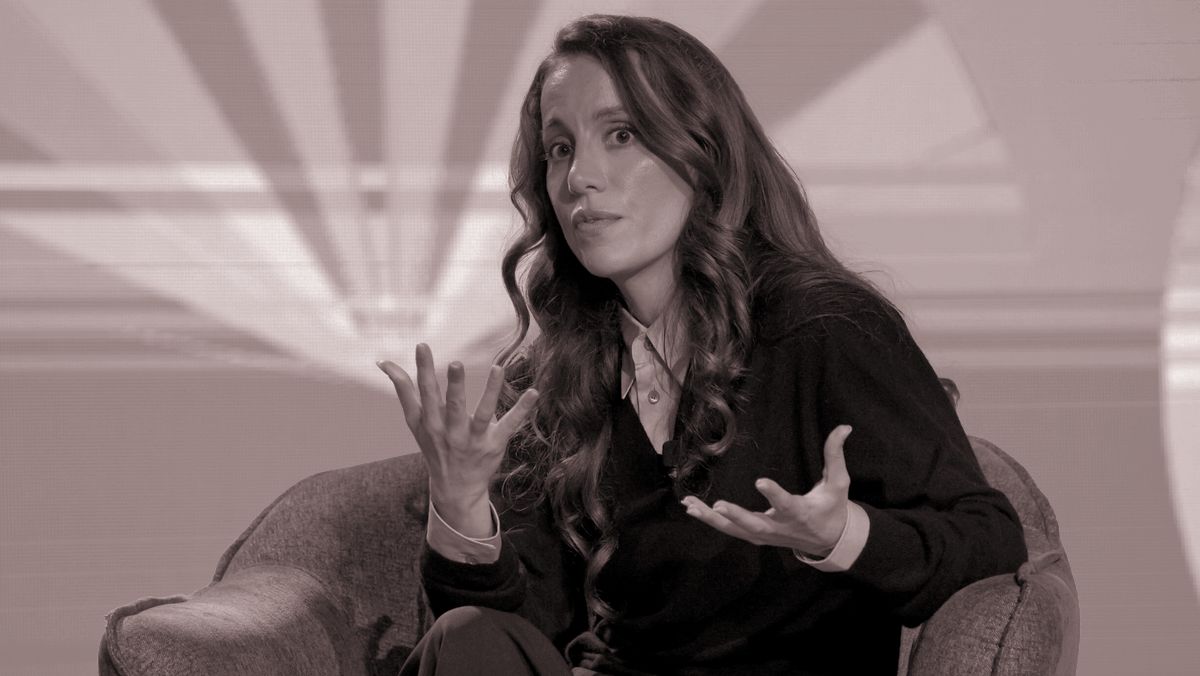
With stratospheric funding and a slew of founding talent from OpenAI, Mira Murati’s Thinking
Machines Lab seemingly had everything an A.I. startup needed for escape velocity. But as it approaches its 15-month mark, the company has little to show for all that promise and capital. |
|
|
|
When former OpenAI C.T.O. Mira Murati launched Thinking Machines Lab, in February 2025, she
made a helluva splash in Silicon Valley. Not only had Murati left OpenAI to set up the foundations of a seemingly legit competitor, but she’d become a talent magnet in the midst of a highly competitive battle for engineers. More importantly, she quickly raised $2 billion in a funding round led by Andreessen Horowitz, with participation from Jane Street, Google Ventures, and Nvidia, that valued the company at $12 billion.
At launch, Thinking Machines Lab had no product in
sight—just a dream of a slightly more focused and quixotic version of OpenAI that would advance “human-A.I. collaboration.” It wasn’t all that dissimilar to what, say, the Amodeis had set out to do when they bailed on Sam Altman’s hyperscale-at-all-costs vision to create a truly viable competitor in Anthropic. Or even what Ilya Sutskever, another former OpenAI co-founder and executive, had less successfully attempted when he launched Safe
Superintelligence—a startup that has secured billions in funding, also without any real product to show for it. Anyway, some 15 months later, and during a moment of head-spinning acceleration in the space, OpenAI is about to go public, Anthropic is raising another privately financed round at about a $1 trillion valuation, and Thinking Machines has been eerily quiet.
Last October, Thinking Machines launched
Tinker, an A.P.I. designed to help researchers fine-tune open L.L.M.s. Cool, sure—but this “me too” product, as one source close to the company suggested, was hardly what the industry had expected from the lab. Instead, it seemed designed merely to “remind people,” as this person put it, that the company still existed. Afterward, Thinking Machines fully dropped off the radar. (The
company declined an interview request for this article.)
Thinking Machines now employs around 150 people, but 13 of its 42 founding team members have already left the building, including three of its six original co-founders, according to Business Insider. Several returned to OpenAI; others jumped at those ludicrous offers coming from Meta.
Not surprisingly, the industry chatter has been pretty brutal. Yet last week, at the tail end of this mini-exodus, Thinking Machines unveiled a new product, one slightly more in line with what you might expect from a frontier A.I. lab: an A.I. system that Murati is calling Interaction Models.
The general idea is to make conversations with models feel more… human. As Murati explained
on X, the “current ‘A.I. experience’ often feels like a conversation that only begins after we stop talking. We have to batch our thoughts. We can’t point at things. We phrase questions like emails. The interface doesn’t leave room for us so we adapt to the models.” Essentially, Thinking Machines wrote in a blog post, they’ve been trying to build more
natural interactivity directly into the model, rather than in the form of scaffolding that goes on top. In practice, this would enable users to interrupt the model, point things out, and adjust their queries in real time. Thinking Machines also announced that it would award multiple $100,000 grants for related social research.
Oumi founder Manos Koukoumidis, who formerly led engineering teams at Microsoft, Meta, and Google, told me the research direction is certainly
“worth exploring”—he just wasn’t sure why Thinking Machines decided to be the company to explore it. “This makes one wonder, is there a specific strategic direction they have in mind that is not clear to the rest of us?” he said. “Are they struggling to figure out what is the right direction for them? Or is it just full of researchers and different voices that they’re just, as a company, a little bit scattered?”
Investors are presumably asking the same questions. Several sources I spoke
to found Thinking Machines’ research preview underwhelming—useful, but incongruous with the hype that the company has generated or the capital it has raised. Others were simply puzzled by what it has been trying to accomplish. Said one person familiar with the company, “A lot of people are confused on if they have a plan. They seem to have started with a massive inventory of brilliant people, and they haven’t been very disclosing.”
Perhaps, this person posited, Thinking Machines
might just be one of those labs, like Yann LeCun’s Advanced Machine Intelligence, or Sutskever’s SSI, where there’s simply no product story… ever. But it’s hard to imagine that mere research is what Andreessen Horowitz had in mind when the firm led the company’s 10-figure seed round. “If this is anything more than 25 percent of their research portfolio, they’re going to be falling way below people’s expectations of this organization,” this person added. “People expected
quite a lot more innovation from that, and in this field, you just don’t get to do three years of secret shit without getting out in the world.” |
But perhaps Murati is pursuing a path that runs deeper than the traditional, now-ubiquitous hype cycle.
Venture investor Vanessa Larco, a former partner at NEA, told me that she can see the economic potential for interaction models that vastly improve voice A.I. systems. Already, A.I. is cropping up in daily consumer experiences—Siri, Alexa, retail checkout, customer service calls—and the tech is not particularly good. Jeff Smith, an A.I. engineer and investor, described Thinking Machines’ work on this more natural, conversational interface as “good science—about
as good as anyone’s done in this respect.”
Breaking through these uncanny valleys is among the final barriers to wider adoption of digital (or even robotic) assistants. “If we want personal assistants in our ears, they need to be non-irritating to talk to,” Smith told me. “We have all the pieces. What we don’t have yet are the product experiences that are compelling enough that people would choose them.”
But as Larco pointed out, there’s a difference between a cool demo and a new
technology finding a real market, especially in this capital-intensive industrial thunderdome. To wit, Thinking Machines’ demo was not all that dissimilar from OpenAI’s own voice-mode product—which it first debuted way back in 2024. (Remember the Scarlett Johansson scandal?) That’s not all that surprising, since the OpenAI engineer who demoed that original product, Rowan Zellers, followed Murati to Thinking Machines.
In the end, two things are true. The
formation of a new generation of A.I. behemoths is about talented engineers, of course, but it also requires the maniacal focus of experienced operators to create an actual company. If the hyperscalers ever started to view Thinking Machines as a real threat, it’s hard to imagine that OpenAI, Google, or Anthropic couldn’t ship something similar before Murati’s model had a chance to catch on. “That is Silicon Valley in a freaking nutshell,” Larco said. “The disruptors want to take on the
incumbents. The incumbents try to defend their territory, and sometimes they win, and sometimes they lose, and it’s just happening faster with A.I.”
On the other hand, these companies aren’t competing against one another so much as they are against one common foe: time. Indeed, Murati doesn’t need to beat her larger rivals to succeed. As PitchBook analyst Harrison Rolfes recently
told me, most V.C.s are perfectly happy to see a portfolio company bought for parts—a paradigm in which smaller A.I. companies, especially those headed up by big names, are essentially moved along a conveyer belt toward eventual acqui-hire or “buy and kill” exits. He called this new trend “day-trading with V.C.”—or simply side-door investments into the largest and
most successful young A.I. companies. If Murati is eventually reabsorbed into OpenAI for more money than her investors put in, that’s a win for everyone. |
That’s all for today. I’ll see you next week.
Ian |
|
|
|
Join Emmy Award-winning journalist Peter Hamby, along with the team of expert journalists at Puck, as they let you in on the
conversations insiders are having across the four corners of power in America: Wall Street, Washington, Silicon Valley, and Hollywood. Presented in partnership with Audacy, new episodes publish daily, Monday through Friday. |
|
|
|
A professional-grade rundown on the business of sports from John Ourand, the industry’s preeminent journalist, covering the
leagues, players, agencies, media deals, and the egos fueling it all. |
|
|
|
Need help? Review our
FAQ page or contact us for assistance. For brand partnerships, email ads@puck.news.
You received this email because you signed up to receive emails from Puck, or as part of your Puck account associated with {{customer.email}}. To stop receiving this newsletter and/or manage all your email preferences, click here. |
Puck is published by Heat Media LLC. 107 Greenwich St., New York, NY 10006 |
|
|
|
|