Hello, and welcome to another special Friday edition of The Best & The Brightest. I’m
Peter Hamby, coming to you from Phoenix, where the Democratic Governors Association winter meeting is underway at the delightful Arizona Biltmore Hotel. Say hi if you see me. Last time I was here? John McCain’s boozy election night “party” in November 2008. (Ask me which inebriated McCain staffers hopped in a rental car at midnight and hightailed it to Las Vegas to escape their sorrows…)
In today’s issue, a conversation with my partner Eriq
Gardner about the Netflix-WBD deal—and whether the Ellison-friendly Trump administration might intervene this year or in 2026, busting out the regulatory and antitrust big guns that they’ve mostly kept holstered since assuming control of the Department of Justice and Federal Trade Commission. If Biden’s was the most merger-skeptic administration in modern memory, the Trump administration has largely taken the opposite approach, giving the green light to
corporate deal heat and crony capitalism at every turn. (Remember when J.D. Vance praised Lina Khan during the 2024 campaign? Quaint in hindsight.)
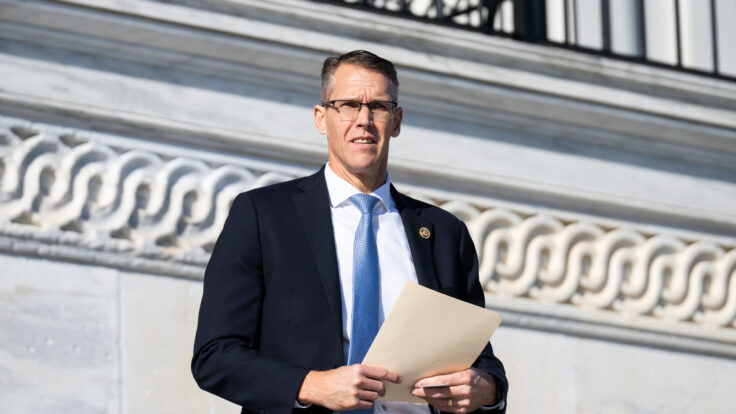
Still, some notable Republicans—Mike Lee, Roger Marshall, Darrell Issa—have raised antitrust concerns over the Netflix purchase and its potential to hurt American consumers with price hikes and limited streaming choices. “Gail Slater at the
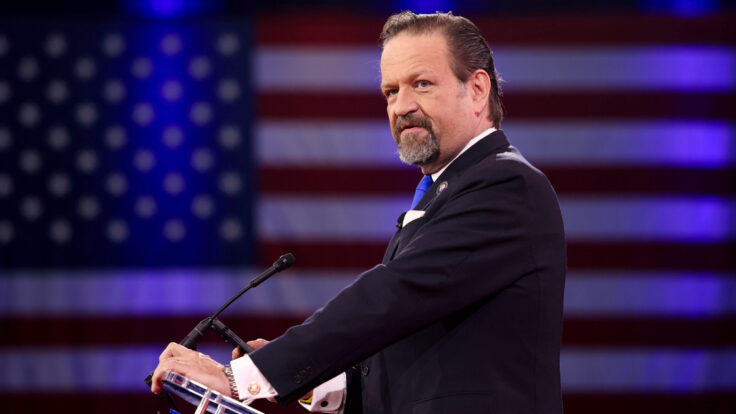
Justice Department and the F.T.C. should be all over this media consolidation,” Steve Bannon told me this morning when I asked for his reaction to the deal. “It’s out of control.”
The only voice that matters in all of this, of course, is that of Donald Trump, who has no antitrust principles to speak of. The president likes deals—deals for his friends and donors, more specifically—so we’ll see if he weighs in on the proposed merger in the coming days. But I’m just a lowly
political hack here, not our resident expert on media law and regulatory chess moves. That would be Eriq. |
|
|
A MESSAGE FROM OUR SPONSOR |
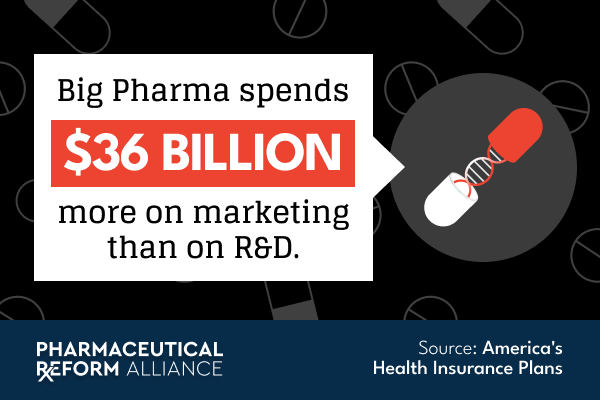
It’s no secret that Big Pharma’s direct-to-consumer (DTC) ads are a problem. In fact, pharmaceutical industry DTC ads are banned in most other countries; yet, Americans are still subjected to manipulative advertising that no one wants to see. Something’s not right when the average American viewer spends more time watching Big Pharma’s drug ads than they do in their physician’s office. Big Pharma has impacted the doctor-patient relationship, and it has to stop.
Americans across the political spectrum want an end to Big Pharma’s ad free-for-all, and lawmakers on both sides agree on this issue. It’s time to
protect consumers from misleading and oversaturated pharmaceutical ads once and for all.
|
|
|
But first, here’s Ian with a few updates from the A.I. regulatory wars… |
|
|

| Ian Krietzberg
|
|
- Republicans are still working
to revive an A.I. regulation moratorium: After serious blowback to the House Republicans’ push to include language in the National Defense Authorization Act that would preempt states from regulating A.I., the effort seems to be on pause. House Majority Leader Steve Scalise told reporters this week that his caucus was now “looking at other places” to deploy the preemption, adding that the N.D.A.A. “wasn’t the best place for this to fit.” Of course, this is the
second time Republican-led preemption efforts have failed. “There’s still an interest,” Scalise added. “We need to find a place to do it.”
- Sam Altman’s legal setback: Last month, OpenAI was ordered to produce 20 million anonymized ChatGPT output logs as part of its ongoing legal battle with a group of news organizations, including The New York Times. OpenAI quickly filed a motion for reconsideration—appealing to both the
district court and the public, in part via a blog post claiming that the demand was a violation of user privacy. On Wednesday, that motion was denied.
In her ruling, Judge Ona T. Wang
wrote that OpenAI had once again failed to demonstrate how the privacy of its users would be compromised by the release, and that the company’s argument was “belied” by the fact that it had already de-identified a 20-million-log sample.
“If OpenAI never intended to produce the entire 20 Million ChatGPT Logs, it would not have (and should not have) spent the time and money de-identifying” the log sample, she ruled. “Either OpenAI initially intended to produce the 20 million logs to News
Plaintiffs and changed its mind, for one reason or another; or OpenAI never intended to produce the logs and de-identified the entire 20 million either as a discovery tactic, or for some other reason that has not been identified. Neither bode well for OpenAI.” (OpenAI declined a request for comment.)
|
|
|
Paramount staged an aggressive, last-ditch effort to secure its own bid for Warner Bros.
Discovery by warning that Netflix would face severe regulatory obstacles in Washington. Could the White House have less leverage than it seems? |
|
|
Earlier this week, I sat down with my partner Eriq Gardner, Puck’s resident legal authority,
to discuss the White House’s… transactional approach to regulatory and antitrust enforcement. Needless to say, the current administration’s position on which companies should be allowed to merge is driven more by personal politics than universal principles. Indeed, when it came to Paramount Skydance’s bid to acquire Warner Bros. Discovery, Donald Trump
and his allies made no secret of the fact that they favored David and Larry Ellison, and that any other suitors would face far greater regulatory scrutiny. Then Hollywood woke up to the news that Warners is selling to… Netflix.
Washington appears to be gearing up for a fight that will stretch well into 2026. But as Eriq argues, the Trump administration (and yes, Elizabeth Warren) may actually have far less leverage over this deal than
outsiders might assume. Herewith, our conversation about what the D.O.J. can do, how other regulators could get involved, whether Paramount will go hostile, and what role the F.C.C. will likely play in antitrust enforcement in the year ahead. As usual, this conversation has been lightly edited for clarity. |
Peter Hamby: Netflix just shocked Hollywood by announcing plans to acquire
Warner Bros. Discovery’s studio and streaming business for $82.7 billion in 2026, beating out Paramount Skydance, which seemed like it was in pole position to win the bid. Do you think the Ellisons, who have the inside track with Trump, will go hostile? And will they lean on their connections to government regulators to try to kill the deal? |
|
|
A MESSAGE FROM OUR SPONSOR |
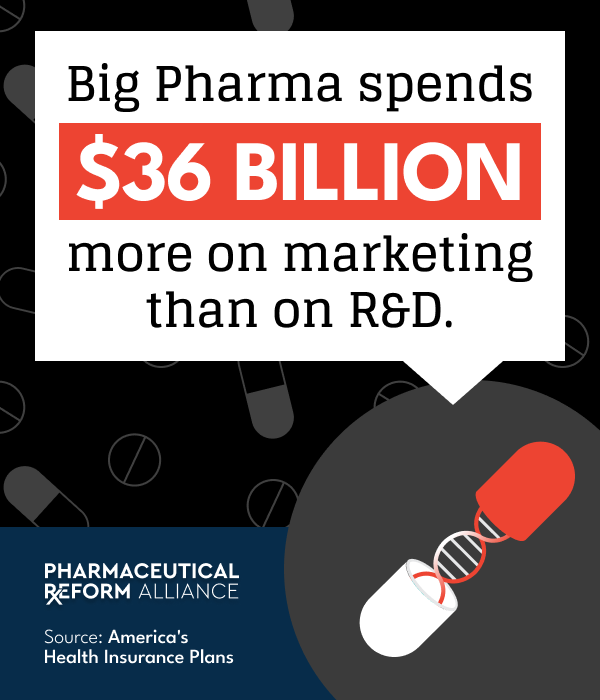
It’s no secret that Big Pharma’s direct-to-consumer (DTC) ads are a problem. In fact, pharmaceutical industry DTC ads are banned in most other countries; yet, Americans are still subjected to manipulative advertising that no one wants to see. Something’s not right when the average American viewer spends more time watching Big Pharma’s drug ads than they do in their physician’s office. Big Pharma has impacted the doctor-patient relationship, and it has to stop.
Americans across the political spectrum want an end to Big Pharma’s ad free-for-all, and lawmakers on both sides agree on this issue. It’s time to
protect consumers from misleading and oversaturated pharmaceutical ads once and for all.
|
|
|
Eriq Gardner: While I think the D.O.J.’s reaction is important, I also have a hard time imagining
David Ellison wants to hang out for a couple years waiting for answers. So I’m definitely putting more weight into the scenario of PSKY going hostile, leading shareholders into court to pry open the bidding process. Who will be the first to ask for an injunction? It might not be regulators.
That said, I do think those efforts would be aided by any concurrent activity in D.C. that undermines deal certainty. The argument will be made that David Zaslav and
the board are breaching fiduciary duties by attempting the Sisyphean task of selling this Netflix deal to the Trump administration. Is that a solid claim? Not sure, but obviously, the situation can become quite hot.
I’m also intrigued by Netflix’s countermoves on this chess board. As everyone from regulators to Hollywood’s talent community raises a ruckus over the proposed transaction, does Netflix signal any openness to accepting conditions? I’m talking about potentially transformative
changes to the way it customarily does business, like how it might license content to rivals, or how it might make its own platform more open. Those could become important to win over critics and some regulators—particularly in Europe. It may also be moves meant to preempt D.O.J. arguments on why the merger should be blocked. There’s a lot to come here.
Earlier this week, Paramount’s lawyers at Quinn Emanuel sent a letter to the WBD board complaining about a “tilted and unfair
process.” That seems like the setup for a shareholder challenge, but also grist for the Trump administration to get involved.
I think people have this idea that a merger won’t happen unless the Trump administration gives its nod. That’s not necessarily the case. The administration can stall a transaction for a few months as they gather information, but at certain points, they would need to go to court and ask a judge for an injunction if they want to stop it from closing. And to
get an injunction, they would have to convince a judge that it’s likely to diminish competition in a substantial way.
At the same time, people forget that the Trump administration isn’t the only regulator in town—there’s also state A.G.s, European competition authorities, workers in the industry, even consumers. They can also go to court and make their own arguments for why a transaction doesn’t make sense for competition. And we shouldn’t ignore those possibilities, especially because
this whole thing has gone very political. If the Trump administration is going to give a certain company a pass because they’re political favorites, that might spur some state A.G.s to step up to the plate—and vice versa. I think things are a little bit more nuanced than people make them out to be.
It seems kind of funny to me that the Trump administration would be concerned that a Netflix–Warner Bros. merger would have too much power over Hollywood, but not concerned that Warner
Bros.–Paramount would have too much power. And by the way, the opposite of all antitrust is Trump telling Paramount to greenlight Brett Ratner’s Rush Hour 4. In other words, it just seems like they’re playing favorites, and they could gesture toward using antitrust concerns to block deals they don’t want, while also letting other ones skate through. Is that what’s going on?
I think that’s part of what’s going on. I also think there’s a
game within a game being played. The parties who were bidding on Warner Bros. Discovery were kind of posturing and trying to get David Zaslav’s ear to say, Pick us, and you can sail through without much of a challenge whatsoever. It’s true that Netflix could face real trouble. I just don’t know if that trouble is as formidable as some think. There’s definitely an interesting amount of discussion and discourse around the regulatory give-and-take here. And I guess that’s to be expected in
this administration, where favorites are played. |
|
|
It’s not very nice. You’d rather have these antitrust things be decided on merits, but it just doesn’t seem
like that’s the case. It’s almost like few actually care about whether or not there’s too much power. It’s just about whether or not the deal can close. |
There’s a narrative that Donald Trump and his allies are just letting business run wild, and that
there’s a completely piecemeal approach to the way they regulate business. Is this true?
I think it’s true to a certain extent. For one thing, they haven’t challenged nearly as many mergers as the Biden administration. On the other hand, they’ve continued some of the cases that were brought during the Biden administration against Meta and Amazon, and they haven’t dropped those. So they’ve kind of played it both ways.
What I’m really looking forward to in
the coming year is how they plan on going on the attack against states that want to regulate A.I. There’s been a lot of talk about that in the last couple of weeks, that the Trump administration is going to do things like withhold broadband money from any state that dares to pass their own laws regulating the A.I. industry. To some people it’s definitely going to look like the Trump administration is kind of pulling back on the war against Big Tech and doing a lot of favors and letting the
market kind of run wild. In the Trump administration’s eyes, they’re in a race with China—and whoever’s bending their ears here has convinced them that regulation is bad and they need to keep their foot on the gas pedal.
I’m basing some of this on your reporting, but it seems the F.C.C. hasn’t really done much of anything since Trump came into office in January. There’s a lot of bark and no bite. All of the wins against media companies have mostly just come in the form of
settlements from lawsuits. What have you seen?
It depends on what you care about. They haven’t done much regulation of traditional media. But if you care about things like broadband, spectrum, satellites, and stuff like that—the Elon Musk sector of the world—there’s actually a lot of activity that goes on. You also have to realize the F.C.C.’s mandate, which is rather thin at the moment. And it’s been a Republican priority over the years to make it even thinner.
And interestingly enough, there’s this talk about Brendan Carr muscling up the F.C.C. to go after streamers, but right now the F.C.C. regulates those who have licenses for local stations.
For instance, let’s take the Warner Bros. Discovery transaction. WBD doesn’t actually have any broadcast stations, so the F.C.C. has no role in approving that merger. That’s in contrast to Skydance’s buyout of Paramount, because there were local CBS stations that were involved, and
that’s what gave Carr leverage to put the brakes on everything. So it all depends on the situation, but there are interesting things coming out of the F.C.C.
As we head into 2026, what’s on the horizon for the F.C.C., and also the Trump administration when it comes to regulation and antitrust efforts?
Right before Thanksgiving, the F.C.C. put out a public notice saying that they wanted to understand more about the relationships between local station groups like
Nexstar and Sinclair, and the Big Four networks. And that gets into lots of really interesting issues, including how these big networks are basically starting to put their own programming on their own streamers. Can the F.C.C. do anything about that? There’s also the reverse trans fees. All the Nexstars of the world actually pay money to the big networks to get their programming, and it’s possible that the F.C.C. comes in and puts a cap on that. And that could reorder the economics of broadcast
television.
I have no doubt that in the coming year we’re going to be talking about what’s going on at the F.C.C. more and more. As much as I think the F.C.C. is toothless at the moment, I also think Carr is a very ambitious person. So I think it’s an agency to watch. |
|
|
Join Emmy Award-winning journalist Peter Hamby, along with the team of expert journalists at Puck, as they let you in on the
conversations insiders are having across the four corners of power in America: Wall Street, Washington, Silicon Valley, and Hollywood. Presented in partnership with Audacy, new episodes publish daily, Monday through Friday. |
|
|
Unique and privileged insight into the private conversations taking place inside boardrooms and corner offices up and down Wall
Street, relayed by best-selling author, journalist, and former M&A senior banker William D. Cohan. |
|
|
Need help? Review our
FAQ page or contact us for assistance. For brand partnerships, email ads@puck.news.
You received this email because you signed up to receive emails from Puck, or as part of your Puck account associated with {{customer.email}}. To stop receiving this newsletter and/or manage all your email preferences, click here.
|
Puck is published by Heat Media LLC. 107 Greenwich St., New York, NY 10006 |
|
|
|