{{ 'now' | timezone: 'America/New_York' | date: '%b %d, %Y' }} |
|
|
Happy Tuesday. Welcome back to The Best & The Brightest. I’m Peter
Hamby.
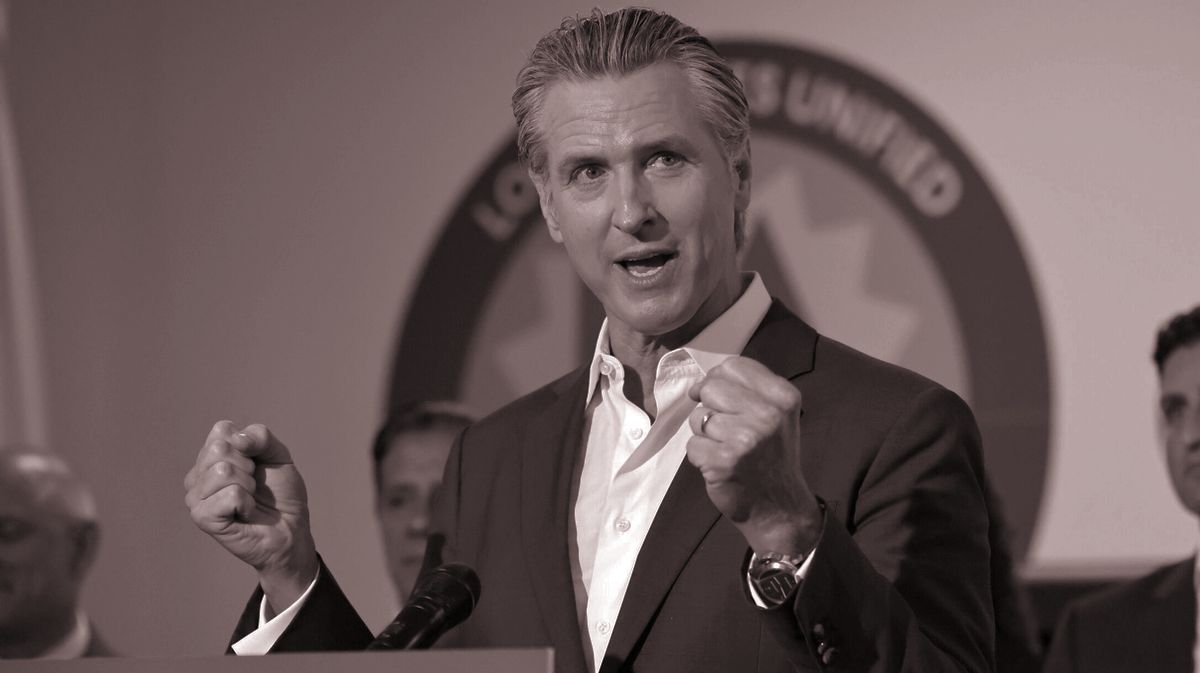
Tonight, a dispatch from my adopted state of California, where Gavin Newsom’s brash and expensive campaign to re-gerrymander the state in favor of Democrats seems like a surefire winner in November and positions him as Donald Trump’s chief foil. But despite a polling lead and a platoon of famous Dem faces showing up for Prop 50, Team Newsom still has work to do to convince voters that this off-year election is worth
their time… |
|
|
What Section 453 really means
Section 453 doesn’t block lawsuits or give blanket immunity to pesticide
companies.
Section 453 ensures labels are based on the EPA’s safety assessment under their guidelines and keeps companies accountable when they break these.
Explore more about Section 453 here |
|
|

| Abby Livingston
|
|
- Obama gets in the ring:
In his most direct political intervention since Trump’s second election, Barack Obama appeared in a new ad telling California voters that “democracy is on the ballot” in the state’s redistricting initiative this November. Democrats are increasingly bullish that the measure, which would likely result in a five-seat pickup for their party in the state, will pass, and
they’ve already outspent Republicans on TV ads by nearly $40 million. Now they’ve deployed the former president to make a closing argument in the campaign’s final weeks.
Speaking directly to the camera over an end-of-the-world musical score, the former president told Californians that “the whole nation” is counting on them to prevent Republicans from “steal[ing]
enough seats in Congress to rig the next election.” Of course, he’s referring to successful efforts in Texas and Missouri to gain Republican House seats through redistricting, and proposed efforts elsewhere.
Obama’s sharp language is a departure from the low-key tone he struck over the past 10-ish months, while headlining private fundraisers for the California redistricting cause and making mostly indirect comments about Trump. But the Republican aggression on mid-decade redistricting
clearly angered him enough to abandon his once-held view that gerrymandering is a scourge in American politics—at least at the moment.
|
|
|
And speaking of California… |
|
|
Democrats have poured more than $140 million into the off-cycle ballot initiative to
gerrymander California, counter Trump’s efforts to manipulate the midterms, and—perhaps most importantly—hand Gavin Newsom the political trophy he needs to cement his status as the presumptive Democratic frontrunner in 2028. But there are plenty of voters who don’t trust Gavin, too. |
|
|
The campaign for Proposition 50 in California—Gavin Newsom’s audacious and expensive
“Election Rigging Response Act” to fight back against Trump-led gerrymandering efforts in Republican states—has a little something for everyone. Want to save democracy? Vote Yes on 50. Fed up with ICE raids? Vote Yes on 50. Think the president is a dictator? Vote Yes on 50. Stop Republicans from stealing the midterm elections, save our beloved universities, make Trump so angry he
throws his McDonald’s french fries on the ground in fury? Vote Yes on 50. (Seriously, that’s one of the bits in lefty billionaire Tom Steyer’s cartoonish multimillion-dollar ad blitz.)
The barrage of ads in favor of Prop 50—which would temporarily pause California’s celebrated independent redistricting process and gerrymander the state’s congressional map in response
to G.O.P. efforts to erase Democratic seats in Texas, Missouri, and possibly Indiana—have become inescapable here as Election Day nears. This summer, when Democrats in Sacramento rushed to put the measure on the November ballot, at Newsom’s urging, it was designed to write five Republicans out of California’s congressional map, at least until the next census. But the brash effort created something rather unusual in the country’s biggest state: an off-year election, with nothing else on the
ballot to grab voters’ attention. And that means Newsom and his team have to work a bit harder than usual to turn out a usually reliable Democratic electorate. “Motivate, motivate, motivate,” said one Yes on 50 strategist and longtime Newsom advisor, describing their current strategy. “Polls don’t vote.”
Political watchers outside of California might assume that Yes on 50 is a surefire winner. How could a pro-democracy initiative backed by Newsom possibly fail in deep blue California?
Trump’s approval rating in the state is stuck beneath the La Brea tar pits, after all. But polls also show that Democrats still have some work to do to convince voters that a special election about congressional redistricting is worth the time and money—especially when plenty of Californians believe leaders should be more focused on the cost of living, homelessness, and affordable housing. |
|
|
Why glyphosate is backed by regulators worldwide For 50 years, glyphosate-based products have been approved by regulators in the U.S., EU, Canada, Japan and more. Bayer stands behind these findings, and Section 453 reinforces these science-based processes, keeping labels reliable and consistent. Learn more about Section 453 here |
|
|
Former Gov. Arnold Schwarzenegger, a gerrymandering foe who helped create the independent
redistricting commission in 2008 and is now the main face of the No on 50 campaign, called the vote a dangerous waste of time. “The homelessness in California has nothing to do with Trump,” he told KFI radio last week. “That we have the highest rent payments anywhere in the nation has nothing to do with Trump. Housing prices, electricity prices—that has nothing to do with the federal government.” Those problems, he said, result from the state’s mismanagement by the very same people now pushing
Prop 50. “Let’s stop it and vote ‘no,’” he said.
Two different polls last week showed support for the measure hovering around 50 percent—a winning number, though Newsom would like the
margin to be higher as he pads his résumé ahead of the 2028 presidential cycle. Those same polls found about a third of voters opposing Prop 50, with about 15 percent undecided. That would suggest both sides have persuasion work to do, to better explain to those remaining voters what the measure does and get them out to vote. But this isn’t Michigan or Pennsylvania. Registered Dems outnumber Republicans by a nearly two-to-one margin in California, and Newsom is betting that blue mobilization is
the whole ball game. “They are clearly playing the math game,” said Rob Stutzman, a veteran G.O.P. strategist in Sacramento. “It’s the strategy they’ve chosen, I think, wisely.” |
Newsom’s strategists have turned the Prop 50 race into a national statement piece, telling Trump-hating
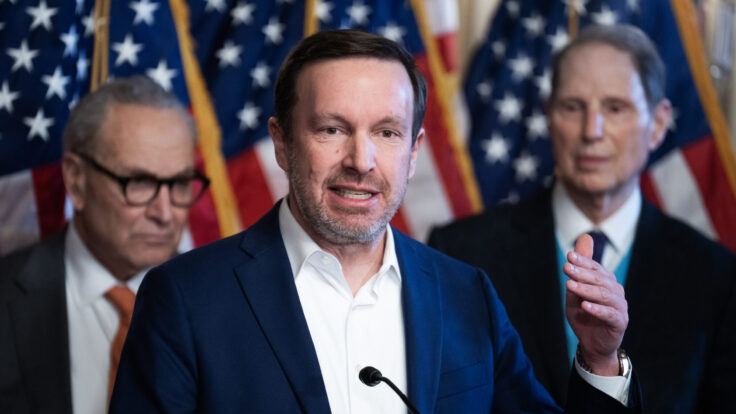
Californians that passing the measure would represent a giant middle finger to the White House. “The mood in the country has soured—on the economy, on tariffs, his immigration actions,” the Yes on 50 advisor told me, framing a “yes” vote as a chance to “stop the president and his agenda that’s hurting you.” Meanwhile, the campaign has recruited so many national Democrats that their ads are starting to resemble an MSNBC booking slate. Elizabeth Warren, Jasmine
Crockett, and Chris Murphy have all appeared in Prop 50 ads, as has Alexandria Ocasio-Cortez, who rarely volunteers for out-of-state campaigns but cut an ad in Spanish aimed at the state’s crucial Latino voting base. (“¡Sí en la 50!”) The latest star, who fronted an ad that launched on Tuesday, might be the biggest: Barack Obama.
Along with Newsom and his gleaming mug, these
famous Dems are now swamping screens from broadcast to YouTube, with ads airing during Dodgers playoff games and the local news, thanks to the more than $140 million raised by the campaign so far. The vast sums pouring into Yes and its associated campaigns—including millions from Steyer, George Soros, various labor outfits, and the campaign arm for House Democrats in Washington—have dwarfed the fundraising totals for Prop 50’s opponents. (The leading groups urging Californians
to vote “no” on 50—one led by former House speaker and Bakersfield native Kevin McCarthy, another funded by Schwarzenegger’s bow-tied billionaire donor Charles Munger—have raised only about half that.)
Newsom has also tapped his increasingly chummy relationship with progressive creators (also an important calling card for his possible presidential bid) to get the message out. A recent livestreamed fundraiser—originally named FAFO, for “Fuck Around and
Find Out,” until Charlie Kirk was murdered—collected $1 million for the Yes campaign. Famous Dems like Hakeem Jeffries, Pete Buttigieg, and Beto O’Rourke were prominently featured, but they shared top billing with influencers and podcasters like Brian Tyler Cohen, Ben Meiselas, and the hosts of Pod Save America. “They’re hitting this thing from every
angle,” Cohen told me, noting the emphasis on speaking with creators and “meeting audiences where they are.” He went on: “It’s a good model for other Dems to follow.” |
Despite its near ubiquity, the Yes campaign is far from universally beloved on the left, a dynamic that gives
opponents some modest hope that Newsom might be embarrassed in November by something less than a blowout win. On a recent Saturday, I chatted with local Democrats in Manhattan Beach, a mostly white coastal community just south of LAX. They were running an outreach tent at the Hometown Fair, an annual fall festival with a petting zoo and vendors serving “pepper bellies,” which are open bags of Fritos drenched in nacho toppings, ballistic missiles targeting my acid reflux. The Dem
volunteers were handing out Yes on 50 stickers and fliers that blared an anti-Trump message: “This isn’t politics as usual. It’s an emergency for our democracy.”
I asked them whether everyone wandering by their booth was on board with Newsom. The answer was complicated. “Most people are positive,” said Ann Gotthoffer, the president of the Beach Cities Democrats. Still, she said, she’d heard some Democrats say they might vote “no” because they themselves had
fought for the nonpartisan redistricting commission. “They are afraid that if we do this, we will become too much like Republicans. I get it.” She described her countermessaging as essentially: “We can’t play a game where one team is playing by the rules and the other team isn’t.”
Megan Bowers, another volunteer, chimed in. “It’s temporary,” she said of the measure, which would pause independent redistricting only until 2030, after Trump leaves office. “That helps.”
(Opponents of Prop 50 scoff at this notion. Jessica Millan Patterson, the former California G.O.P. chair who is helping McCarthy’s opposition group, said Democrats are just going to keep their newly gerrymandered seats. The measure, she said, “was drawn up by the very people who are running in these districts, and will run in them again when they have the chance, and that’s just disgusting.”) |
|
|
A few steps away, at a pop-up by the local branch of the League of Women Voters—which is officially
nonpartisan and hasn’t taken a position on Newsom’s crusade—volunteers told me that plenty of California good-government types remain queasy about voting “yes.” Several of them, in fact, said they are voting “no,” but didn’t want to be identified because they didn’t want to speak on behalf of the LWV. “Nonpartisan redistricting is just the best way to go for drawing maps, and if the whole country did what we did, that would be the way to go,” one said. Another woman told me that opinions in her
friend group are mixed. “People are conflicted,” she said. “Conceptually, what we have here in California with redistricting is the best. Why give up what we worked so hard to get?”
Strategists for No on 50 are realistic about their chances, which aren’t great given the spending disparity and star power on Team Newsom. Californians are historically prop-skeptical, and Newsom has lost a handful of prop races he’s attached his name to in the past, but most insiders expect this one to pass.
Meanwhile, the biggest star on Team No, Schwarzenegger, remains well-liked, but is still a figure from a bygone era of pre-Trump California politics, and he’s reluctant to criticize Newsom, or any California governor, personally. (Nor does Arnold like Trump—he voted for Kamala Harris in 2024.)
But Prop 50 opponents are also sanguine about a possible coalition emerging against the measure—good government libs awkwardly joining forces with Republicans who hate Newsom—that
might keep the winning margin below where Newsom would like. “Look, it’s California. It’s an uphill battle,” said one national Republican operative involved in the race. But this person pointed out that it’s harder to get people to vote “yes” for an initiative that isn’t immediately understandable. Plus, the Republicans are seeing the anti-Trump messaging, too, which may drive turnout on the G.O.P. side. “The fact that [the Yes side] is barely over 50 percent, and that’s the number they’re
hitting consistently—that’s a red flag.” |
“There Are
Voters Who Don’t Trust Gavin”
|
Newsom, meanwhile, has made the campaign into a battle between himself and Trump, in an off-year, on an issue
that doesn’t naturally resonate with people who aren’t close political watchers. That should work for the governor, and he can build on the race as he shapes his national reputation, Stutzman told me. “He’s building an organization that they can use moving forward. Trump gifted it to him. First the Los Angeles ICE raids, now this.” But, Stutzman said, the hyperpartisan nature of the messaging has the potential to turn off plenty of voters who might just stay home—or who aren’t really paying
attention in the first place, especially given that it’s an off-year election. “There are also voters who don’t trust Gavin,” he said. “So this race is just politician-on-politician violence, and that isn’t really attractive unless you’re hardcore partisan.”
In other words, this election might look like so many other off-year or midterm elections in the Trump era, in which Democrats rely a little too much on turnout from the most hyper-engaged, college-educated types, without expanding
their numbers among the working-class voters, young people, and Latinos who have drifted away from Democrats in the last decade. The Yes campaign is hoping this isn’t the case: Their field program is communicating with voters in eight different languages and partnering with several activist groups with deep ties to Spanish speakers and workers in California, including the Coalition for Humane Immigrant Rights (CHIRLA), the Dolores Huerta Foundation, and the SEIU. The Democratic National
Committee, too, announced this month that they’re deploying some 40,000 volunteers to engage with Latino voters in the state.
Mike Madrid, the California-based political strategist who studies the Latino vote, said he thinks those who vote will probably side with Yes, in part because they aren’t happy with Trump’s management of the economy. But he said that California’s Latinos—who make up about a third of the state’s registered electorate—have soured on the Democratic
Party too, and he’s watching to see how many will actually show up for Newsom in a special election about redistricting when the cost of living is still their primary concern. “Latinos now have the lowest partisan anchor of any demographic, and their dislike for Democrats right now is at video game levels,” Madrid told me. “What are you voting for with this prop? A Democratic Party you just rebuked last year, or Donald Trump, who is a bad alternative? When you can’t pay the rent or the mortgage,
it’s hard to see a compelling reason to cast your ballot here. The resistance moms who worry about democracy—that’s who’s showing up.” |
|
|
Join Puck’s chief political columnist, John Heilemann, as he roams the corridors of power and influence in America on this
twice-weekly interview show, taking you beyond the headlines with the people who shape our culture: icons and up-and-comers, incumbents and insurgents, moguls and machers in the overlapping worlds of politics, entertainment, tech, business, sports, media, and beyond. The conversations are rich and revealing, unrehearsed and unexpected… and reliably impolitic. A Puck-Audacy joint, new episodes drop every Wednesday and Friday. |
|
|
Unique and privileged insight into the private conversations taking place inside boardrooms and corner offices up and down Wall
Street, relayed by best-selling author, journalist, and former M&A senior banker William D. Cohan. |
|
|
Need help? Review our FAQ page or contact us for assistance. For brand partnerships, email ads@puck.news. You received this email because you signed up to receive emails from Puck, or as part of your Puck account associated with {{customer.email}}. To stop receiving this newsletter and/or manage all your email preferences,
click here. |
Puck is published by Heat Media LLC. 107 Greenwich St, New York, NY 10006 |
|
|
|




_01K77C0D9VDDGVNNP1DBKASPB4.jpg "Bayer")