 |
 |
|
Welcome back to The Best & The Brightest.
I’m Abby Livingston, filling in for Tina Nguyen. In today’s dispatch, an inside look at how Nancy Pelosi’s masterfully equivocal Morning Joe appearance is ricocheting across Capitol Hill, and whether it opened the floodgates for more Democrats to begin openly calling for Biden’s withdrawal. Then, my partner Dylan Byers has the latest on the Biden media circus, from Karine Jean-Pierre’s credibility crisis to the latest on the George Stephanopoulos-TMZ brouhaha.
🎧 From the Puck podcast network: On the latest episode of John Heilemann’s Impolitic, Guardian columnist and BBC radio host Jonathan Freedland offered a tour d’horizon of political news in Europe—and the U.S. as seen from across the pond. On Tara Palmeri’s Somebody’s Gotta Win, she chatted with CBS News’s Weijia Jiang about Biden’s disastrous media week and attempts at damage control, and on The Powers That Be, Tara joined Peter Hamby to discuss the anguished chatter circulating among Capitol Hill Democrats. You can check out all those episodes, and more, right here.
|
|
A MESSAGE FROM OUR SPONSOR
|
 |
| You work hard to provide the essentials for your family. We are honored to do the same. America’s freight railroads transport just about everything. The device you’re using? Diapers for your kids? And the food in your dog’s bowl? All were likely on a train at some point.
As a key link in the supply chain, we help move about 61 tons of goods per American every year. That’s a lot of precious cargo. To move your essentials safely, we invest about $23 billion annually to maintain and improve our infrastructure. These ongoing investments earned the highest grade for infrastructure in the last two American Society of Civil Engineers’ report cards. And it’s one of the reasons why freight rail remains the safest and most fuel-efficient way to move your most important stuff. Learn how freight rail works. |
|
|
|
|
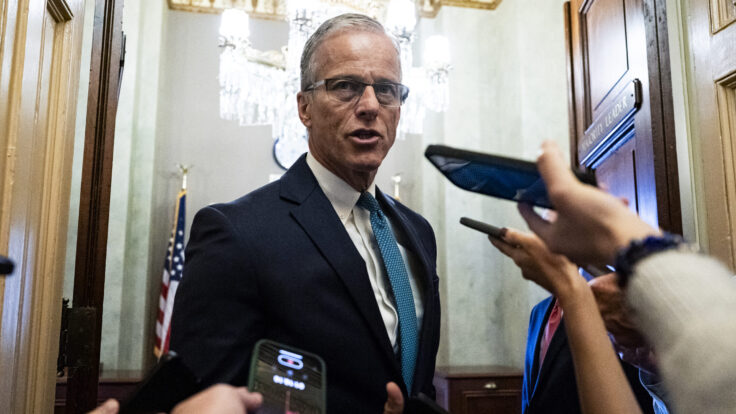
| As the Biden campaign launched its taming-of-the-Hill campaign earlier this week, leaning on the president’s relationships to suppress a congressional revolt, Nancy Pelosi went dark. Her TV appearances slowed down, and during yesterday’s House Democratic caucus meeting, she remained quiet and in a listening posture as her colleagues debated the president’s future, according to a source in the room. So when word came that Pelosi planned to appear on Biden’s favorite show, Morning Joe, on Wednesday morning, it was clear she would be addressing an audience of one.
On the surface, the words she chose sounded innocuous enough. “It’s up to the president to decide if he is going to run,” Pelosi told Jonathan Lemire. “We’re all encouraging him to make that decision. Because time is running short.” But for the Democratic political class, her words may as well have been a thunderclap. Biden, of course, has been adamant, over and over again, that he’s already made his decision. Here was Pelosi, the elder stateswoman of the Democratic Party, blowing right past her president’s public statements and firmly and unequivocally resetting the table.
Several Democrats I’ve spoken with since her appearance—operatives, members, former members, leadership aides—interpreted her remarks as providing permission for members to speak their minds about whether Biden should end his campaign. “Some people saw it as cover, I saw it as her releasing the floodgates,” a Democratic consultant told me. “I couldn’t believe what I was hearing.”
In the hours since Pelosi’s appearance, she has gently, and adroitly, backpedaled. “I think the president is great. And there are misrepresentations of what I have said. I never said he should reconsider his decision” she told CBS’s Jalaa Brown, giving a masterclass in old-school political bobbing and weaving. Of course, her calculated revisionism didn’t exactly contradict her initial message: that the president has a decision to make.
Whatever Pelosi’s intention, the Democratic Party remains in a state of unstable equilibrium, with most lawmakers holding off from public airings of their private concerns. Only Pat Ryan, a Frontliner from New York, and Earl Blumenauer, a progressive member from Oregon, have called for Biden to withdraw since Pelosi’s Morning Joe jolt. But there’s a newfound bravery coursing through members in both chambers, who are increasingly using language that signals to Biden that it’s time to let go. In the Senate, perhaps taking cues from Pelosi as well as Michael Bennet’s needle-threading, not-quite-calling-for-Biden-to-step-down interview on CNN last night, Richard Blumenthal told reporters this afternoon that he was “deeply concerned about Joe Biden winning this November.” Senator Peter Welch joined the chorus, saying, “I want him to look at the evidence and make a hard decision. He’s earned that.”
Of course, Pelosi is also among a very small group outside the Biden inner circle—Jill and Hunter, Mike Donilan, Anthony Bernal, Ron Klain, Anita Dunn, Ted Kaufman—who has any hope of influencing the president’s decision. Biden’s complicated relationships with Obama and the Clintons has pushed them to the sidelines (at least publicly). Meanwhile, Chuck Schumer and Hakeem Jeffries are busy balancing their caucuses’ politics. And while Pelosi’s statement could be interpreted as bigfooting her successor, no Democrat I’ve spoken with has characterized Pelosi as undercutting Jeffries, who’s been performing shuttle diplomacy among the various factions: the Congressional Black Caucus, the New Dems, the Frontliners—the kind of hustling Pelosi used to do as leader, and he’s in listening mode.
Pelosi is not merely an elder Democratic stateswoman. She’s the only major player here who comes close to Biden’s stature. She took power in 2002 (before some Capitol Hill interns were even born…) and has led Democrats through several eras as tumultuous and unnerving as the current one—the 2008 financial crisis, the A.C.A. passage, the Trump years, the insurrection, etcetera. As speaker, she crossed paths with practically everyone who matters in Democrats politics, and because she no longer has any professional hills to climb, she’s perceived as an honest broker on the Hill. The former speaker, who at 84 is three years older than Biden, has a long history with the president. She’s been in too many negotiations with him to count, dating back to his V.P. tenure. A former Democratic leadership aide characterized their relationship as “old-school Catholic pals.”
In my conversations with Hill insiders during the past weeks’ collective panic attack, many expressed relief that Pelosi was still around. One former Democratic Hill operative, who was most certainly not down with N.D.P. 10 years ago, admitted he’s taken to referring to her as “the godmother.”
It’s also important to remember that Pelosi, a daughter of the Baltimore political machine, taught Democrats how to be ruthless. Moreover, she has always been in tune with House Democrats, and her rhetoric tends to track with the caucus’s evolving mindset. The consensus after her TV appearance this morning was that she was saying the quiet part out loud. Said the former Pelosi detractor, “She’s where everyone is.” |
 |
| Curious George Stephanopoulos |
| News and notes on the media inside conversation amid the continuing Biden fallout: George’s man-on-the-street confession, Karine’s credibility crisis, and lessons from 2016. |
|
|
|
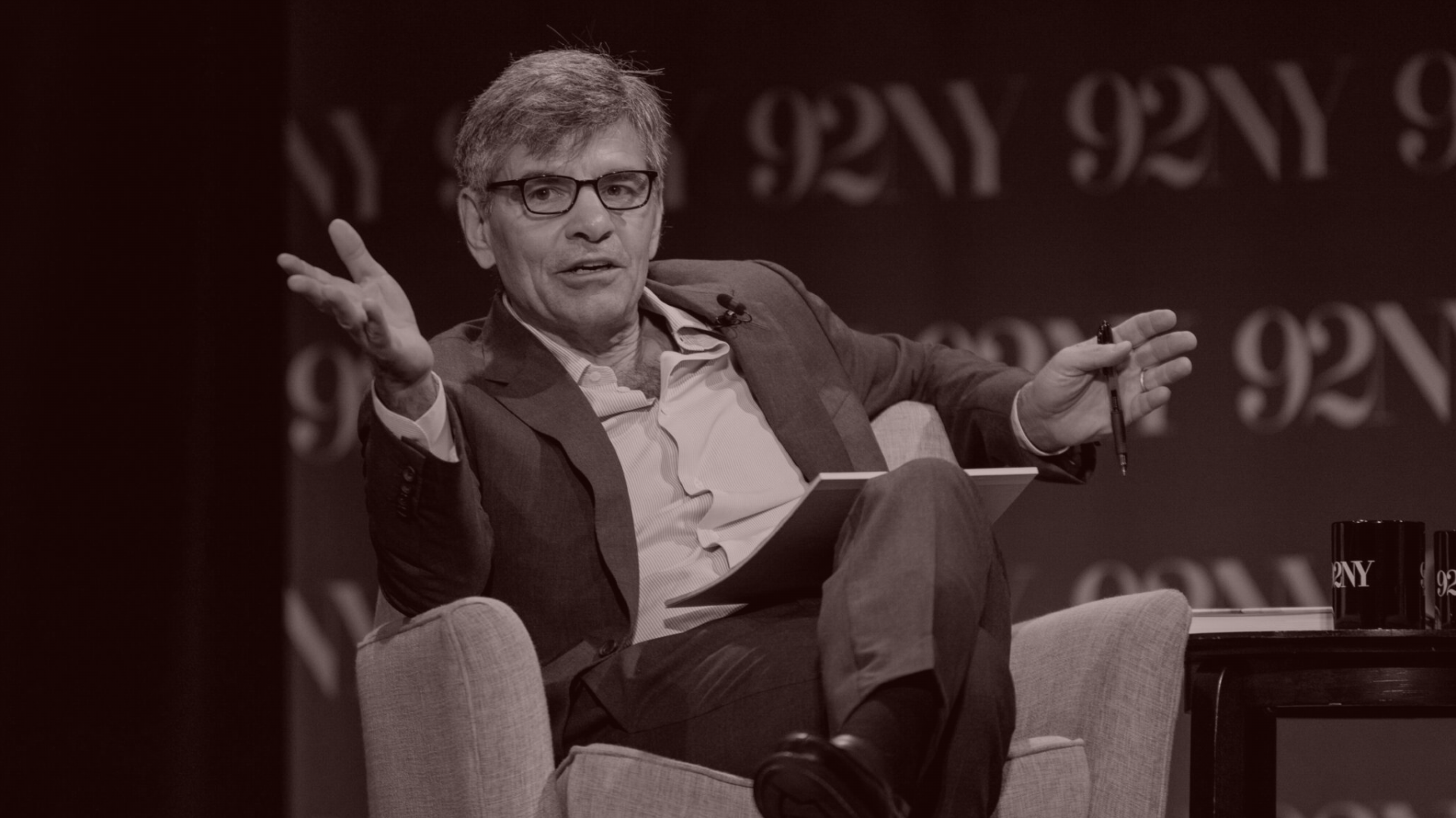
| On Tuesday afternoon, the ever-disciplined, often soft-spoken, and normally besuited veteran politico and newsman George Stephanopoulos was marauding up Fifth Avenue in a t-shirt and gym shorts when he was accosted by a passerby, who sought to extemporaneously follow up on the anchor’s recent newsmaking interview with embattled president Joe Biden. So, this passerby wanted to know, did George think the president should step down? “I don’t think he can serve four more years,” Stephanopoulos casually responded. In a matter of minutes, the secretly taped footage was furnished to TMZ.
In light of the national fervor over Biden’s disastrous debate performance, two weeks ago, Stephanopoulos’s gaffe struck a nerve. Through a spokesperson, he told me he “shouldn’t have” responded to his interlocutor. Meanwhile, his network distanced itself from what it stressed was their $20 million dollar-a-year anchor’s “own point of view.” But it was obvious to everyone that George had meant what he’d said and that it was indeed yet another meaningful vote of no confidence in the president—not just from someone who had recently sat down with him in person, but from a 30-year veteran journalist and former Democratic White House press secretary who has deep respect for the office and the institution. |
|
A MESSAGE FROM OUR SPONSOR
|
 |
| Your new energy-efficient appliances are doing more than just lowering your energy bill – they're doing their part for the planet. Shouldn’t shipping them do the same? Freight trains are up to four times more fuel efficient than trucks. And a single train can keep hundreds of trucks off the roads, cutting greenhouse gas emissions by as much as 75%.
We’re proud to be the most sustainable form of transporting cargo today, and we’re also driving toward becoming even more sustainable tomorrow. America’s freight rail companies are investing in electric cranes and recyclable composite rail ties. We’re also testing biodiesel fuel blends and researching zero-emission hydrogen powered locomotives. All to remain the safest and most fuel-efficient way to move your essentials across the country. Learn how freight rail works. |
|
|
| Indeed, in phone calls and text messages on Tuesday night, some of Stephanopoulos’s friends and longtime colleagues wondered whether this was a gaffe or simply his subconscious attempt to reckon with his frustrations as a concerned American institutionalist? “This moment truly, deeply upsets him,” one longtime colleague told me. “Trump is a clear and present danger, and Biden is manifestly in decline and unfit for another four years. Which is why the inner agony came out to a random person on the street. He couldn’t contain it. It matters too much to him.” |
|
|
| Of course, this post-debate moment has induced a lot of convulsions across the political-media landscape. It has also served as a potent analeptic for a beleaguered news business, shaking it from the somnolence that characterized so much of the political coverage prior to that fateful early-summer night in Atlanta. Now, for the first time since the Trump era, the media itself is a principal actor in the national story. The Stephanopoulos episode is only the most recent, if accidental, manifestation of that phenomenon.
As I noted last week, the Biden press corps has the bit firmly between its teeth and is relentlessly pursuing scoops and chronicling developments on the Biden-in-decline beat with a collective tenacity and urgency unseen in years. In the process, they are pressing an evasive Karine Jean-Pierre for answers in a manner that has made the Brady Briefing Room once again a relevant theater for live coverage. “We are miffed around here!” CBS News’s Ed O’Keefe shouted at her the other day, calling to mind the tensions of the Sarah Huckabee Sanders era. (For what it’s worth, the vast majority of briefing room denizens I surveyed this week think Jean-Pierre has lost all credibility. Alternatively, one White House reporter said the press corps “looked like bitchy little babies who carried on about a story that had no basis in fact because they’re trying to fetch their way into a coverup.” In any case, it’s interesting again.)
The mainstream punditocracy has also enjoyed a revival. In the Biden era, the vast majority of columnists and talking heads have been predictably and uninspiringly aligned on partisan sides. But once the existential dread began simmering after the debate, the proclamations of Friedman (adios, Joe) and Remnick (ditto) or Scarborough (“turncoat,” per one of his fellow MSNBC hosts) took on renewed significance well beyond the green room. (Scarborough and Mika have since settled back into a far less antagonistic position.) Hell, even the declarations of The New York Times editorial board felt momentarily notable. |
|
|
| Meanwhile, cable news is once again relevant and even occasionally compelling. On Monday alone, both candidates called their respective cable news friendlies—Joe and Mika for Biden, Hannity for Trump—to try to shape the national narrative. On Wednesday, Nancy Pelosi again affirmed Morning Joe’s enduring status as a narrative-driving public forum when she chose it as the venue to ever-so-diplomatically urge Biden to reconsider. Next week, Biden will sit down with NBC’s Lester Holt for another one-on-one acuity test (advice, Lester: Avoid strangers on the street). On CNN, Kaitlan Collins has been landing noteworthy interviews with pro-Joe and go-Joe lawmakers, while Jake Tapper’s eyebrows are again contorting into their signature incredulous arch as he debunks the false claims of a sitting president. It may be 2024, but it feels a bit more like 2016. And, to state the obvious, let’s not forget that all this started because of a CNN debate.
Of course, this aberrant moment in American political history is hardly an enduring lifeline for industries beset by changing business models and new technologies, to which most news outlets have struggled to adapt. Prior to June 27, you may recall, D.C. media was navel-gazing over the perceived ethical shortcomings of Washington Post publisher Will Lewis, whose still-nebulous plans to modernize the inert legacy media property were being bogged down by internal friction. Amid all the drama of this week, CNN chief Mark Thompson still found time to unveil a long-awaited strategic reorganization that will prioritize digital while also slashing yet another 100 positions. On Wednesday, CBS News president Ingrid Ciprián-Matthews stepped down in part to avoid the tough and unforgiving task of implementing more cuts. Legacy news remains a rapidly shrinking industry, and no jolt of campaign drama can fundamentally change that.
It can, however, buy it a little more time. Many news companies do indeed see their fortunes rise and fall with current events, particularly when the nation’s focus centers on one big story (the Zucker thesis). In the first Trump era, both the Times and the Post grew subscriptions 50 percent year over year. The ultimate goal, as the Times’s unique success has shown, is to have a multifaceted business that isn’t so vulnerable to these ebbs and flows (hence Lewis’s “third newsroom,” or Thompson’s forthcoming subscription product). But big news definitely helps. And no matter what Biden decides to do, this moment is likely to stretch on until the election in November, fueled either by the anxiety around Biden’s obstinance or the suspense around the formation of a new ticket—followed, of course, by the drama of the election itself, then the first hundred days, and so forth.
Several media executives I spoke to this week predicted that the current momentum is likely to sustain if Trump wins, because the stakes of the coverage will be so enormous, or if Biden somehow wins, because it will be what one referred to as “a death watch.” Healthier news organizations, like the Times and the Journal, are likely to thrive in that environment. Those that have suffered through years of mismanagement, such as CNN and the Post, will have a far tougher row to hoe. Indeed, as predicted, CNN’s ratings since the debate have been relatively paltry: The network is once again a distant third behind its competitors, even during major news events.
As for Stephanopoulos, he’ll be just fine. He got to be a star during the ascendant glory years in this business, when the paychecks were fat and the medium really mattered, and anyway, he recently ceded some of those duties and went back to writing history bestsellers and making Hulu shows under his production shingle, BedBy8. Meanwhile, while this White House may not be calling anytime soon, Steph remains the perfect guy for these big interviews: a consummate professional and disciplined TV animal who maintains his figure (yes, this is 63, if you do the daily exercise and the yoga and eat an apple every day at 9 a.m.) and can otherwise enjoy life with his very beloved wife, actress Ali Wentworth, sip a martini at East Hampton’s 1770 House just down the way from their Sagaponack summer home, and play golf. And, while he may not have intended for it to happen, he also has the distinction of fulfilling the duties of his office, which is to actually tell viewers the truth. |
|
|
|
| FOUR STORIES WE’RE TALKING ABOUT |
 |
|
 |
|
 |
| Yo Mary Cassatt! |
| Scoping out the bubbling art world action in Philadelphia. |
| MARION MANEKER |
|
 |
|
|
|

|
 |
|
|
|
Need help? Review our FAQs
page or contact
us for assistance. For brand partnerships, email ads@puck.news.
|
|
You received this email because you signed up to receive emails from Puck, or as part of your Puck account associated with . To stop receiving this newsletter and/or manage all your email preferences, click here.
|
|
Puck is published by Heat Media LLC. 227 W 17th St New York, NY 10011.
|
|
|
|