 |
 |
|
Greetings, and welcome back to The Best & The Brightest! This is your regularly scheduled foreign policy Tuesday, and boy, is there a lot to discuss. Today, we’re going to dig into what the Biden administration really thinks about China mediating any kind of negotiated end to the war in Ukraine. But first…
|
Putin’s Pissed-Off Nemesis
(And Why He’s Still Alive…) |
|
| Over the weekend, Wagner chief and Russian knock-off Bond villain Yevgeny Prigozhin announced that his forces had finally, after a nine month effort, taken the Ukrainian city of Bakhmut, or what little is left of it. Volodymyr Zelensky and Ukrainian officials denied that this was the case, claiming that Bakhmut was very much in play. But according to my favorite military analyst, Michael Kofman, of the Center for Naval Analyses, “for all practical purposes, it seems they have.”
It took Prigozhin’s troops—and it was mostly his troops—more than seven months to take a city that once contained just 70,000 people and, by Prigozhin’s own admission, conferred little strategic value. It also cost his mercenary company tens of thousands of lives. While in Hiroshima for the G7, Biden put the figure at an improbable 100,000 casualties. The number, whatever it is, is definitely grotesque. Think up to 50,000 casualties—killed, wounded, and missing in action—since December alone, and maybe 75,000 since the battle originally started in August, but no one really knows. Prigozhin himself has called the battle for the city a “meat-grinder.”
Prigozhin has also complained, extremely publicly and colorfully, that the body count derived, in part, from the Russian Defense Ministry’s decision to starve his men of artillery ammunition. In reality, it’s because of Wagner’s crude tactics of sending waves of men, usually convicts, to storm heavily armed Ukrainian positions and getting obliterated—which I’ve seen Ukrainians refer to as “meat storms” or “meat waves.” (Bon appetit.)
Because Putin’s war has not, shall we say, produced the desired result of swiftly recolonizing Ukraine, Russia has focused on Bakhmut as something it could hold up as a clear victory. We’ve known this for months now, including when the Kremlin hinted that Bakhmut would be taken in time for the May 9 Victory Day celebration.
That, of course, didn’t happen. But Russian state media was going to make many, many bales of political hay when Bakhmut inevitably fell, much as most people predicted it would. Russian state TV compared it in significance to Soviet troops taking Berlin in May 1945. A wounded Russian soldier told a Kremlin camera that he was experiencing “probably the same emotions as our grandfathers felt in Berlin.” It’s hilarious—and has made for some excellent Twitter—but now we know why they wanted so badly to take Bakhmut in time for Victory Day: Imagine the symbolism in a country so starved for it!
Prigozhin has said that his forces will “clean” Bakhmut for a few days—i.e., get rid of any Ukrainian forces still in the city—and then withdraw after handing the city over to the Russian military. As for what comes next for Prigozhin, who has been publicly mocking Defense Minister Sergey Shoigu and referring to himself as his eventual replacement, we’ll have to see. Given his political ambitions and attacks on Putin himself, it’s a wonder to many how he continues to live and breathe and post on his Telegram channel. So far, though, as one U.S. official tells me, the view in D.C. is that Putin is too reliant on Prigozhin and his meat army to send him into a Novichok coma. I tend to agree, especially since he has just delivered Putin the bloody, wretched, but politically precious gift of Bakhmut. But then again, the night is young. |
| A Surprise Before the Coming Offensive |
|
| Second on our docket today is Belgorod, the region in southern Russia that borders Ukraine. Yesterday, militants from the Russian Volunteer Corps and the Free Russia Legion rolled into some villages on the Russian side of the border with several armored vehicles and a bunch of heavily armed men. Their goal, they said, was to “liberate” Russian territory.
The panicked Russian government evacuated the villages, and there have been reports of wounded Russian soldiers and wounded Russian civilians, and an 82-year-old Russian woman who died while being evacuated. The Russian government has declared that the area was subject to a “counter-terrorism operation,” which is analogous to martial law and with which residents of Chechnya, Dagestan, and other mostly Muslim Russian regions are bitterly familiar. Now, all over social media, you can find videos of panicked Russians trying to flee or scramble into sealed bomb shelters, or filming helicopter gunships shooting at targets on the ground, or with missiles crisscrossing the Belgorod sky, and screaming, “For what?!” As in, what have we done to deserve this!
Nobody is quite sure what, exactly, happened: how many men were involved, how many armored vehicles there were, how far they got, or how many of the guerrillas were killed in the operation that the Russian military claimed was successful. And all the theories aside, we also don’t know who was behind the rogue Russians. What we do know, however, is that this incursion was accompanied by a very loud P.R. campaign. The fighters posted several videos on social media, saying that they were Russians just like the Russians in Belgorod, and that they wanted to free Russia from the tyrannical yoke of Putin. And even though one of the groups is led by a known neo-Nazi (and former MMA fighter), the soldiers used the classic slogan of the Russian opposition: “Russia will be free!”
Those videos of panicky Russians are getting quite the mileage on social media and the victory of Bakhmut seems like a distant memory. The conversation in Russia now isn’t about Bakhmut, but Belgorod.
The Kremlin, of course, blamed Kyiv. Kyiv, of course, denied it, though Zelensky’s advisor Mikhailo Podolyak did it in a rather arch way. “#Ukraine is watching the events in the #Belgorod region of #Russia with interest and studying the situation, but it has nothing to do with it,” Podolyak wrote, before adding, cheekily, “As you know, tanks are sold at any Russian military store, and underground guerrilla groups are composed of Russian citizens.”
There’s a lot we don’t know yet, but it’s not hard to imagine that this really is the work of the Ukrainian government, specifically its intelligence wing, H.U.R., and its honey badger of a chief, the 37-year-old Kyrylo Budanov. It’s also not hard to imagine that this is the prelude to a Ukrainian offensive that’s been awaited for so long that it’s become a kind of punchline in D.C. (Ask anyone any question about the war in Ukraine and the answer, always, will be, “It depends on how the offensive goes”—and has been for months.) “It looks to me like a cross-border raid with a large information operation around it, and that it’s another raid probably put together by H.U.R.,” Kofman said. “The information operation around it is to make it seem bigger than it is and that it is still ongoing.”
This, like some of the counterattacks around Bakhmut in the last couple of weeks, seems to be a way to put the Russian military on the backfoot and to soften them up ahead of the main push. “These are interesting, destabilizing attacks that I would probably do if I were trying to shape the battlefield for the coming offensive,” one U.S. official told me. “You want the Russians all over the place, you want them fucking wondering when they go to bed at night.”
And now for the main event: What Biden really hopes will happen in Ukraine… |
 |
| The Biden-Xi-Zelensky-Putin Peace Plan |
| As the White House (and the White House adjacent) ponder whether Xi can intervene to forge a peace plan in Ukraine, a little healthy Washington skepticism emerges behind closed doors. |
|
|
|
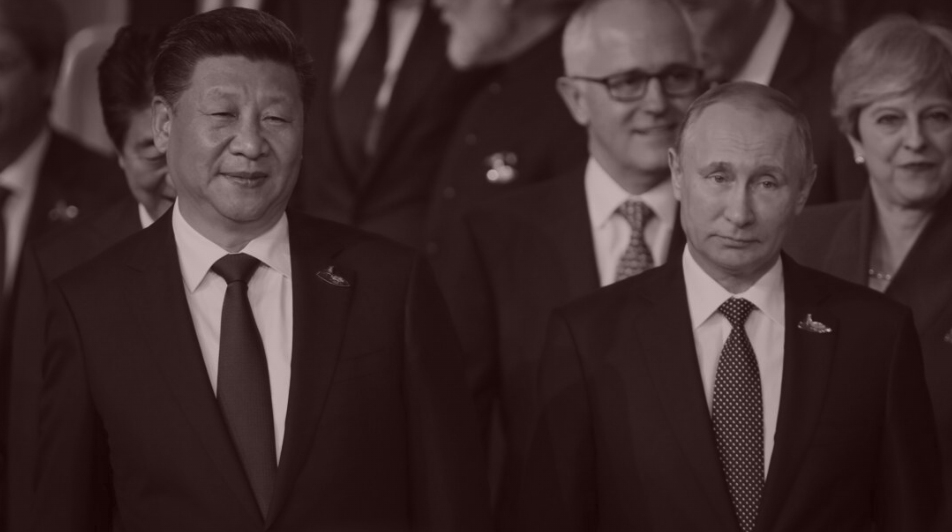
| Earlier this month, Antony Blinken told D.C. grandee David Ignatius that the Biden administration was not averse to China playing a role in mediating the end of the war in Ukraine. “In principle, there’s nothing wrong with that if we have a country, whether it’s China or other countries that have significant influence, that are prepared to pursue a just and durable peace,” Blinken told Ignatius. “We would welcome that, and it’s certainly possible that China would have a role to play in that effort. And that could be very beneficial.”
As Ignatius noted, this notion is indeed being bandied about in Washington, both among people in the administration and those proximate to it. Ignatius also wrote that the administration was “weighing whether to work with China to seek a negotiated settlement.” But what I’ve heard is not exactly as sanguine as what Ignatius reports. It’s not as if the Biden White House is exactly champing at the bit to get China to broker a peace deal. The attitude is more that the White House wouldn’t be against China playing some kind of constructive role. As one senior State Department official put it when I asked them, “Yeah, if they’re serious, but we know they’re not serious.”
There are some people in the administration who are, to be sure, more hopeful about China’s diplomatic intervention than others. These are the same people who are far more insistent on getting to the negotiating table sooner rather than later. I’ve written about them here before. But in general, I get the sense that the skeptics outnumber them. “Behind closed doors, there are not a lot of high hopes,” said one Democratic foreign policy insider. “You can be serious without being pollyannaish, which is to say there are healthy levels of skepticism, which is to say there are very high levels of skepticism toward a mediator who is in a No Limits partnership with the aggressor.”
So what’s going on? “This is about managing international politics,” said the insider. For one thing, Zelensky clearly wants Beijing to play a role. He had been lobbying hard for that phone call with Xi Jinping, and not just because China has so much leverage over Russia. China also had large investments in Ukraine before the war and clearly Zelensky is hoping for Chinese money to fill the massive reconstruction hole when this war eventually ends. If the Biden administration’s position is “nothing about Ukraine without Ukraine,” then they have to respect, at least outwardly, Zelensky’s desire to have China at the table.
Then there’s the fact that Moscow and Beijing had a field day when the U.S. dismissed the Chinese peace proposal earlier this spring. Even though it was a vague document that claimed it was for everything good and against everything bad, while also taking Russia’s side, China and Russia could plausibly tell the rest of the world that they had put forth a plan—and that the U.S., always the warmonger, shot it down. “It would rightly look untoward if the U.S. didn’t welcome constructive efforts from other large countries,” said the Democratic insider. “It would give the Russians and Chinese a talking point, so the right thing to do is to say we welcome any constructive solutions while having a healthy dose of skepticism.” |
|
A MESSAGE FROM INSTAGRAM
|
|
 |
| How can parents help teens manage the time they spend on Instagram?
Once Supervision is set up, parents can use daily time limits to manage the amount of time their teen spends on Instagram every day.
As a result, teens can be more intentional about the time they spend online.
Explore 30+ tools. |
|
|
|
|
| Some of it is also about managing—and accounting for—the opinions of America’s closest allies. “I have a feeling the shift in the U.S. position on this is a result of listening to our European allies,” said the German Marshall Fund’s Bonnie Glaser, a China expert. Europe has long been dovish on China and, as I’ve written before, the Biden administration has put in a lot of work to convince European countries that China isn’t just there to spend money. And despite all that work, both Spain and France’s leaders have made recent pilgrimages to Beijing, with Emmanuel Macron using the opportunity to slam the U.S.
In that context, it’s hardly surprising that European allies, especially in western Europe, are more optimistic about a Chinese role in settling this war. Glaser told me she recently met with some senior European officials and “one of the very strong messages was exactly that: We shouldn’t be dismissing an interest by China in playing a positive role, that would be a mistake. Let China go in and see what they can do and if they can help.” People in the Biden administration tell me that they have to acknowledge it, even as a possibility, in the interest of keeping the trans-Atlantic alliance together. As one of them told me, “The worst thing is for Americans to be seen as being against peace.” |
|
|
|
|
| I can’t, however, overstate the skepticism I heard when I asked people about this idea—and about Xi’s intentions to actually do anything to either separate himself from Putin or to put real pressure on him. Sure, China isn’t arming Russia, at least not yet, but it’s happily buying Russian oil and helping Russia bypass Western sanctions. Beijing also very clearly sees Russia as a useful tool to distract America and undermine its global hegemony. It also doesn’t help, for example, that the special envoy China has assigned to the Ukraine war portfolio was the ambassador to Russia for a decade and has some very pro-Russian views.
As for all this talk of a peace plan, it is perceived largely as a cheap P.R. stunt. “China wants to be seen as a peacemaker without actually doing anything,” said Glaser. “They care about the image because they think that image will help them with the Europeans. Ukraine is the one issue that has most damaged China’s relationship with Europe.”
Others view China’s efforts with a bit of schadenfreude. “There’s a bit of, you think this is easy?” said the Democratic insider. “You think it’s easy being the country that, whether you like it or not, everybody is counting on you?”
Which is kind of the rub of it: If China really wanted to lean on Russia in a real way and end the war, it would be the kind of diplomatic coup that would earn China far more international credibility than it has been able to earn as, for the most part, a U.N. spoiler and propper up of Kim Jong Un. It would build on its win of reconciling Saudi Arabia and Iran. It would decisively demonstrate that, in addition to being an economic heavyweight, it is a diplomatic one, too. What better way to show that Chinese diplomacy—and Chinese power—had fully arrived in the West? “That would be a confident play,” admitted the State Department official. “But they always act from a place of, well… of having a chip on their shoulder.” |
|
|
| That’s all for me this week, friends. I’ll catch you back here next Tuesday, rain or shine. Until then, good night. Tomorrow will be worse.
Julia |
|
|
|
| FOUR STORIES WE’RE TALKING ABOUT |
 |
| Ronny on the Run |
| Lessons from a day shadowing the press-shy presidential hopeful. |
| TARA PALMERI |
|
 |
|
 |
| The Chanel Spell |
| A rundown on the latest shifts at the storied fashion house. |
| LAUREN SHERMAN |
|
 |
|
|
|

|
 |
|
|
|
Need help? Review our FAQs
page or contact
us for assistance. For brand partnerships, email ads@puck.news.
|
|
|
|
Puck is published by Heat Media LLC. 227 W 17th St New York, NY 10011.
|
|
|
|