Hi, and welcome back to Line Sheet. How are you?
Today’s Inner Circle exclusive issue (sign up or trade up here) is efficiently packed. I’ve got an analysis of the official launch of Zac Posen’s GapStudio (I guess that Vogue article was two months too early), a note on the Gredes-Kardashians choreography, and a proverbial brown paper bag for you to scream into as you panic over the consequences of Liberation Day. And yes, I get into Radhika Jones’s oddly timed but ultimately unsurprising Vanity Fair exit. For the main event, I dig into the executive strategy and crisis management at both LVMH and Kering. Links will be back tomorrow!
Mentioned in this issue: Schmatta Black Wednesday, Bernard Arnault, LVMH, Jonathan Anderson, Demna, Pieter Mulier, Damien Bertrand, Stella Bugbee, Mark Guiducci, Radhika Jones, Vanity Fair, Zac Posen, GapStudio, Mario Sorrenti, Skims, Mel’s Diner, Kris Jenner, the Gredes, Kristin Juszczyk, Emmanuel Macron, and many more…
|
|
|
|
A MESSAGE FROM OUR SPONSOR
|
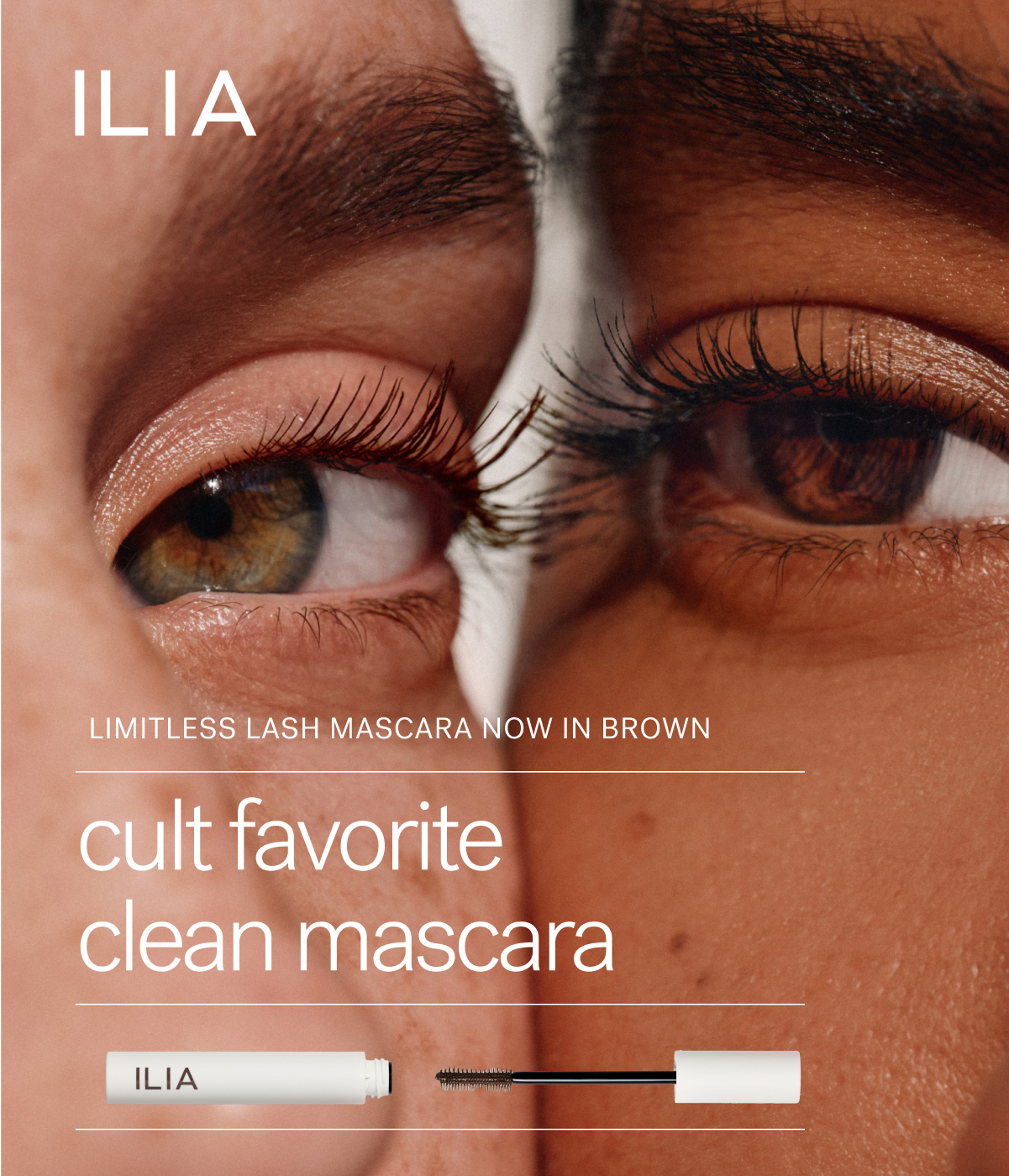
With 25,000+ 5-star reviews, best selling Limitless Lash Mascara has been a cult favorite for years—and now we’re building on the love with a new brown shade inspired by the sky before daybreak.
Whether you choose black or brown, Limitless Lash lengthens and lifts without clumping—then resists flaking and smudging for up to 12 hours. With every swipe of the dual-sided wand, powerful lash care ingredients strengthen like a lash serum. Safe for sensitive eyes, it removes easily with warm water—no scrubbing needed.
Try award-winning Limitless Lash and take 15% off your first purchase with code LINESHEET on ILIAbeauty.com.
|
|
|
Four Things You Should Know…
|
- Someone has to say it: GapStudio, designed by Zac Posen, launched in earnest today. The campaign, shot by Mario Sorrenti and Line Sheet A-lister Alastair McKimm, is gorgeous. The clothes, however, are… not right. Nobody wants a denim trench, or a too-purple navy blue bubble skirt (even if it’s cute) from the Gap. You know what they want? A t-shirt. Fetishize the t-shirt. Uniqlo is eating Gap’s lunch because they know that high-quality basics are their stock and trade.
- The Gap’s, and everyone else’s, actual problem: Who cares about brand positioning during a full-on trade war? For me, the past 24 hours have mostly been about listening to what a lot of different smart people have to say about Trump’s tariffs. As my colleagues in Washington noted, even Republican members of Congress are worried about the political consequences. In the luxury world, the hope is that there will be retaliation in Europe, and indeed, on Thursday afternoon, Emmanuel Macron called for a “suspension of investments” in the U.S. until this is all sorted. That said, I talked to a high-level strategist today who is familiar with the inner workings of all the big groups, who posited that it’s unlikely anyone will follow Macron’s wishes. The U.S. is the biggest market for luxury goods, and the groups, which are already in trouble outside of this trade situation, need to sell more here, not less. If sales of French wine and spirits imported to the U.S. fall by at least 20 percent, as expected, that’s big trouble for LVMH and Diageo. This means that LVMH’s guy in Washington, lobbyist Martin Delgado, will be leaning in more, not less. Expect more communications around what brands are doing in the U.S.: how much they’re hiring, how much they’re contributing to the local economy. Much of what happens depends on how the negotiations with the European Union shake out.Over in Southeast Asia, where most of the world’s clothes are made, the Chinese government has threatened to take all “necessary measures” to protect its interests, though what that would entail is unclear. For companies like Gap Inc. and Uniqlo owner Fast Retailing, China is but one problem: Producing clothes in China got expensive a long time ago, so the bigger concern is Vietnam, Cambodia, etcetera. Some of my Victoria’s Secret sources expressed concern over their dependence on Sri Lanka, the bra-making capital of the world, which is facing a 44 percent tariff. Sheesh.
- Meanwhile, pre-trade war: On Tuesday night, I stopped by the opening of the Skims flagship on Sunset Boulevard, next to the Mel’s Diner, which Skims has re-skinned this week—all the placemats and swivel chairs, etcetera, are rendered in shades of greige. It’s a fun concept, as is the store, which is merchandised really well, with just the right amount of product on the floor. It feels comprehensive but not overwhelming: A few prints (tiny flowers) and textures (geometric lace) are mixed in with the requisite gradient of skin tone shades that start with Pantone 11-0601 TCX and end with Pantone Black C.I stayed long enough to clock Kris Jenner and Skims C.E.O. Jens Grede. That same day, Grede’s wife and longtime business partner, Emma, announced the appointment of Victoria Picca, the former Fanatics and NBA executive, as the president of Off Season, the new venture that she formed with 49ers WAG Kristin Juszczyk that sells expensive, branded puffer jackets that look like a fashionized throwback to the oversize Starter jackets of ’90s yore. Interesting to note that the Gredes are now doing more and more business outside the Kardashian bubble. Besides forming Off Season, they also invested in The Elder Statesman last year. Anyway, just something to observe.
- When the going was not so good: At 12:30 p.m. on Thursday, Vanity Fair editor-in-chief Radhika Jones and her boss, Condé Nast chief content officer Anna Wintour, informed staff that the Graydon Carter replacement would be stepping down after seven wobbly years running the brand that Si Newhouse used to read before all his other toys. Obviously Vanity Fair has been constantly diminishing since Carter, who is making the book tour rounds these days, announced his departure in 2017. (It was diminishing long before he left.) And plenty of that decline can be attributed to obvious external factors that have wreaked havoc on the media industry. Blame can also be assigned to Wintour, current C.E.O. Roger Lynch, and the Condé Nast board, all of whom either ignored headwinds or addressed them too late or buried their heads in the sand about the size and scope of the challenges. But plenty of blame also falls on Jones herself, who was a poor fit from the start. And not because of the fox tights.Jones’s inauspicious first year was marked by that stupid fox tights scandal, the “Valentine’s Day Massacre” off-boarding of Carter’s deputies before their trips to the Oscar party, the departure of Michael Lewis (and other key writers), and the beginning of a never-ending round of cost-cutting. Things stabilized after that, but were far less exciting. Her tenure was not without accomplishments—she made the brand more diverse and younger—but her talents couldn’t outrun the challenges she faced. Alas, the next person will have it even worse.By official accounts, Jones made her own decision to leave. Of course, there are conflicting reports. People inside Vanity Fair who never liked her but stayed for the paycheck say she preempted an ouster; her loyalists say she was getting sick of managing decline, doing more with less, and generally dealing with the incompetency of the increasingly faulty Condé Nast machine. My educated guess is that after a miserable quarter at Vanity Fair—I’m told projections were missed “massively,” pegged to the macro advertising environment, a weak Oscar field, and a miscalculation around moving the Hollywood issue up to December from Q1—she probably wanted to preserve her reputation before things got really, really bad and she had to fire more people. (A person close to Condé Nast refutes this, saying that the books aren’t closed on the quarter just yet, and that this year’s Oscar party was one of the best years ever in terms of revenue.)It’s ironic—and a little weird—that this announcement was made a week after the release of Carter’s memoir, When the Going Was Good, which was mostly about his time editing the magazine. In any case, the Condé Nast board is paying more attention to the profitability of the individual brands, and the levers Vanity Fair used to pull (the Oscar party, the Hollywood issue, good articles) are losing their revenue juice. Moreover, people familiar with the business said that Jones wasn’t a particularly commercially friendly editor, and Vanity Fair’s global structure—every edition is vastly different from the other—makes it difficult to sell scale.
As for who might be next, it’s pretty obvious they haven’t made a decision, given that Jones is slated to stay on through June. There is a deranged rumor that the internal candidate is Mike Hogan, the brand’s longtime digital director, who went hard for the gig after Carter quit before pivoting to become a devout Radhika loyalist. Other than a brief stint as editor-in-chief of Moviefone (you’re not misreading) and a couple of years at HuffPost, Hogan has spent his entire career at Vanity Fair and is surely making the argument that he gets the brand and won’t mind reporting to Wintour. And yet, this seems unlikely. (Hogan couldn’t even snag the Wired job in 2021; Wintour picked Gideon Lichfield, a guy obsessed with cynar, instead.)
Someone mentioned Will Welch. Again, no. GQ is in trouble right now, facing a severe China revenue dip, and he needs to manage that crisis. If Welch is doing anything else, it’ll be a few years from now, when I suspect he’ll succeed Wintour as chief content officer. Elsewhere in the building, there’s Architectural Digest editor Amy Astley, who was once in line at Vogue. But does Astley really want to stand under those hot lights at the Vanity Fair Oscar party? Perhaps Mark Guiducci would, and he has Wintour’s confidence, not to mention the support of the fashion advertising community. (He also started his career at VF as an assistant when the going wasn’t quite as good, but few appreciated just how bad it was going to get.)
If Wintour and Lynch are lucky, the short list is mostly made up of people outside of the Condé system. Adam Moss and Janice Min, who were the two most obvious replacements for Carter, are too senior at this point. New York magazine editor-in-chief David Haskell is a huge talent, but I hear he’s not interested…why would he want to leave New York and the protection he gets there from Pam Wasserstein? (Although one person who knows him well suggested that he may be lured by Wintour’s siren call.) Then there’s Kristina O’Neill, late of WSJ. and currently of this Sotheby’s media experiment, who’s had her eye on the job ever since (before, really) Carter’s departure. Stellene Volandes over at Town & Country has to be on the short list. Stella Bugbee, who was passed over for the New York editor-in-chief gig when Moss left, is another compelling idea: She can handle the journalism part, the advertising part, the ideas part, and the design part, and she thrives in tough situations. It should obviously be Stella.
When Carter announced his retirement, the Times sent an alert to an embargoed front-page story. A few hours before Jones shared the news with her team, Lynch held a global virtual all-hands. Jones’s departure was not one of the company updates.
|
|
And now on to the main event…
|
|
|
|
While the luxury industry processes Trump’s multibillion-dollar assault on global trade, LVMH and Kering are confronting the consequences of their own success: greater exposure to macroeconomic trends, creative exhaustion, and consumer fatigue… at least until a new wave of designers arrives.
|
|
|
|
I don’t want to dismiss the fretting over Schmatta Black Wednesday, as a friend of mine referred to Liberation Day, the hard launch of Trump’s trade war. The tariffs that go into effect next week will cost most fashion brands a fortune—likely forcing entire supply chain reconfigurations, and driving down already sluggish sales. “Small and scaling brands cannot catch a break,” one longtime operator told me. “This completely challenges their operating income.” Said another, “The whole industry is in a melt.”
And yet in Europe, where many hold out hope for a last-minute deal to save key industries before Trump’s blanket 20 percent tariff creates real carnage, there has been a bit of schadenfreude directed toward the Arnaults. Not only did the family proudly attend Trump’s inauguration, but patriarch Bernard Arnault subsequently spoke sycophantically about a “wave of optimism” coursing through America. Ultra-wealthy people like Arnault are also increasingly reviled in France, where their livelihood is also threatened by higher corporate taxes.
|
|
|
|
A MESSAGE FROM OUR SPONSOR
|
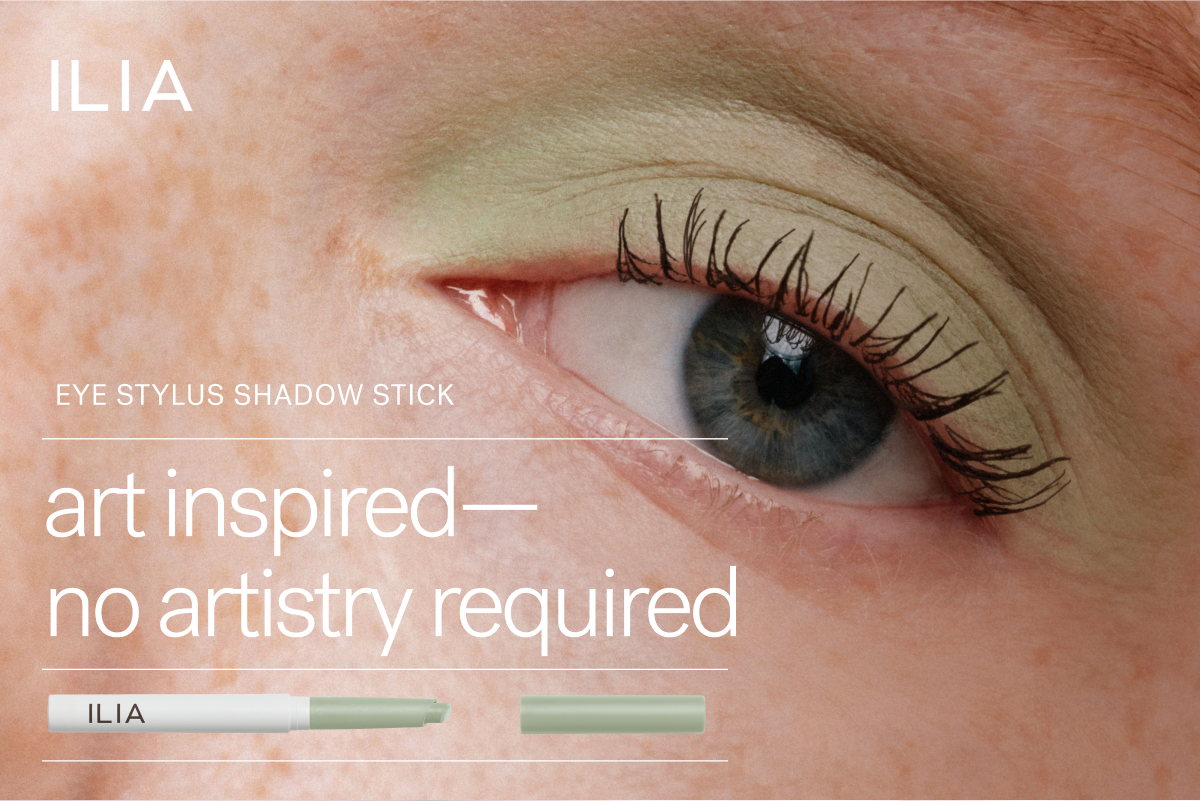
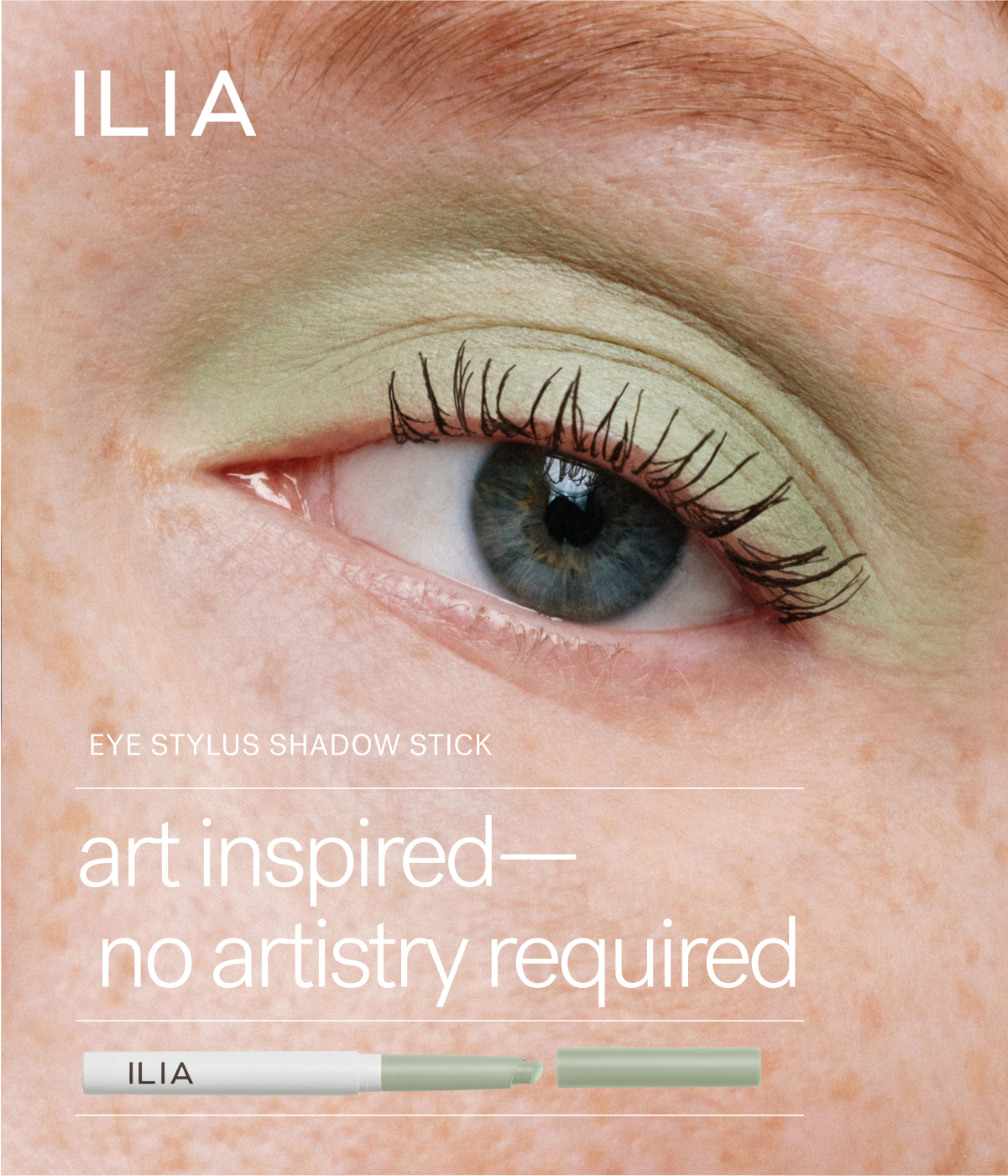
Makeup is a medium—let your lids be your canvas. Paint your point of view with new Eye Stylus Shadow Stick, a waterproof, crease-resistant eyeshadow that lasts for up to 12 hours.
With the versatile angled tip, it’s easy to be playful or precise. Use the flat side for a wash of all-over color, or the edge to line and define. Choose from 20 hues inspired by Renaissance paintings—they’re made to mix, match, and create your own unique look.
Use code LINESHEET for 15% off your first purchase on ILIAbeauty.com.
|
|
|
Perhaps Arnault still believes that his relationship with Trump, combined with his influence in Europe, will provide leverage. But the tariffs are just one of many concurrent challenges facing LVMH, and the luxury industry at large, which is in a legitimate crisis—one that’s not as easily navigable as the micro-recessions of the past. The industry is larger, with more sophisticated supply chains, and in the midst of generational, multichannel disruption. As Raf Simons said when he was still designing Dior, “fashion became pop” during the past 20 years. “Now, high fashion is for everybody.”
Of course, Arnault helped create this ecosystem by turning designers like Simons and John Galliano and Marc Jacobs into superstars and selling billions of dollars’ worth of goods off their ideas. But in the process of scaling luxury, Arnault created an inescapable prison of his own design. His company may be diverse on paper, but most of its profits are derived from the premium products that he is currently having trouble selling. Luxury consumers are bored these days, especially with handbags; clothes are too expensive, there is a perceived (and sometimes real) decline in quality, and convoluted supply chains have made it worse. LVMH’s market capitalization, which has declined by 30 percent during the past year, bears these wounds. The tariff issue offers more salt.
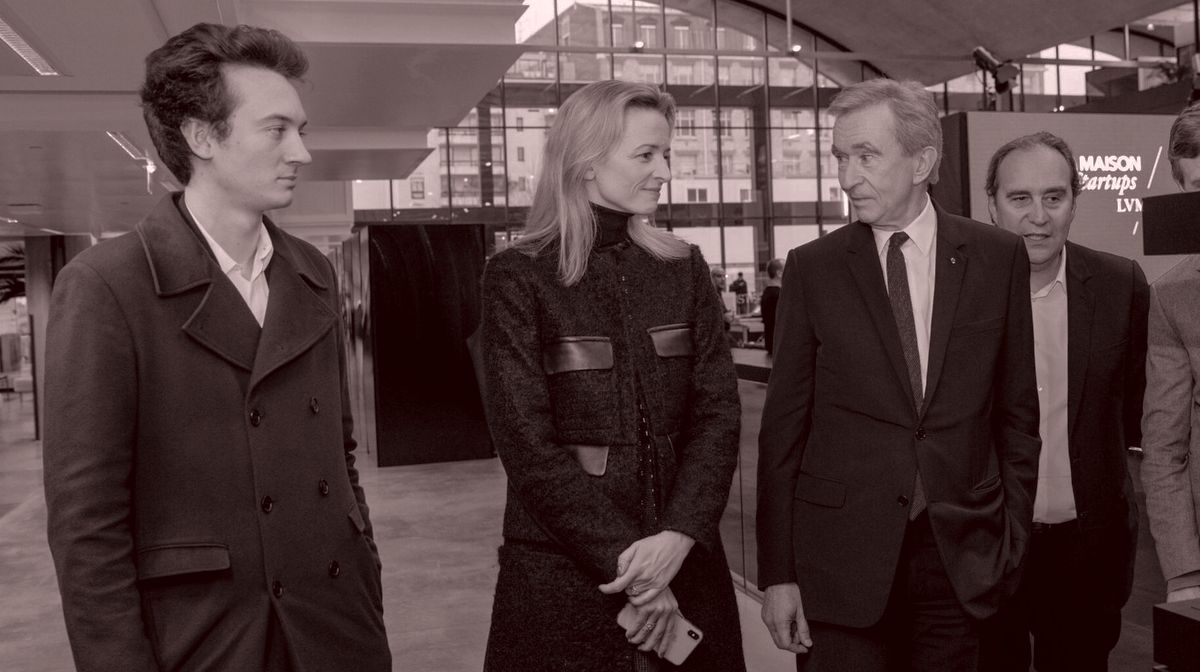
Arnault and his closest deputies know all this. And while there’s been a lot of talk about the most recent round of creative director musical chairs, few of these appointments are positioned to actually move the business forward in a material way. At LVMH, the executive changes are more consequential. Arnault has been methodically cycling out his core group of advisors: Toni Belloni has been replaced by Stéphane Bianchi in the group managing director role, and moved to Italy to oversee the businesses there and watch over 29-year-old Frédéric Arnault, the new C.E.O. of Loro Piana. Michael Burke is still around, but no one really knows what he does anymore. Sidney Toledano tried to half-retire once, and will likely get the opportunity to do so again in the next year or so.
There’s obviously been a lot of talk about Frédéric’s move to Loro Piana. Why did BA give him that job when Tag Heuer was sinking under his purview? But the far more consequential chess pieces here are Damien Bertrand’s move to Louis Vuitton as deputy C.E.O., and Pierre-Emmanuel Angeloglou’s transfer to Dior in the same position. Both men will be burdened with steering enormous P&Ls and making them even larger. And then there’s Pietro Beccari, the 57-year-old C.E.O. of Louis Vuitton known for his aggressive sales tactics—the success of the Murakami reissue, which is buoying that brand’s business in 2025, will buy him time before he ascends to his next gig at the company. The theory is that either he or Delphine Arnault, the current C.E.O. of Dior, will replace Toledano as the C.E.O. of the Fashion Group. But, truth be told, it will most likely be Delphine—who was dealt a difficult hand when she took over Dior from Beccari—once she’s taken her victory lap at Dior with Jonathan Anderson, whose first collection will be released later this year.
|
|
Anderson is an executive as much as he is a designer: Once Maria Grazia Chiuri leaves the Dior women’s building, he’ll ostensibly oversee more people than any other designer working today. And if his first few collections are successful, his remit will significantly grow. Many in the building have wondered whether that will put Anderson into conflict with Olivier Bialobos, the mastermind of the brand’s image. In some ways, Bialobos, whose name always comes up as a potential C.E.O. candidate for smaller LVMH brands, has more control over how Dior is viewed by consumers anyway, since he oversees marketing and communications across the business.
My assessment is that these two incredibly ambitious and tactical men will enjoy the challenge of learning to work together, and that Bialobos will one day be rewarded for his performance and loyalty with a job outside of Dior—if he so wishes. More immediately, I predict that Anderson’s long-awaited move to Dior—which will finally be announced in the coming months, if not sooner—will help lift the still-dragging stock.
|
|
|
That’s not how things played out at Kering, whose stock sank (and kept sinking…) after the company announced that Demna, Balenciaga’s envelope-pushing designer, was headed to Gucci. But I’m actually increasingly convinced that Demna can bring the desirability factor back to Gucci. The more important question is whether C.E.O. Stefano Cantino and Kering deputy C.E.O. Francesca Bellettini’s reorganization set him up for success. Anyway, it’s far from a sure bet, which is why Kering really needs to stick the landing with his successor at Balenciaga. It’s a tricky balance: Demna still has one more couture show to go, but he is being promoted to the group’s biggest and most important brand. With Kering’s stock at its lowest point since 2016, down an astonishing 50 percent over the past year, there is a case for announcing a new designer as soon as possible.
The speculation surrounding the Balenciaga gig is not as intense as one might expect, possibly because people needed a break from gossip after the whirlwind announcements during the Paris shows. But I’d say most people agree that Pieter Mulier would give Kering a boost.
At Alaïa, Mulier has put creation at the center of his work, while managing to sell a massive amount of netted ballet flats and elongated top-handle bags in a finicky market. Credit is also due to his incredibly astute and brand-sensitive C.E.O., Myriam Serrano; one does not succeed without the other. As I’ve written before, it would be bittersweet, and a massive loss for Richemont, for Mulier to leave Alaïa. And yet, the key to staying relevant in this business—and really, any business—is moving on before you’ve outstayed your welcome.
|
|
And finally… If you happen to be in Paris this Friday, maybe stop by the launch of Amanda Charchian’s monograph, A Very Bad Man, featuring 68 of her photographs and nine original artworks by artists based in Los Angeles. It’s at Karl Lagerfeld’s studio Librairie 7L, and goes from 7 p.m. to 9 p.m. Proceeds from sales of the book will benefit the L.A. wildfire relief fund.
Until tomorrow,
Lauren
P.S.: We are using affiliate links because we are a business. We may make a couple bucks off them.
|
|
|
|
Puck fashion correspondent Lauren Sherman and a rotating cast of industry insiders take you deep behind the scenes of this multitrillion-dollar biz, from creative director switcheroos to M&A drama, D.T.C. downfalls, and magazine mishaps. Fashion People is an extension of Line Sheet, Lauren’s private email for Puck, where she tracks what’s happening beyond the press releases in fashion, beauty, and media. New episodes publish every Tuesday and Friday.
|
|
|
|
Puck’s daily art market email, anchored by industry expert Marion Maneker, offers unparalleled access to the mega-auctions and galleries, elite buyers and sellers, and the power players who run this opaque world. Wall Power also features Julie Brener Davich, a veteran of Christie’s and Sotheby’s, who provides unique insights into how the business really works.
|
|
|
Need help? Review our FAQ page or contact us for assistance. For brand partnerships, email ads@puck.news.
You received this email because you signed up to receive emails from Puck, or as part of your Puck account associated with . To stop receiving this newsletter and/or manage all your email preferences, click here.
|
|
Puck is published by Heat Media LLC. 107 Greenwich St, New York, NY 10006
|
|
|
|