|
Hello and welcome back to The Best & The Brightest. I’m Leigh Ann Caldwell, wishing you all a wonderful and much deserved Mother’s Day. I’m spending this Mother’s Day in London, trying to channel my best Lauren Sherman by spotting fashion trends and retail activity. I can report with authority that the West End is packed with people. Last I checked, England’s Habeas Corpus Act of 1679 is still in place.
Because I’m traveling, I’m turning this issue over to Julia Ioffe—a new mom herself—who has a peek into Russia’s future with some of the best minds thinking about the issue. Her dispatch from Milken, below.
But first…
|
|
|
|
A MESSAGE FROM OUR SPONSOR
|
Everyone deserves access to high-quality, affordable health care, and that is why Blue Cross and Blue Shield companies are taking on the drivers of higher premiums and out-of-pocket costs — rising hospital and drug prices.
Learn how we’re championing commonsense solutions that can reduce costs by nearly $1 trillion over the next decade.
|
|
|
 |
Julia Ioffe |
|
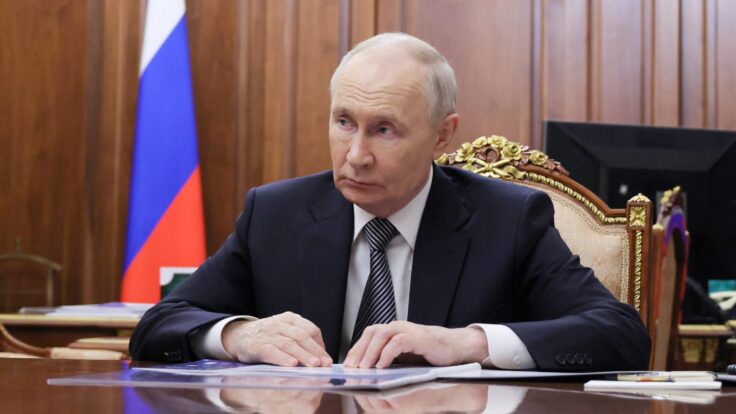
- Russia’s Victory Day drone threat: On Friday, Vladimir Putin held court on Red Square as the country celebrated the 80th anniversary of the end of World War II and victory over Nazi Germany. The Soviet Union did the lion’s share of the fighting and dying to make that happen—after doing the most to make Operation Barbarossa such a success at first. Stalin had purged his top spies and military brass, then disregarded any and all intelligence that Hitler was getting ready to invade. Most of the fighting in Europe took place on Soviet territory, and more than 27 million Soviets, including 8 million troops, died in the four years between Hitler’s invasion and Victory Day. (Sorry, I was just in book edits, so this stuff is all fresh.)Given this marquee year, the pressure was really on Putin—self-applied, to be sure—to make it as grand a celebration as possible. Putin scored a big diplomatic win in getting Xi Jinping to make a three-day visit to Moscow and have it coincide with the military parade, which Xi attended. (There was talk that Donald Trump would attend, which would have been the biggest feather in Putin’s cap, but that, thankfully, did not happen.) The parade, which Russia now puts on every year, featured many of the visuals that have become standard in recent years: I.C.B.M.s, alleged war criminals in the stands behind Putin. But this year featured two new additions: drones—which were, well, paraded around—and Chinese troops marching alongside their Russian hosts.The other novelty this year? Completely paralyzed air traffic in all of Moscow’s airports during one of the two main holiday seasons in Russia (the other being around New Year’s). Some 350 flights were affected and more than 60,000 passengers stranded as Kyiv sent its own delegation to Putin’s celebration: more than 500 drones, aimed right at the Russian capital, that Russia claims were shot down. “It is absolutely right that the Russian sky, the sky of the aggressor state, is also restless today,” Volodymyr Zelensky said.
|
|
|
|
Now, on to the main event…
|
|
|
|
A conversation with scholars, practitioners, and members of the Russian opposition about why Putin—despite sanctions, war, and isolation—keeps surviving and consolidating power.
|
|
|
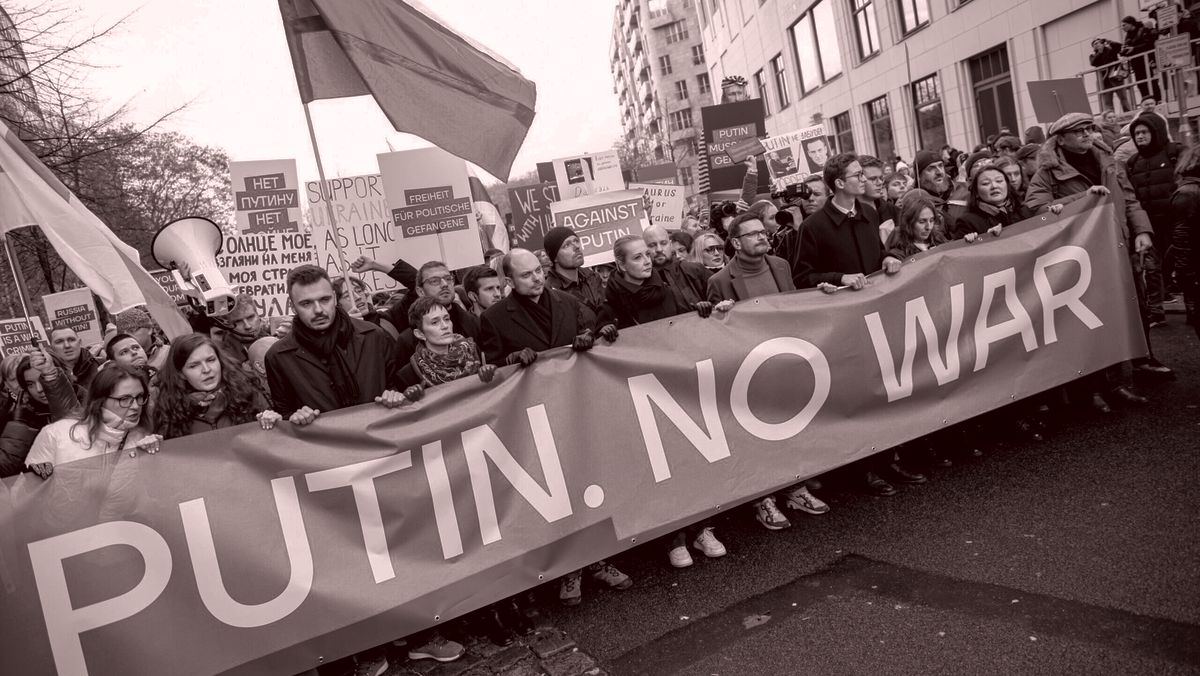
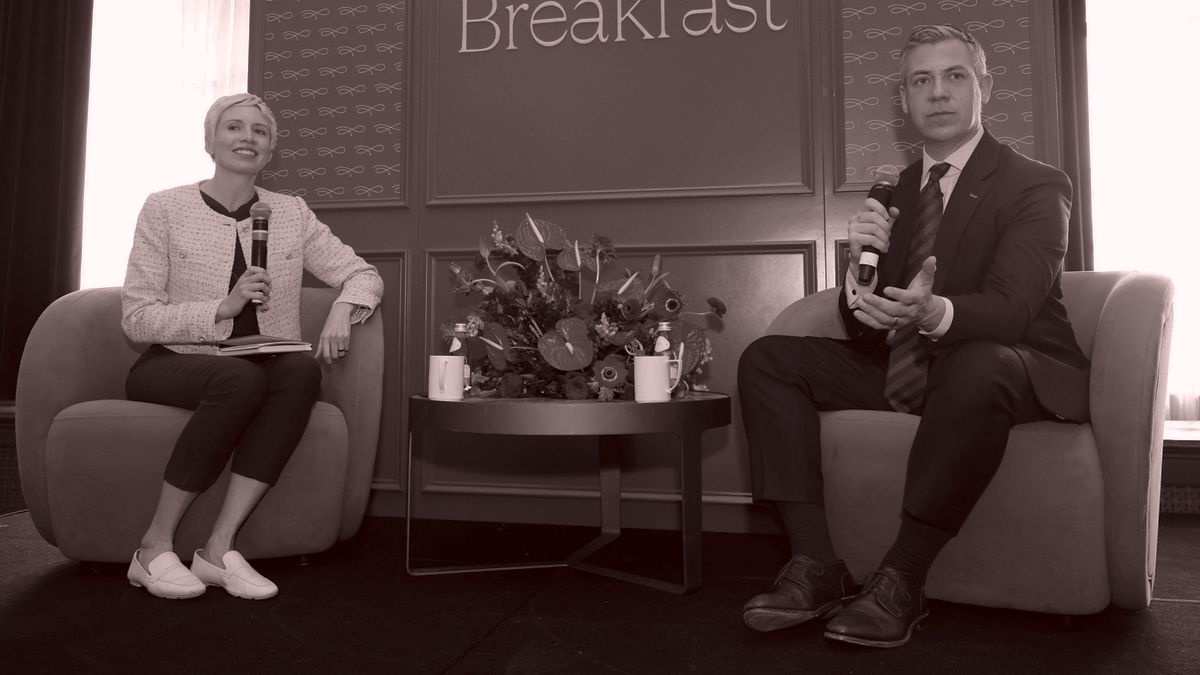
Earlier this week, I got to moderate a panel on Russia’s future at the Milken Institute conference in Los Angeles, featuring some of the best minds working on Russia today. We had a practitioner: Eric Green, who was the senior director for Russia on the National Security Council during the first half of the Biden administration (and at the beginning of the war). We had two of the best scholars in the business: UCLA’s Daniel Treisman, a political scientist and author of many excellent books on Russia, and C.S.I.S.’s Maria Snegovaya, whose insights on the Russian system have been so trenchant. We also had representatives of the two main wings of the Russian opposition (or what’s left of it): Pavel Khodorkovsky, who heads the U.S. branch of the Khodorkovsky Foundation, and whose father, Mikhail, spent a decade behind bars and now bankrolls a good chunk of the Russian opposition; and Leonid Volkov, the late Alexey Navalny’s right-hand man and the political director of Navalny’s Anti-Corruption Foundation.
I expected the meeting backstage to be a little awkward, since Volkov was attacked last year by an assailant who was allegedly hired by Khodorkovsky’s longtime lieutenant, Leonid Nevzlin. To my surprise, Pavel and Leonid were quite cordial with each other. Volkov told me that, though he still holds Khodorkovsky père responsible for the attack (despite his disavowal), he’s cool with Pavel. Or can be in public.
We were meeting at an interesting time. Trump has been trying, so far without success, to end Russia’s war against Ukraine, mostly by scrapping the Biden administration’s policy of “nothing about Ukraine without Ukraine” and largely siding with Vladimir Putin. But while this administration seems to think it can end this war and just move on to a future of U.S.-Russia cooperation, the panelists were not so sure. We spoke about this, as well as why Putin’s regime has proven so resilient—economically, politically, and militarily—plus what we can expect from Moscow in the future, in the near term and after Putin’s passing.
|
|
|
|
A MESSAGE FROM OUR SPONSOR
|
Everyone deserves access to high-quality, affordable health care, and that is why Blue Cross and Blue Shield companies are taking on the drivers of higher premiums and out-of-pocket costs — rising hospital and drug prices.
Learn how we’re championing commonsense solutions that can reduce costs by nearly $1 trillion over the next decade.
|
|
|
|
I hope you find our discussion, which has been shortened and edited for clarity and length, as interesting as I did.
|
|
Julia Ioffe: In 2022, when Putin went into Ukraine full throttle, there was a sense of, Okay, this can’t last very long. But the economy has adapted and the regime has consolidated control. I would say Putin is probably more powerful than he’s ever been. What do you think explains the strength and longevity of the regime and the economy?
Daniel Treisman: I would say it’s a combination of a great deal of luck, which we underestimate, and skill. I think we had exaggerated ideas of how much the sanctions were going to harm the Russian economy. The economy proved remarkably resilient, with trade really holding up despite all of our efforts to reduce it. Exports haven’t actually dropped. India took over the oil purchases from Europe. [Domestically] there’s been this massive fiscal stimulus of about 3 percent of G.D.P. a year. So, in part, Putin had saved revenues from oil for a long time, and not all of those were frozen in the West. And he’s used those to maintain economic health, and wages have even increased.
But over the long term, it’s been a changing story. During those first eight years, [Putin] created a pretty sophisticated system of manipulating information and establishing lots of different groups within the elite that had an interest in the regime’s survival. And then since about 2012, when protests broke out against him, he’s been consolidating the regime and making it more repressive. He’s done that in a pretty thorough way. I think there’s very little that threatens him.
Cliff Gaddy once described the Russian economy as a cockroach economy, in the sense that it is very rudimentary and can survive pretty much any shock. Why do you think this economy has been able to survive?
Maria Snegovaya: In a lot of ways, the Russian economy is very primitive, in the sense that it is largely export-oriented. Because of that, it’s highly vulnerable to oil shocks, but otherwise highly resilient, because you cannot easily substitute for oil. Russia currently produces about 10 percent of the oil market in the world. We see, by the way that the sanctions were designed, the West was deliberately cautious about not eliminating Russia from the markets because it would just be too destabilizing. Plus, it’s an economy that’s inherited this large industrial defense and military complex from Soviet times.
Putin very successfully combined these two factors: reviving the military-industrial complex and creating a lot of early winners from this war. It’s true that it’s a highly traumatic event for many within the society, but it’s also something that’s created a lot of opportunities for Russian society and for Russian elites. In general, the public sentiment is quite optimistic, despite all of the horrors that have taken place.
Leonid Volkov: You quoted that the Russian economy is able to survive any shock. Maybe. But there’s been no shock. The sanctions after the annexation of Crimea were applied very gradually and slowly. And the response that followed after February 24, 2022, was much softer. They were actually given time to get adjusted. We can’t speculate what would happen, but it would’ve been a different story if the Russian economy was swiftly cut off on February 25, and if the really tough sanctions that we advocated for were applied.
To what extent is that possible, given that there’s China and, to some extent, India to help Russia bypass all of these Western sanctions?
Eric Green: It’s important not to overpromise what sanctions can actually accomplish in terms of changing Putin’s behavior. He’s dead set on dominating Ukraine, and the only way to change his calculus on the battlefield—the economy is an important factor, but it’s not the main one. He also needs to see unified resolve from the West, to make him understand that we are in this for the long haul, and Ukraine will continue to be
supported.
|
“Permanent War Against the West”
|
|
I know several people who have made a ton of money bypassing sanctions and all of these export controls. Everybody I talk to in Moscow says there’s never been this much money. Is this a sugar high, or can it last indefinitely?
Treisman: It’s both. The economy has been reoriented toward producing the things that were previously supplied from abroad. The connections to the West have been cut to a great extent, and the internal economy has been stimulated. These other friendly countries—China, Turkey, India, and others—have been undercutting the sanctions and providing the goods. Some Russian businesses actually like sanctions because it reduces competition from outside. There are many corrupt, and even uncorrupt, ways that people are getting rich from this.
But at the same time, there’s 10 percent inflation; the deficit has been small, [but] they’re running out of liquid reserves to cover that. In the long run, they’re losing technological competitiveness. They’re going to rely on China for technology in the future, and that’s going to gradually reduce the growth rate. So we’re going to have inflation and stagnation in the next few years.
Does China want a strong Russia, to offset U.S. power, or a weak Russia that they are basically turning into an economic colony of China?
Green: I think China and Russia have a shared objective, which is to weaken the United States and to reorder the world system. So China will modulate its relations with Russia based on that common goal. And I think they’re very comfortable with the current status quo, where Russia is becoming increasingly dependent on Beijing. Whether that will reach a breaking point where the Russians will rebel against that—that’s something I imagine the Chinese are conscious of, but I think they’re handling it quite well at the moment. China is the biggest beneficiary of what’s happening globally with the disorder created over the past several months.
|
|
|
What do you think the end of the war looks like? What is the Trump administration doing right and wrong in their approach to trying to end the war?
Treisman: Well, it’s easy to say what they’re doing wrong: giving everything away before you start negotiating, announcing that Ukraine will never be part of NATO, visibly taking Putin’s side on all the key issues—obviously, that doesn’t lead to a sustainable negotiation and agreement that both sides can accept. As for what they’re doing right, I really don’t see much. I don’t see the war ending. Putin sees himself as in a permanent war against the West. It’s not always going to be a hot war with invasions and military conflict. It’s on many different levels: cyber, infiltrations, spying, sabotage operations in Europe. I don’t think that’s going to end as long as Putin is there and this particular regime is in power.
Eric, you’ve been in the room, you were on the N.S.C. Let’s say Steve Witkoff were to call you up today and say, “What am I doing wrong? What do I need to know?” What would you tell him?
Green: Before the Trump administration, we had a coalition that the United States led, of the U.S., Europe, and Ukraine facing off against Russia. We had moral clarity about who was at fault for the war. As a result, we had a clear objective, which was to preserve Ukraine as an independent, sovereign actor, free to associate with the West, to join Western institutions, to develop security relationships with the West, and to be able to defend itself.
When the new team came in, all that capital we had in the bank, they kind of flushed that way, including by insulting our allies and calling into question who was at fault. The first thing we need to do is to establish the moral position of the United States. Tactically, it’s not bad to talk to the Russians. I would encourage him also to visit Ukraine. He could also benefit from relying more on the experts—when we see him going into these meetings, it doesn’t appear that he has staff from the State Department or National Security Council with him. At the strategic level, as Dan said, we have to recognize that Russia is at war with the West, and we can’t pretend otherwise. They need to recognize that it’s not a territorial dispute, as Witkoff has described it.
Snegovaya: In defense of the Trump administration, there’s one thing they’re doing right from the viewpoint of Ukraine: the economic war with China. China is one of the major reasons why Russia is able to sustain this war. The two economies are complementary: Russia sells energy to China, and China sends products back to Russia and is able to substitute and compensate for the effect of the sanctions. There is less economic growth in China. There are fewer products to send to Russia, and altogether, this economic turbulence in China is contributing to the declining oil prices, which were a major reason Russia was able to sustain all of its own revenue. So from that perspective, Russia does not benefit from the current tariff war situation.
|
|
What does a post-Putin Russia look like?
Green: A lot depends on the war and how it ends. But I would say, considering Russia’s history and internal practices, that you’ll likely get a much more pluralistic type of leadership arrangement—at least in the early stages. And that does create some opportunities for creative diplomacy and trying to strengthen the more-liberal factions that may be in that collective leadership. But I don’t think you’re going to have a rapid evolution toward a democratic Russia.
Snegovaya: One of the consistent features of the Russian post-Soviet trajectory is the failure to reckon with the past. In order to radically alter your future, you need to recognize the atrocities that have been committed by various regimes. It’s not just Putin, it’s much of the Soviet [era]. Even with Putin gone, this general reality will not change. That’s why it’s unlikely that we’re going to see a liberal, democratic Russia emerge—particularly given that Putin is very unlikely to lose this war. And by “lose,” I mean Ukraine recovering all of the territories that Russia has occupied since 2014.
The new guy may be moderately autocratic—some sort of reset of relations with the West without radical altering of the previous models of the kind we’ve seen in some Central Asian republics in the past. Unlike what we’ve seen in the late ’80s and early ’90s, the West has, unfortunately, lost its soft power and appeal. The “beautiful America” that used to actually create this pull toward a more viable, democratic model is no longer the case—another reason why Russia is unlikely to follow that trajectory.
There is a fear in some corners of the West, including in the Biden administration, that Putin’s successor might be even worse. Do you agree that’s a possibility?
Volkov: I can’t stand this trope of, Someone could be even worse than Putin. Putin did his best to prove that no one can be worse. This is a highly personalistic regime. There’s no such thing as a successor. None of his lieutenants are more than 10 percent shareholders in the structure of power, so they can’t become strong enough. When Putin is gone, there will be a royal battle, where no one will be strong enough to verticalize the regime. That will create an enormous space of opportunities. There will be a lot of options available. It will be a very natural democratization of political life, because no one will have a full grip over the repression apparatus. So there will be chances, and it will be much better than now.
|
|
That’s all from me, folks. I hope you had a lovely weekend, and I will see you back here on Thursday, when we’ll be back to our regularly scheduled programming. Until then, good night. Tomorrow will be worse.
Julia
|
|
|
|
Join Emmy Award-winning journalist Peter Hamby, along with the team of expert journalists at Puck, as they let you in on the conversations insiders are having across the four corners of power in America: Wall Street, Washington, Silicon Valley, and Hollywood. Presented in partnership with Audacy, new episodes publish daily, Monday through Friday.
|
|
|
|
Unique and privileged insight into the private conversations taking place inside boardrooms and corner offices up and down Wall Street, relayed by best-selling author, journalist, and former M&A senior banker William D. Cohan.
|
|
|
Need help? Review our FAQ page or contact us for assistance. For brand partnerships, email ads@puck.news.
You received this email because you signed up to receive emails from Puck, or as part of your Puck account associated with . To stop receiving this newsletter and/or manage all your email preferences,
click here.
|
|
Puck is published by Heat Media LLC. 107 Greenwich St, New York, NY 10006
|
|
|
|