Happy Tuesday, everyone, and welcome back to The Best & The Brightest, I’m Peter
Hamby.
The government shutdown is about to be officially one week old, and Democrats have, for now, gained the upper hand in the messaging fight, with most voters now blaming President Trump and expressing concerns about their healthcare benefits. How did the Dems do it? By finally, at long last, embracing the power of new media and delegating to the creator economy. Tonight, I take you inside Democratic efforts to win the shutdown messaging fight on social
media—if only for a few days. Has the party of cringe finally figured out how to rival MAGA in the attention wars? More on that below.
But first, here’s Abby from the Hill… |
|
|

| Abby Livingston
|
|
- Pam Bondi brings the
oppo: Attorney General Pam Bondi’s testimony before the Senate Judiciary Committee started out in pretty standard fashion, with Chairman Chuck Grassley praising her efforts to clean up Biden’s “weaponization” at the Justice Department. Even the grilling from Democrats that followed—about the indictment of former F.B.I. director James Comey, the alleged $50,000 bribe taken by border czar Tom Homan,
Trump’s deployment of the National Guard to American cities, etcetera—was to be expected. But the real surprise came in how Bondi prepared for the hearing, having apparently showed up with oppo research to deploy against several Democratic senators.
When Sen. Richard Blumenthal asked Bondi whether she’d discussed the Comey indictment with Trump, for example, she reminded him of his
false claims to have served in Vietnam, saying she wasn’t “going to be lectured about integrity by someone who lied about being in the military just to be elected to senator.” (He did in fact serve in the military, but he never deployed to Vietnam.)
But the strangest exchange came after Democratic Sen. Sheldon Whitehouse probed Bondi about
journalist Michael Wolff’s allegations that Jeffrey Epstein had showed him photos of Trump with topless young women. Bondi repeatedly deflected Whitehouse’s questions about whether the F.B.I. had located any such photos, instead charging the senator with taking political donations from LinkedIn co-founder Reid Hoffman, who
had social ties with Epstein after his 2008 conviction. After Whitehouse asked the question again, Bondi remained silent.
Right after the hearing concluded, Whitehouse told CNN that Bondi’s allegation was “demonstrably false” and that it
was “weird” she would make their exchange about Hoffman “rather than answer a pretty simple fact question: Is there a picture, or isn’t there?” Indeed, there are no contributions from Hoffman to Whitehouse in the F.E.C. database, though Hoffman is a prolific Democratic donor.
|
|
|
After years of churning out digital cringe, Democrats finally seem to have found a human
message during the government shutdown, leveraging the left’s messy creator ecosystem to beat the Trump meme machine. |
|
|
Last Wednesday, in the hours after the government officially went into shutdown mode, researchers at
Resonate, a firm that monitors online discourse for Democrats, began to notice something unusual: For once, the left was actually winning a message battle online.
Posts about the shutdown—outraged reactions, explainer videos from creators and Democratic politicians, attacks on Donald Trump and Republicans in Congress—were noticeably overperforming on TikTok, Instagram, Twitter, YouTube, and Facebook. Mainstream news accounts as well as left-leaning ones
like MeidasTouch, Courier Newsroom, and NowThis Impact were seeing nearly twice as much engagement on the major platforms as they normally do. Clicks, views, and shares were spiking for liberal creators like Aaron Parnas, Harry Sisson, and Dean Withers.
Democratic politicians themselves, finally getting comfortable spreading their message through their own videos after decades of relying on cable news, were also seeing big
numbers. California Rep. Sara Jacobs got almost 10 million views on a “spooky” TikTok about the shutdown filmed in the dark, while Sen. Adam Schiff, who has quietly amassed half a million YouTube subscribers, has netted more than a million views on his shutdown explainers since last week. And while House Minority Leader Hakeem Jeffries faced some mockery inside the Beltway for a 24-hour YouTube livestream that didn’t get very many views at all,
that was just one of his news media efforts post-shutdown: A Meidas interview with Jeffries last week has been viewed more than 800,000 times on YouTube and Substack combined.
Meanwhile, right-leaning pages that usually swagger through the hallways of the political internet—including the official White House accounts and those of prolific posters like Benny Johnson, Jack Posobiec, and Catturd—were seeing slightly less engagement
than usual on the big platforms, down roughly 5 percent across the board. On X, where MAGA usually has the home-field advantage, Gavin Newsom and progressive talker Mehdi Hasan both received more engagement this past week than did the White House account and its ferocious partner, RapidResponse47.
One reason: The Trump administration’s sombrero-themed meme attacks on Democratic leaders Chuck Schumer and Jeffries, claiming that Democrats
wanted to give free healthcare to illegal immigrants, didn’t seem to hit the mark. Resonate found that right-leaning pages in their tracking mentioned sombreros 126 times last Wednesday—but those posts underperformed their average engagement levels by 40 percent. “The healthcare for illegals argument, what we call ‘sombrero posting,’ did not really seem to be getting them anywhere,” said Eric Coffin-Gould, the vice president of analytics at Resonate. “Anything that goes up on
Donald Trump’s accounts is always going to perform well, but outside of that, they seemed to actually be underperforming.”
On the other hand, left-leaning shutdown posts that included references to healthcare—specifically, the Democratic argument that Republicans were preparing to ax health insurance subsidies for millions of Americans—were performing four times as well as content that didn’t mention the issue. The D.N.C., which went megaviral on TikTok and X with a cutesy/weird shutdown
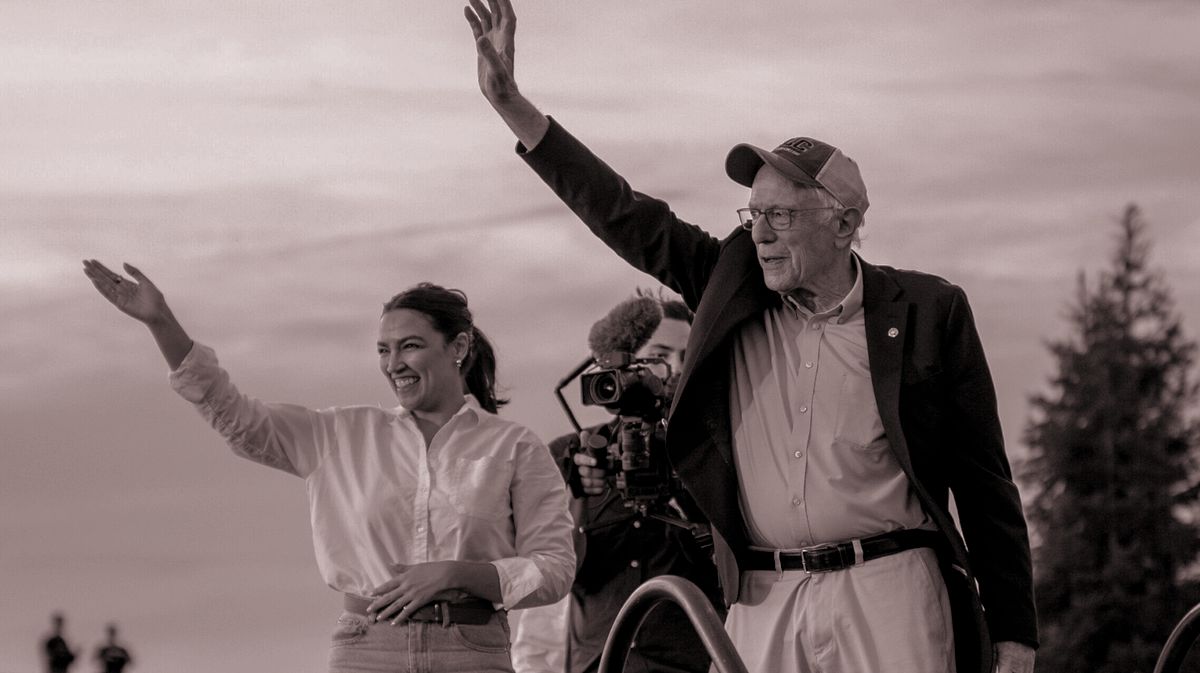
explainer clip starring kittens, jumped 24 spots on Resonate’s ranking of social media accounts compared to the previous week. Bernie Sanders and Alexandria Ocasio-Cortez also collected millions of views with a widely shared walk-and-talk video explaining the Obamacare subsidy cliff.
Crucially, Resonate also found that Dem-friendly messaging was traveling beyond political echo chambers. Shutdown news was suddenly appearing on the pages of Pubity and
RapTV, while generally nonpolitical creators like Cristian Maldonado and Vivian Tu of Your Rich BFF were making posts about the stalemate, racking up millions of views on TikTok and Instagram. “What immediately started to break through, for the normies, were the explanations and explainer videos,” said Carly Evans, Resonate’s director of analytics. “But those have a pretty short shelf life, and the challenge for Democrats is going to be figuring
out how to keep competing for attention in a longer fight.”
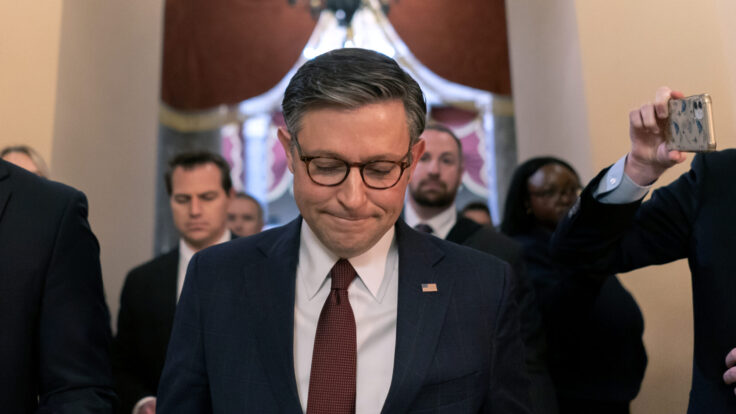
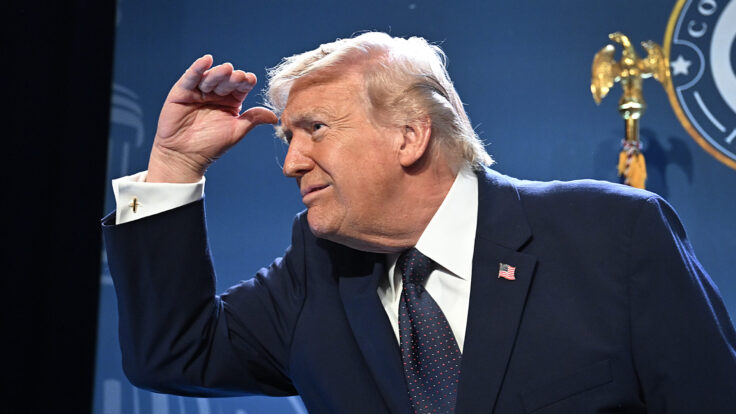
Still, the internet always rewards first-movers. And these social media stats from last week help explain what pretty much everyone in Washington now believes: that Democrats—yes, those hapless, tech-illiterate try-hards—had won the first round of the shutdown messaging war by pushing forcefully into new media spaces with a plan and a coordinated message. That’s why Trump and House Speaker Mike Johnson both
organized public appearances on Monday to assure the public that Republicans do not want to take away people’s healthcare, even if they betrayed no signs of wanting to cut a deal with the Democrats. Their change in tone is an obvious reflection of public opinion: Voters aren’t enamored with Democrats, but polls have consistently shown that they’re more inclined to blame Trump and Republicans for the shutdown. A CBS News/YouGov poll over the weekend found that most say the shutdown fight is about
healthcare.
The G.O.P., for once, is on its heels. “They are seeing that the usual media machine that they relied on in 2024—their usual playbook blaming immigrants or trans people—it’s not working right now in the same way,” said Ben Meiselas, one of the co-founders of MeidasTouch. In 2024, he said, Trump and Republicans had used Fox, podcasters, and memes “in a way that felt unified and relentless.” But now they’re lacking that kind of unity, possibly due to defections
over ICE, healthcare, or inflation. “And on the flip side,” he continued, “we are starting on our side to understand that we have our own broader media apparatus that exists.” But will it last? |
At the height of DOGE fights in March, a Democratic source complained to me about the lack of raw political
talent inside the party. But this person gave Democrats credit, at least, for trying to correct their stale, 2024-era approach to media by embracing digital formats and reaching out to voters beyond their usual Beltway channels. “You go to war with the lame nerds you have, I guess!” this Democrat told me. Their efforts back then were halting and cringe—awkward podcast appearances, whiffed
attempts at TikTok trends, selfie videos that no one watched—but many Democrats I spoke to in the early days of Trump 2.0 were just glad that their politicians were finally trying something new. “They’re holding their own camera, speaking directly to the camera, finding creative hooks, really learning and actually becoming pretty good at it,” New Jersey Sen. Cory Booker boasted to me in the spring.
Since the shutdown began, though, Democratic strategists and progressive
content creators I’ve spoken with seem to think that their coalition has finally started to grasp the importance of feeding an always-on “content flywheel,” as Paulina Mangubat, digital content and creative director at the D.N.C., put it. “We’re more familiar with all the different levers to pull, and I think that’s great, and I want that to keep happening,” she said. “We get that a clip will likely mostly surface first on Twitter and then eventually make its way through TikTok
and the vertical platforms. An MSNBC hit doesn’t just have to be like an MSNBC hit.”
Mangubat, whose team helped cook up the kitten shutdown explainer that has so far racked up more than 4 million views on TikTok, said the D.N.C. now understands that it can’t control every single message or talking point that ripples out onto YouTube or Spotify. Today’s information flow is too distributed for a top-down approach from Washington—and their party is out of power, anyway. So while the D.N.C.
still promotes talking-head cable news appearances from Democratic governors and members of Congress, Mangubat told me they now also prioritize arming elected officials and progressive content creators with clips and research they can filter or recycle on their channels, often through the D.N.C.’s affiliated FactPostNews account. FactPost could, she said, post a clip of Pete Hegseth saying something liberals would mock, and other content creators could remix it in their own
voice.
Another big reason for last week’s success was the sheer volume of content. Unlike the last shutdown fight in March, when Schumer and Senate Dems infuriated the party base by voting to keep the government open without any clear explanation, party leaders this time went into the shutdown with a shared message—and a willingness to delegate to independent creators to help them sell it to the American public. Shutdown content on liberal channels, led by multiplatform
progressive Brian Tyler Cohen, ultimately amassed 43 million views on YouTube.
Democrats shouldn’t be afraid of this kind of “more is more” approach to content, said Danielle Butterfield, executive director of the Democratic super PAC Priorities USA. “We’ve had a good message for a long time,” she argued. “But we just haven’t been showing up in spaces where people are spending their time.” Meiselas told me that during last year’s election season, he
rarely had his texts and emails returned by Democrats he was trying to book on his YouTube show and podcast for Meidas. Now, he said, “If I wanted to do 20 interviews a day with senators or members of Congress, I could.” |
A Megaphone at a Meme Fight
|
Democrats haven’t completely figured out the playbook, of course, and there are plenty of lame nerds who can
never compete long-term with Trump’s attentional powers. Keith Edwards, a progressive creator who has nearly 1 million subs on YouTube, told me that while he’s happy that Democrats are getting more comfortable on social media, most of them lack the talent—or bravado—to embrace the tone and language that resonate on those platforms. Edwards would know—scan the recent tile images on his YouTube page and you’ll see blaring headlines like “White House PANICS as SICKLY Trump
REAPPEARS in Public” and “Trump LOSES his mind over EPSTEIN … and then NEWSOM ENDS HIM.”
Edwards pointed to the lack of clips from leadership going viral—with a few exceptions, like A.O.C., party leaders “understand they need to spread their message, but they’re still not saying it in a way that actually gives it juice to travel.” For reference, Edwards texted me a clip from Fox News last night in which Trump advisor Stephen Miller smiled awkwardly while
being shown a recent clip of A.O.C. mocking his height. The implication: Few Democrats are willing to throw punches and grapple with MAGA on its own rhetorical terms. (Countered another Democrat: “Well, some of us have shame.”) Newsom, a least, has gone full Mean Guy on social media, with his trolly name-calling and derogatory memes, and it’s helped him leap to the top of 2028 polls among Democratic voters, who seem to enjoy seeing a prominent party figure finally bring a gun to a
gunfight.
While Mangubat, the D.N.C. content guru, acknowledges that such a tone won’t work for all Democrats, she said her team is seeing results by going on offense. Their primary goal, after all, is to run a rapid-response account against Trump and Republicans. The D.N.C. TikTok account has added almost 1.5 million followers since January, partly because they’re not playing nice—she reminded me that the D.N.C. was the first major Democratic account to go all-in on posting about
Jeffrey Epstein and Trump. Over the weekend, her team posted a reimagined logo for the Republican National Committee that reads “Pedophile Protectors.” It now has 11 million views on X. Emulating the tone on the rest of the internet to get a message across “doesn’t mean that the content is degraded,” Mangubat said. “It just means that we’re being effective.”
The sharp rhetoric might have its limits—an expiration date that comes with every news cycle and the nation’s
diminished capacity to pay attention to anything for more than a day. The researchers at Resonate told me that interest in the shutdown faded quickly, as news coverage and algorithms moved on to stories like the Gaza flotilla and the new Taylor Swift album. “Breaking news is just what drives the internet,” Coffin-Gould told me. “The shutdown was something everyone heard about Wednesday, but for the majority of people, the not-politically-engaged, it has now moved to the
background.”
Faiz Shakir, the Bernie-aligned progressive strategist who started the Emmy Award–winning video hub More Perfect Union to showcase working-class voices online, has a more fundamental critique. He lamented the fact that Democrats continue to talk about politics in insider-y or academic terms that feel opaque for most working people, who usually care more about their own economic situations than who’s to blame for the shutdown. Too often, he said, video content
being pushed by Democrats features politicians or experts making arguments straight to camera. Not much of it, he argued, feels durable. “How many of these videos, these social content clips that Democrats are putting out, just feature a regular person? Because you’re fighting on their behalf right now,” Shakir said. “You’re saying their healthcare premiums are going to go through the roof. So presumably, it’s not hard to go into a lot of different places and say, ‘Hey, there’s a real person, a
real story, behind this.’ Turn the camera on them.”
Shakir pointed to the raw, emotionally jarring clips of human suffering in Gaza and outrageous videos of ICE agents separating families and brutalizing protestors—videos that continue to go viral. “Those clips,” he said, “have done more to change public opinion on those issues than anything else.” |
|
|
Join Puck’s chief political columnist, John Heilemann, as he roams the corridors of power and influence in America on this
twice-weekly interview show, taking you beyond the headlines with the people who shape our culture: icons and up-and-comers, incumbents and insurgents, moguls and machers in the overlapping worlds of politics, entertainment, tech, business, sports, media, and beyond. The conversations are rich and revealing, unrehearsed and unexpected… and reliably impolitic. A Puck-Audacy joint, new episodes drop every Wednesday and Friday. |
|
|
The industry’s go-to source for unflinching reporting on the trillion-dollar business of artificial intelligence - perhaps the
single most important technology of our time. Ian Krietzberg, the powerhouse journalist behind The Deep View, delivers twice-weekly insights into the latest dealmaking and breakthroughs in A.I., and how the intersecting worlds of finance, entertainment, media, and politics are being transformed in its wake. |
|
|
Need help? Review our FAQ page or contact us for assistance. For brand partnerships, email ads@puck.news. You received this email because you signed up to receive emails from Puck, or as part of your Puck account associated with {{customer.email}}. To stop receiving this newsletter and/or manage all your email preferences,
click here. |
Puck is published by Heat Media LLC. 107 Greenwich St, New York, NY 10006 |
|
|
|