 |

|
|
Welcome back to The Best & The Brightest. I’m Peter Hamby.
|
|
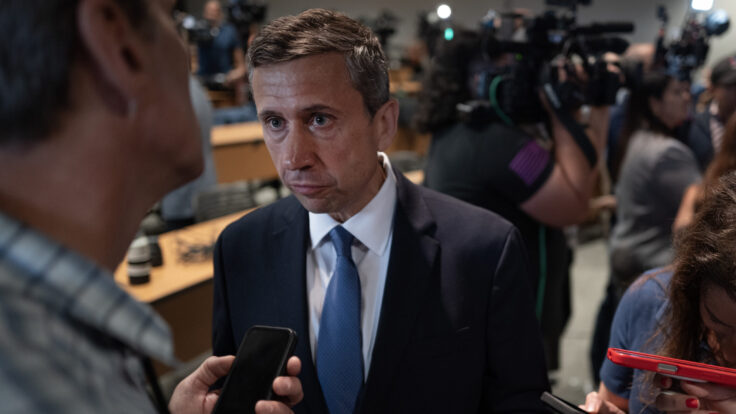
Tonight, my candid conversation with Mark Mellman—one of the Democratic Party’s biggest pro-Israel voices and prominent pollsters—in which we dig into the Biden protest vote in Michigan, the humanitarian crisis in Gaza, and how he’s interpreting the Gen Z backlash to Biden and Israel.
But first, here’s Abby Livingston with the latest from Capitol Hill…
|
|
A MESSAGE FROM META
|

|
|
The world faces a shortage of skilled tradespeople.
Today, students at the skilled trades school RSI use the metaverse to gain hands-on welding experience and develop the exact muscle memory they need.
Making quality training more accessible helps combat a global shortage of welders.
Explore the impact of the metaverse.
|
|
|
| SOTU Murmurs & the Garvey Mirage |
|
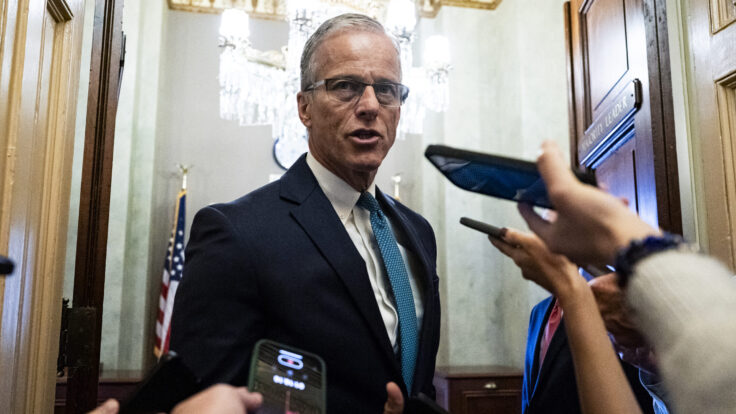
Congress is heading into another big week, featuring more shutdown avoidance drama and Biden’s State of the Union on Thursday night. But first, of course, comes Super Tuesday. While most media attention will focus on whether Trump can put the presidential primary to bed, there’s an entire world of politics being litigated down-ballot. At least one House incumbent will lose tomorrow, and other members are facing the race of their lives. Here are the most interesting stakes for Tuesday:
- Rodeo circuit: House Democrats pulled on their boots and cowboy hats and descended on the Houston Rodeo over the weekend, participating in the leadership-aligned House Majority PAC fundraiser. The Big Three—Hakeem Jeffries, Katherine Clark, and Pete Aguilar—all came, along with local talent Lizzie Fletcher and Sheila Jackson Lee. Filemon Vela, an Akin Gump lobbyist and former Texas Democratic delegation member, organized the event, and I’m hearing that a not insignificant number of D.C.-based lobbyists attended as well.
While in town, Aguilar was spotted out and about with Fletcher, who’s facing a primary challenge on Tuesday, albeit one that seems to be petering out. Jeffries, sporting a black felt cowboy hat, hit the carnival adjacent to the rodeo with Jackson Lee, who has a much more formidable opponent in Amanda Edwards.
According to several on-the-ground sources, Jackson Lee may have a tight margin tomorrow, but there’s confidence she will hang on. “She’s everywhere, a fierce advocate for the people she represents, [who] love her so much,” a plugged-in Houston observer told me. And that was from a Republican.
- California dreaming: As Republican Steve Garvey continues his surge in California polling, Inside Elections’ Jacob Rubashkin made a prescient point late last week: Do not overread the results on Tuesday night (or days later, given California’s reputation for glacial vote counting…) if Garvey joins Adam Schiff in the general election. A Garvey advancement in the jungle primary doesn’t mean Republicans have a shot at Dianne Feinstein’s Senate seat. Garvey’s success will come on the back of Schiff’s spending, and because Katie Porter and Barbara Lee have split the Democratic vote.
To wit, the last time Republicans went on offense statewide was 2010, the worst political climate in a generation for Democrats. Despite that, Meg Whitman spent $180 million to lose the governor’s race by 13 points, and Carly Fiorina’s campaign raised and spent $23 million to lose the Senate race by 10.
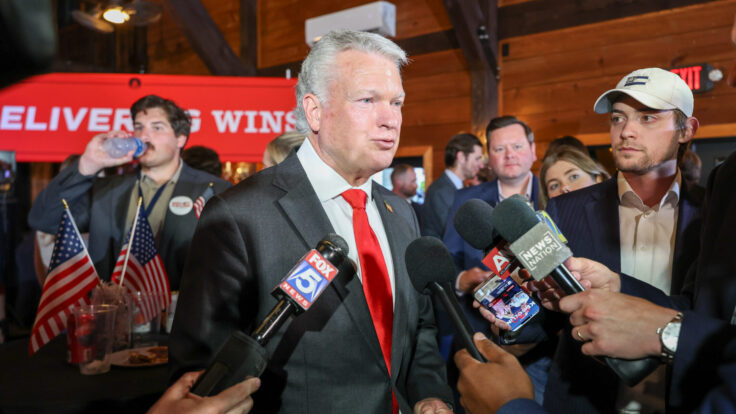
- Somebody’s gotta lose: Tomorrow will also feature the Alabama Republican member vs. member showdown between Jerry Carl and Barry Moore. Carl has completely dominated Moore in fundraising, hauling in $1.8 million to Moore’s $700,000. But it’s even more interesting under the hood: Members from all over the conference in recent weeks dumped money into this race from their own campaigns.
Carl has the backing of the pragmatist wing of the party, pulling in donations from Blaine Leutkemeyer, Julia Letlow, Ashley Hinson, Mariannette Miller-Meeks, Steve Womack, Financial Services Chairman Patrick McHenry, Andy Barr, Stephanie Bice, Ann Wagner, and Armed Services Chairman Mike Rogers. Also of note: Hedge funder Paul Singer donated to Carl.
Moore’s backers include Bill Posey, Judiciary Chairman Jim Jordan, Andy Biggs, Warren Davidson, Eric Burlison, Ways and Means Chairman Jason Smith, Troy Nehls, Randy Weber, Andrew Clyde, Chip Roy, Jody Hice, Russ Fulcher, and Josh Brecheen.
|
 |
| Biden’s Gaza Dilemma |
| A candid, post-Michigan conversation with Mark Mellman, the prominent Democratic pollster and staunch pro-Israel advocate, about how Biden is navigating the party’s protest vote, the humanitarian crisis in Gaza, the media echo chamber, and whether the Gen Z backlash is for real. |
|
|
|
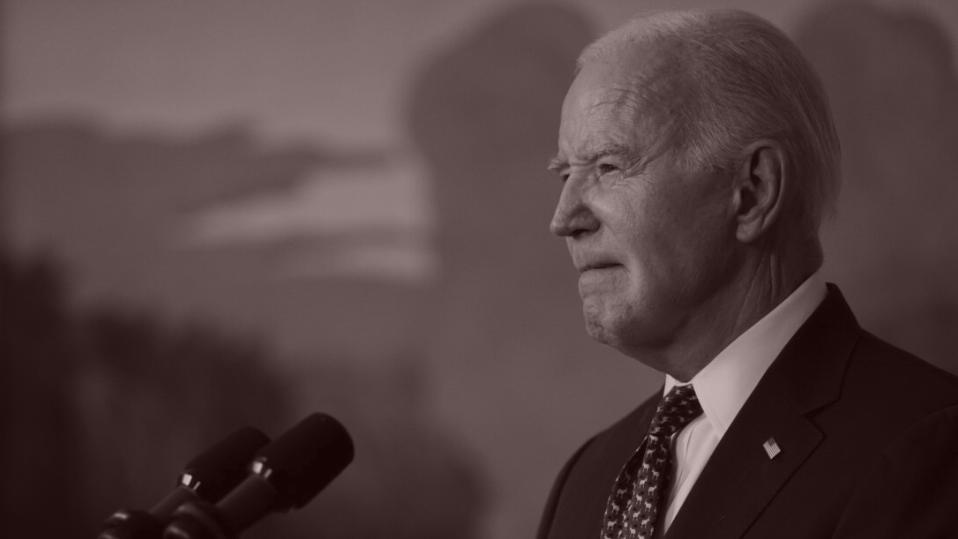
| It would be a colossal understatement to say that the pro-Israel wing of the Democratic Party—which is to say, most establishment Democrats—watched the news coverage of last week’s Michigan primary with mere annoyance. President Joe Biden had a full-blown political headache on his hands: A protest campaign against Biden’s support for Israel’s war in Gaza, organized by progressives and leaders from Michigan’s sizable Arab and Muslim American communities.
When the final results were tallied, the “uncommitted” protest in Michigan had netted more than 100,000 votes. Not great, considering Biden only won Michigan by about 150,000 votes in 2020. Even so, Biden won the primary overwhelmingly, with 81 percent of the vote, as he continues his leisurely march to the 2024 nomination.
But never mind the final results: Cable news coverage last Tuesday evening focused almost entirely on the early returns from the protest vote, brought to life by an echo chamber of sound bites from college students and Arab leaders attacking Biden’s handling of Gaza and claiming his electoral chances in November are doomed. There were few pro-Israel voices included in the news coverage at all.
Mark Mellman didn’t like it one bit. “I thought a lot of the coverage was an embarrassment to the press and to the media,” he told me over the weekend. Mellman, proudly Jewish, is the president of the Democratic Majority for Israel, one of the most influential pro-Israel advocacy groups in the country, along with AIPAC. Mellman’s outfit spent more than $3 million in the 2022 midterms to help elect pro-Israel Democrats. This year, it’s all but certain DMFI will spend heavily to defeat progressive Democrats in Congress who have been critics of Biden and his support for Israel’s war, such as New York’s Jamaal Bowman and Missouri’s Cori Bush.
Mellman isn’t just one of the Democratic Party’s biggest pro-Israel voices, however. He also happens to be one of its most prominent pollsters, working at the highest levels of campaign politics, and he was a senior adviser and pollster on John Kerry’s 2004 presidential bid. I talked to Mellman about the media coverage of Michigan and the protest vote, whether the war in Gaza will truly imperil Biden’s reelection chances, why the president’s support is so soft with young progressives, and much more. The following has been lightly edited. |
|
A MESSAGE FROM META
|

|
|
“The more muscle memory that you have, the smoother your weld is.”
Shanna Ford gets high-quality welding practice with a VR training platform powered by ForgeFX. When training is more accessible, welders can practice over and over again to improve their skills and advance their careers.
Discover other stories.
|
|
|
| Peter Hamby: What did you make of the media coverage and some of the narrative-shaping that happened on Tuesday?
Mark Mellman: The reality is, many of the networks—and when I say many of the networks, I’m thinking of CNN in particular—featured one side of the story only. You saw that in the people they interviewed, the people they had on camera, the places that they went. You had a correspondent in Dearborn—which is perfectly reasonable; it’s the headquarters of the Arab American community. You had a correspondent in Ann Arbor, which is the headquarters of the left in Michigan. You had no one in the Jewish community. You had no one in Oakland County, which had the largest number of votes of any county in the state. The fact that they had people like [progressive activist and Bernie Sanders acolyte] Nina Turner on, and others who were just spouting about one side of the issue, nobody who represented the pro-Israel side as a guest—all of that was embarrassing.
And the coup de grâce, in terms of embarrassment, was that lack of a historical discussion of the uncommitted vote. And the fact is, uncommitted did about two and a half points better after this large campaign than it did against Barack Obama in 2012, when no one was asking anybody to vote uncommitted. That is an abject failure as far as I’m concerned. But it was portrayed as a big win.
Your team sent out a pre-primary briefing to reporters, and it said, based on previous elections, “exit polls tell us that 2 percent of Michigan’s general electorate is Jewish, 1 percent Muslim.” Is that true? Exit polls can be iffy.
The pro-Israel vote in this country and in Michigan are larger than the anti-Israel vote. You would have no sense of that from watching most of the coverage of the Michigan primary. And again, CNN hosted Nina Turner. It must’ve been pretty difficult to find the one person who identifies herself as a Democrat who supported neither Joe Biden nor Hillary Clinton.
The polling environment on Israel and Gaza feels like it’s all over the place. Navigator has a poll, Pew has a poll, Gallup has a poll, and some are about, like, Biden disapproval or approval on Israel. Others are, “Do you support a ceasefire?” or, “Do you support a ceasefire only if Hamas gives up their weapons?” What is your general sense of where Democratic voters are at when it comes to Biden’s handling of this conflict, and primary voters specifically?
Well, we can’t speak to Democratic primary voters, specifically, because we just don’t have the data. But we can speak to Democrats generally, across the country, and most Democrats approve of the president’s handling of this issue. There’s a significant number who disapprove, but the reason for their disapproval has nothing to do with which side he’s taken.
The second-largest group is people who disapprove because they think he supports the Palestinians too much. And the smallest group of disapprovers are those who say they disapprove because of his support for Israel. So the reality is, if you look at the ceasefire questions, a ceasefire is an appealing thing! If you say to people, “Are you for a ceasefire,” it’s like asking if you’re for world peace. “Well, of course I am.” But does that mean you’re against having a Defense Department and you think we should defund the military? No, it doesn’t necessarily mean that. And the same thing is true here.
When we look at this ceasefire, the majority of Democrats and the vast majority of Americans favor a ceasefire if and only if the hostages are released and Hamas is disarmed and dismantled, and no longer controls Gaza. But for the average person, not being reminded of that fact or those facts, and just being asked whether they favor a ceasefire? Of course they favor a ceasefire!
Biden is obviously getting heat from activists and young voters on this issue. But on the flip slide, in the press at least, it feels like he doesn’t get credit from the Romney-Biden voters, normie types who are generally pro-Israel. In other words, if he’s on the right side of this conflict in terms of public opinion, you don’t really hear that.
Well, I’m not sure who you’re referring to exactly when you say you’re not hearing it. But we’ve had members of Congress backing him up very strongly and backing up the Biden policy as well. But the far left, the anti-Israel segment, they have the largest share of voice, even though they’re the smallest share of vote.
You started the Democratic Majority for Israel group in 2019. What do you attribute Gen Z sentiment on Israel to, what’s changed with young voters over the last few years, and why are their views on this issue so radically different from older generations? Is it just social media making certain political positions seem fashionable?
I think it’s a lot of things, quite honestly. Look, there is a distance from, and an unfamiliarity with, the Holocaust. That’s just a fact of demographic life. And that has an impact. Second, this is a generation that has only known Israel as a militarily, culturally, economically strong country. They weren’t really conscious of how, in 1973, the question of whether Israel would continue to exist was a real question. And they also have been raised in a period when the notion of “strong equals wrong” has gotten a lot of currency.
The reality is that most younger people tend toward the progressive side, toward the left side of the spectrum, and we live in a highly polarized world, certainly a highly polarized country, where the right can’t talk to the left and the left can’t talk to the right. And with Benjamin Netanyahu in charge of Israel for the last 15-odd years, more or less, the pro-Israel message has been coming from the right. And it’s not surprising that [Gen Z is] not totally in Israel’s corner, given the fact that they’re not people of the right, by and large.
But the other thing that we should be aware of is that when people ask those Gen Z voters what they’re most interested in, and what they’re going to vote on, they overwhelmingly say the economy. They do not say, “I’m voting on the basis of Israel.”
That’s definitely true.
It’s also not Biden’s age or anything else. They’re saying, “I’m mostly focused on the economic conditions.” |
|
|
|
|
| There are 30,000 people dead in Gaza. Why shouldn’t progressives be allowed to talk about conditioning aid to Israel, or that Biden needs to do more to stop the war? In other words, what’s the line where you feel the need to weigh in against certain Democrats, and maybe go after people in primaries?
First of all, we’re very clear about what we’re for: We’re for the Democratic agenda and for the advancement of the Democratic Party, and we think one of the important parts of the Democratic agenda is support for a strong U.S.-Israel relationship. We’re very clear about that. We don’t need air cover of any kind.
In terms of who we go after, we go after people who disagree with us. I’m pro-choice, and the pro-choice community goes after people who are not pro-choice, and they do so in primaries. This is nothing new or innovative in American politics. We go after people who have fundamental disagreements with us.
Everybody—most people—have said that they are deeply moved by the tragedy in Gaza, and they should be. And we have never gone after anybody for saying that a lot of civilians have died in Gaza. That’s a fact. The question is, do you recognize the fact that that is Hamas’s fault? That every one of those civilians, or almost everyone, would be alive today had Hamas not executed this brutal, savage attack that killed 1,200 people, wounded 15,000, took hundreds of hostages, raped and mutilated people? Had Hamas not engaged in that brutal attack, all these people would still be alive. So this is really Hamas’s problem.
What should we do about it? If your answer is, “We’ll just get along with Hamas,” then you’re naive. Because Hamas has fired over 10,000—going on 20,000, actually—rockets at Israel over the years. That’s a continuous barrage of rockets on an ongoing basis. The reality is, again, Hamas believes that Israel should be destroyed, and its people displaced. That’s what they’ve said in writing, it’s what they’ve said orally, and it’s what their actions demonstrate they believe.
I know that most of the Democrats you’re backing for the House are incumbents, but which members are you supporting a primary against? I assume these are Squad types?
We haven’t announced any endorsements against incumbents yet, so I’m not going to get ahead of myself there. But we support a lot of progressives. People who are members of the Progressive Caucus earn our support. We did an independent expenditure in favor of John Fetterman in the general election. We did an independent expenditure in favor of Emilia Sykes in Ohio and Eric Sorensen in Illinois. We have nothing against progressives. We have something against people who are anti-Israel.
Our view is that this anti-Israel segment is not just bad for the U.S.-Israel relationship, which we think is important, it’s also bad for the Democratic Party. As a Democrat, I look at these MAGA Republicans and I say, “This is the definition of extremism.” But if you talk to voters as a whole, they think that the Democratic Party is just as extreme as the Republican Party. And that’s a big problem for us. We should have a huge advantage on that, and we don’t because this far-left, anti-Israel group paints the entire Democratic Party with a brush that it doesn’t deserve to be painted with.
There was a lot of genuine early passion on Gaza from the left, from the campus left, about this conflict. Now we’re at the point, almost six months later, where I’m curious if you think voices out there are actually registered Democrats. Like, some of the loudest anti-Israel voices right now feel like professional activists who were never going to vote for Joe Biden in the first place—the kind of people who voted for Jill Stein, or might vote for R.F.K. Jr. or Cornel West. How many were actually Biden voters in the first place?
Or, how many of them are voters? How many of them are Biden voters? Both are reasonable questions, and we don’t know the answer to that, but I’ll tell you, we do know that some of these people who are activists, some of these people who are leading this effort, were against Joe Biden before October 7 even happened.
And I have no idea what they’re going to do in November. But there’s no question that many of these folks are not historically Biden supporters. Again, that’s not necessarily true of any particular set of voters, but if you’re talking about the leaders and the people who are putting these campus demonstrations together and so on, there’s a lot of evidence that a number of them were never Biden supporters.
With Israel and Gaza in mind, when it comes to younger voters, how does Biden proceed to November? You’ve been a pollster for a presidential campaign. How does he navigate making sure the normie voters that helped him win the White House in 2020 come back to his side. while also repairing his relationship with the young left?
This is about the overall messaging of the campaign. The reality is, this president has a lot of accomplishments that are very important to younger people, as well as to older people, that most people, old and young, don’t know about. And that’s not really his fault. All these accomplishments got wrapped up in a couple giant bills so nobody really knew what was in them. People don’t know what the president has done on climate change, for example. They don’t know what he’s done on prescription drug costs. They don’t know what he’s done on student loan forgiveness, student debt forgiveness. And our campaign is an opportunity to tell all those stories.
The reality is, what the polls tell us about this race is it’s a very close race that either one of them could win, and anybody can pick out a poll saying, “Oh, there’s a poll here showing Trump winning,” or, “Here’s a poll showing Biden winning,” and that’s true. But what the weight of the polling evidence tells you is it’s a very, very close race. And the truth is, the race is just getting engaged at that level. |
|
|
|
| FOUR STORIES WE’RE TALKING ABOUT |
 |
| Zaz’s Bonus Math |
| A readout on the freshest Downtown Cip table chatter. |
| WILLIAM D. COHAN |
|
 |
|
 |
|
 |
|
|
|

|
 |
|
|
|
Need help? Review our FAQs
page or contact
us for assistance. For brand partnerships, email ads@puck.news.
|
|
You received this email because you signed up to receive emails from Puck, or as part of your Puck account associated with . To stop receiving this newsletter and/or manage all your email preferences, click here.
|
|
Puck is published by Heat Media LLC. 227 W 17th St New York, NY 10011.
|
|
|
|