Hello, and welcome back to The Best & The Brightest. I’m your host, Julia Ioffe, coming to you on a Tuesday in lieu of Leigh Ann Caldwell, who will be back on Thursday after hosting a Puck Power Breakfast with Hawaii Senator Brian Schatz that promises to be a banger. If you’re a Puck subscriber in Washington and interested in attending, email Fritz@puck.news.
Tomorrow marks two weeks since Donald Trump said he needs two more weeks to decide whether he will roll out tougher sanctions on Russia, which has been pummeling Ukrainian cities with renewed viciousness in the past few days. Well, the two weeks are up, but the president seems to have washed his hands of the war he said he’d end in 24 hours. (If anything, the war is even worse now than it was before his inauguration. Same with the war in Gaza.) Don’t hold your breath expecting him to roll out new Russia sanctions tomorrow. Or the day after. Or, let’s be honest, ever.
Tonight, the diplomats in Foggy Bottom are waiting on pink slips, which arrive on Friday; the military and the spooks across the river are wondering what the blurring of the line between foreign and domestic security means for their work; and, across the ocean, Elon Musk’s dad is running around Moscow, singing Vladimir Putin’s praises as “a very stable and pleasant man.” (A very stable genius, even?)
But first, here’s Abby on the redistricting drama in Texas…
|
|
|
 |
Abby Livingston |
|
The G.O.P.’s Lone Star Gamble
|
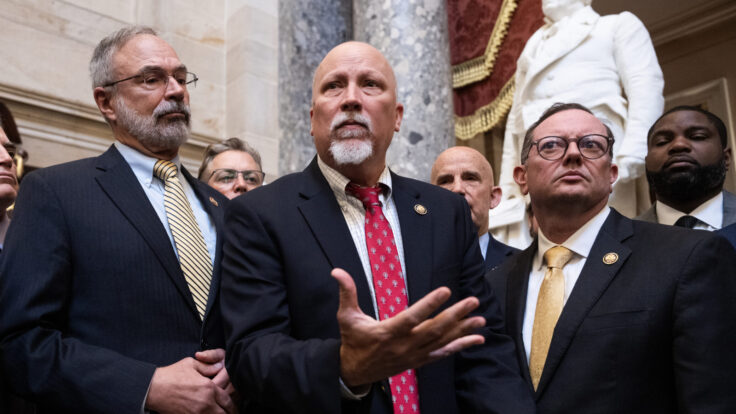
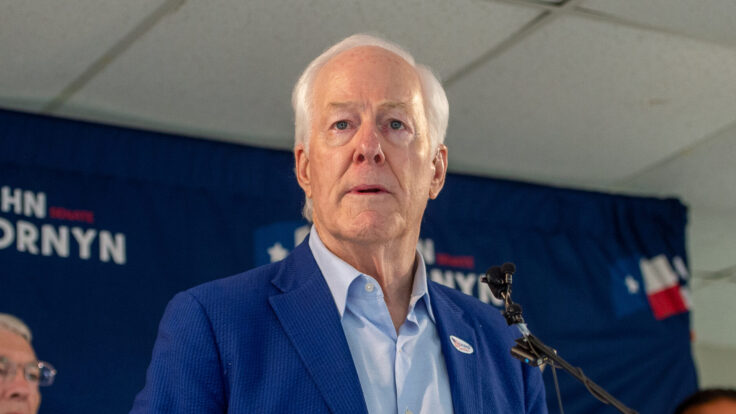
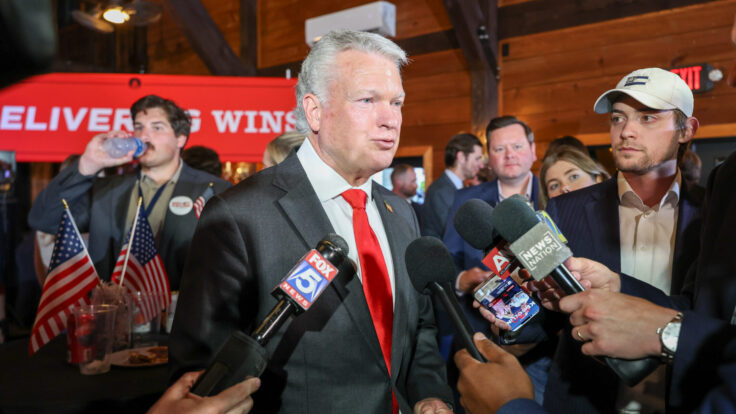
In a bid to pick up House seats, Trump’s political team is pressuring Texas Republicans to dramatically redraw the state’s congressional lines, according to the Times, unnerving Texas Republican sources I’ve spoken with in recent days. The move signals the White House’s anxiety about a Democratic midterm wave, but it’s also, according to almost every G.O.P. insider I’ve spoken with, remarkably ill-conceived. After all, an aggressive map could spread Republican voters too thin, and lead to tough reelection campaigns for as many as eight Texas G.O.P. House members, Republican map experts tell me. “We are going to put more seats at risk than ones we can potentially gain,” a bewildered Texas Republican told me last night.
Historically, Texas Republicans have been adept at drawing exquisitely ruthless congressional maps. That approach was on the table in 2021—the first year of redistricting after the Supreme Court gutted the Voting Rights Act, when the national G.O.P. was on the march to a House majority in 2022. Instead, state Republicans were strategically conservative, and prioritized incumbent protection.
At the time, Texas Republicans were trying to prevent another sweeping Democratic offensive, like they’d experienced in 2018 and 2020, when the Trump-led G.O.P. hemorrhaged support in the suburbs. In the end, Republicans ended up losing only two seats in the state in 2018, and were able to hold on to competitive seats in 2020—but they didn’t want to repeat the experience, and understood that going after a single Democrat in Dallas or Houston could risk destabilizing the reelections of surrounding Republican incumbents. Now, Trump is calling for five or six new Democratic targets. Even in the Trump era, and even in Texas, this kind of aggression is not the norm.
It’s also worth noting that the current map has paid political dividends for Texas Republicans in recent years. The 2021 map effectively neutralized Democrats’ statewide ambitions, and helped reduce the need for defensive ad spending in expensive TV markets like Dallas–Fort Worth, Houston, Austin, and San Antonio. To wit, when Colin Allred ran for Senate in 2024 against Ted Cruz, the reverse coattails that had lifted Beto O’Rourke to a narrow loss to Cruz in 2018 were nowhere to be found. But this new pressure campaign could unintentionally reopen the door to Texas Democrats. As Democratic Rep. Lizzie Fletcher, a likely target for this Republican thought exercise, put it: “Be careful what you wish for.”
|
|
|
|
News and notes on the fears of the professional class in Washington: the military mobilization in L.A., impending layoffs at State, and the curious saga of Elon Musk’s father in Moscow.
|
|
|
In between doing burpees and always-on-camera “P.T.” with the troops, Secretary of Defense Pete Hegseth has declared, over and over again, that the American military needs to get back to “ warfighting.” Now, less than six months into his term, the U.S. is indeed deploying troops, including an active-duty Marine combat battalion—not to a war zone, but to America’s second-largest city, to deal with a protest that absolutely did not merit it. Warfighting, it seems, actually means fighting political wars at home.
The military mobilization in Los Angeles, ostensibly to protect ICE agents from several hundred protesters carrying signs and flags (and a much smaller group of rioters) has left D.C.’s national security community both alarmed and befuddled. Is this a national security issue because it involves the military? Or a domestic political issue because it’s about immigration and law enforcement? What does it mean to fuse the two?
Whatever the case, current and retired military personnel are being extremely careful in how they express their alarm, even off the record. They have, after all, been trained to follow the chain of command, and Trump is its apex, the commander in chief. Instead of overt criticism, they’re settling for technical questions that skate just shy of the line. Why, they wonder, is such a show of force being used at all, let alone to police a small protest that local law enforcement could have easily handled? Why are national, D.O.D. resources being used—to the tune of $134 million—before local ones are tapped out, especially at a time when the administration says it’s rooting out waste, fraud, and abuse? Were these troops trained for domestic crowd control? Their orders are to protect federal buildings and “federal processes,” but what does that mean? And what happens if, under the rules of engagement that govern the U.S. military, an 18-year-old Marine deployed to L.A. feels his life has been threatened and shoots live ammunition into an unarmed crowd on domestic soil?
One retired military officer wondered about the significance of the L.A. deployment occurring in the same week as the U.S. Army parade in D.C., to celebrate the service’s 250th anniversary, show off the military’s intimidating hardware, and, not coincidentally, mark Trump’s 79th birthday. The juxtaposition certainly implies that the president who promised to “end wars” overseas is less concerned about deploying troops as an option of first resort on the home front. But was the American military trained for this? “We can fucking do anything, fortunately or unfortunately,” one senior defense official whispered from their office when I asked this question. “Our military can do whatever America asks them to do. And that presents easy options for political decision-makers.”
Civilians, on the other hand, have been far more direct about the five-alarm fire ignited by the domestic deployment of troops. The administration is doing this “in order to continue to cement their expansive conception of presidential power, which is to say that the courts and Congress have no authority or recourse about anything that the administration claims is linked to foreign policy or national security,” one former senior Pentagon official told me. “They are basically trying to say that immigration is just a foreign policy issue”—see the president’s repeated insistence that illegal immigration amounts to an “invasion” and efforts to claim extraordinary powers on that score—“so all legal questions can be resolved by the president’s Article II authority to make foreign policy and defend the
country.”
This person went on to say that using the military as a border patrol and deportation force might just be the start—that doing so “could, of course, establish precedent for them to take other issues they see as being important or popular enough for them to want to be able to deal with unilaterally, and do the same thing.” Trump applied a similar approach with tariffs, this person noted, declaring an “emergency” to open up a “whole extra world of authorities.”
All of this gets into something the national security professionals in this town, both retired and on the “inside,” have been worrying about since November: What happens as Trump continues to blur the line between domestic and national security? The laws that govern these previously separate spheres are very clear and very different. Law enforcement is subject to certain constraints, and warfighting to others; ditto for surveilling a suspect versus spying on a foreign national. There are different laws for collecting intelligence abroad and collecting it at home.
But if, say, the Supreme Court upholds Trump’s contention that illegal immigration does, in fact, constitute a foreign invasion, does that mean the C.I.A. and N.S.A. can freely spy within the U.S., as they’re largely prohibited from doing now? If an “invasion” is here, will we see troops not just protecting federal buildings but actually doing Hegseth’s “warfighting” in America’s cities? Even if sending in the Marines to L.A. is partly about alpha optics in this specific instance, for the country’s national security professionals, this all opens up a whole new world of extremely thorny, consequential, and constitutional questions.
|
Meanwhile, across the river in Foggy Bottom, people at the State Department are bracing for reduction-in-force notices (RIFs) as Marco Rubio’s re-org plan is put into action. State Department civil service employees received emails this week instructing them to update their C.V.s and upload them to a “résumé collector SharePoint site” by close of business on Friday, June 13—the very day dismissal notices are scheduled to come down. Employees have been told that they should plan to work from home on Friday because of traffic, security, and preparations for Trump’s
birthday military parade—and, though no one will say it, because of the coming RIFs.
The mass email, which was shared with yours truly, also tells civil service employees to update their employment information. Needless to say, this is deepening the panic and despair at State. “Why, in preparation for RIFs, do they want current employees to upload their résumés into a new internal shared drive?” a department insider wondered, speculating that the department—which already has everyone’s personnel records—might use A.I. tools against them. Alarmed Staties have been pushing back, asking for clarification about the request, but no additional information has been provided. Many of them are concerned about data scraping and privacy. Some are worried that the information they share will be used against people who were not RIF’d, so they can be fired later on for ties to an alleged deep state or D.E.I. efforts.
Meanwhile, as career Staties await an expected 20 percent cut, the senior ranks of State leadership are filling up with B.F.F.s. As we reported earlier, the Ben Franklin Fellowship, a kind of Federalist Society for the diplomatic corps, is being seen as an express lane to senior state posts. Now, the leadership of the Bureau of Consular Affairs— i.e., the people who handle
visas—is staffed almost exclusively with members of the Trump-aligned group.
|
And Finally, Some Musk Kremlinology…
|
In a strange footnote to last week’s Trump-Musk blowup, Elon’s estranged father, Errol, appeared in Moscow over the weekend for a conference organized by Alexander Dugin and Konstantin Malofeyev, the original “Orthodox oligarch” who is under U.S. and E.U. sanctions for funding the astroturf separatists in eastern Ukraine in 2014. The conference featured other American “gets” for the Russians: Alex Jones, Columbia professor Jeffrey Sachs, and Max Blumenthal, a well-known Moscow tankie and son of Clinton confidant Sidney Blumenthal.
But it was Errol who was the real prize. His Russian hosts had him tape something that looks a lot like a hostage video (albeit one in which the hostage doesn’t quite realize he’s a hostage), praising Moscow’s clean, safe streets, Tucker Carlson–style. He pontificated for the cameras about how he is advising Elon to repair his ties with Trump, comparing the billionaires’ falling-out to a spat between “a man and his wife.” He went on about how Elon does not in fact have a drug problem—“He’s squeaky clean,” Errol said, because otherwise his security clearance would be yanked. And when a Kremlin TV reporter asked him how you “raise a genius,” Errol responded by making repeated smacking motions and laughing maniacally. (No wonder they’re estranged.)
But most importantly, Errol Musk was saying over and over again that the West is wrong about Russia. That Moscow is the best city in the world. That Russians are geniuses. It didn’t matter that Errol and Elon don’t speak, or that the conference had been planned before Trump and Elon fell out in a supernova of Twitter threats and insults. This is how the Kremlin and its special services operate—and have, for decades. It’s the same old playbook: Get someone from the enemy camp who is prominent—or proximate to someone who is—and lure them over to your side. That way you can say, See? Even so-and-so, a prominent such-and-such—or, failing that, a relative of so-and-so— thinks Russia is great and the West is wrong.
It makes for great—and, in the mind of the F.S.B., humiliating—propaganda content. They think this even when they snag people we think of as marginal, like Errol, or Sidney Blumenthal’s kid. It’s why the apparently troubled son of a senior C.I.A. officer somehow ended up fighting, and dying, for Russia in Ukraine. The point isn’t just trolling, although there’s a bit of that too. The point is to shift Western public sentiment toward Russia by co-opting people who are close to the most important people in the U.S., i.e., Elon Musk or, back in the day, the Clintons. It’s also about getting influencers—or people the Russians think are influencers. (As I’ve always said, the Russian state’s boundless capacity for evil is always mitigated by stupidity and incompetence, i.e., thinking Musk père matters.)
But there’s a broader point here. Just because Trump and many of his supporters share an affinity for Putin and Russia, just because they see Moscow as a potential ideological ally in Christian nationalist revanche, doesn’t mean Putin and the Russian deep state are returning the favor and backing off. They’re happy to take the American president’s unilateral disarmament and keep pressing the advantage, using the same tricks they’ve been using for decades. Because if it ain’t broke, why fix it? Especially if, every four to eight years, a new American president comes in, fully confident in his ability to reset his relationship with Putin. It’s something that the American intelligence community has come to understand, but there’s not a ton they can do if the directive coming from the boss in the White House is to stand down.
|
|
That’s all from me, friends. I’ll see you back here next week on our regularly scheduled foreign policy Thursday. Until then, good night. Tomorrow will be worse.
Julia
|
|
|
|
Join Emmy Award-winning journalist Peter Hamby, along with the team of expert journalists at Puck, as they let you in on the conversations insiders are having across the four corners of power in America: Wall Street, Washington, Silicon Valley, and Hollywood. Presented in partnership with Audacy, new episodes publish daily, Monday through Friday.
|
|
|
|
Unique and privileged insight into the private conversations taking place inside boardrooms and corner offices up and down Wall Street, relayed by best-selling author, journalist, and former M&A senior banker William D. Cohan.
|
|
|
Need help? Review our FAQ page or contact us for assistance. For brand partnerships, email ads@puck.news.
You received this email because you signed up to receive emails from Puck, or as part of your Puck account associated with . To stop receiving this newsletter and/or manage all your email preferences,
click here.
|
|
Puck is published by Heat Media LLC. 107 Greenwich St, New York, NY 10006
|
|
|
|