{{ 'now' | timezone: 'America/New_York' | date: '%b %d, %Y' }}
|
|
|
Welcome back to The Best & The Brightest. I’m Peter Hamby in Los Angeles, hitting
your inbox just as John Ourand and I take our seats at the Lakers game for our first in-person Wemby watch.
Tonight, my look at the revealing election-year politics of California, where races for governor, mayor, Congress, and even city council will test whether Democratic voters really want anti- Trump fighters, class warriors taking on billionaires, #Resistance shitposters, Abundance-inspired
technocrats, or something else altogether. And of course, there’s the Gavin of it all…
Also mentioned in this issue: Susan Collins, Al Green, Christian Menefee, Young Kim, Ken Calvert, Traci Park, Daniel Lurie, Karen Bass, Nithya Raman, Zohran Mamdani, Ezra Klein, Derek
Thompson, Bernie, A.O.C., Ro Khanna, Tom Steyer, Katie Porter, Matt Mahan, Eric Swalwell, Adam Schiff, Don Lemon, and more…
|
|
|
Science fuels farmers ability to grow healthy, abundant food for Americans. That’s why companies like Bayer depend on
rigorous, predictable, science-based standards to bring new tools to market for farmers. Innovation isn’t a buzzword, it’s the lifeline that gives growers more options and keeps America’s food supply secure.
At Bayer, we succeed when farmers succeed.
Learn more.
|
|
|
 |
Abby Livingston |
|
Last of the moderates: Ending months of speculation, Maine Republican Sen. Susan
Collins officially announced her reelection campaign today with a swaggery video of her opening a box of New Balance sneakers and declaring them “perfect for 2026, because I’m running.” (New Balance has a major factory in Skowhegan.) Collins won reelection in 2020 by 9 points, but she’s also the most vulnerable Republican incumbent this cycle—too moderate for MAGA, not independent
enough for anti-Trumpers. Ironically, Trump himself is also in a tough spot with Collins: He’s called her a “disaster,” but badly needs her seat to hedge against Democrats retaking the Senate. Let the temporary ceasefire begin…
|
Longtime Texas Rep. Al Green, the flamboyant serial author of Trump
impeachment resolutions, appears to be the first incumbent Democrat in serious trouble this cycle. That’s according to a fresh internal poll released by newly sworn-in Texas Democratic Rep. Christian Menefee—yes, another incumbent now running against a colleague due to new district lines—that shows Menefee with a 49–29 lead over Green. It’s worth
noting that this poll has a very small sample—430 respondents, with a 4.7 percent margin of error—so the results should be taken with a grain of salt. The primary is on March 3.
Runner-up: Elsewhere in incumbent-on-incumbent redistricting violence, California Rep. Young Kim released an almost-as-dishy poll this week via the Republican pollster Public Opinion Strategies, showing her in a dead heat—23 percent to 22 percent against her SoCal
colleague, Rep. Ken Calvert. (This one also has a small sample, with 400 respondents and a 4.9 percent margin of error.) The primary will take place on June 2.
|
|
|
And now for the main event…
|
|
|
California is the epicenter of Democrats’ nationwide intraparty reckoning. Races up and down
the ballot—including to replace Gov. Gavin Newsom—will reveal whether voters want a fixer or a fighter headed into 2028.
|
|
|
After a year of Trump-induced panic and futility, Democrats are finally getting
down to the messy process of figuring out what they stand for and how they can win again. It’s happening in marquee primaries, from Texas to Michigan to Maine, where Democratic candidates are reckoning with the party’s declining cultural relevance and urgent calls for generational change. The sharpest are willing to test everything—values, policy ideas, media tactics—with the understanding that the old ways of politics are dying.
But there’s one state that showcases the purest
distillation of the progressive id—where the big questions about the future of the Democratic Party are being litigated up and down the ballot, all the way to city council races—and that’s big blue California. I know: Democrats who win here don’t have to worry about moderating in a general election or bother much with the sentiments of swing voters. But it’s the epicenter of the roaring fights taking place inside the party. Left versus center. Young versus old. #Resistance-style
Trump-bashing versus Abundance-style solutions. Attacking billionaires versus accommodating the tech elite. Labor versus the private sector. Debates about race, immigration, crime, housing, and climate. I don’t need a Horace Greeley quote here to punctuate the argument. California is where the action is.
|
In parts of the state, there are House races pitting old-guard Democrats against younger insurgents demanding
that they step aside, as my colleague Abby Livingston has written. California’s new congressional map will also compel some citified Democrats to leave the comfort of their wealthy enclaves and spend some time in the rural areas drawn into their districts, meaning they’ll have to engage with farmers, ranchers, and gun owners instead of
just New Yorker subscribers. There’s even nationalized drama in my local city council race, on the Westside of Los Angeles, where a progressive challenger to centrist Democrat Traci Park is dropping mailers suggesting—dubiously—that Park is more aligned with federal ICE agents than the city’s substantial immigrant population.
|
|
|
Science fuels farmers ability to grow healthy, abundant food for Americans. That’s why companies like Bayer depend on
rigorous, predictable, science-based standards to bring new tools to market for farmers. Innovation isn’t a buzzword, it’s the lifeline that gives growers more options and keeps America’s food supply secure.
At Bayer, we succeed when farmers succeed.
Learn more.
|
|
|
In San Francisco, the independently wealthy mayor, Daniel Lurie, has helped bring the city
back from its Covid-era dystopian brink by stiff-arming the identity-politics left and boosting police hiring, cleaning up street encampments, and partnering with the Bay Area’s tech elite to rejuvenate public spaces and streamline government services. He’s now one of the most popular mayors in the country. In Los Angeles, beleaguered Democratic Mayor Karen Bass is facing a serious last-minute challenge from one of her former City Council allies. Bass lost the trust of
voters after her disastrous handling of last year’s wildfires and a possible cover-up attempt reported this month by the Los Angeles Times. New housing construction has advanced at a snail’s pace, and Bass infuriated progressives and housing advocates by opposing a state law designed to expand
higher-density, multifamily housing near major public transit stops.
Her new challenger, Nithya Raman, won her seat in 2020 with the help of the Democratic Socialists of America, and her entrance in the race stirred up hyperbolic comparisons to Zohran Mamdani. While Raman seems likely to run to Bass’s left, her public remarks so far sound more like Ezra Klein and Derek Thompson than Bernie or
A.O.C.: She’s campaigning on fixing broken streetlights, streamlining permitting, YIMBY upzoning, and fiscal responsibility. Will L.A.’s Black voters cast a Black mayor aside for a chic progressive from Silverlake? Will moderates and conservatives hold their nose and vote for a lib just to punish Bass? Will the leftists who came up with Raman stick by her side as she pivots from ideology to pragmatism? All fascinating questions—and that’s just one of the races on the ballot this
year.
|
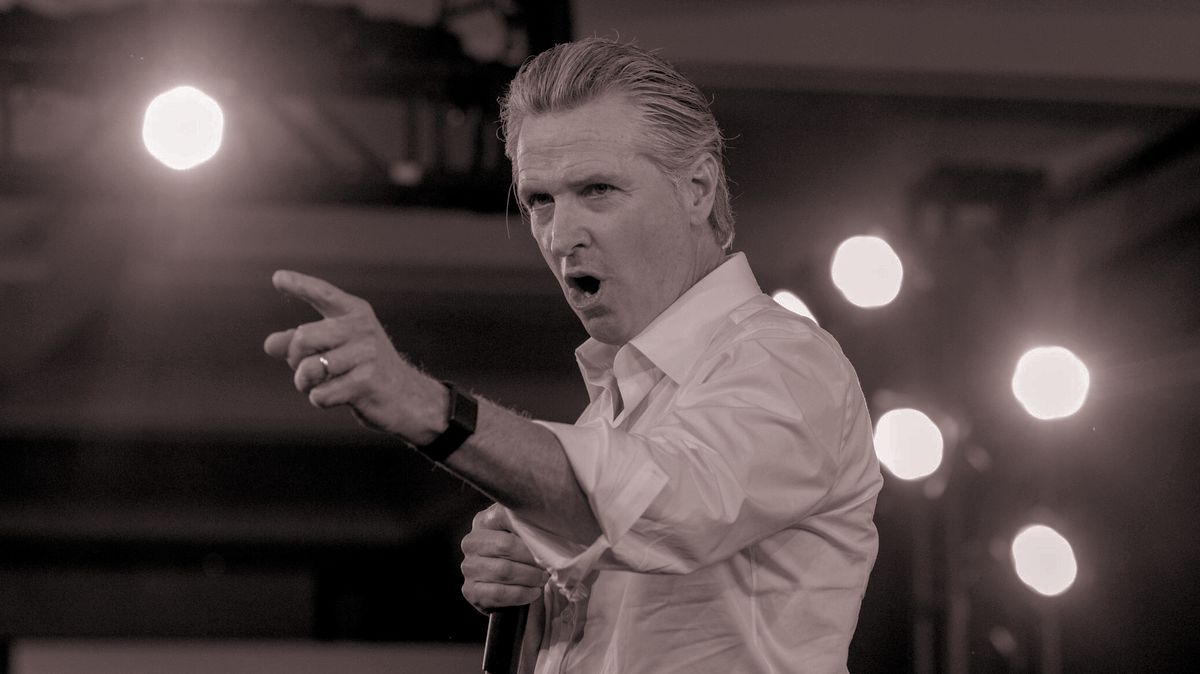
Of course, there’s also the headline story in California: Gov. Gavin Newsom. Thanks to his
pugnacious anti-Trump style on social media, his war of words with the president over ICE raids and National Guard troops sent to Los Angeles last year, and his successful Proposition 50 effort to redraw the state’s congressional boundaries, Newsom is now the frontrunner for the Democratic presidential nomination in 2028. But his biggest liability in that race would be… his own state. California’s sky-high cost of living, heavy tax burden, and enduring problems of homelessness and housing supply
will be fair game for his rivals in a Democratic primary—and bloody chum for a Republican opponent in a general election. (For more on Newsom’s conundrum, check out my conversation with John Heilemann last week on The Powers That Be).
An Emerson College poll in December found Newsom’s approval rating in California at just 47 percent. (Newsom’s allies point to higher quality state poll from the Public Policy Institute of California showing his approval at 56 percent.) There’s also the question of his relationship with the tech villains of our time—the greedy, hyperscaling A.I. companies in his backyard that have become punching bags for populists and labor. Is Newsom the best line of defense against Big Tech? (He did sign several bills designed to regulate A.I., including one requiring companies to publicize safety incidents, and another requiring public schools to limit student cellphone use.) Or is he just in the back
pocket of these NorCal elites? (He pals around with rich donors from the tech and media worlds, and critics accuse him of having watered down A.I. legislation to please Silicon Valley honchos who lobbied against it.)
Despite these local concerns, Newsom has soared to the top of national Democratic polls, mostly because Dems know him for trolling Trump all the way to Davos. His obvious social media talents and knack for getting attention—it helps that the guy can just talk and talk and
talk—far surpass those of any Democrat currently considering a presidential run. But even his putative rivals have started to poke at him for being performative. At the Super Bowl on Sunday, Democratic Rep. Ro Khanna, who is also considering a presidential run, made a point of tweeting that he was spending time outside Levi’s Stadium with anti-ICE protestors instead of “in the suites”—a swipe at Newsom, who was in a luxury box watching the game.
|
Then there’s the wide-open race to succeed Newsom as governor, with too many Democratic candidates to
count—none of them superstars, but each promising to stand up to Donald Trump while also fixing the enduring problems of the country’s most expensive state. To win, they must not only appeal to rabid partisans, but also the state’s many working-class Latino voters, arguably the swingiest group in American politics. The jungle primary takes place in June, followed by a top-two race in November. Much has changed in the primary since I first
wrote about it last year—the frontrunner is now “undecided,” followed distantly by a pair of Republicans who stand little chance of winning the general election.
|
|
|
One Democrat who should be a frontrunner, given his massive bank account, is Tom
Steyer. The private equity O.G. and hedge fund billionaire turned climate activist has vastly outspent his rivals since joining the race last year, pouring nearly $30 million into his own campaign. He also enlisted Fight Agency—the media firm that worked for Mamdani in New York—to flood TV screens with ads portraying himself as a populist who will fix California’s housing problem, in part by foisting a wealth tax on billionaires. But Democratic rivals, like former Rep. Katie
Porter, have rolled their eyes at Steyer’s shtick, pointing out that he is, in fact, a billionaire—and one who got rich off fossil fuels. In horse-race polls, Steyer remains stuck in the high single digits despite all of his spending. (And yes, Porter is still in the race despite those videos that emerged last year of her berating staffers. Aside from Steyer, Porter has raised more money than any other Democrat in the field.)
Two of the race’s biggest developments came just this
past week—each pointing to a different path for the Democratic Party. First, sensing weakness in the field, San Jose Mayor Matt Mahan—a proud moderate and erstwhile critic of Newsom—jumped into the race. Mahan, who has the support of wealthy Silicon Valley tech donors, has gone full Abundance. “Matt Mahan is focused on affordable housing by cutting fees, reducing regulations & costs,” his website reads, while he pitches himself as the sole candidate focused on practical
solutions to the housing crisis. That might be music to the ears of Democratic technocrats and podcast listeners, but maybe not to angry voters who want their politicians to fight—for democracy, not against CEQA regulations.
The other big story dropped Monday: Rep. Eric Swalwell, the notional Democratic frontrunner, received the endorsement of Sen. Adam Schiff—his old House colleague and partner in impeaching Trump—cementing his position as the
loud #Resistance candidate in the mold of Newsom. Yes, Swalwell is also talking about kitchen-table issues—affordability, bringing down energy costs, and helping small businesses—but any glance at his social media and MSNBC appearances shows what his campaign is really about: Trump-bashing. And why not? The strategy worked like a charm for Newsom in his Prop 50 campaign, when he sold voters on the idea that an arcane ballot initiative was really about sending a message to Trump—whether that
message was about fascism, or corruption, or anything else liberals wanted to project onto it.
Swalwell, who also joined the race after no one emerged as a serious frontrunner, has placed his chips on #Resistance-core as his path to the governor’s mansion. He’s a Millennial and prolific social media user who likes to post about his odds on prediction market apps like Kalshi and Polymarket, and his candidacy is basically Bluesky come to life. To wit: After journalist Don
Lemon was arrested by federal agents in Los Angeles last month, Swalwell posted a plaintive infographic expressing his support. “Don Lemon stood up for a country on its knees,” it read. “Don over Donald.” Swalwell has also floated policy ideas, such as revoking driver’s licenses for ICE agents, that are guaranteed to get likes and shares even if they might never make it through the state legislature. Performative? Corny? Cringe? Maybe. But Swalwell is leading his Democratic rivals in
the polls for now. And Schiff’s blessing will only boost his credibility with voters statewide, including in SoCal, where he’s less known.
The big question this year in California is the same one facing Democrats in primaries everywhere: Do they want a fighter—someone they believe can stop Trump from destroying the country and its cherished values? Or do they want someone who can make life cheaper, fix that crack in the sidewalk, and look out for the little guy as the rich get richer?
Rhetoric or solutions? Most voters would probably say a little bit of both. But the verdicts coming out of California in June—and November—will reveal much about what Democratic voters really want as the nation turns its eyes toward a momentous presidential race in 2028.
|
|
|
Puck sports correspondent John Ourand and a rotating cast of industry insiders take you inside the executive suites and owners
boxes where the decisions that shape the entire sports business are made. You’ll hear interviews with players, network execs, and everyone in between. The Varsity is an extension of John’s private email for Puck by the same name. New episodes publish every Wednesday and Sunday.
|
|
|
Unique and privileged insight into the private conversations taking place inside boardrooms and corner offices up and down Wall
Street, relayed by best-selling author, journalist, and former M&A senior banker William D. Cohan.
|
|
|
Need help? Review our
FAQ page or contact us for assistance. For brand partnerships, email ads@puck.news.
You received this email because you signed up to receive emails from Puck, or as part of your Puck account associated with {{customer.email}}. To stop receiving this newsletter and/or manage all your email preferences, click here.
|
Puck is published by Heat Media LLC. 107 Greenwich St., New York, NY 10006
|
|
|
|