 |
 |
|
Hello, and welcome back to The Best & The Brightest, your Tuesday foreign policy edition.
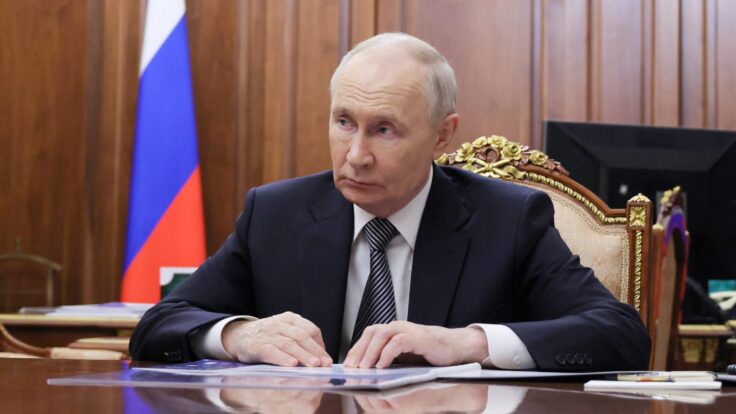
Last week, I wrote to you that Yevgeny Prigozhin, the mallet-wielding warlord who marched on Moscow on June 24, had all his money (and, apparently, some weapons) given back to him and that he had been spotted in Moscow for some meetings. Then, Belarusian dictator Alexander Lukashenko said that Prigozhin was not, in fact, in Belarus, as per the agreement that deflated the mutiny, but in Russia. And then, yesterday, the coup de grâce: news that Pregozhin was not just in Russia, but had a three-and-a-half hour meeting with Vladimir Putin, himself, just a week after Putin had labeled Prigozhin a traitor.
So this man, who had presented the most embarrassing challenge to Putin in many, many years, was not only not killed or imprisoned, but offered a meeting with the czar? What the hell is that all about?
“I don’t have any explanations except to say that it’s the insanity of the situation,” a clearly baffled, furious source close to the Kremlin told me today. “I think it’s a mistake. People go to jail for retweeting something—and then a person who starts a military mutiny and marches on Moscow and nothing happens to him. If anything, he gets his money back and a meeting with Putin. It looks wild.”
And while we still don’t really know what was said in the meeting—the source speculated that it was a mix of grievance airing and making clear to Putin that it wasn’t his hide they were after—it sent a clear and slightly terrifying message to the Russian elite. “Elites don’t understand how power will be transferred,” the source said. “They’ve learned that if you wave some weapons around, nothing will happen to you. That’s a trauma for people.” In other words, is this what will happen after Putin dies? Armed violence? And does that mean they need to cling to this man who isn’t quite in control even tighter?
Another well-connected source in Moscow understood the meeting in a different light. With a war raging in Ukraine that Russia isn’t losing but isn’t winning either, the Kremlin needs Wagner and, because Wagner is loyal to Prigozhin, they have to work something out. “I can understand why a country that has 31 NATO countries against it, why the Kremlin wouldn’t want to waste the few human resources it has,” this person said. “Some people will call this a sign of weakness, but I see it as a sign of realism. And realism is stronger than weakness.”
Maaaybe. Oh, and in the meantime, while Prigozhin, the guy who did the mutiny, is meeting with Putin, no one knows where General Surovokin is. You know, the guy who maybe knew about the mutiny and may have helped it. Two generals have apparently replaced him, and the extremely plugged-in Russian journalist Alexey Venediktov wrote in his Telegram channel that he was told that Surovikin is on “official leave.” But, Venediktov noted, Surovikin’s wife’s birthday was on July 3. “He didn’t call, didn’t write,” Venediktov wrote. July 10 was Surovikin’s daughter’s birthday, “20 years old, a round number, I might add. Didn’t call, didn’t write. A nice leave, that.”
Curiouser and curiouser, as they say.
I’m going to take you back to the Swamp today, but first…
|
| The Capitol Hill Cafeteria Report |
|
| An utterly indispensable, high-minded, and, yes, occasionally dishy readout of what our lawmakers are really legislating behind closed doors.
By Abby Livingston
- Online Fundraising Bonanza: Congressional campaigns have been releasing their latest fundraising numbers, and it’s safe to say they’re completely bonkers. On the Senate side, we’re seeing candidates like Adam Schiff, Elissa Slotkin, and Colin Allred hauling in the range of $3 million to $8 million—the kinds of numbers presidential campaigns used to post. And this is not just on the Democratic side. Punchbowl’s Max Cohen reported earlier today that G.O.P members are practically rolling in money. August Pfluger, a Texas sophomore who is probably safe in his primary and would easily win the general, raised $900,000 this past quarter.
These are massive jumps over the last ten years or so, fueled in part by the energy Trump injected into politics, but also by the continued evolution of online fundraising. As one lobbyist pointed out, online fundraising has become so pervasive that corporate shilling is becoming increasingly inefficient and irrelevant. Whatever the cause, it should be noted that only the good fundraising numbers are released early. Disappointing figures are typically announced in the dark of night on the reporting deadline day, which this quarter is July 15, or not at all.
- Field of Dreams, Pt. 3: If you’re in the Washington region, don’t forget that the Congressional Women’s Softball Game is Wednesday night. In the annual matchup between female members of Congress and female media members, rest assured the press team (aka “The Bad News Babes”) is ready to vindicate the team’s loss last year. It should be a good game.
But also, odd-numbered years are particularly interesting because it means a new class of freshmen will debut, and the 2022 elections were kind to the member team. New ballplayers will include Democrats Becca Balint of Vermont, Nikki Budzinksi of Illinois, Mary Peltola of Alaska, Brittany Pettersen of Colorado, and Hillary Scholten of Michigan. Meanwhile, Lori Chavez-DeRemer of Oregon and Jen Kiggans of Virginia will bolster the G.O.P. numbers on the team. And I hear that freshman Jasmine Crockett of Texas will postpone her debut due to an injury. I have not done my usual research (spying on their practices) but Kiggans is the freshman who has me most concerned at first blush.
|
 |
| History Boys |
| An off-the-books, citizen’s backchannel to Russia exposes the ego and inanity of Washington “formers” freelancing as peacemakers without any consideration for Ukraine. |
|
|
|
| Last week, NBC broke a story about three former U.S. officials meeting with Russian foreign minister Sergey Lavrov while he was in New York for a U.N. Security Council meeting. The report stated that these three former officials had “secret Ukraine talks with prominent Russians.”
And so began a tempest in the Blob’s teapot. Did the Biden administration condone this backchannel? Was it a backchannel? And why wasn’t Ukraine in the room? After the NBC story, National Security Advisor Jake Sullivan had to come out and clarify that these were not negotiations and that the three former officials in no way represented the U.S. government in their conversation with Lavrov. These were “private American citizens,” Sullivan said on Friday, and “the United States government did not pass messages through that meeting. The United States government did not seek to pursue diplomacy, direct, indirect or otherwise through that meeting. Period.” |
|
A MESSAGE FROM OUR SPONSOR
|
| |
 |
At Chevron, we realize carbon capture and storage is a critical step in helping enable progress toward global net zero. That’s why we’re developing and deploying the technology in our facilities, while also working with partners to scale it to other industries, like cement and steel. Our target is to reach 25 million tonnes of CO2 per year in storage and offsets by 2030, the equivalent to the emissions of 3.1 million homes annual energy use. Part of supporting our efforts is our proposed Eastridge CCS project in the San Joaquin Valley, which is projected to capture up to 300,000 metric tonnes of CO2 per year. Also, through our partnership with Svante, we’re working to reduce the cost of carbon capture and help scale the technology. Moving closer toward global net zero by developing and deploying carbon capture and storage, that’s energy in progress.
|
|
|
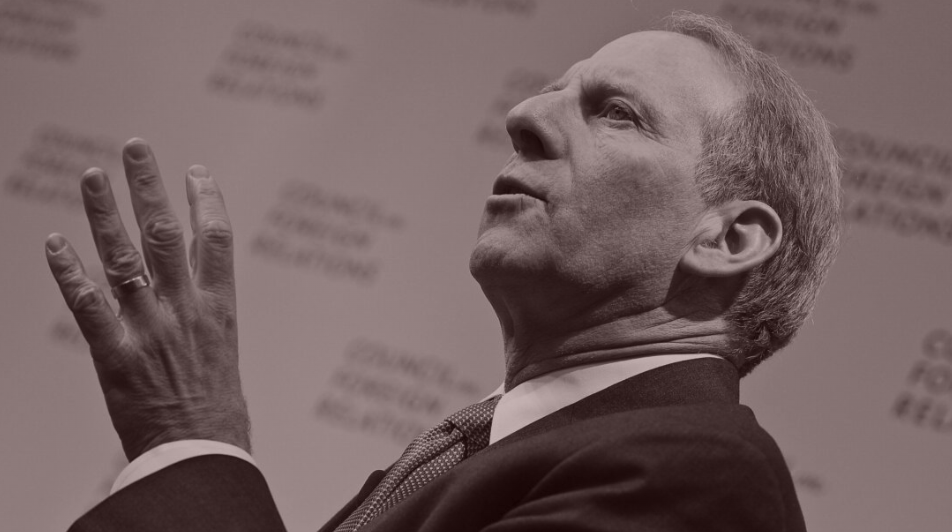
| One of the “private citizens” who met with Lavrov, the recently retired head of the Council on Foreign Relations, Richard Haass, decided to defend his honor on his Substack. He described the meeting as a conversation, rather than a negotiation, and complained of “nasty, ad hominem attacks.” Everyone, including the Russians, went out of their way to emphasize that these were in no way negotiations. Just a few private U.S. citizens getting together with the foreign minister of a country that invaded its neighbor, committed war crimes, considers itself at war with NATO and is currently under heavy Western sanctions. Nothing to see here.
But the rest of foreign policy D.C. just cringed. “This is just embarrassing,” a former senior intelligence official texted me when the story broke. A senior administration official indicated that the news had been met with eyerolls in the White House, which knew about the meeting in advance and got a read-out afterwards. “It’s Haass and a bunch of formers”—D.C. speak for former government officials—“wanting to feel like they’re doing something,” the senior administration said. “This is not at all a backchannel. I mean, if you’re going to have a back channel, why would you do it with Lavrov? We have no evidence that he is part of Putin’s inner circle of decision making.”
Another U.S. official referred to Lavrov as “an irrelevant diplomat.” “Three think tankers meeting with Lavrov at this point is more about being able to say that they met with Lavrov,” a Democratic foreign policy insider said, holding back giggles. “The funny thing is not that these three would negotiate for the U.S., but that Lavrov could negotiate anything on Russia’s behalf.” |
|
|
| Others noted the level of hubris involved in this self-assigned mission. Sure, Russia is waging a horrific, intractable war against Ukraine, killing tens of thousands of people, but had anyone tried sending Richard Haass? How many highly-credentialed white men in the Acela corridor believed that they alone could solve the quagmire? “There’s a big tall glass of male ego here,” the head of a think tank told me. “No one can solve this problem except me. It’s very interesting that all these guys are white guys, Americans who don’t have much real life experience in the region we’re talking about. They see themselves as grand strategists and see the world as a chessboard rather than seeing it as a real world with real human people in it.”
Then there was the chase for who leaked it. Lavrov, according to a source close to him, has been fuming for the last few days: he had been promised a confidential conversation and now here it was, all over the American press. “He’s very upset that these guys promised it would be off the record,” the source close to Lavrov told me. “He was told that it would be exclusively an expert conversation, no negotiations of any kind. The narrative is that Russia is begging for negotiations, but Russia doesn’t need these negotiations for shit!” Others had more D.C. explanations. “Haass probably moved it to them,” the senior administration source told me, meaning he believed it was Haass who had told the media about the meeting. “It’s essentially a really long way of getting a Morning Joe hit.”
When I reached out to Haass, he at first said that he would limit himself to what was in his Substack post, and then he fumed. “That is both nuts and pisses me off,” he fired off. “If you think about it for two minutes you will realize I had nothing to do with the leak. FWIW, you should never again trust that person as a source.” I told him I would take it under advisement. |
|
|
|
|
| Much of the eye-rolling in Washington, however, was undergirded by real alarm. In part, this was because of who the participants in these talks were and what positions they’ve espoused. The former U.S. officials, according to the report, were Haass, who was once George W. Bush’s former State Department director of policy planning; Thomas Graham, his former deputy and colleague at CFR who still regularly travels to Russia and meets with senior Russian officials like Putin’s foreign policy advisor Yury Ushakov; and Charles Kupchan, a former Obama N.S.C. official and Georgetown professor.
The last two have publicly expressed views that some call “realist,” but that others describe as defeatist. “We’ve known for a long time that Tom and Charlie’s views have been focused on pushing for some kind of negotiated settlement without Ukraine in the room,” said the head of a D.C. think tank. (“Charlie Kupchan is a very nice person who has been wrong about Russia for so many years and still gets consulted,” said another senior think tank source. “But I guess he’s a think tanker who’s included on the invite lists.”)
Haass, for his part, recently penned an essay in Foreign Affairs with Kupchan arguing, essentially, the same thing. In his Substack, Haass wrote, “I am skeptical that Ukraine will be able to liberate all of its territory any time soon using military force, and worry that an open-ended war will leave the country and its people in ruins. I also fear that Western willingness to stand by Ukraine could fade over time for reasons both political and strategic. For this reason I wrote an article (with Charles Kupchan) advocating that a cease-fire be proposed at the end of this fighting season should Ukraine fall short of recovering all the territory occupied by Russia.”
What, the experts wondered, were people like these doing talking to the Russians? After all, their positions were eerily close to Moscow’s, which has long thought that Ukraine doesn’t need to be in the room while the big boys—Russia and the U.S.—split everything up between them, and that Ukraine has no choice but to grant Russia the Ukrainian lands it has conquered by force. At some point, one source familiar with the conversation told me, the group was discussing the status of the Donbas. “The Russians were mooting things like what the status of the Donbas would be,” the source said. “Ten years of observers, then an election to determine whether it becomes Russian or Ukrainian. Russia brought that up and it was actively discussed.” But, the source noted, “Most importantly, the Russian government is very happy to have a bunch of people in the U.S. saying, ‘give peace a chance.’ Anything as we move toward 2024 that will increase support for anything that involves Ukraine not winning.”
And in fact, the Russian media ran with this story, spinning the mini-scandal in Washington as the Biden administration trying to wrap up the war in Ukraine before the 2024 election. “They are useful idiots for the Russians,” the think tank head sighed. “They help propagate the Russian perspective inside U.S. foreign policy circles. Whatever their motivations may be are totally irrelevant to the Russians.”
Some people gave me the boilerplate line that, given the barely existent diplomatic ties between Russia and the U.S., talking was better than not talking. But what was the point, if only to say that you spoke? “There are lots of reasons to have these people talking, but it doesn't necessarily reflect a desire by Russia to negotiate in good faith,” said the source familiar with the negotiations.
And then there is the question of whether “just talking” does real harm, including to Biden’s stated foreign policy of “nothing about Ukraine without Ukraine”—a commitment to ensuring Kyiv is at the table for any discussion about the country’s future. “We all roll our eyes at them, but they have huge platforms,” the think tank head said of the Haass trio. “They still have access at the highest levels of the Russian government, they’re constantly publishing in prestigious American publications. So we can roll our eyes but we’re still providing a platform and access. And I think that’s very counterproductive and destructive for American policy.” |
|
|
| That’s all for this week, friends. I’ll catch you back here Tuesday. Until then, good night, tomorrow will be worse.
Julia |
|
|
|
| FOUR STORIES WE’RE TALKING ABOUT |
 |
| Kering vs. LVMH |
| How is Kering navigating the era of big luxury? |
| LAUREN SHERMAN |
|
 |
|
 |
|
 |
|
|
|

|
 |
|
|
|
Need help? Review our FAQs
page or contact
us for assistance. For brand partnerships, email ads@puck.news.
|
|
You received this email because you signed up to receive emails from Puck, or as part of your Puck account associated with . To stop receiving this newsletter and/or manage all your email preferences, click here.
|
|
Puck is published by Heat Media LLC. 227 W 17th St New York, NY 10011.
|
|
|
|