Welcome back to Wall Power’s Inner Circle. I’m Marion
Maneker.
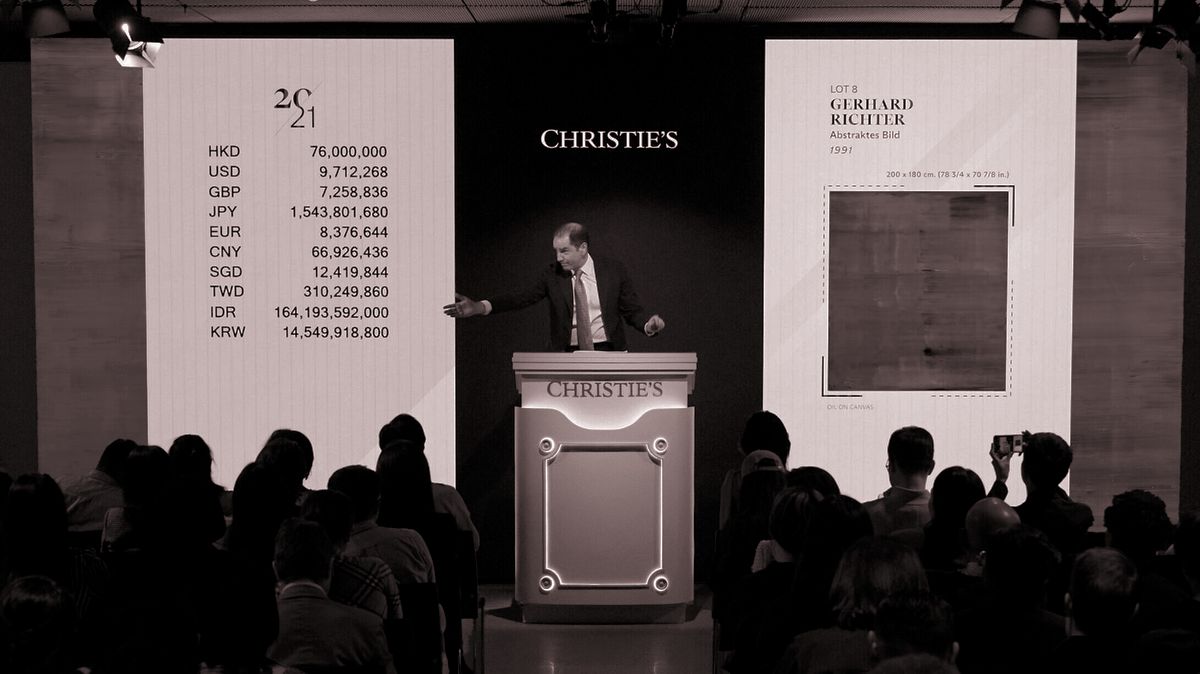
Things are looking up in Hong Kong. The Asian auction market took a tough four-year slide from its peak in 2022 to the bottom of the trough in 2025, with auction totals for the spring sales cycles falling by two-thirds. But this last weekend—the second year that all three auction houses were able to hold sales on adjacent days—the total spend rose by 43 percent. That’s great news. I have a lot more detail on what happened in those auctions below.
I always
ask you for feedback, but today, I’d really like to get your opinion on how we present the data. We experimented for a few months running the top 10 lists as text. Tonight, we’re going back to including charts. Let me know if you have a preference by hitting reply or texting me at +1.917.825.1391 on SMS or WhatsApp.
Mentioned in this issue: Rebekah Bowling, Paul Durand-Ruel, Joan Mitchell, Gerhard Richter,
Sanyu, Yayoi Kusama, Zao Wou-Ki, Lalan, Atsushi Kaga, Nguyen Sang, Wu Guanzhong, Yu Nishimura, Le Pho, Mai Trung Thu, Jean-Michel Basquiat, Christine Ay Tjoe, and more…
Let’s get started…
|
- Bowling alone no more: Not quite a year ago, Phillips’s Rebekah Bowling left the auction house to become an art advisor at Citi Private Bank. This week, the auction house announced she has returned as the head of 21st century art. Still based in Los Angeles, Bowling will “bring a curatorial point of view” to her role, especially since Phillips now has a space in L.A. where she will do some programming for private sales. After a decade of working in galleries
in London and New York, and another decade at Phillips, Bowling came to realize that the “hamster wheel” of auction house life was just her natural milieu. She started back at Phillips earlier this week.
|
|
|
|
CHANEL Connects, the flagship arts and culture
podcast, goes global for Season 6. From the Hamburger Bahnhof in Berlin to Tokyo’s Nexus Hall, tune in to a series of intimate conversations in iconic places. In this episode, recorded live at the Guggenheim Museum in New York City, celebrated artists Sarah Sze and Julie Mehretu connect with Yana Peel, President of Arts, Culture & Heritage at CHANEL. The conversation moves from the now to the next, exploring both artists’ ongoing commitment to their communities and abstraction as a launch pad
for radical invention.
Listen Now.
|
|
|
|
- Lost Monets in Paris: Sotheby’s announced today that two “lost” paintings by Claude Monet, unseen for more than a century, would be in their Paris sale on April 16. Coming from two different collections, the works depict Monet’s landscapes along the Seine in Vétheuil and Giverny. Vétheuil, effet du matin, from 1901, was last exhibited in 1928 and is estimated at €6 million. Held in Parisian collections throughout the 20th century, the work has been owned by the same family since 1972. Les Îles de Port-Villez, from 1883, which was last exhibited in 1954 and known only through black-and-white photographs, is estimated at €3 million. Monet painted it only weeks after settling in Giverny; dealer Paul Durand-Ruel acquired it shortly after that and displayed the work in his Fifth Avenue gallery in 1907 and 1911.The market for Monet peaked along with the broader art market in 2022, when nearly $540 million worth of the
impressionist master’s art was auctioned. Since then, the appetite for Monet works has not diminished greatly, but the supply is constrained. In 2023, only $195 million worth of Monets were auctioned. By 2024 that number had only gotten back up to $293 million before falling again to $148 million last year. Basically, no one wants to sell their Monets—the works are too valuable and unlikely to fall out of favor. In that context, it will be interesting to observe what happens when these works
reemerge on the market.
|
Now, let’s look at the numbers from Hong Kong…
|
|
|
|
Though still a ways off from the global art market peak of 2022, last
weekend’s Hong Kong auctions showed a definite rebound: vastly improved totals, impressive sell-through rates, and signs of strength for Asian artists.
|
|
|
|
The auctions in Hong Kong last weekend reversed the four-year slide in the amount of
money spent in the regional market’s spring season. The cumulative sales volume of $216 million was up 43 percent from last year, with a very positive 89 percent sell-through rate. Meanwhile, the all-important hammer ratio—the aggregate hammer price divided by the combined low estimate for all lots, including the unsold lots—reached 1.18, a strong but not overheated number.
Admittedly, the Hong Kong market is coming out of a trough—from a spring sale peak of $438 million in 2022 to $150
million last year. This descent occurred in phases, with a significant deceleration in 2023, followed by large drops in both 2024 and 2025. It’s useful to also consider the aggregate presale estimate. In 2023 and 2024, the presale estimate fell by 11 and 14 percent, respectively. In 2025, it dropped by a sharp 48 percent. This year, amid the rebound, the presale estimate was up 28 percent… though we’re still trailing 2024 levels.
Anyway, the internal dynamics of the Hong Kong market were
all positive last weekend. A total of 487 lots were offered for sale with an aggregate presale estimate of $146 million. Among the 435 lots that sold, 35 percent made prices above the estimates, 44 percent were sold within the estimates, and only 21 percent garnered prices below the low estimate. The average price of a lot sold in Hong Kong was $443,000, up 23 percent from a year ago.
|
The top lots in Hong Kong were mostly works that were efficiently priced by the global
market. Six of the top 10 were sold for prices close to the estimates, two were sold slightly below the estimate to third-party guarantors, and two garnered competitive bidding. The top lot was a Joan Mitchell painting that had been sold six years before in New York for almost $14.5 million. It resold in Hong Kong for $17.5 million, a hammer price nearly equal to the previous premium price. A red Gerhard Richter abstract painting that had been purchased privately in 2015 was sold to the third-party guarantor for a price in line with the broader market for his abstracts.
A transitional Mark Rothko painting, from the period when he was working out his ideas about abstraction,
sold for $8.5 million, nearly two times the estimate. That work had sold at auction in 2005 for almost $1.7 million; nine years later, it sold for $2.5 million. This weekend’s sale was a big acceleration: From 2005 to 2014, the auction price rose around 50 percent. Then it more than tripled over the next dozen
years. Sotheby’s said there were 20 bidders on the Rothko painting.
|
|
|
|
In this episode of CHANEL Connects, meet renowned
painter and critic David Salle. For more than five decades, the artist has been creating across disciplines: on the canvas, behind the camera, and now, in dialogue with artificial intelligence. He connects with Yana Peel, President of Arts, Culture & Heritage at CHANEL, for a live conversation recorded at LACMA in Los Angeles. Set against this backdrop, they discuss Salle’s formative years at the legendary art school founded by Walt Disney, his collaborations—from Martin Scorsese to AI
engineers—and the enduring power of human intention as the digital frontier evolves.
Listen Now.
|
|
|
|
Two Sanyu paintings, of the 18 that were sold last weekend, appeared
in the top 10 works by price. One depicting a horse sold for $6 million—solidly within the estimates but still subject to active bidding. The other sold for nearly $8.2 million, a
price above the estimates. That work, which depicted a kneeling horse, had passed through only two owners, including the Lévy family in Paris. A third Sanyu painting was also the focus of strong bidding and sold for nearly twice the estimate, at $3.4 million.
German painter Walter Spies’s seminal 1934 depiction of Bali, titled
A view from the heights, has set a record price for the artist on three separate occasions now: In 2001, the painting was priced at just under $1 million at auction; in 2013, the same work sold for $4 million; and this week it sold for $7.5 million. Many artists’ markets have bellwether works like this, which function as a kind of market index. So this sale can be seen as a sign of strength for Spies; but it is also a positive sign that Asian art is being broadly repriced
higher.
A Yayoi Kusama fiberglass pumpkin sold for $6.35 million—almost the exact same price as a very similar pumpkin that sold two years before. The Hong Kong sales may still be hovering below their 2024 totals, but at least the Kusama pumpkin market is stable. A pumpkin painting
from 1993, offered with a third-party guarantee, also sold for the estimate to make just over $5 million, yet more evidence that the Kusama market functions efficiently.
Zao Wou-Ki is another reference point for the broader Asian market. Nineteen works by the artist were included in these sales. The top work, Nuage, from 1956,
sold for a bid or two above the low estimate to make $5.18 million. There were six Zao paintings in the top 25 works by price: Four sold for prices within estimates, one made a price 20 percent below the estimate, and one saw dynamic bidding that drove the selling price to twice the estimate. The latter work, Ville
Chinoise, from 1955, sold for $2.6 million.
The final work among the top 10 was a David Hockney painting, The Chair, from 1985, that was last sold in London five years ago for $3.4 million. It returned to market with a third-party guarantee and an estimate of $4 million. It appears
the guarantor had the right price for the work. In the end, it sold to her.
|
The artwork with the most intense bidding in Hong Kong was a painting that
sold for 16 times the estimate and a final price of nearly $1 million. Painted by Lalan, a China-born artist who lived and worked in France, the work last sold in Hong Kong for $28,000. Lalan, of course, was married to Zao Wou-Ki for 20 years before they divorced. She migrated to Paris with him in 1948 and became a
multidisciplinary artist. This painting was made in 1974, long after the two artists had separated.
A small kneeling horse sculpture attributed to Sanyu was bid up to eight times the estimate to sell for nearly $260,000. (It would appear that more than one bidder believes the attribution.) A 2021 Atsushi Kaga painting, YES! (A bag made by my
mother), sold for nearly $584,000, or more than seven times the estimate. Another work by the artist, Moon Catcher, from 2020, also attracted bidders, driving the final price to $600,000. And Vietnamese painter Nguyen
Sang’s Lady with a Parasol, from 1983, sold for $292,000, or six times the estimate—the new record price at auction for Nguyen.
It isn’t clear to me why Wu Guanzhong’s Red lotus flowers, from 2003, was estimated so low at $300,000, but seven bidders quickly
decided the work was worth $2.2 million. Finally, Yu Nishimura’s paintings have been selling very well at auction since before David Zwirner took over representing the artist. The work entitled bug, from 2021,
sold for $360,000, or more than four times the estimate, driven by interest from 16 bidders.
|
The market-share numbers for these sales are an interesting mix of Asian and Western
artists. Zao Wou-Ki was responsible for more than 11 percent of the market spend, or $24 million across 19 different lots. Sanyu attracted nearly $19 million across 18 lots for almost 9 percent of the spending, while a single Mitchell painting accounted for more than 8 percent of the total sales. Kusama took 7.5 percent from 19 works that totaled $16.1 million. Two Richter works comprised nearly 6 percent of the market at $12.8 million. Single works by Rothko and Spies accounted for 4 percent
and 3.5 percent, respectively. That’s $8.5 million and $7.5 million.
A little further down the market-share list is where things get more interesting. The $6 million spent on four Hockney works accounted for almost 3 percent of sales. Almost the same amount was spent on five works by Chu Teh-Chun. In previous eras, his work would have had more substantial market share. And four Marc Chagall works made $5.4 million, or 2.5 percent of the total
sales.
Vietnamese artists are getting more visibility in these sales: The two top sellers were Le Pho and Mai Trung Thu, both with sales above 1 percent of the total. Monet, Pierre-Auguste Renoir, and Vincent van Gogh also placed above 1 percent, as did Jean-Michel Basquiat. There were five women among the top 25 artists by market share as well—including Kusama, Mitchell, Lalan, and Lucy
Bull. Finally, congrats to Indonesian abstract expressionist Christine Ay Tjoe, who also had a single work sell for more than $2 million, placing her in the single-percentage-point market-share category and among the top 25 artists.
|
That should be enough for today. The Asian market is gaining strength, but it will still
be a while before it fully represents the wealth in the region. I’ll be back on Friday with more.
Until then,
M
This newsletter has been updated.
|
|
|
|
Need help? Review our
FAQ page or contact us for assistance. For brand partnerships, email ads@puck.news.
You received this email because you signed up to receive emails from Puck, or as part of your Puck account associated with {{customer.email}}. To stop receiving this newsletter and/or manage all your email preferences, click here.
|
Puck is published by Heat Media LLC. 107 Greenwich St., New York, NY 10006
|
|
|
|
|




.001_01KN55TJE8SQ4TWD74TWMB0G52.png)

.002_01KN55TJT4QYF0711JZCWSP7S6.png)