 |
|
Hello, and welcome back to The Best & The Brightest, your Tuesday foreign policy edition. I’m Julia Ioffe and I’ll probably make you feel sad about the world—which, to be clear, is the world’s fault, not mine.
Because I am now in my 40s and this was my 11th time doing this, I am still recovering from the White House Correspondents’ Dinner weekend, which is both fun and exhausting. Some of the most interesting moments/encounters/conversations I had this weekend, in no particular order:
- I talked to a friend and Columbia alum who mostly disagrees with the protestors but made an excellent point: Regardless of what you think of the protests and encampments, it’s hard to argue that Columbia’s president calling in the NYPD made the situation better, not far, far worse. (In fact, that response made the protests spread nationally.) “Everyone who goes to Columbia has a 1968 fetish,” this friend said. “Why would you feed into that?”
- I ran into an old acquaintance, a Uyghur activist who fled China and whose family is imprisoned in the Chinese reeducation camps. He told me he is “fucking pissed” at the protests and the protestors who are so singularly focused on Palestinian suffering but have always largely ignored the genocide of Uyghur Muslims—as they have the Rohingya Muslims, the Yemenis, etcetera. “Our oppressor is inconvenient for the left, so they prefer not to talk about us,” this activist told me bitterly. (The American left is so focused on fighting American imperialism that, by the transitive enemy-of-my-enemy property, the Chinese government is their ally, while Arab countries are too busy cozying up to Beijing to care.) It reminded me of meeting a young Syrian refugee who’d just moved to Brooklyn, back in 2016, and discovered that virtually no one there cared about what was happening to her family and her country, which was enduring barrel bomb and sarin gas attacks. “I hate the American left,” she told me, nearly spitting. “They only care about the Palestinians, while we are getting slaughtered next door.”
- I watched Michael Beckerman, head of public policy at TikTok, harangue a senior Schumer staffer at a party. Beckerman was quite aggressive, pointing a finger in the staffer’s face and saying, “They’re trying to add language that would make it impossible for us to go to court! Tell your boss not to do it!” The Schumer staffer rolled his eyes and walked away, pointing out that this was yet another example of how badly TikTok has managed their lobbying efforts in D.C. (Yelling at a leadership staffer in the middle of a party?! What?!) “And now they’re banned!” the staffer laughed.
|
| Now, before we get to my analysis of the $61 billion in Ukraine aid that finally passed Congress, here’s the amazing Abby Livingston on the Hill… |
| The Jeffries-Johnson Pact & November Anxieties |
|
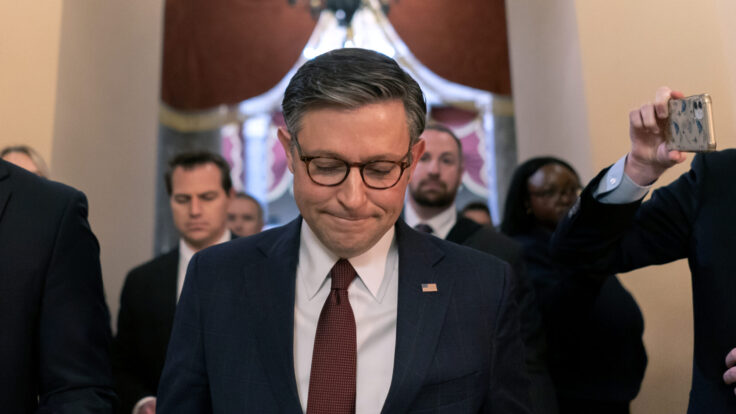
After Hakeem Jeffries’ statement earlier today, officially codifying that House Democrats would help protect Speaker Mike Johnson from a motion-to-vacate threat from his rightward flank, things feel oddly calm on the Hill for the first time in a long time. Johnson’s job is probably safe until November… when all hell is virtually certain to break loose regardless. For now, here’s what’s brewing:
- Clearing the barn: Beyond Jeffries’ statement, a few factors are contributing to the tranquility. Republicans, perhaps understandably, are exceptionally exhausted after a tumultuous six months, and there simply isn’t much of an appetite to oust another speaker. And earlier this month, Johnson led a Saturday night vote that dealt with most of the urgent issues facing Congress—namely, funding for Ukraine, Taiwan, and Israel, and legislation addressing TikTok. In Boehner parlance, Johnson “cleared the barn.” The rest of the session’s docket (N.D.A.A., Farm Bill, Appropriations) is less urgent and divisive, and in recent years, these recurring bills are often kicked to lame duck sessions.
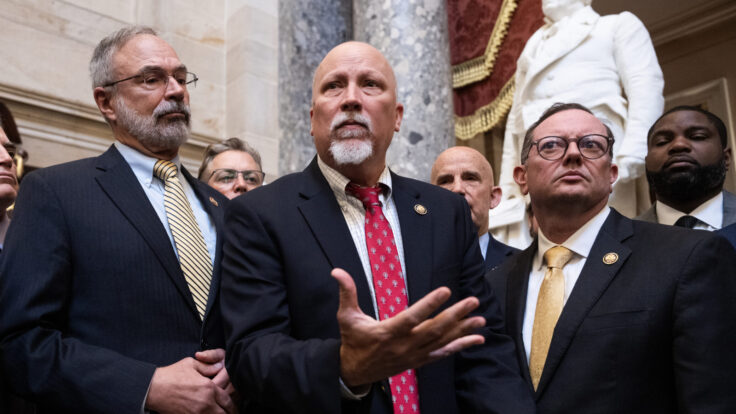
- Speaker tea leaves: If Johnson decides to run for speaker again, Marjorie Taylor Greene and others have already floated the notion of keeping him away from the gavel. Just two days ago, Greene tweeted that Johnson’s “days as Speaker are numbered.” But if House Republicans lose the majority, there won’t be a gavel to fight over. As it stands, control of the House is expected to be a district-by-district knife fight, perhaps with a slight Democratic advantage based on fundraising and party unity. That said, running for minority leader is a much easier exercise since candidates only need to secure the majority of their conference’s votes, rather than the entire House.
If House Republicans do hold on, however, it’s expected to be a tight margin. That could lead to yet another multi-round, teeth-pulling exercise similar to the one that Kevin McCarthy endured at the beginning of this term. It’s also important to remember that the next House G.O.P. conference will likely be even more rebellious than the present one, given the exit of so many institutionalists who might be replaced by future Freedom Caucus members.
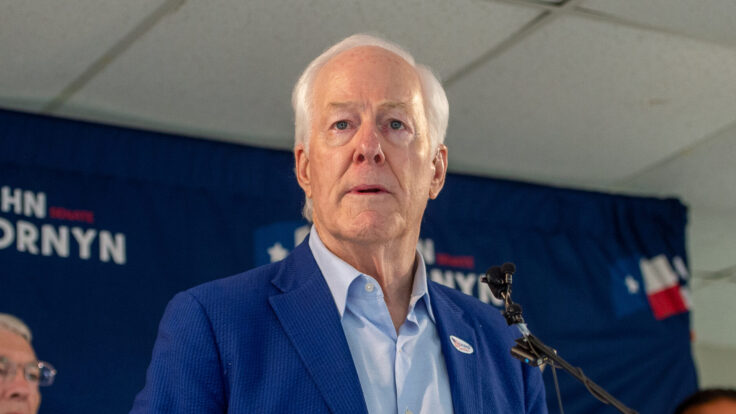
- A November to remember: November is on track to resemble a season finale-scale drama. Beyond a potential House G.O.P. leadership race, Senate Republicans will be in the process of selecting a new leader to replace Mitch McConnell. So far, the succession showdown between John Thune and John Cornyn has mostly unfolded cordially behind the scenes (this is the Senate, after all…), but given that both men are personally popular among their colleagues, this will probably be a painful process. And if Biden wins reelection—the November after a presidential vote is usually when Cabinet officials either step down or are fired—that would mean more Senate confirmations to fight over.
|
 |
| Ukraine’s $61 Billion Question |
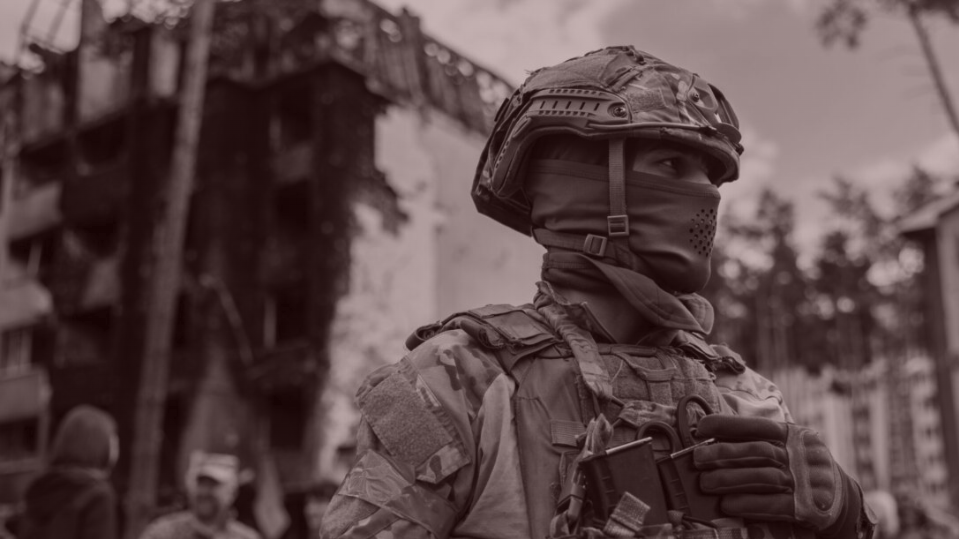
| For a while, it was easy to blame a dysfunctional Washington for Ukraine’s problems on the battlefield. Now that the supplemental is done and the aid is once again going out the door, the ball is in Ukraine’s court. |
|
|
|
| A broken clock is right twice a day, and last week, after seven months of the Biden administration predictions, Congress finally got its act together and passed the Ukraine supplemental. Now, $61 billion in urgently needed aid is on its way to Kyiv, including munitions to push back the advancing Russian military and intercept the Russian missiles and Iranian drones raining down on Ukrainian cities. The Pentagon has had a lot of this equipment staged in Poland, ready to go the minute the supplemental package was signed into law. The question now is whether it will be enough.
One senior administration official told me that the aid should last Ukraine through the end of 2024—but then again, it will have to. Given what it took to get this aid package through, it seems impossible that the Biden administration will be able to come back and ask for more before 2025. “This is the last supplemental of this level that we’ll get for Ukraine, and, frankly, it’s never been a sustainable approach,” said Alina Polyakova, who runs the Center for European Policy Analysis. “If every time our partner in Europe needs support, it has to get through two chambers of Congress—it’s not sustainable.”
But what will this aid actually do for Ukraine? Since fresh U.S. support dried up at the end of 2023, the Ukrainian disadvantage has grown to the point where Ukraine fires only one shell for every five shot by Russia. With no American replenishments coming, some Ukrainian soldiers had to ration their outgoing fire, sometimes limiting themselves to firing just one shell a day. Unable to defend their positions under withering Russian assault, Ukrainian forces have had to retreat and cede ground to a creeping Russian advance.
Ukrainian cities, meanwhile, have been under heavy bombardment from drones and missiles, all of which the Ukrainian military has been unable to intercept because of air defense rationing. As a result, Russian attacks have undone the repairs Kyiv has made to its civilian infrastructure (which came under attack in the winter of 2022-23) and inflicted additional damage on Ukraine’s energy grid. Ukraine’s army is exhausted and is having so much trouble replenishing its ranks that some of its units are operating at just 60 percent of capacity.
So what will the aid do? Said a second senior administration official, “It will stop the bleeding at least.” |
|
|
| Despite the arrival of American aid, the days of sweeping Ukrainian victories and promised Ukrainian offensives seem to be over, at least for the rest of 2024. The best the aid can do, observers say, is tilt the balance of power on the battlefield back toward what it was at the end of last year: a grinding, bloody stalemate without either side gaining much ground. “Is $61 billion enough? It’s enough to stabilize everything through this year and maybe a little into the next, but it’s not a war-winning boost,” said Dara Massicot, a military analyst with the Carnegie Endowment.
Still, a bloody stalemate would be an improvement to where Ukrainians have found themselves in the last few months, losing men and territory at a slow but steady pace. Now that the spigot of American aid has been turned back on, it will allow the Ukrainian military to start shooting back against advancing Russians. It allows them to reinforce their front line, and stop the Russians from taking more ground—or, at the very least, to increase the cost of doing so for Moscow. It will also allow the Ukrainians to exploit the structural weaknesses of the Russian army, which hasn’t been able to do all that much in terms of regaining territory, despite all its recent advantages.
Ukrainian air defenses also can now get their interception rates back up to around 90 percent, a major improvement from the near 50 percent where they are today. “The best outcome we can expect is that Ukraine is going to be able to defend itself better from those air attacks,” said Polyakova. “That would be a great outcome. Beyond that, it’s hard to say.”
Alas, the months of waiting and belt-tightening have done a tremendous amount of damage to Ukraine’s morale and fighting capacity, and that will be much harder to undo. Even now, as the aid surges in, Russians are on the verge of taking several key towns in the Donetsk region, which they’ve been softening up with artillery barrages and notorious “meat waves” of human cannon fodder. These are incremental gains, but they put important Ukrainian logistic and transport hubs at risk.
Moreover, there is a lot of recent chatter about a looming Russian offensive this summer and, though the renewed American aid will make it easier for Ukraine to beat it back, another Ukrainian offensive this year seems completely beyond the realm of possibility. “Ukrainians can now be more liberal in use of ammunition because more is coming,” said Steven Pifer, a former U.S. ambassador to Ukraine. “I’m not sure it’s enough to reconstitute some kind of offensive force at this point.” Added Polyakova, “Everyone understands that. They won’t be able to take back territory; that’s not the expectation.” |
|
|
| Ukraine has often blamed the West, specifically the U.S., for its inability to decisively win the war. Had Washington given Kyiv the weapons it had asked for in a timely manner—instead of saying no for months only to relent, as it has with F-16s, ATACMS, and Abrams tanks—the Ukrainian army would have been able to rout the Russians and recapture its territory, or so the thinking goes.
Perhaps that could have been possible in the first weeks and months of the war, when Russia was stunned by its own failures and beating a retreat. But the battlefield dynamics look very different today, more than two years later. The average Ukrainian soldier is 40 years old, and he hasn’t had much rest since going into battle in 2022. The fierce attrition of the conflict, exacerbated by the failed 2023 Ukrainian offensive and the last few months of Russia pounding Ukrainian positions, means many of Ukraine’s frontline units “are undermanned by as much as 40 percent,” says Massicot. “It’s pretty bad. When units get hollowed out so badly, they’re brittle.”
And while Russia has been able to recruit hundreds of thousands of volunteers, Ukraine has been grappling with a manpower shortage that has only grown more acute. (Readers of this newsletter know that I, along with others, have been warning about this issue for well over a year.) Volunteers for the Ukrainian army have largely dried up as the war turned into a stalemate and as American aid ran out, making the battle even bloodier and more hopeless for Ukrainian troops. The fact that those who went off to war at its onset have still not come home made the prospects for new volunteers seem grimmer—even suicidal. Unwilling to touch such a politically sensitive issue—and do further damage to the country’s battered economy—President Volodymyr Zelensky spent months and months kicking this particular can down the road. It was also one of the reasons he ousted the widely popular head of his military, Valery Zaluzhny, in February.
Two weeks ago, Zelensky finally signed a law strengthening and broadening the draft, but it won’t go into effect until May. Even then, it will take months for the new recruits to go through training and come online. “There’s still a pipeline of a few months,” said Massicot. “It wasn’t done six months ago, so they don’t have the forces” ready to go now that American weaponry is finally surging back into Ukraine.
For a while, in other words, it was easy to blame a dysfunctional Washington for Ukraine’s problems on the battlefield. Now that the supplemental is done, the ball is in Ukraine’s court. “At this moment, it’s Kyiv,” added Massicot. “They’re going to need to make some tough decisions.” |
|
|
| That’s all from me this week, friends. I’ll see you back here next Tuesday. Until then, good night. Tomorrow will be worse.
Julia |
|
|
|
| FOUR STORIES WE’RE TALKING ABOUT |
 |
| Not Great, Bob! |
| An epilogue to Bob Bakish’s tenure at Paramount. |
| MATTHEW BELLONI |
|
 |
| Strike a Posen |
| Updates on the Zac Posen experiment at Gap. |
| LAUREN SHERMAN |
|
 |
|
 |
|
|
|

|
 |
|
|
|
Need help? Review our FAQs
page or contact
us for assistance. For brand partnerships, email ads@puck.news.
|
|
You received this email because you signed up to receive emails from Puck, or as part of your Puck account associated with . To stop receiving this newsletter and/or manage all your email preferences, click here.
|
|
Puck is published by Heat Media LLC. 227 W 17th St New York, NY 10011.
|
|
|
|