 |
|
Happy Tuesday and welcome back to The Best & The Brightest. I’m Peter Hamby.
Thanks to Julia Ioffe for filling in for me yesterday. And speaking of Julia, please check out The Powers That Be tomorrow for our conversation about the Biden administration’s diminishing patience with Benjamin Netanyahu. It’s a fantastic episode. (As always, it’s free to listen. Subscribe here or here.)
In tonight’s issue, the latest poll from our partnership with Echelon Insights, which found that voters everywhere are deeply frustrated with this election season—and turned off big-time by Donald Trump using campaign contributions to pay his legal fees.
But first… here’s Abby Livingston with an update on today’s madness on the Hill…
|
| M.T.V. Foreplay & Dingell’s Ascent |
|
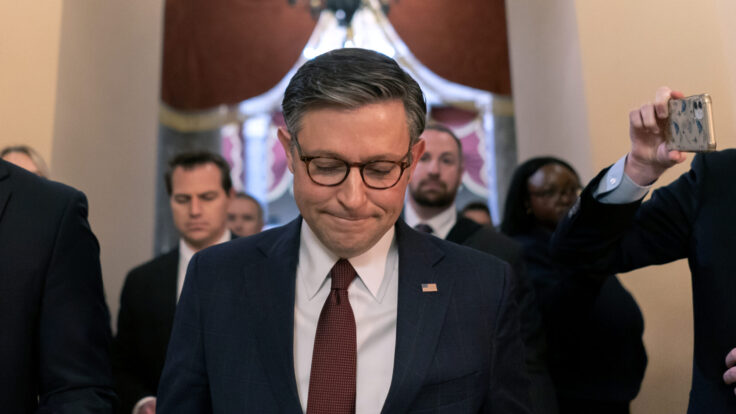
Tuesday was yet another astonishing day in the 118th Congress, with House Republicans once again teetering on the precipice of chaos. It appears that Mike Johnson, who’s only been in office for five months, might have to face the music following his decision to put a Ukraine funding bill on the floor, thereby jeopardizing his speakership. As PBS’s Lisa Desjardins described it, today was “the most defining and politically risky day he has had in office.” While House Republicans brace for more grueling days ahead, here’s the latest inside chatter…
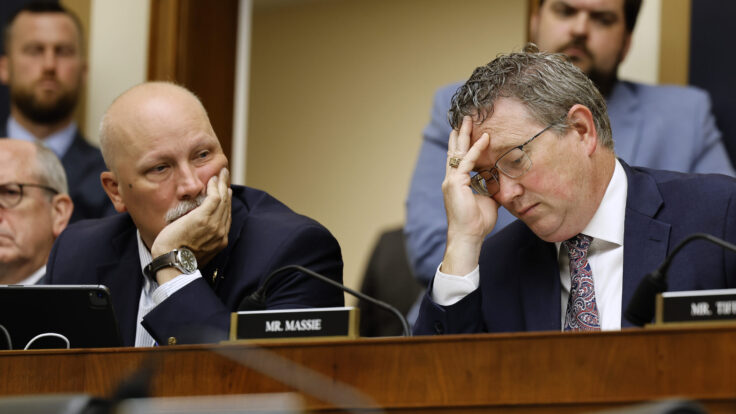
- The M.T.G.-Massie alliance: As of early this evening, Thomas Massie and Marjorie Taylor Greene were the only Republicans who were entertaining the notion of throwing Johnson out of office. M.T.G., of course, possesses unique political power that has made her one of the most formidable sophomores in congressional history. But Massie is a lone wolf who sometimes surfaces as the single contrarian vote against a House bill.
It remains unclear how expansive this movement is. For months, most House Republicans have had little appetite for another round of speakerless anarchy. But sources in G.O.P. leadership say they are taking the possibility extremely seriously. At least a dozen House Republicans, along with former Speaker Newt Gingrich and Georgia Gov. Brian Kemp, rushed to social media to defend Johnson. Several of the most powerful chairmen on the Hill issued a joint statement urging passage of Ukraine funding, including Michael McCaul (Foreign Affairs), Mike Rogers (Armed Services), Mike Turner (Intel), Tom Cole (Approps), and Approps Defense cardinal Ken Calvert. Moreover, Turner joined with Democratic Ranking Member Jim Himes to issue another statement urging a quick passage. This could shape up to be an extraordinary week for House whipping enthusiasts.
- Meet the new impeachment managers: Impeachment managers, who’ve had their hands full in recent years, tend to be a party’s most trusted and talented lieutenants, like Lindsey Graham (class of ’98), Adam Schiff (’20), and Jamie Raskin (’21). These members march the articles over to the other chamber and take part in their proceedings. Recall that in 2020, Schiff delivered the Democratic closing arguments alleging Trump tried to coerce Ukraine into election interference while in “excruciating pain due to a dental emergency.” Tough cookie.
The 2024 Mayorkas impeachment managers also had their coming-out party today. While introducing the articles in the Senate chamber, the lead impeachment manager, Homeland Security Chairman Mark Green, referred to presiding officer Patty Murray as “Mr. President.” Murray, the first-ever female president pro tempore, swiftly corrected him: “That would be ‘Madam President.’”
- Dingell promises a ‘girl team’: Over in the calmer waters of the Democratic side, Debbie Dingell won a leadership race to serve as chair of the Democratic Policy and Communications Committee, beating out Lauren Underwood of Illinois and Veronica Escobar of Texas for the post. Dingell replaces Joe Neguse of Colorado as the caucus’ messaging leader. Neguse moved up the pecking order to the assistant speaker slot earlier this year after James Clyburn stepped down from leadership.
At a news conference with party leaders, Dingell said she looked forward to working with Underwood and Escobar as D.P.C.C. co-chairs, along with Lori Trahan of Massachusetts. “We’re all going to be united,” Dingell said. “We’re going to be a girl team.”
|
 |
| Tuned In But Not Turned On |
| The latest Puck/Echelon poll finds voters are finally engaged but just as unenthusiastic as ever… and, as the Stormy Daniels case goes to trial, giving a bipartisan thumbs-down to Trump using campaign funds for his legal fees. |
|
|
|
| President Joe Biden’s approval ratings are lousy, the equally unpopular Donald Trump is on trial, Congress is impotent, prices and interest rates are annoyingly high, and the Middle East feels like it’s on the brink of a larger war. So—surprise!—Americans feel pretty downbeat about the presidential election that’s coming down the pike.
An eye-popping 61 percent of likely voters described their mood about the 2024 election as “frustrated,” “anxious,” “disenchanted” or “indifferent” in a new poll from Echelon Insights. Offered a choice of words to describe the upcoming election between Biden and Trump, only 14 percent of voters in the survey said they felt “hopeful” about the campaign. Only 4 percent felt “energized.” (Maybe those are the Robert F. Kennedy Jr. fans?) The survey is the latest from Puck’s election year partnership with Echelon Insights, digging into how voters really feel about the 2024 race. Echelon surveyed 1,020 likely voters, matched to the L2 voter file, from April 12-14.
While voters are unenthused, they nonetheless are starting to tune in to the race. The poll found that 52 percent of voters are paying “much more attention” or “somewhat more attention” to the campaign than they were at the end of last year. That might be good news for Democrats, given the press attention being lavished on Trump’s criminal trials and the Arizona Supreme Court ruling criminalizing abortion in the swing state. The poll was in the field as those stories were dominating the news.
Republicans and 2020 Trump voters were more likely to describe their mood this year as “frustrated,” perhaps driven by Trump’s permanent state of victimhood and his complaints about being targeted by the justice system and the Biden administration. For Democrats and 2020 Biden voters, “frustrated” and “anxious” were tied for the top moods. The source of the anxiety is obvious: Democrats of all stripes continue to express concerns about Biden’s approval ratings, as well as his age and fitness for the campaign. Democrats—especially the white college-educated news addicts who increasingly dominate their ranks—are also professional bed-wetters. “It makes sense,” said Echelon research director Clare Considine, describing the mood music surrounding the polling. “Anxiety and anger have frequently characterized the Democratic and Republican parties, respectively.” |
|
|
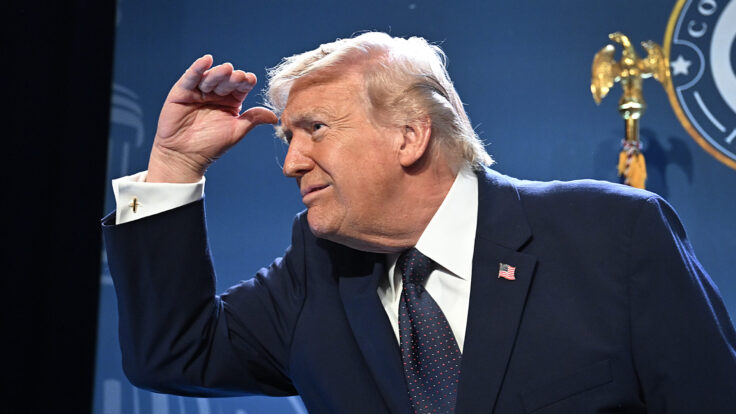
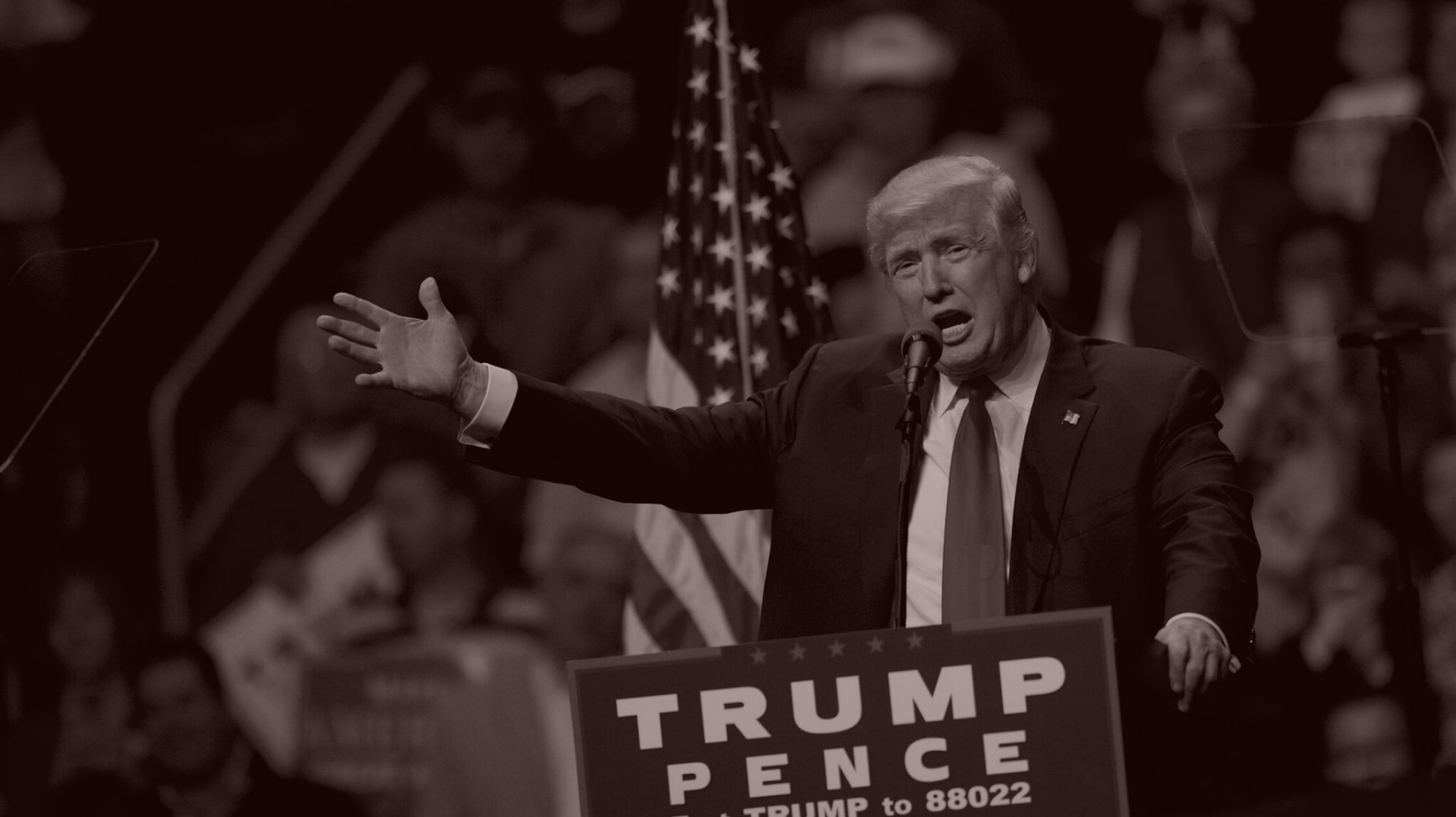
| One opinion, though, is uniting Americans through all the doom and gloom: overwhelming opposition to Trump using campaign donations to pay for his many legal obligations. Trump is using a leadership PAC—Save America—to pay off millions in legal expenses related to many criminal and civil cases, including his attorney’s fees. Much of that money is coming from campaign contributions, from small and large donors alike. Since last year, other Trump fundraising entities have transferred more than $50 million to Save America. The PAC even gets money before the Republican National Committee does, according to Trump’s fundraising invites and reporting from my colleague Teddy Schleifer.
The concept is novel—and deeply unpopular. A huge majority of likely voters—70 percent—say they do not support campaign donations being used to cover legal fees. That number includes a majority of Republicans (51 percent) who oppose the fundraising gambit. Only 19 percent of voters say it’s appropriate for Trump to use campaign contributions on legal fees, and only 34 percent of Republicans say the same.
Speaking of campaign donations, Echelon found that voters are more than fed up with the barrage of fundraising text messages that have been polluting their phones every election cycle. Echelon asked voters about the many ways campaigns solicit financial support, and why voters feel motivated to give to a candidate. Getting a text? Attending a rally? Seeing a candidate on TV supporting a certain policy position? Text messages were the biggest turnoff. The poll found that 68 percent of voters said getting a text message “has never motivated me to donate and I don’t think it will.” Fundraising emails were also unpopular, with 65 percent of voters saying they don’t motivate them to donate.
Fundraising professionals, of course, view these methods as a volume play: If three out of seven people donate a few bucks to a campaign, they’re still raising lots of money at scale, at the risk of annoying the people who ignore the messages. Even if most voters hate the tactics, text and email solicitations show no signs of slowing down. |
|
|
|
| FOUR STORIES WE’RE TALKING ABOUT |
|
|
|

|
 |
|
|
|
Need help? Review our FAQs
page or contact
us for assistance. For brand partnerships, email ads@puck.news.
|
|
You received this email because you signed up to receive emails from Puck, or as part of your Puck account associated with . To stop receiving this newsletter and/or manage all your email preferences, click here.
|
|
Puck is published by Heat Media LLC. 227 W 17th St New York, NY 10011.
|
|
|
|