 |
|
Hello, and welcome to The Best & The Brightest. I’m Julia Ioffe, taking over for Peter Hamby, who will be back in your inbox tomorrow.
I am still in Munich, where I was covering the Munich Security Forum, perhaps the biggest and most important national security conference of the year. More on that on Wednesday.
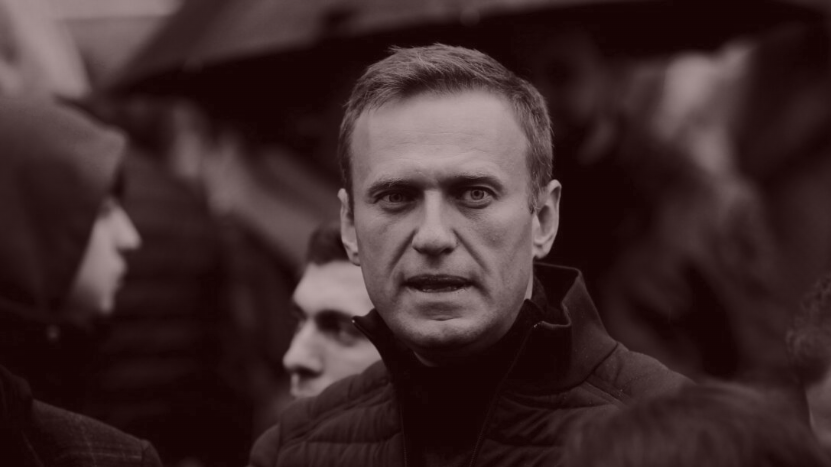
Today, however, I wanted to write to you about the death—the murder—of Alexey Navalny, in an Arctic prison in Russia, three days ago. When I first heard the news, I thought I was going to throw up. The days since have been a roller coaster of forgetting, remembering, feeling disbelief, despair, and anger. My friends and family, everyone who was still in Russia and those who had escaped, were also shuttling between shock and grief, a sense that all hope for a better future had been snuffed out. I wanted to write about this, about the hollow grief of a future plucked from people’s hands. But this morning’s events overtook me. More on that below.
|
 |
| The Tragedy of Navalny |
| Alexey Navalny wasn’t simply a powerful oppositional leader or visionary. For many Russians, he was the future leader of a post-Putin Russia—a cosmopolitan democracy that espoused freedom and equality. Now that he is gone, his widow Yulia is taking up the fight. |
|
|
|
| On Thursday night, I ran into Yulia Navalnaya in the lobby of the Bayerischer Hof, the Munich hotel where, once a year, heads of state, intelligence chiefs, defense ministers, and foreign secretaries come together to discuss the state of the world. She was talking to Leonid Volkov, her husband Alexey Navalny’s longtime lieutenant, and Michael McFaul, the former U.S. ambassador to Moscow and a professor at Stanford, where the Navalnys’ daughter, Dasha, is a senior. I hadn’t seen any of them in a long time, so I came over to say hi.
“How’s Alexey doing?” I asked after we’d caught up briefly about our own lives. Yulia responded nonchalantly. “He’s good!” she smiled.
I was incredulous. For the three years that Alexey had been in prison, we had witnessed him melt, turning so gaunt that his cheekbones cast shadows in videos of his court hearings from jail. (Even as he served a sentence for a bogus crime, new criminal cases were opened against him, one after another. At the moment of his death, he had served out his first sentence and was already serving a second: He had been given 19 years in August and was facing another three in a court case opened against him December.) His lawyers, political team, friends, and family warned constantly that Alexey’s health was in danger: He had never fully recovered from his August 2020 poisoning with Novichok and, after being thrown in jail on his return to Russia in January 2021, the conditions in the various penal colonies where he had been held were purposefully brutal. Alexey spent about a third of his prison term in solitary confinement, punishment for various imagined infractions—not greeting one of the guards exactly the right way, not buttoning his jacket all the way. He was starved, deprived of contact with his family, with other prisoners. His lawyers were imprisoned. Everyone else close to him warned, over and over again, that Alexey needed to be saved, urgently.
Yulia shrugged. “Everyone asks me this all the time and I’ve been trying to find a concise way to say it,” she said. “But I think I’ve finally settled on a formulation: He’s doing really well in really bad circumstances.” Less than 12 hours later, the world—and Yulia Navalnaya—learned that Alexey was dead.
Just hours after reports of the opposition leader’s death began to circulate around the Munich Security Conference—Volodymyr Zelensky got the news Friday morning while in a meeting with Germany’s Olaf Scholz—Yulia mounted the main stage of the conference, a last-minute addition to the lineup. The audience stood and applauded her for a good minute, then Yulia began to speak. “I thought for a long time, should I come out here or fly immediately to see my children,” she said, referring to Dasha and Zakhar, her teenage son going to boarding school in Germany. “And then I thought, what would Alexey do in my place? And I am sure that he would be here, on this stage.”
Her eyes were still full of tears, but she was steady, held upright, it seemed, by her righteous, icy fury. The world was watching and she would not wilt under its pressure. “I want to call on the entire global community, on all the people in the world to come together so that we can defeat this evil, defeat this horrifying regime that is in power in Russia,” she said, not begging or even asking, but demanding.
The hall gave her another standing ovation. Antony Blinken teared up. Nancy Pelosi kissed her hands. Yet it was clear—painfully, shamefully clear—there was very little that any of them could do for her. “Yulia is a lot stronger than I am, I can tell you that,” one former U.S. official told me. It was a sentiment I heard a lot that weekend. Yulia Navalnaya, once again, would turn out to be a lot stronger than any of us. |
|
|
| Over the weekend, as his death was confirmed by his team—and as the prison authorities announced “sudden death syndrome” as the cause—and as his mother tried to chase down her son’s body in the wilds of the Russian Arctic, the idea that Navalny was gone, forever, sunk in among the Russian opposition, as well as among Russians who are quietly waiting out a regime they loathe. “I’m in shock,” one friend texted. “It feels like you’ve fallen through the earth but you don’t understand where you’re going to land because you’re still falling,” wrote another. “I don’t understand what to do now,” wrote a third. “It’s one more step toward 1937,” referring to Stalin’s Great Terror.
If the Russian opposition had been eviscerated two years ago with Vladimir Putin’s invasion of Ukraine and the introduction of military censorship, the death of Navalny seemed to have snapped its spine. Most of the opposition now lives abroad, in exile, and those who are left in Russia are either in jail or fear the kind of increasingly Stalinist atmosphere enveloping, suffocating the country. A 72-year-old woman was sentenced to five years in a penal colony for sharing someone else’s posts on social media. А young woman was given jail time for wearing rainbow earrings after the Kremlin named the “international L.G.B.T. movement” an extremist one, on par with ISIS. A small-town veterinarian is under criminal investigation for her antiwar TikToks. A history student was arrested for reading a book about the S.S. on the Moscow metro. A single father was put in jail for his antiwar posts, and his 12-year-old daughter was taken from him and put in an orphanage. Prominent artists who have spent years implementing the Kremlin’s bread-and-circus agenda have had to publicly plead for forgiveness and undergo humiliating tours singing to wounded Russian soldiers in the occupied parts of Ukraine in order to get off blacklists.
The fear is palpable. When I text with people still in Russia, their responses have become carefully beveled and bland because people have been arrested for text messages and phone conversations. One friend who recently returned from Moscow told me that some people responded to “How are you?” with “They haven’t come for me yet!”
As Putin steadily re-created the days not of Brezhnev but of Stalin, people who hated him and what he had done with their country, clung to one hope: the day after Putin. When he inevitably died, they figured, there would be a chance for Russia to start fresh, to finally become a “normal,” European country. Alexey Navalny, a much younger man, would outlive the old dictator and finally take the reins and lead Russia into the “wonderful Russia of the future” that he publicly fantasized about. Russians would finally get free and fair elections, the freedom to speak and assemble, the rule of law and independent courts to protect them, and a government that would spend their tax money responsibly, without worrying that it was being siphoned off to pay for palaces, yachts, and Maybachs.
But then the unthinkable happened. Navalny simply ceased to be. After being transferred in December to a notoriously harsh penal colony beyond the Arctic Circle known as “the Polar Wolf,” Navalny was put in a cell that was, essentially, made specifically for him: It was a 75-square-foot concrete box where he was allowed a book, a mug, and a toothbrush, and nothing else. He was, once again, isolated and cut off from the world and his family. The night before the world learned of Navalny’s death, a fellow prisoner reported, there was “a commotion”: the prisoners were locked down in their cells and a fleet of cars entered the penal colony. This has led some people to believe that Navalny actually died a day earlier and that Russian authorities had to figure out how to word the announcement of the politician’s demise.
Navalny died in prison just six weeks shy of Putin’s re-anointment in the March presidential election. Navalny had cheated death once, in August 2020, when, poisoned with Novichok, he was saved by an airline pilot who made an emergency landing in Omsk, where he received medical care and, because of Yulia’s fierce insistence, was evacuated to Germany. (He returned to Russia a few months later, knowing that he would be arrested on arrival.) This time, however, he did not rise from the dead. For so many Russians, he had been their hero, bravely, selflessly fighting evil, and yet, somehow, the villain killed him, a kind of perverse inversion of what happens in every fairy tale, in every movie. “There was no miracle,” wrote journalist Julia Taratuta, editor-in-chief of Wonderzine. “This is a kind of horrific, unbearable injustice. It’s like in some kind of horror story: right in front of our eyes, evil conquered good.”
There is a generational aspect here, too. Russia, like America, is still ruled by the old. Putin and his cronies are baby boomers well into their 70s. They are full of resentment at the collapse of the U.S.S.R. and warped, bitter nostalgia for the good old days of Soviet totalitarianism. Navalny, who was young enough to be Putin’s son, was a generation younger and a world apart. Raised on the democratic hopes of the 1990s, on a dream that Russia would become a rightful part of the West, and possessing an innate understanding of social media, he was someone to whom those born in the Soviet twilight and far later could relate. He was the politician of the young.
Navalny, who spent six months in the U.S. on a fellowship at Yale, built an American-style political organization and, eventually, presidential campaign. (He tried to run in 2018 but was not allowed on the ballot.) Unlike the secretive Putin, he showed Russians his family. He was funny, warm, and genuine. He interacted with real people, not those hired and coached. He was approachable and curious. He admitted to his mistakes and learned from them, including his earlier embrace of Russian nationalism and racism. He looked toward the future, not the Soviet past. And more than anything, he exuded optimism in a way that convinced other Russians: with jokes and conviction, and deep authenticity. He infected all of us with it.
And then, in an instant, it was gone. The hero and hope of a generation, of the generations coming up behind Putin and his bloody, revanchist fantasies, had been killed. The future, a gleeful Putin seemed to be telling Russians, would be just like the present and the past: an endless, stultifying loop of war and terror and repression, with no end or hope in sight. |
| The Second Half of Alexey Navalny |
|
| As Navalny built a political organization with a media arm to match, Yulia stayed deliberately out of the limelight. She was always at Alexey’s side and was one of his key advisers, but she firmly and consistently rebuffed any suggestion that she might take up politics in her own right. “I think it’s much more interesting to be the wife of a politician,” she told a Russian magazine in one of the handful of interviews she’s ever done.
On Monday morning, that changed. “Hello, I’m Yulia Navalnaya and, for the first time, I want to address you,” she said. She was, as always, perfectly poised, elegant in a dark blue dress, her peroxide blond hair tied into her signature tiny bun. But her eyes looked puffy from crying, and it seemed she had aged a lifetime in the four days since I’d seen her in Munich. “I shouldn’t be sitting here,” she said, staring straight into the camera out of a dark apartment. “Somebody else was supposed to be in my place. But that person was killed by Vladimir Putin. Three days ago, Vladimir Putin killed my husband, Alexey Navalny. Putin killed the father of my children. Putin took away the most precious thing I had, the closest person to me, and the person I loved most in the world. But Putin also took Navalny from you.”
In the days since Alexey’s death—a person close to him told me “there’s almost no doubt that it was Novichok”—a question hung over the Russian opposition: Would it be able to live and fight without its leader?
On Monday, Navalnaya had a resounding answer. This beautiful, young widow, her grief still fresh and urgent, who had so assiduously kept the public focus on her husband, was stepping up to take his mantle. “I will continue the work of Alexey Navalny,” she said in her address, catching and steeling herself whenever her voice began to crack with emotion. “And I call on you to stand beside me. Not only to share the grief and the endless pain that has engulfed us. I ask you to share the fury. The fury, the anger, the hatred toward those who have dared to destroy our future.” If Alexey wasn’t around to fight for the “wonderful Russia of the future,” then all of them would do it for him, fed, she said, by his memory and his great love of Russia.
When I wrote about Yulia for Vanity Fair in 2021, Yevgenia Albats, a legendary Russian journalist and a close friend of the Navalnys, spoke to me about her at length. Yulia, Albats told me, was the reason Alexey did what he did and was what he was. Albats remembered seeing the couple at a birthday party, back in 2006, nearly 20 years ago. “She’s a queen,” Albats recalled, “and Alexey was dancing around her like a little rooster. And that’s when I thought, ‘This is the motivator.’ In addition to his personal ambition, he needs to constantly prove to this beautiful woman that he is worthy of her.” As Navalny built his political career, Albats and others told me, Yulia became the “shadow politician” behind Alexey. Whether his supporters knew it or not, Yulia was the person Alexey consulted on everything.
“It’s just as you and I predicted,” a shattered Albats said when I reached out to her after Yulia’s Monday appeal. “Alexey Navalny, the politician, is two people: Yulia and Alexey Navalny.” Now, only half of that politician is left. That half, already stronger than most humans are capable of being, seemed only strengthened by grief and fury. “By killing Alexey, Putin killed half of me,” Yulia said in her address, “half of my heart, and half of my soul. But I have a second half left, and it is telling me that I have no right to give up.” |
|
|
| That’s all from me, friends. I’ll see you back here later this week. Until then, good night. Tomorrow will be worse.
Julia |
|
|
|
| FOUR STORIES WE’RE TALKING ABOUT |
 |
|
 |
| Buffett’s Shari Short |
| You don’t get as rich as Buffett without knowing when to cut and run. |
| WILLIAM D. COHAN |
|
 |
|
 |
| Catch-81 |
| The Cafe Milano crowd on the political topic du jour. |
| TARA PALMERI |
|
|
|

|
 |
|
|
|
Need help? Review our FAQs
page or contact
us for assistance. For brand partnerships, email ads@puck.news.
|
|
You received this email because you signed up to receive emails from Puck, or as part of your Puck account associated with . To stop receiving this newsletter and/or manage all your email preferences, click here.
|
|
Puck is published by Heat Media LLC. 227 W 17th St New York, NY 10011.
|
|
|
|