{{ 'now' | timezone: 'America/New_York' | date: '%b %d, %Y' }}
|
|
|
|
Hello and welcome back to The Best & The Brightest, Sunday edition. I’m Leigh Ann
Caldwell.
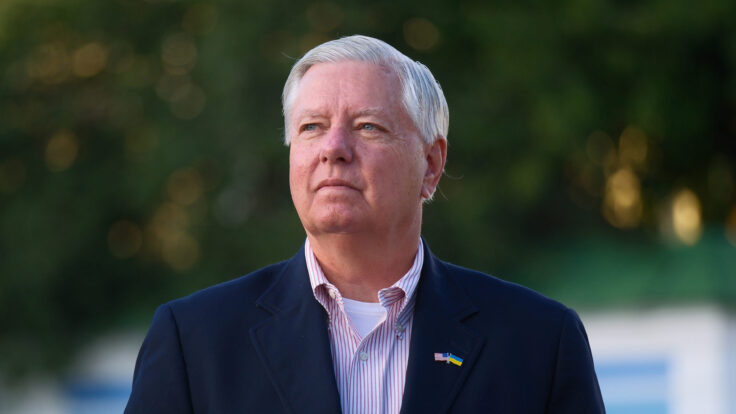
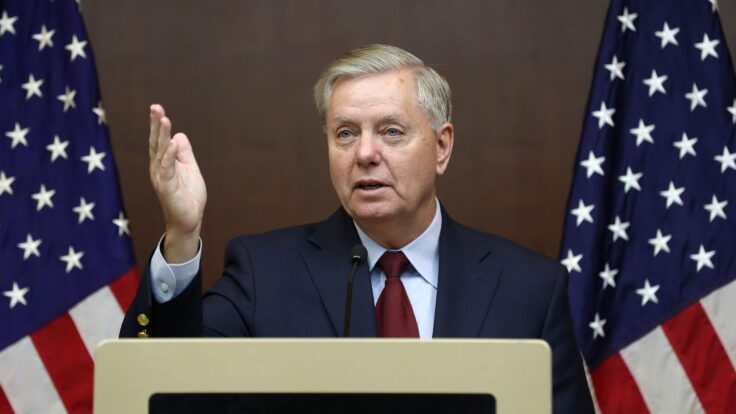
The political world woke up on Sunday to the shocking and sad news that Sen. Lindsey Graham had died suddenly of a tear in his main artery caused by cardiovascular disease, two days after his 71st birthday. He was a complicated, witty, strategic, and politically astute senator who used his relationships to his own personal and political advantage. As one Republican senator told me years ago, “Always watch what Lindsey does. He can read the political
winds better than anyone.”
It was apt advice. Depending on the moment, Graham would easily shape-shift from bipartisan dealmaker (Gang of Eight immigration reform and gun safety legislation) to conservative firebrand (defense of Brett Kavanaugh and Amy Coney Barrett) to Trump acolyte. (Sen. Kyrsten Sinema used to privately call him a
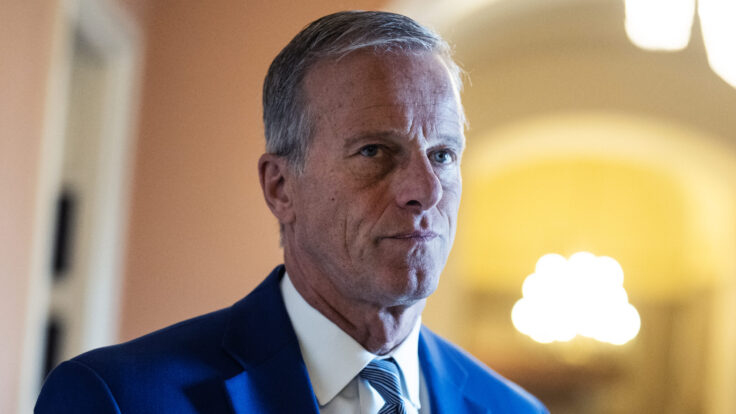
“ chaos monster” because he worked to undermine bipartisan talks to appease Trump.) He was also a leadership ally, close with Republican leader Mitch McConnell and was a confidant and friend to majority leader John Thune. From Sen. John McCain’s B.F.F. and Trump’s favorite golfing partner to Democrats’
favorite Republican, Graham got the most out of his time in Congress. His colleagues on both sides of the aisle will miss him.
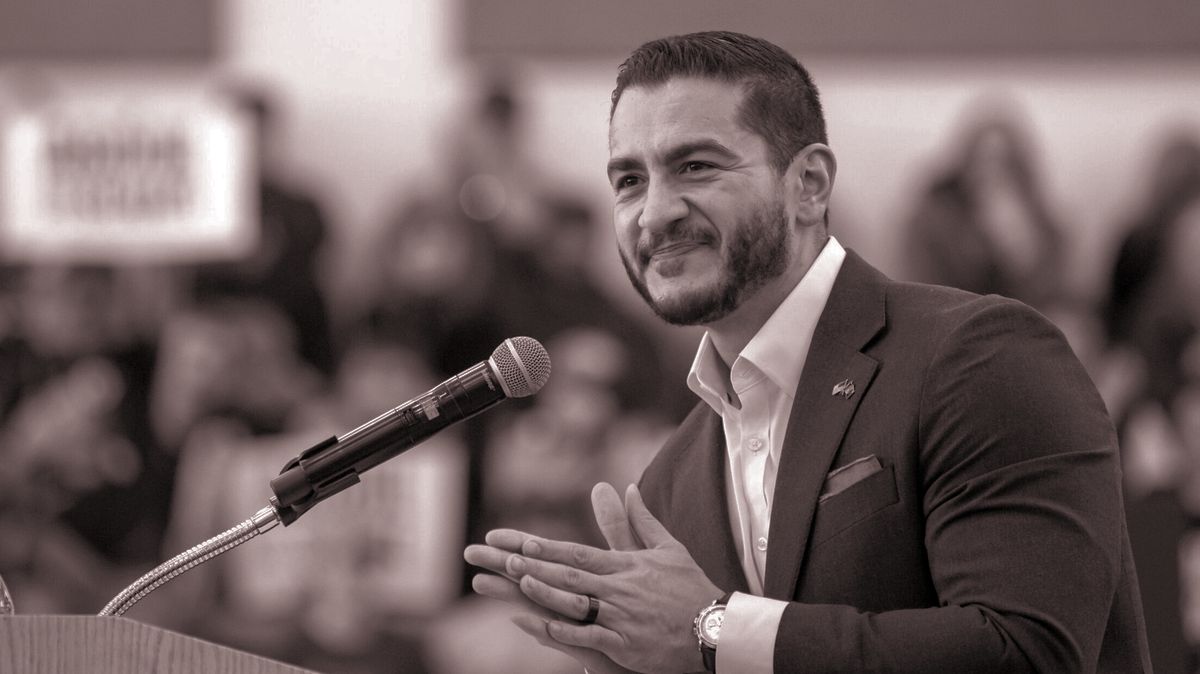
I’ll have a bit more on the process to replace Graham, who was in the middle of a reelection campaign, below. Plus, I also have a look at where the progressive left goes next after the Graham Platner debacle. They know that Abdul El-Sayed winning the Michigan Senate race is existential to their movement. Plus,
Marianna has some news and notes on the G.O.P.’s hand-wringing over Trump’s decision not to sign—or take credit for—the bipartisan housing bill.
Also mentioned in this issue: Henry McMaster, Joe Wilson, Ralph Norman, Pamela Evette, Mike Johnson, Kristen Welker, Nancy Mace, Alan Wilson, Thom Tillis, Susan
Collins, Joseph Geevarghese, Troy Jackson, Bernie Sanders, Haley Stevens, Adam Green, Usamah Andrabi, Darializa Avila Chevalier, Zohran Mamdani, Nate Blouin, Will Lawrence, and more.
|
- The
race to replace Graham: The sudden and tragic death of Sen. Lindsey Graham has given way to the jockeying to supplant him. Gov. Henry McMaster will appoint someone to serve out the remainder of Graham’s term. And a special election will need to take place within the next month to replace him on the November ballot.Because of their already razor-thin margins, Republican leadership would prefer that McMaster not choose anyone from the House. Rep.
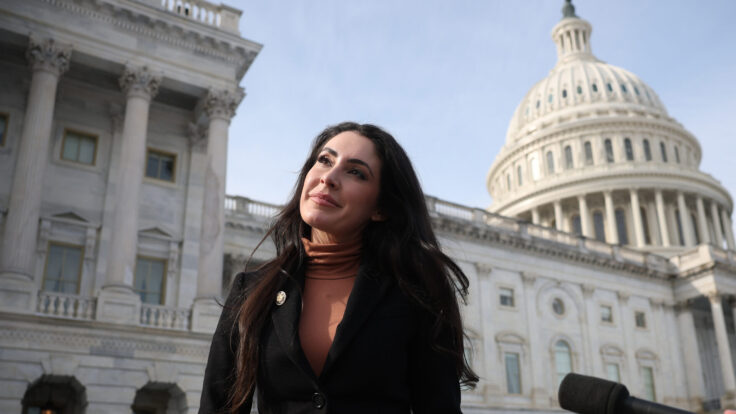
Joe Wilson announced that he spoke to Trump and “assured him my goal is to remain in the House to keep his two-vote majority for the American people!!!” But there are other interested Republican House members. Rep. Ralph Norman told me that he’s planning on talking to McMaster about the appointment. Rep. Nancy Mace said that she is not interested in the appointment but is “strongly considering” running for the seat and that she
is conducting polling starting Monday.
As for whom McMaster could appoint that would not make Speaker Mike Johnson’s job harder, current Lt. Gov. Pamela Evette, who lost the gubernatorial nomination, is a possibility. A person familiar with Evette’s thinking said she is getting encouragement to put her name forward, arguing that she would be the best situated, having just come in second in a gubernatorial primary with Trump’s endorsement (before
he also endorsed Alan Wilson when it became clear he was going to win). Trump told Kristen Welker on NBC that he has someone in mind whom he’d like to see in the seat, but he wasn’t going to reveal the name yet.
Replacing Graham as chair of the Budget Committee will be a much simpler process. Sen. Ron Johnson is the next-most-senior member, and his team told leadership that he would accept the position if the Republican
conference elected him.
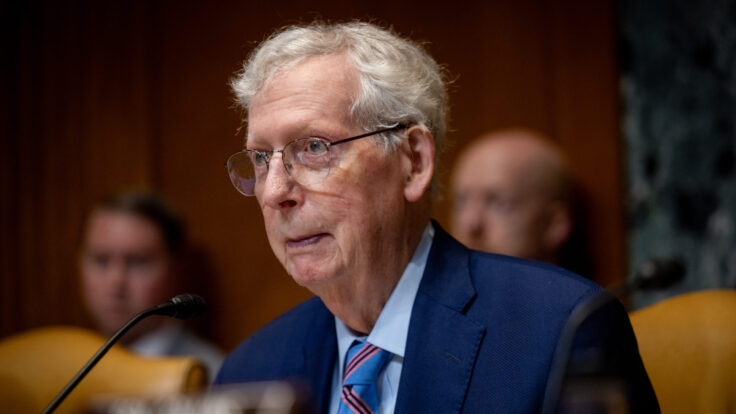
Meanwhile, Sen. Mitch McConnell has finally—finally—released a statement and a photo of him and his wife, Elaine Chao, from the hospital. The statement says that he was taken to the hospital more than a month ago because he fell and was also dealing with a “mild case of pneumonia.” He says that he won’t be able to return to the Senate to vote “quite yet.”
|
|
|
|
Building healthier communities means addressing the 80% of health that happens outside the
doctor's office. By working with local partners, UnitedHealth Group is helping communities across America live healthier lives.
For example, UnitedHealth Group partners with The Good Acre and local farmers to deliver over 45,000 nutritious meals in the Twin Cities. This partnership helps participants lower their A1C and manage chronic conditions like diabetes, helping to build a better system for
everyone. Learn more.
|
|
|
|
 |
Marianna Sotomayor |
|
- The made-up word:
Republicans are cringing at President Trump’s trashing of a significant housing affordability bill that they really need to broadcast everywhere to boost their chances in the midterms. Trump boycotted the bill’s signing ceremony on the Hill last month, only later to describe the legislation as a “yawn” and “so unimportant” in comparison to a restrictive voter I.D. bill that would also federalize elections. If it wasn’t obvious already, Trump made clear on Friday that his refusal to sign the 21st
Century ROAD to Housing Act into law was “in PROTEST over the fact the United States Senate is not capable of passing THE SAVE AMERICA ACT.” As one Republican lawmaker told me. “His tantrums may cost us the House.”The bright side for Republicans: A provision in the Constitution gives the president 10 days to sign or veto a bill, or it automatically becomes law—which is exactly what happened on Saturday at midnight. But the lack of fanfare—both the signing ceremony and the customary round
of media hits that normally follow such an affair—has denied Republicans a chance to hammer home the message that they care about the cost of living, despite Trump referring to affordability as a “fake word made up by the Democrats.” However, I saw more Democrats put out statements via email or on social media about the bill becoming law than Republicans, including leaders, did, which is a tad awkward.
Speaker Johnson would love to pass another big legislative package that includes a
pared-back version of the SAVE Act and numerous bills that would tackle high costs. But Congress has roughly 20 days left in this session, and Trump loyalists have blocked any legislation from consideration until they have guarantees that the SAVE Act will pass. And even after months of cajoling and threats from Trump, there is still no appetite in the Senate to pass the voter I.D. bill. Senators, including Thom Tillis, have said publicly that changing how elections are run
right now could throw the midterms into chaos. The fervor is also dying down in the House, with another lawmaker telling me, “What’s the point of appeasing Trump if he’s already derailing our agenda?”
|
|
|
|
Now, about those progressives…
|
|
|
|
After Graham Platner’s flameout in Maine, Michigan’s Abdul El-Sayed is the progressive
left’s best—and last—chance to prove they can win a Senate seat in a purple state.
|
|
|
|
The progressive left was on a hot streak, electing democratic socialists as mayors, ousting lazy incumbents
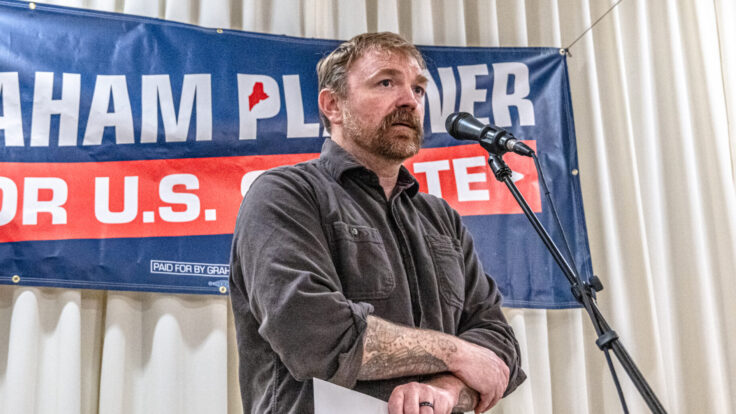
in House primaries, and on the verge of winning top-tier Senate races. But after the spectacular collapse of Graham Platner in Maine, who was supposed to crack the code on how to win back white, working-class voters, the progressive movement is once again on its back foot, fielding potshots from disgruntled Democrats who are blaming the left for jeopardizing the party’s chance at a Senate majority.
Platner was the progressives’ path to political staying power, a crucial
vehicle for proving that, on a slate of populist promises, they could beat a battle-tested Republican opponent like Sen. Susan Collins in a barely blue state. Joseph Geevarghese, who runs Sen. Bernie Sanders’s endorsement arm, Our Revolution, acknowledged that Platner’s implosion was a “setback” but called it a mere “blip” for a movement that, he argued, has more momentum now than at any time since Bernie’s 2016 presidential run.
|
|
|
|
Stable jobs help build healthier
communities. That’s why UnitedHealth Group invests in job training programs for high-demand careers like medical coding across the country. So far, UnitedHealth Group has helped more than 300,000 people start or advance their careers, which means better health for them, and their communities. Learn more.
|
|
|
|
Progressives are hustling to win in Maine despite Platner’s flame-out, immediately mobilizing to ensure a
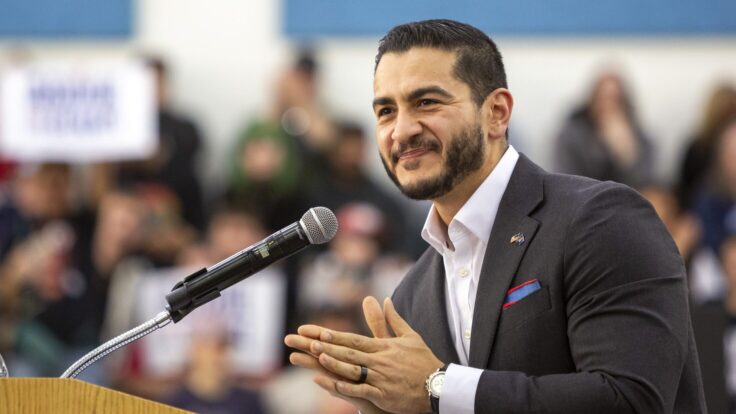
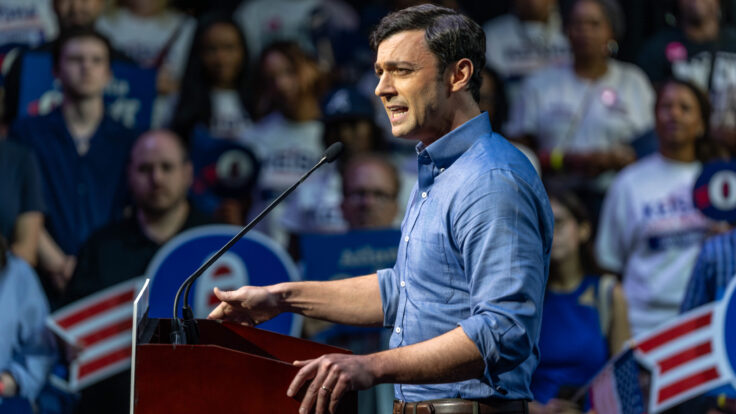
progressive candidate—such as Troy Jackson, a former state legislator, union organizer, and logger—replaces him on the ballot. But the stakes are even higher in Michigan, a race central to the progressive left’s effort to show that they can win in competitive places. Progressive-backed Abdul El-Sayed is on the verge of upsetting leadership-backed Congresswoman Haley Stevens, a quirky run-of-the-mill Democrat, in the primary for the state’s open
Senate seat. El-Sayed’s campaign has successfully painted Stevens as an AIPAC-controlled corporate stooge, highlighting more than $20 million of campaign ads by AIPAC’s super PAC, United Democracy Project. “I reject the power of corporate money and AIPAC money and Chuck Schumer in our politics,” El-Sayed often says on the trail. (Stevens says that she puts Michiganders’ interests first.) “A win there would be critical, and it would underscore that the movement is bigger than
just personalities and, you know, charismatic candidates,” Geevarghese said.
This cycle is a key building block to influence the 2028 presidential cycle. Michigan, of course, is not as blue as Maine; Trump won the former by less than a point in 2024, putting it back on the map as a top Republican pickup opportunity. If progressives prove that they can be successful statewide, then they can have much more influence in 2028, including who the Democratic nominee is and what sort of platform
they run on. “I consider 2026 our ‘put up or shut up’ moment,” Adam Green, co-founder of the Progressive Change Campaign Committee, said.
|
While progressives are fighting for the direction of the party, most Democrats just want to win. “The far
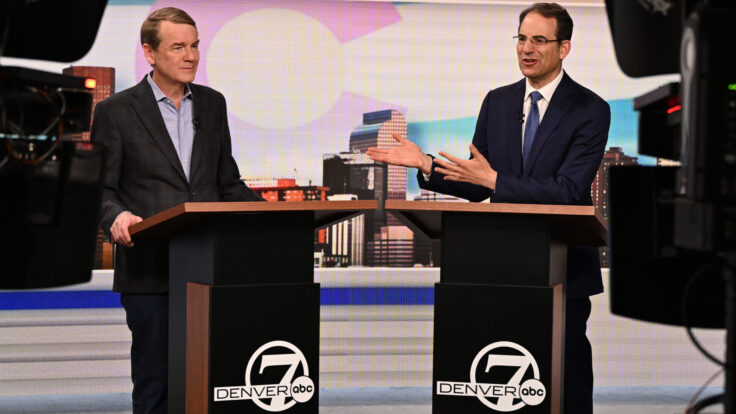
left is much more focused on the idea of winning this ideological warfare than everyone else,” one Democratic consultant said. And some argue that the left’s demand for populist purity is undermining the party’s chances to win back the House and the Senate outside the confines of sapphire blue New York City or liberal Denver. “The need for trade-offs is real, and trying to wish it away is both self-defeating to us as a party and pretty dishonest to our base,” Searchlight Institute founder
Adam Jentleson said. “The American electorate is not super liberal, and you need to find a way to win in these places if we are going to defeat fascism—and pretending that you can do it while adhering to rigidly left-wing ideologies is just not going to work.”
Usamah Andrabi with Justice Democrats—who are having their most successful cycle to date in the House, having won six Democratic primaries so far and advanced two candidates to the top two in
California’s jungle primary—obviously disagrees. He argues that the base is just as mad at a feckless Democratic Party as they are at Trump. They don’t see a difference between the two parties when it comes to affordability challenges, income inequality, the threat of A.I., the influence of pro-Israel money in U.S. politics, etcetera. “We are giving the Dem establishment a road map of how to excite a disaffected base. It’s up to the Democratic Party to take it and learn lessons from
it,” he said, adding: “We don’t have to talk about left, right, or center, but how do we unite the bottom 99 percent against the top 1 percent that is robbing the public blind?”
|
|
|
|
The Democrats’ center vs. left divide is not new, though over the past year it has been subsumed by universal
opposition to Trump. But the primary season has reignited the conflict. The D.C.C.C. angered the left when it endorsed in House primaries against progressive challengers. On the flip, Zohran Mamdani infuriated Hakeem Jeffries’s team when he helped Darializa Avila Chevalier—an avowed prison abolitionist—oust Adriano Espaillat, chairman of the Congressional Hispanic Caucus, from his district representing Harlem and parts of the
Bronx. After Platner’s Hemingway-esque implosion (gradually, and then suddenly), there was no hiding the animosities, and everyone from the consultants to the left was being blamed. “It’s a recognition that there is a real battle within the Democratic Party about its direction,” Geevarghese said.
Democrats frustrated at the progressives’ lack of vetting and willingness to pit Democrats against each other are quick to point out Sanders’s blunders, happily noting that he lost two primaries
in Illinois, one in North Carolina, and one in Utah. In the Utah House race, Sanders’s candidate, Nate Blouin, had made derogatory statements years ago about women, people with disabilities, and the Church of Latter-day Saints. And just this weekend, HuffPost reported on demeaning
statements that a Sanders candidate in a competitive Michigan House race, Will Lawrence—who is white—made about Black leaders.
|
It was partly the high stakes of that war for the Democratic soul that prevented the left from seeing—or at
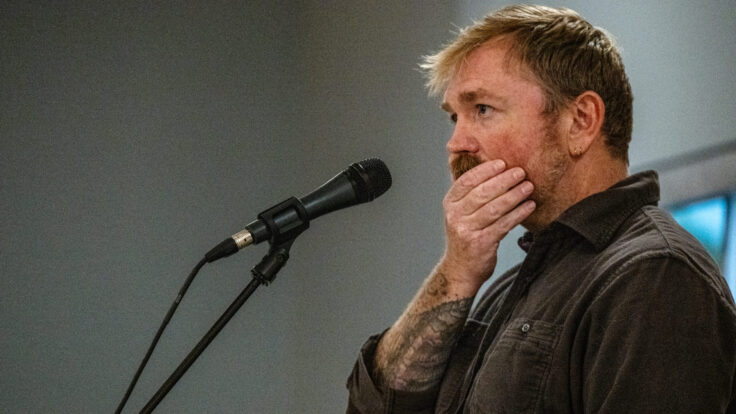
least acknowledging—Platner’s vulnerabilities. With his gravelly voice, unkempt hair, undeniable affinity for retail politics, and working-class vibe, he became a proxy for the future of the party and the factions trying to shape it. And those divides emerged up and down the political hierarchy, from the political consultant class to the United States Senate.
What jolted establishment Democrats the most is the condemnation they faced, from all levels, if they spoke out about Platner’s
flawed candidacy. But the intimidation worked, and managed to keep Platner’s campaign alive through scandal after scandal. We all saw what happened to Rep. Jake Auchincloss when he criticized Platner on CNN and called his Nazi tattoo “disqualifying.”
The left couldn’t afford to abandon Platner, so they dismissed his
personal flaws for the sake of the message. They convinced themselves that he wasn’t lying when he told them on a recent afternoon in D.C. that all his skeletons had been leaked. As it turns out, he was. Sanders—the very last person of prominence to abandon Platner—is 84 and has no plans to run for president again in 2028. El-Sayed is progressives’ last, best hope to prove that a Democrat who pledges to stop sending taxpayers’ dollars to Israel, shuns corporate donors, and promises healthcare
for all can be the party’s presidential nominee.
Marianna Sotomayor contributed to this report.
|
|
|
|
Join Emmy Award-winning journalist Peter Hamby, along with the team of expert journalists at Puck, as they let you in on the
conversations insiders are having across the four corners of power in America: Wall Street, Washington, Silicon Valley, and Hollywood. Presented in partnership with Audacy, new episodes publish daily, Monday through Friday.
|
|
|
|
Ace media reporter Dylan Byers brings readers into the C-suite as he chronicles the biggest stories in the industry: the future
of cable news in the streaming era, the transformation of legacy publishers, the tech giants remaking the market, and all the egos involved. Also featuring a weekly dispatch from Puck’s crack streaming/media analyst, Julia Alexander.
|
|
|
|
Need help? Review our
FAQ page or contact us for assistance. For brand partnerships, email ads@puck.news.
You received this email because you signed up to receive emails from Puck, or as part of your Puck account associated with {{customer.email}}. To stop receiving this newsletter and/or manage all your email preferences, click here.
|
Puck is published by Heat Media LLC. 107 Greenwich St., New York, NY 10006
|
|
|
|
|