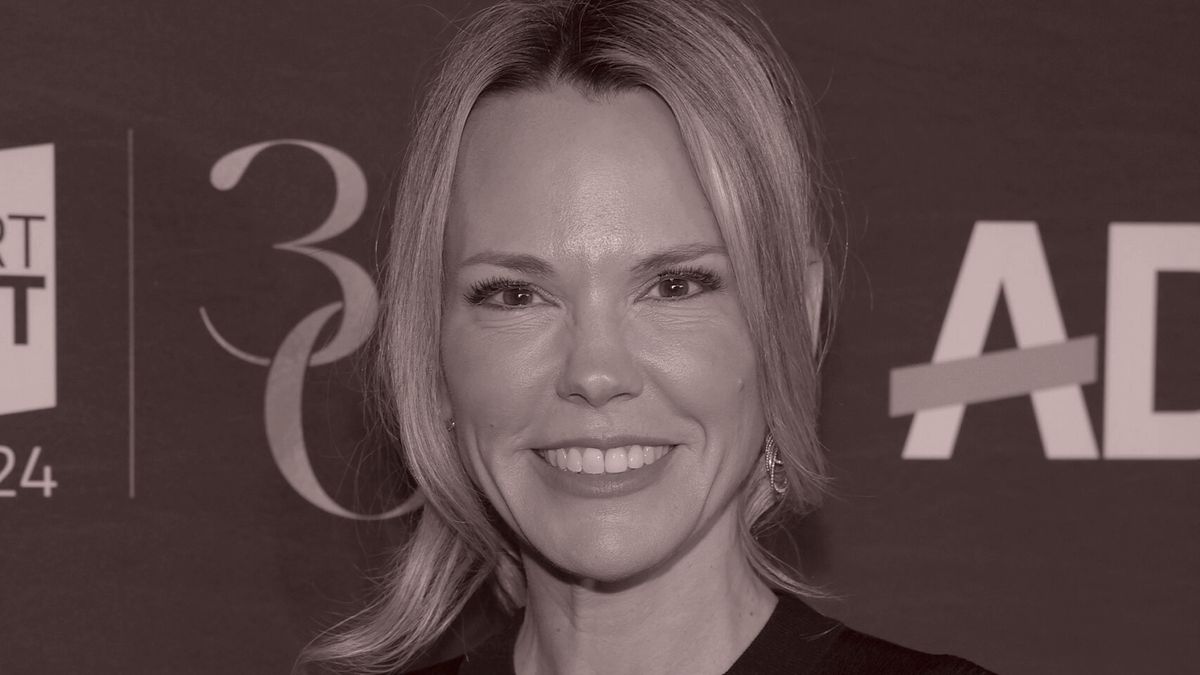
Welcome back to The Best & The Brightest, I’m Leigh Ann Caldwell in Trump’s Washington, where people are dyeing potatoes for Easter because of the persistent shortage and high costs of eggs. Meanwhile, very preliminary signs of life have been discovered on a planet 124 light years away. Maybe that planet also has eggs?
Below the fold, my partner John Heilemann spoke with multifaceted business guy and former Obama advisor Steve Rattner, who is quite pessimistic about the economic aftershocks—or are they pre-earthquake tremors?—of Trump’s tariff policy.
But first, here’s Abby on the Dems’ anti-incumbent surge…
|
|
|
 |
Abby Livingston |
|
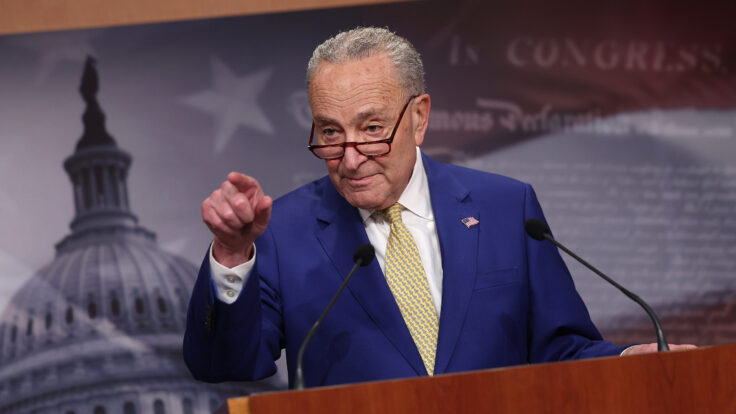
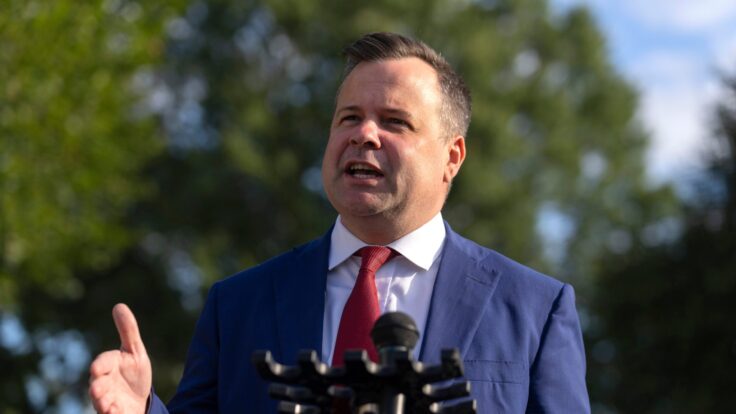
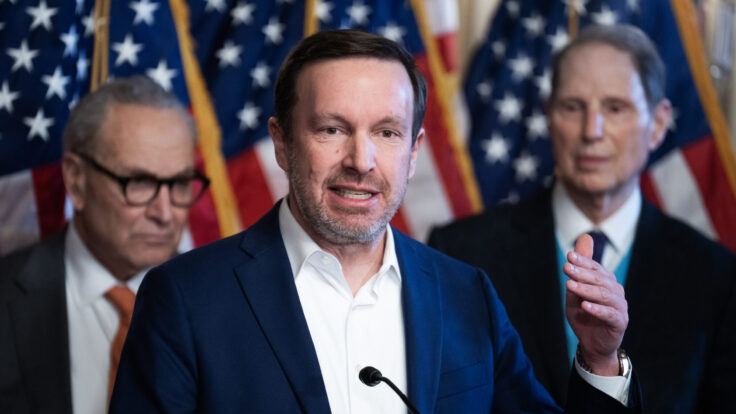
There’s an anti-incumbent wave coming, especially among Dems, but don’t tell that to the incumbents themselves: The first-quarter F.E.C. finance reports give few indications they’re worried, even though many longtime lawmakers will face viable challengers for the first time in their careers. They could have used the first quarter to post the kind of figures that scare off challengers, but few did so—usually a signal of complacency, or a coming retirement.
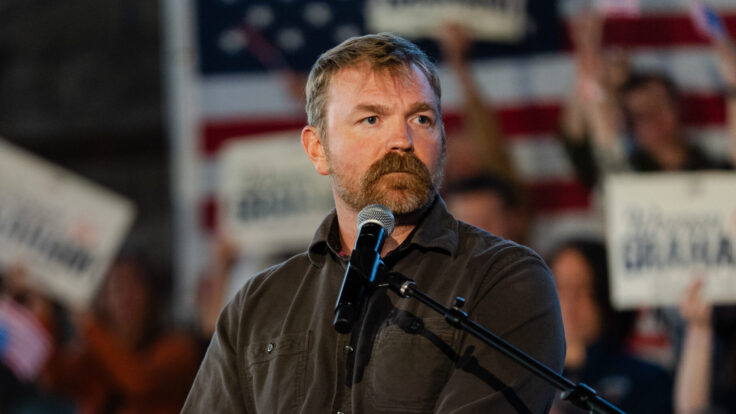
Most notably, Dick Durbin raised just $43,000, a stunningly paltry sum for the 80-year-old, second-ranking Democratic senator. (He raised more than 10 times that amount in the same period when he was last in-cycle.) This number has only reinforced swirling suspicions that Durbin will hang it up, though he has yet to announce any retirement plans. Louisiana Republican Sen. Bill Cassidy, meanwhile, was outraised more than two-to-one by his primary rival, state treasurer John Fleming, posting $1 million to Fleming’s $2.3 million. (Cassidy does have $7.5 million in cash on hand compared to Fleming’s $2.2 million, which puts him in a position of strength, if he can maintain it.) South Carolina G.O.P. Sen. Lindsey Graham raised $1.1 million, a pittance compared to his mostly self-funded challenger Mark Lynch’s $5 million.
Other shockers: Democratic Rep. Danny Davis, of Illinois, has seemed intent on running for a 16th term but raised only $8,000 this quarter, with $54,000 cash on hand—numbers more typical of a city council than a U.S. House race, especially since he picked up a primary challenger this morning in philanthropist Jason Friedman. Georgia Democrat David Scott faces Gwinnett County school board member Everton Blair and several other Democrats in his House primary, and spent more ($90,000) than he raised ($82,000) this quarter, with $167,000 in cash on hand.
Other House challengers of note: Gen Z influencer Kat Abughazaleh outraised Illinois Democrat Jan Schakowsky, $379,00 to $213,000, despite entering the race at the end of the quarter. (Schakowsky, however, maintains the cash-on-hand advantage, with $877,000 to Abughazaleh’s $364,000.) Gainesville Mayor Sam Couvillon outraised Georgia Republican Andrew Clyde by a factor of nearly five, with $263,000 to Clyde’s $58,000. No numbers yet for Jake Rakov—the former chief of staff to California Democrat Brad Sherman—who announced he was challenging his former boss after the fundraising deadline. But Sherman, despite only raising $137,000, is sitting on $3.9 million of cash on hand.
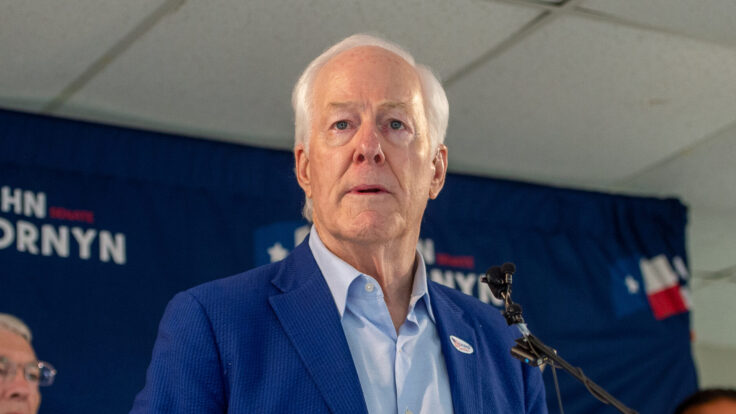
Finally, Texas Republican Sen. John Cornyn and California Democratic speaker emerita Nancy Pelosi raised money in preparation for their own challengers. Cornyn—who faces the fight of his life against Texas Attorney General Ken Paxton, who just announced his candidacy last week—raised $1.5 million this quarter (his campaign also touted an additional $1 million raised by allied committees). And Pelosi raised $860,000, while her Democratic challenger, ex- A.O.C. chief of staff Saikat Chakrabarti, raised $291,000.
|
|
|
|
A fair and balanced conversation with Wall Street eminence and former “car czar” Steve Rattner about the impact of Trump’s global tariff jihad.
|
|
|
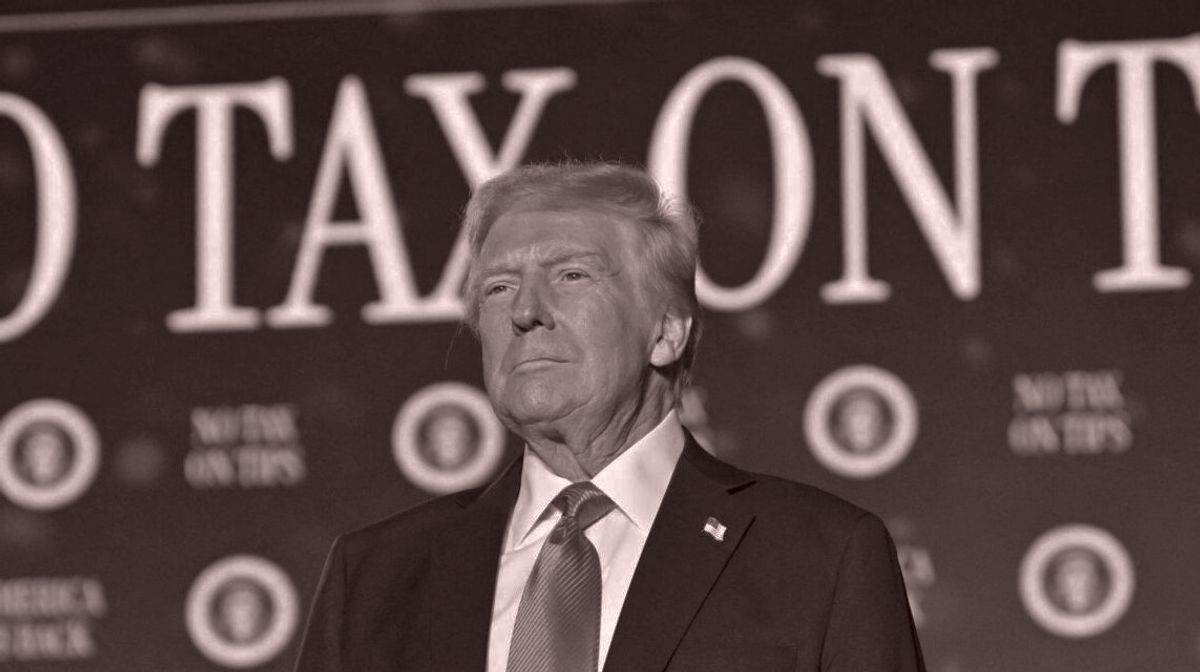
Thanks to Donald Trump and his ChatGPT-enabled tariff jihad, last week was one of the most tumultuous, tempestuous periods for stocks and bonds and currencies that we’ve ever seen. What happened across those five days, and more importantly, what happens next, is a story that sits at the intersection of Wall Street and Washington, of financial mechanics and political mojo, of conventional plutocratic maneuvering and MAGA-fueled disregard for history, precedent, and institutional coherence.
It is a story, in other words, that very few of us are well-equipped to decode, that risks tangling us in the weeds and obscuring the macroeconomic and political realities likely to matter most in the end. To help us avoid that fate, I recently interviewed Steve Rattner, who has spent decades observing and participating at the highest levels in business, finance, government, politics, and media, on my Impolitic podcast.
Rattner began his career as an economics reporter for The New York Times, and eventually became one of the most influential investment bankers and private equity minds of the modern era. He then stepped into public service in the teeth of the Great Recession as the counselor to Obama Treasury secretary Timothy Geithner and point man for the restructuring of the American automobile industry (the “car czar”). Today he serves as the chairman and C.E.O. of Willett Advisors, a firm you’ve probably never heard of, but which performs the large and estimable task of managing Mike Bloomberg’s money. He’s also Morning Joe’s in-house economics analyst and a contributing writer to the Times op-ed page.
Earlier this week, Rattner dropped by the pod to discuss the global economic impact of Trump’s trade war, attempt to make sense of his protectionist agenda, and debate the notion that there’s any master plan lurking behind the chaos. As always, this excerpt has been edited for length and clarity.
|
|
John Heilemann: Volatility was the story of the week. Even now, after Trump blinked and hit pause on most of the crazy elements of his tariff agenda, we find ourselves in an unprecedented trade war with China, and there’s still this 10 percent tariff across the board in every other country. Still, you’ve got the White House pointing to daily market bounces and rallies, as if to say, No pain, no gain…
Steve Rattner: But remember that the market had been in virtually a free fall. You’re still not back where you were before all this craziness started. And as important as the stock market is, note that the dollar remains very weak, note that Treasury yields are elevated. Each of those three important indicators of our economic health remain in substantially worse shape than they were before. He went crazy on April 2nd, did a bunch of terrible stuff, had a slightly better day that looked okay, but we’re still worse off than we were 10 days ago.
You said in the 50 years you’ve been involved in markets, that this is the worst run in terms of economic management that you’ve seen. Your sense is that it’s totally untethered and ad hoc. Is the fundamental problem that it doesn’t seem as if there is really any management going on, or that they’re pursuing the wrong policies?
I think what you’re talking about is separating the theory of the case and the execution of the case. I would give them the lowest grade possible on
the execution of the case, and I would still give them a failing grade on the theory of the case—but the theory of the case has some coherence to it, which is that we run a large trade deficit. While that deficit is not automatically bad, we need to do something about it.
The idea that you put tariffs on until the other side capitulates, and then you announce you’re pausing them for 90 days because the markets got “yippy” (which anybody could have predicted), and then you have this 90-day clock running, which nobody knows where that’s going to end—this is not the way you run a railroad.
All the Trump administration’s calculations around the trade deficit leave out services. How can you have a conversation about resetting the global trading system if you’re leaving out the entirety of the service sector?
Well, services are important, and they are one of our great comparative advantages. But it is also true, in fairness, that the size of our service surplus is not nearly the size of our goods deficit. So even when you put them together, you’re in a deficit. Then you get into the question of whether our services can take advantage of free trade or not. But in general, I think we have reasonable access to services. I’m not going to dispute the fact that we have not been given the same access to markets—even to places like our European allies, let alone Japan, let alone China—as they have gotten of our market. But it is also true that we don’t necessarily sell products that, even in a different world, would [sell in those places].
We are a high-cost economy. It’s expensive for us to produce this stuff. Labor is a heck of a lot cheaper in places like China and Mexico, but it’s not only cheaper, it’s pretty damn near as good as our labor in terms of productivity and things like that. And that’s just the world we live in. And so we have some great advantages, particularly in the service sector, as you point out. But competing head to head with some of these other countries on manufactured goods, even if the playing field is completely level, is simply not going to be a productive road for us to go down.
|
|
Do we have a deficit of respect around the world? Is that the issue, that the world doesn’t think of the American market and American government with sufficient respect? Is that the problem we’re trying to solve here?
Um, no, I don’t think so. I believe this will end much the way Trump’s much smaller tariff wars of Trump 1.0 ended between Canada and Mexico, which was with the revised NAFTA, the USMCA, where Mexico and Canada agreed to make some changes to improve the competitiveness, and that they weren’t taking unfair advantage of us with labor that was too low of costs, or where the factories did not operate by some minimal environmental standards. I don’t know when—it may not be 90 days—but I predict Trump will basically start announcing a bunch of deals.
It’s not like the march of these countries to our door is out of respect; it’s out of fear. They’re being extorted by an increasingly unpredictable trading partner who has turned on them in a capricious way and is threatening to punish them. I just can’t imagine that’s the basis on which a cooperative and helpful trade relationship going forward is going to be established.
That is correct. I think there are going to be consequences. We may be able to badger these people into doing some things, but it is going to damage the relationship, and it’s going to have consequences. Look at China. We have been in this war with China, going back to Trump 1.0 and continuing through Biden. And we have all come to realize that China is our principal strategic
and economic rival in the world. We’ve put a bunch of sanctions on China—and I’m actually very much in favor of that—but they’ve had repercussions. The Chinese, who used to love American brands, have turned away from American brands. And in Europe, I think you’re going to see the same thing happening.
What Trump does not understand about anything, is that he thinks you can call somebody all kinds of names, and then you make peace and just move on. Well, that person you’ve just called all those names is your enemy for life. He may not say it, but he thinks it.
We all recognize China is the great geostrategic economic rival to the United States in the 21st century. In your view, what are the scenarios for how the China thing plays out?
The solution in China is hard to see for a couple of reasons: First, you have to recognize that they are damn good at making things. I’m not sure I know how this ends. You have to reconcile the fact that, yes, China could give up all of its unfair trade practices, but they still have this huge pool of low-cost, very skilled and talented labor, really strong management, and people who work their butts off. And they’re going to be fierce competitors.
|
Fiscal Bastions & Bond Vigilantes
|
|
Is there anyone on the Trump team whom markets and investors view as reliable? Some people think Scott Bessent is a rational actor, but does anybody feel like he is in a position of influence that markets can count on?
Yes and no. I think you and I might agree that from all outward appearances, Donald Trump does not have a lot of core beliefs. One of the core beliefs he does have is around tariffs and trade. Some of it is out of ignorance. He does not understand that a trade deficit [doesn’t mean] you’re losing money the way it would be in business.
Moving Trump on this issue is really hard. From what I can see on the outside, knowing a little bit about how things work on the inside of a normal administration, I think Bessent has done a good job of trying to maneuver Trump without getting fired and without ending up in a pitched battle with Peter Navarro. I give Bessent a lot of credit, but his powers are limited.
The House and Senate have negotiated an extremely costly budget blueprint—how dangerous could that be in terms of debt and deficits?
What’s ironic is that the Republicans have always put themselves forward, Donald Trump among them, as bastions of fiscal rectitude. It is a fact that in Trump 1.0, even if you adjust for Covid, he racked up more debt than Biden did in his term. Now, we’re facing something that makes all of that look like kids’ candy. The House passed the budget that would have added $2.8 trillion to the deficit over 10 years. The Senate passed one at $5.8 trillion. And so then, the House came back and said, Okay, we’ll pass the Senate bill. Right now, as we sit here, the two chambers have passed a budget that would add $5.8 trillion over the next four years. And this $5.8 trillion includes only $4 billion in potential spending cuts. And from memory, $512 billion of spending increases for things like defense, and a huge array of tax cuts.
And John Thune, who’s the Senate majority leader, stood up and said, Well, we’re going to find a trillion and a half dollars of spending cuts. But meanwhile, he’s got members telling him, You can’t cut this, you can’t cut that. And even if they got it done, it would still be $4.3 trillion of additional debt. This is more than all the last set of rescue plans and infrastructure packages and Biden’s Inflation Reduction Act put together. It’s a crazy number.
Can you explain to me why the Senate bill was so much more fiscally irresponsible than the House bill?
I think it depends how you define responsible versus irresponsible. You could argue that the House is more irresponsible because they wanted to cut $880 billion out of Medicaid, for example, and that’s a pretty extreme position. The House is filled with far right and some far left. The Senate is more like, Let’s just not change anything too much.
What Thune would tell you is that this is a maximum, not a minimum, of deficit, and he expects to work it down over time. Whether it’s the House or the Senate, I think they’re going to have trouble because you’re dealing with very small margins and in both chambers you’ve got enough people who are basically saying, I want this or I’m not going to vote for it. So then it becomes a least-common-denominator problem.
I would say a lot of Democrats, in fact, especially on the progressive side, really did have a view that that deficit spending was fine and that they could get away with that. And the Republicans pretended to be fiscally prudent, but, in fact, basically embraced that same theory, and we ended up in this place where we have these massive numbers on the deficit and debt side. Why haven’t we paid a price for that?
The fact is, we still are the best house in a bad neighborhood. We still have the reserve currency. People still trust our debt more than anybody else’s, but we are paying a price even right now. I think our interest rates are extremely high relative to other countries. For example, they’re maybe 2 percentage points higher than they are in Europe. Part of that is because of our deficit. If we reduced our $2 trillion deficit, our interest rates would come down, and people would be able to buy houses and get mortgages at less than 6 and a half or 6 and three-quarters percent, where they are roughly at the moment. Our trade deficit would go down, our dollar would come down, and a lot of what we started talking about an hour ago would actually get a lot less worrisome. That is the path; that would be the greatest path in the world.
|
|
|
|
Join Emmy Award-winning journalist Peter Hamby, along with the team of expert journalists at Puck, as they let you in on the conversations insiders are having across the four corners of power in America: Wall Street, Washington, Silicon Valley, and Hollywood. Presented in partnership with Audacy, new episodes publish daily, Monday through Friday.
|
|
|
|
Unique and privileged insight into the private conversations taking place inside boardrooms and corner offices up and down Wall Street, relayed by best-selling author, journalist, and former M&A senior banker William D. Cohan.
|
|
|
Need help? Review our FAQ page or contact us for assistance. For brand partnerships, email ads@puck.news.
You received this email because you signed up to receive emails from Puck, or as part of your Puck account associated with . To stop receiving this newsletter and/or manage all your email preferences,
click here.
|
|
Puck is published by Heat Media LLC. 107 Greenwich St, New York, NY 10006
|
|
|
|