 |
|
Welcome back to The Best & The Brightest. I’m Tara Palmeri.
Earlier this week on Twitter, I solicited your burning election questions, and unsurprisingly, many of the submissions focused on early returns. We’re all just looking for clues during this extremely close race, so why not totally obsess over early-voter data that may mean absolutely nothing at all come Election Day. To demystify the hype, I rang up the top political journalists, analysts, and data gurus in the battleground states.
🎧 Programming alert: Kamala Harris is making a hard pitch in her final days to the Nikki Haley voters—i.e., independent and soft Republican—that Donald Trump is a dangerous threat to democracy. Will it work, or have those elusive voters already gone MAGA? To get a feel for the efficacy of her strategy, I called up Republican pollster Kristen Soltis Anderson (whose Echelon Insights also partners on polling with Puck). Check out our conversation on the latest episode of my podcast, Somebody’s Gotta Win.
Now, here’s Abby Livingston on the latest dish from the campaign trail…
|
|
|
While an expansive swath of the political class continues to revel and despair with each new public poll, serious campaign professionals have moved on to a different obsession: identifying actual evidence of how things are playing out in the field. Alas, there, too, it’s fairly easy to find news that supports almost any mood or preconception. But in any case, here’s some fascinating data points…
- Nevada tremors: If there’s anyone qualified to dissect early-voting numbers in the Silver State, it’s The Nevada Independent’s Jon Ralston—and the news on his Twitter feed is growing more positive for Republicans by the hour. Indeed, National Republicans must agree with his analysis, because they’ve orchestrated a last-minute money dump to see if they can get their Senate candidate, Sam Brown, over the line in his race against Democratic freshman Jacky Rosen.
Per Ralston, the rural vote is coming in strong (presumably for Trump), and Teddy Schleifer reported Elon Musk’s ground game operation may be better there than in other states. And yet, the Senate Democratic super PAC is deploying $5 million to Texas, showing that the party is still serious about spending there on the eve of Kamala Harris’s Houston visit.
- Crane’s new challenge: The Cook Political Report’s Erin Covey moved Eli Crane’s Arizona race from Safe Republican to Likely Republican. After a competitive race last cycle, Crane is facing a stiff challenge from former Navajo Nation president Jonathan Nez, and a recent Inside Elections poll indicated that the race is a dead heat. Crane is a strong small-dollar fundraiser and reported $1.5 million in cash on hand last week, but Arizona TV is atmospherically expensive. Crane was also one of the eight Republicans who voted to oust Kevin McCarthy from the speakership, further complicating his bid.
Meanwhile, Larry Sabato’s Crystal Ball moved Republican Sen. Deb Fischer’s Nebraska reelection bid from Likely to Leans Republican. The Sabato team is also bullish on three House Democrats: North Carolina’s Don Davis, Ohio’s Emilia Sykes, and Pennsylvania’s Susan Wild, all of whose races the Crystal Ball moved from Tossup to Leans Democrat. But Sabato’s outfit also moved Republican David Valadao’s California House race from Tossup to Leans Republican. No surprise there: It’s easy to imagine Republican operatives arguing with complete conviction that Valadao, a thick-skinned fighter, could survive an actual nuclear winter.
- The Upton gateway: Harris picked up a surprise endorsement earlier today from retired Republican Michigan Rep. Fred Upton. While certainly not a household name, Upton spent time at the Reagan O.M.B. and served three terms as House Energy & Commerce chairman. Notably, he voted to impeach Trump after the insurrection. Democrats hope that his credibility, earned after 36 years in the House, will create a local permission structure that allows like-minded moderate Republicans to cross over to Harris. More specifically, Democrats hope Upton helps deliver Kent County, historically the state’s bellwether district.
|
| Now, here is Trump’s rose-tinted view on the early voting returns… and the facts approximating the truth, too… |
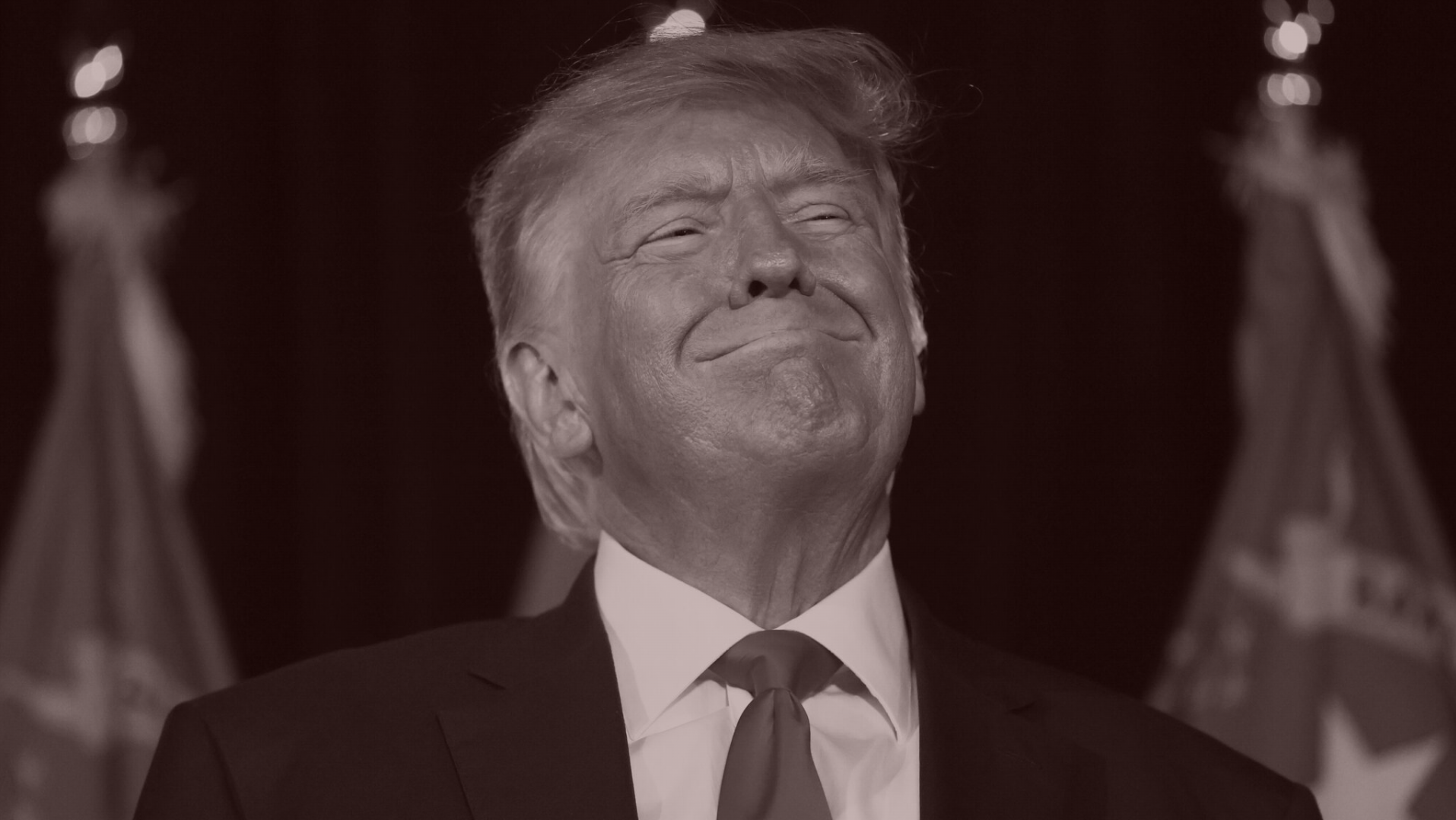 |
| Trump’s Premature Early-Voting Celebration |
| Fairly or not, the good vibes inside Mar-a-Lago are real, and multiple campaign sources have told me that they’re encouraged by early voting behavior so far in key battleground states. “It hit Trump in the last couple of weeks that early voting is a good way to win,” a person with knowledge of his thinking said. Here’s what the numbers really say. |
|
|
|
| While voters anxiously smack the refresh button on Nate Silver’s blog, the political class is currently obsessing over the early returns. Tens of millions of Americans have already cast their vote, including many more Republicans than in 2020. Donald Trump, of course, famously dissuaded his supporters from early voting or mailing in ballots during the pandemic, which ultimately gave a major turnout advantage to the Democrats. Since then, however, G.O.P. party leaders have made serious efforts to encourage their base to vote early too, despite Trump’s various soliloquies about the process being rigged.
It’s far too early to determine whether Republicans’ change of heart will pay off for the party, notwithstanding their auspicious initial data emanating from Nevada, Arizona, North Carolina, Georgia, and Pennsylvania. After all, early voting is still a relatively new practice in many key states, and returns from a once-in-a-lifetime pandemic aren’t useful context or precedent. There’s also the strong likelihood that most of these new early-voting Republicans were planning to vote on Election Day anyway, and simply found it more convenient to get it done ahead of time—meaning that the same burst of activity currently buoying the Trump campaign will be offset by fewer Republican votes on Election Day. Oh, and there’s a record number of women coming out to vote.
But that hasn’t stopped Trump or those in his orbit from some preemptive, obviously premature, celebration. “They’re very high right now,” said a campaign source. As Trump’s pollster John McLaughlin told me on my podcast last week, the chest thumping can be partly attributed to the fact that Trump, who is perpetually underpolled, has never been tied ahead of an election. “We're not used to this,” McLaughlin said when I asked why he interpreted polling within the margin of error as a win. “At this point in 2020, the Real Clear Politics average had us down 10. Even against Hillary, at this point we were down seven points, 48 to 41 nationally, and in all the battleground states we were down. So we’re used to being down now.” Instead, the latest poll of polls show Trump and Kamala Harris in a statistical dead heat.
Trump, an opportunistic early voting evangelist, now says he plans to vote early, himself. But he’s only become convinced of its merits—to him, of course—during this final stretch of the race. “It hit Trump in the last couple of weeks that early voting is a good way to win,” a person with knowledge of his thinking said. The campaign has been papering Pennsylvania with signs like, “Swamp them with votes,” “Make it too big to rig,” and “Vote early today!”
The bravado isn’t just a feature of the campaign—it’s part of the strategy. Some Republican operatives believe that a cohort of persuadable Trump voters are more likely to be activated if they believe that they are in the majority and supporting the winning team. (That may explain why the party touted a red wave in 2022, which didn’t quite come to fruition.) Meanwhile, the Democrats are predictably and constantly projecting anxiety—leveraging the trauma of a second Trump term to shock voters out of complacency. Indeed, as a Democratic pollster and Harris advisor John Anzalone told me earlier this week, the campaign is now deliberately attempting to reactivate Trump P.T.S.D. by reminding those remaining persuadables, independents, and soft Republicans about the chaos of the Trump years.
Whatever the case, the good vibes inside Mar-a-Lago are real. Multiple campaign sources told me that they’re encouraged by early-voting behavior so far. Still, there’s no illusion that it’s a done deal, especially in Pennsylvania, where among voters who requested mail ballots, Democrats outnumber Republicans by two to one. So to get a clear-eyed look at the numbers, I turned to some of the top, no-bullshit data crunchers in the battleground states where we have enough information for at least some toplines. Here’s what I’m hearing… |
| Nevada: Democrats in Disguise? |
|
| Thanks largely to the late, former senator Harry Reid, a quarter of all Nevada democrats have already voted by election day. But earlier this week, The Nevada Independent’s Jon Ralston reported a surge in early Republican voting, noting it was “the most unusual turnout pattern” he’s seen in the 16 years he’s been covering campaigns. Republicans haven’t won the state since 2004.
The Republican lead in early-voting turnout—by 4 percent, or just 1,200 votes—is coming from urban as well as rural counties. “If this pattern continues, when early voting ends a week from Friday, Republicans will have a ballot lead going into Election Day,” Raston told me. “Which has never happened in the past 20 years, and which could be ominous for Democrats, because they always lose on Election Day.”
Trump’s “no tax on tips” proposal was a “brilliant” play in Nevada, according to Ralston, where Democrats have traditionally relied on strong support from the unions representing restaurant, hotel, and casino workers. (Harris has since taken the same position.) A big unknown in Nevada are the 100,000 early independent voters. Nevada recently started auto-registering voters in 2020 as nonpartisan, so it’s hard to track how many of these registered voters will vote, and for which party. Ralston told me that the Democrats’ experienced ground operation is more likely to capture these voters than the slapdash Republican operation being run by Charlie Kirk and Elon Musk. “The independents could change everything,” he said. “The Democrats have been targeting independents and registering them, so they could be Democrats in disguise.” |
| Arizona: A Return to Norms |
|
| Voting early is a longstanding practice in Arizona, where 80 percent of residents vote by mail. And unlike in most of the country, more Republicans than Democrats tend to vote early. In 2020, when Republicans lost the White House, early voting numbers sagged and fewer Republicans voted early than Democrats. (Biden beat Trump by fewer than 20,000 votes.)
According to ABC News’ Garrett Archer, who has been tracking early ballots in the state since 2014, Republicans are back to voting early this year. “What we’re seeing is a return to norms,” Archer said. “The polls have a very clear trendline: The enthusiasm advantage is for Trump.” He noted that turnout is lower than usual for the Latino community, but it’s unclear if that’s a net-negative for Harris since they are becoming increasingly conservative. At the same time, public polling has shown that Democrats are making inroads with seniors. |
| Georgia: Reading the Record Highs |
|
| Early-voting turnout in Georgia is at a record 2 million, with several Republican counties doubling or even tripling their numbers from 2020, which was the first year that the state allowed early voting. Mike Pence was booed in an Atlanta exurb when he encouraged the practice.
The Atlanta Journal-Constitution’s Greg Bluestein told me that the behavioral change doesn’t necessarily reflect MAGA enthusiasm, per se, but rather the efforts of moderate Governor Brian Kemp, who has worked so hard to encourage early voting. “For Harris, she’s behind where she wants to be with Atlanta metro turnout, but they always vote later. They’re not too worried,” he said. “There is a concern from Democrats that it’s not as high as they want it to be.” A bright spot for Democrats: 33 percent more Black voters showed up on the first Sunday of early voting than in 2020, despite the Greensboro polling facility being closed, and urban and south Atlanta Black women are voting in-person at a 39 percent higher rate than four years ago. |
| North Carolina: The Wild Card |
|
| After seven days of early voting, Republican turnout is ahead in North Carolina by about 3,000 returns, a departure from recent history, when Democrats have typically led. The numbers represent a 15-point swing from 2020 for Republicans, who have also turned out a slightly higher percentage of voters who stayed home in 2020. According to Republican consultant Mike Rusher, Republicans still have more “dependable Election Day voters” left in the tank than Democrats. “If I’m sitting in the Republican headquarters and I’m looking at Election Day strategy, I’m looking at how I’m going to turn out low-propensity voters,” he told me. “If I’m looking at Democratic voters, they’re trying to turn out their base.” Democrats saw strong signs on the first day of early voting when as many Black voters showed up on Sunday as they did in 2020 during Covid.
Michael Bitzer, a political science professor at Catawba College in Salisbury, agreed. “It’s a significant shift,” he told me, but advised paying attention to unaffiliated voters, who make up 19 percent of new voters this year. “Republicans are doing well,” said Bitzer. “The wild card is these unaffiliated voters—and they’re coming out.” |
| Michigan & Wisconsin: All Noise, No Signal |
|
| Statewide early voting in Michigan doesn’t start until Saturday, but residents of Detroit, East Lansing, and Canton have started going to the polls. The 9,000 votes cast in person so far is too few to be statistically meaningful. Detroit has the highest return so far with absentee ballots, according to Rep. Debbie Dingell, with strong representation from the Black community. “It’s tight,” she said. “We have to turn people out.”
Twenty-seven percent of registered Democrats have requested absentee ballots, according to Democratic activist Patrick Schuh, who tweeted that this trend seems to be mirroring the Democratic advantage in 2020 and 2022, creating “a firewall,” he posted on Twitter/X, with Democratic vote-by-mail ballots likely outnumbering those cast by the G.O.P. by 489,000.
Meanwhile, early voting has been open for a little over 24 hours in Wisconsin, and voters in the state don’t register by party, so it’s hard to read the tea leaves. “There’s no red wave or blue wave in Wisconsin,” said JR Ross, a writer at WisPolitics. “Republicans feel they’ve got more enthusiasm to vote early in Wisconsin, but don’t listen to anybody who tells you that Democrats or Republicans have an advantage.” |
| Pennsylvania: Deep Breaths… |
|
| Finally, of course, there is the oh-so-crucial swing state of Pennsylvania. A previous three-to-one advantage for Democrats requesting early ballots has dropped to two-to-one this year—Democrats requested 1 million ballots and Republicans requested 500,000. And requests from both parties are down from 2020, a somewhat remarkable shift given the emphasis on Pennsylvania as the decisive state in the national map.
But then again, it’s no longer Covid. Democrats are encouraged by return rates from Philadelphia, which are four points higher than the rest of the state. And with the game being all about Pennsylvania, jitters will proceed through Election Day… and likely a few days after. |
|
|
|
| FOUR STORIES WE’RE TALKING ABOUT |
 |
|
 |
|
 |
|
 |
| Moore ’24 Warnings |
| A bracing chat with the Democratic governor of Maryland. |
| JOHN HEILEMANN |
|
|
|

|
 |
|
|
|
Need help? Review our FAQs
page or contact
us for assistance. For brand partnerships, email ads@puck.news.
|
|
You received this email because you signed up to receive emails from Puck, or as part of your Puck account associated with . To stop receiving this newsletter and/or manage all your email preferences, click here.
|
|
Puck is published by Heat Media LLC. 227 W 17th St New York, NY 10011.
|
|
|
|