{{ 'now' | timezone: 'America/New_York' | date: '%b %d, %Y' }} |
|
|
Happy Wednesday, everybody, and welcome back to The Best & The Brightest. I’m Peter
Hamby.
Tonight, we have exclusive new polling on the Republican side of the 2028 presidential race. The campaigning won’t kick off until after next year’s midterms, but we asked G.O.P. voters what they want from a post-Trump Republican Party, and prodded them on the early frontrunner, J.D. Vance. The V.P. has a dominant lead over his potential rivals, but our poll finds that Vance also has one major weakness that could spell doom for his
inevitable campaign.
Mentioned in this issue: J.D. Vance, Donald Trump, Hakeem Jeffries, Chuck Schumer, George H.W. Bush, Al Gore, Kamala Harris, Donald Trump Jr., Ron DeSantis, Marco Rubio, Nikki Haley, Ted Cruz, Jeff Roe, Hillary Clinton,
George W. Bush, Chris Whipple, Joe Biden, R.F.K. Jr., Kristi Noem, Glenn Youngkin, Marjorie Taylor Greene, Steve Bannon, Tucker Carlson, Peter Thiel, Steve Case, and more…
But first… |
|
|

| Leigh Ann Caldwell
|
|
- Healthcare chaos on the
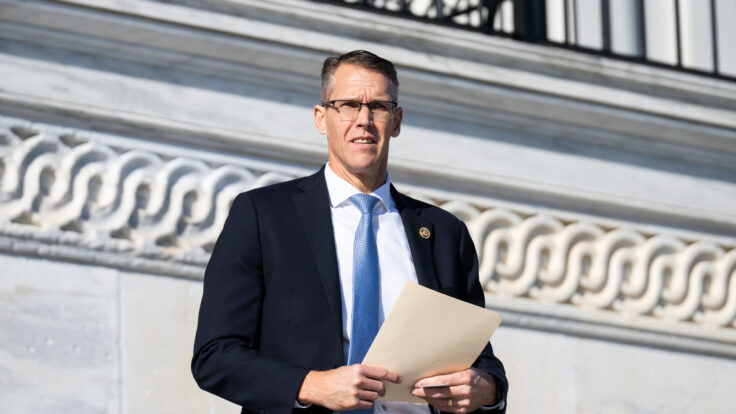
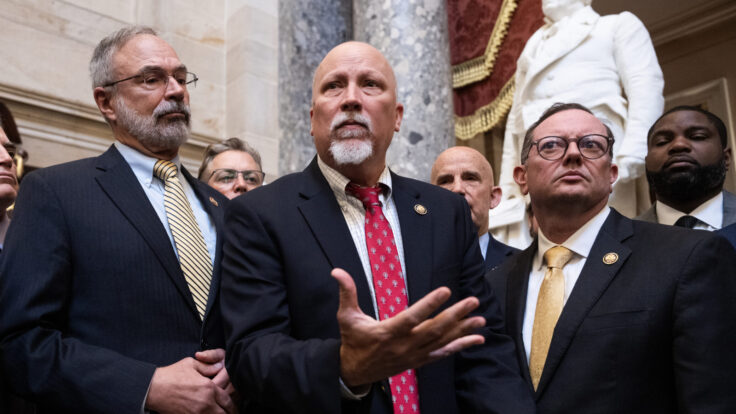
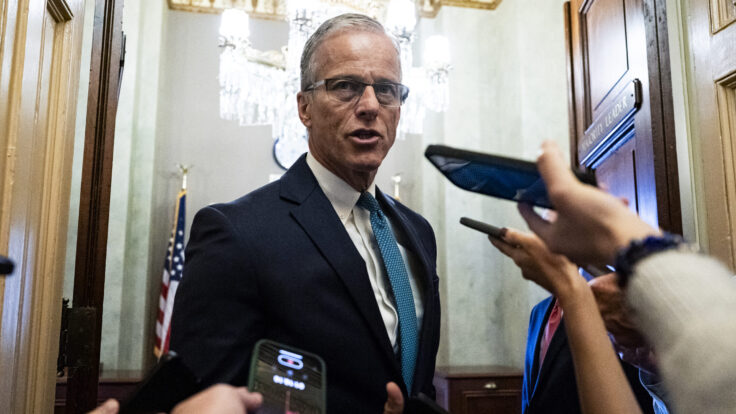
Hill: Today, four purple-district Republicans—Rep. Mike Lawler of New York, along with Reps. Brian Fitzpatrick, Robert Bresnahan, and Ryan Mackenzie of Pennsylvania—signed on to the Democrats’ long-shot discharge petition to extend Affordable Care Act subsidies for another three years. Afterward, I watched as two Democratic lawmakers in the palatial Speaker’s Lobby gave each other a fist bump, cheering 218—the number of
signatures needed for it to be brought to the floor. This is the second successful discharge petition to be supported by a majority of Democrats this year. (The other was to release the Epstein files.)
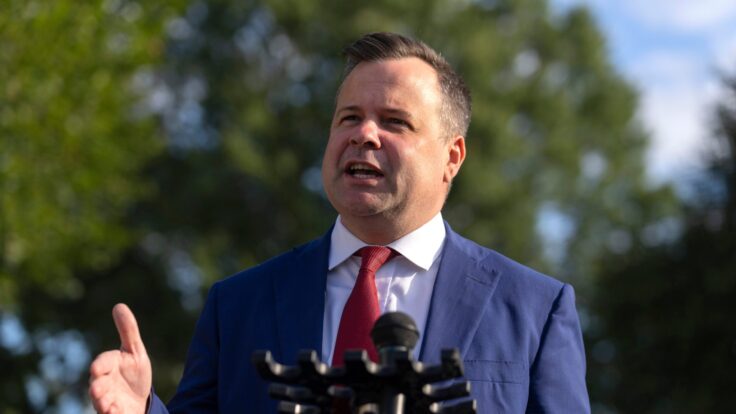
Lawler and his compatriots are blaming Republican leadership. “We wanted an up-or-down vote, and let the chips fall where they may, let the people’s business be done,” Lawler told me and a few other reporters. “And unfortunately, leadership found every way not to let that
happen.” Speaker Mike Johnson’s team says the moderates refused his requirement that an A.C.A. subsidy amendment include provisions to offset the cost and to nullify the discharge petition.
The vote will take place when lawmakers return in January—after the subsidies expire on December 31. But it’s an outcome that Democrats couldn’t have written any better. Republicans are in disarray, and the Democrats’ “messaging” bill is expected to pass the House.
|
|
|
A MESSAGE FROM OUR SPONSOR |
Wells Fargo is helping strengthen small businesses in our communities. That's why we announced a $20 million program in
2025 to support small business owners. Across the United States, we’re proudly: |
• Serving ~60
million customers and over 3 million small businesses. • Supporting our customers digitally and in person, maintaining over 4,000 locations, from the smallest towns and the biggest cities. |
|
|

| Abby Livingston
|
|
- Countdown to a Republican
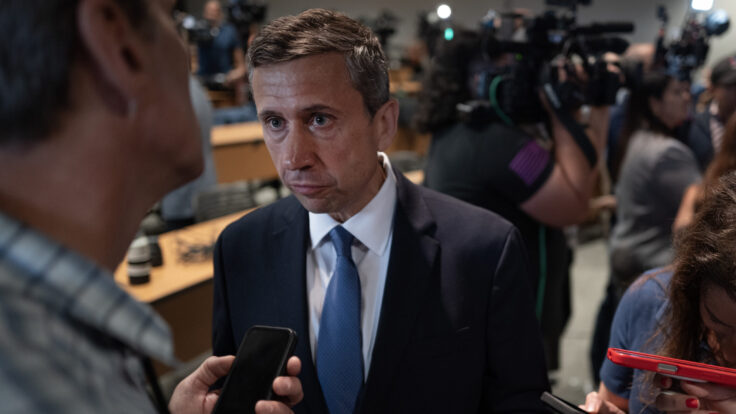
rebellion?: It’s been a rough fall for the House G.O.P. moving into a midterm year, and party operatives are bracing for more cracks in the coalition. Practically everyone in Republican politics has their eyes trained on the schedule of state filing deadlines—formerly sleepy nonevents that are causing headaches on both sides of the aisle this year. Proper form on the Hill, of course, is to alert party leaders early and not wait until just before the spring filing deadline—or, say,
suddenly announce a resignation mid-term, à la Marjorie Taylor Greene. Which means everyone on the Hill expects retirement announcements to come over the holidays—or during the first week back from recess in January. (Case in point, Washington Republican Dan Newhouse announced his retirement earlier today…)
The filing deadlines have broader political implications, too. If a G.O.P. incumbent can make it to that date without having drawn a viable
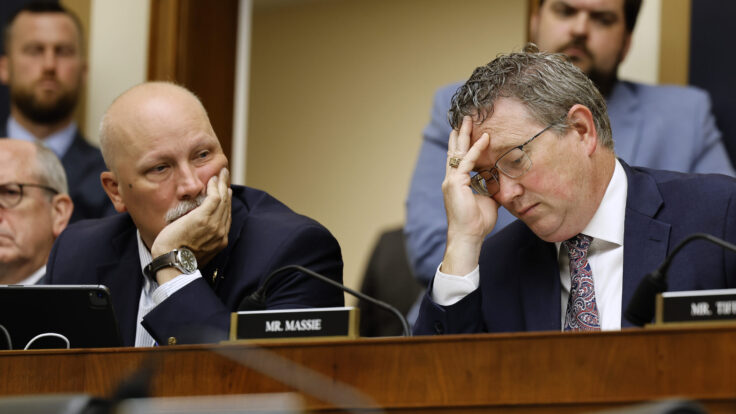
primary challenger, they’re probably in the clear for another full term—and the threat of a Trump-backed primary dissipates. House Republican operatives I speak to, pretty much to a person, anticipate that if the G.O.P. pushback to Trump on the Hill spreads beyond the retiring Don Bacon and the D.G.A.F. Thomas Massie, it’ll come once incumbents have that measure of political security.
Democrats care about the filing deadlines as well, but the dynamics are
different: A youthful offensive has been spreading against the party’s old guard, forcing incumbents into competitive primaries for the first time in many years. Just this morning, House Homeland Security ranking member Bennie Thompson drew a primary challenger in Evan Turnage, a former counsel to Chuck
Schumer.
The next dates circled on the filing deadline calendar are December 19 (North Carolina), January 9 (Kentucky), and January 31 (West Virginia). But the most interesting early state might be Indiana (February 6), given how toxic its politics became over redistricting. Expect more signs of rebellion to emerge as state deadlines stagger
into the spring.
|
|
|
Now, the latest from our exclusive Puck-Echelon poll… |
|
|
Everyone knows that J.D. Vance is desperately positioning himself to become Trump’s heir
apparent, and our exclusive data suggests that he has the field almost to himself. But his popularity depends on his closeness to Trump, who could change his mind at any minute, for any reason. |
|
|
When I
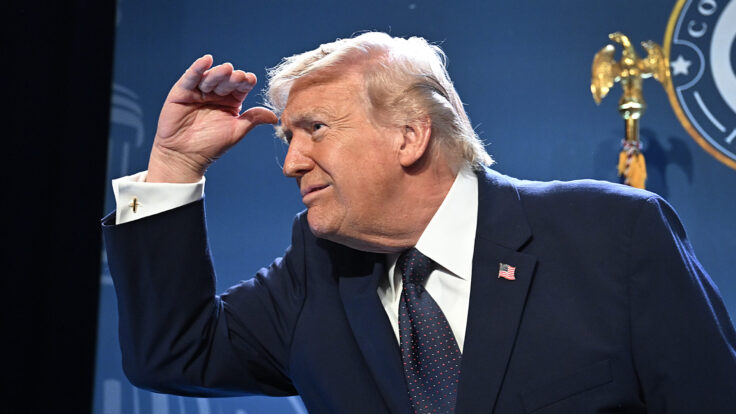
interviewed Hakeem Jeffries a few weeks back, he told me that Donald Trump had recently teased J.D. Vance in the Oval Office during government shutdown negotiations. Trump—apparently trying to spring a trap for Jeffries and Chuck Schumer in front of an official White House photographer—had an
aide hand out a pair of red “TRUMP 2028” caps and suggested the Democratic leaders try them on. “You don’t have a problem with this?” Jeffries asked the V.P., pointing to the new merch. According to Jeffries, Vance smiled and said, “No comment.” The president then gestured toward his V.P. and quipped, “Perhaps he needs some more training.”
Jeffries said the conversation then pivoted to the shutdown. But looking back on it, the House minority leader told me, it seemed like Trump was
implying that Vance “ain’t ready for what may come in 2028.” |
|
|
A MESSAGE FROM OUR SPONSOR |
Wells Fargo is helping strengthen small businesses in our communities. That's why we announced a $20 million program
in 2025 to support small business owners. What we say, we do. See how. |
|
|
Ain’t ready for Trump to run for a third term? Ain’t ready to run himself? There are a few ways one could
parse Trump’s implication. But the moment, as described, captured Vance’s essence pretty well. In public, a partisan attack dog, always spoiling for a performative fight—briggity, to use one of my favorite hillbilly terms. In private, a supplicant to Trump, full stop. In either case, Vance twists himself in knots to demonstrate fealty to the president through every news cycle and policy announcement, and he’s in the room for almost every big moment. That relentless obsequity—in full
view of everyone, including the satirists over at South Park—is exactly why he’s the frontrunner for the G.O.P. presidential nomination come 2028. It’s been that way since Trump tapped the much-younger Ohio senator as his running mate last summer at the Republican National Convention in Milwaukee.
But Vance isn’t next in line just because he’s vice president. Sitting V.P.s almost never win the top job after their boss steps aside. In the last 50 years, George H.W.
Bush and Al Gore have been the only two to win their party’s presidential primary; Kamala Harris joined that group in 2024, albeit under different circumstances. Vance’s political power really flows from his proximity to Trump—whose total domination of the Republican Party and pretty much every person affiliated with it is undisputed. Trump, of course, has not formally endorsed Vance this far out from the race, and hasn’t said if he will. Nor does it
take a political scientist or psychoanalyst to presume Trump will relish in making that process more fickle and excruciating than any episode of The Apprentice.
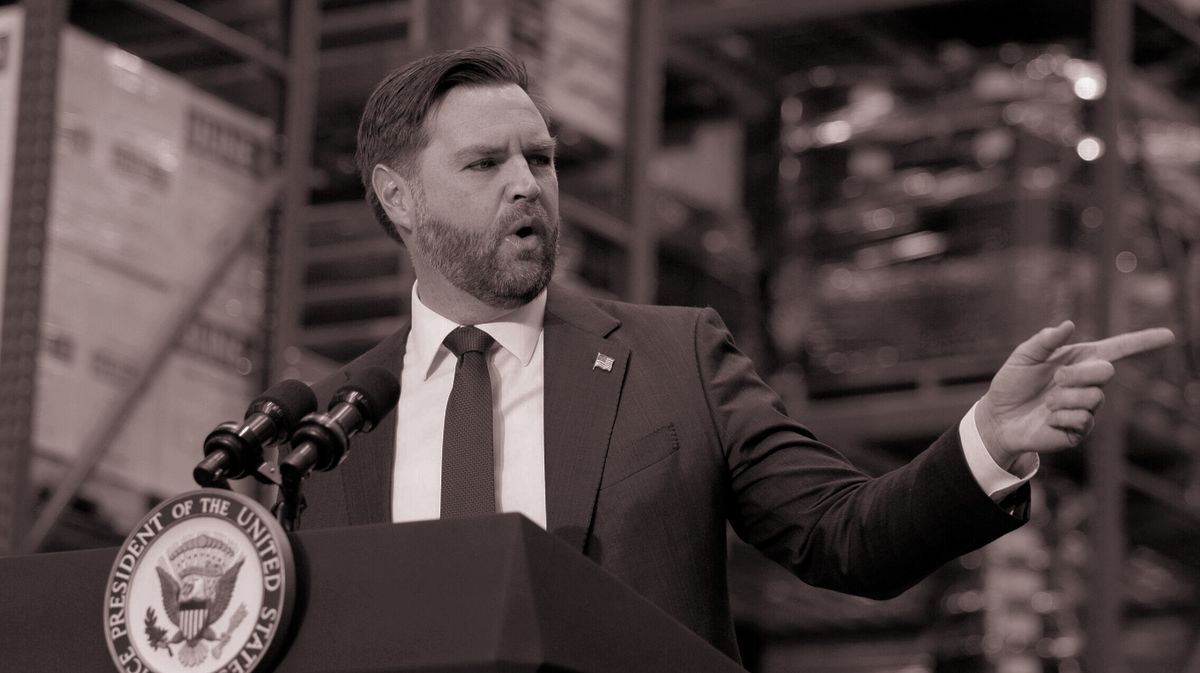
But right now, Republican voters see Vance as Trump’s political firstborn, making him the de facto MAGA standard-bearer heading into the next election. Our new poll out this
week, in partnership with Echelon Insights, shows Vance with a massive 33-point lead in a hypothetical 2028 primary over the next-closest possible G.O.P. candidate—Trump’s actual firstborn, Donald Trump Jr. In the survey, Vance is the choice of 45 percent of Republican voters, followed by Don Jr. (12 percent), Ron DeSantis (9 percent), Marco Rubio (4 percent), and Nikki Haley (4
percent), with everyone else in asterisk territory—including Ted Cruz (3 percent), who has been open about his desire to run for president again. (Jeff Roe, I hope you’re paying attention…) These numbers are consistent with other early polling on 2028, with Vance hovering around 50 percent and everyone else struggling to hit double
digits.
Few politicians in modern memory have held such a commanding lead in this wholly speculative portion of a presidential primary cycle—not Hillary Clinton in the earliest days of the 2008 Democratic race; not George W. Bush, who would go on to dominate the 2000 Republican primary. The only comp to Vance right now, really, is Trump, who led DeSantis by around 30 points at the outset of the 2024 primary’s polling cycle.
Vance’s polling
preeminence with Republicans right now is why other potential candidates are deferring to him any time the topic of 2028 comes up. Just take a gander at Rubio, who would give both kidneys to be the next Republican nominee. But pressed on the prospect by Chris Whipple in his delicious Vanity Fair profile of the Trump administration published this week, Rubio demurred. “If J.D. Vance runs for president, he’s going to be our nominee,” he told Whipple, “and I’ll be one of
the first people to support him.” |
The Trump 2024 example aside, starting off as the frontrunner in any primary is fraught with peril. History
shows there’s often nowhere to go but down. Rivals inevitably launch attacks that drag down the frontrunner’s popularity, televised debates and news events can expose unforeseen frailties, and the issue matrix can change from the economy to immigration to foreign policy on any given day. Vice presidents also face the burden of answering for the shortcomings of their boss, as Harris learned the hard way in last year’s general election when she failed to distance herself from Joe
Biden.
While it’s possible, even likely, that Trump will be a liability for any Republican general election nominee in November 2028, the primary is a different ballgame entirely. Despite some slippage with G.O.P. voters frustrated with his handling of the economy, Trump is still overwhelmingly popular inside his own party, with an approval rating of 87 percent among Republican and Republican-leaning voters. It’s not surprising, then, that our poll with Echelon finds Vance to
have considerable strength with G.O.P. voters compared to other potential candidates. He’s not as popular as Trump, but Vance’s favorable rating among Republicans is a sky-high 83 percent. Only 11 percent of G.O.P. voters have a negative view of the vice president.
Compare Vance’s favorable rating among Republicans to other White House wannabes who may show up in Iowa and New Hampshire in the next few years: Trump Jr. (76 percent), Robert F. Kennedy Jr.
(74 percent), Rubio (70 percent), Cruz (66 percent), Kristi Noem (53 percent), and Virginia Gov. Glenn Youngkin (32 percent, with most saying they don’t know much about him). With the exception of Marjorie Taylor Greene—whose favorable rating among Republicans now stands at a dismal 26 percent—those numbers are all perfectly fine for anyone considering a 2028 run. But Vance’s reputation with Republicans thumps all of them, for now. (It should be
noted here that all of these politicians have rather putrid poll numbers with Americans generally, including Vance, who has a 43 percent favorable rating among all voters, the same as Trump.) |
|
|
Also boosting Vance with Republicans is his stalwart support of Trump, even as the president finds himself
underwater with the larger electorate on pretty much every issue. We asked Republicans: Which of the following would make you more likely to vote for a given Republican candidate? A huge majority (68 percent) said they’d be more likely to back a candidate who “is fully aligned” with Donald Trump, compared to just 13 percent who said they would support a candidate who “is no longer supportive of and aligned with Donald Trump.” |
Despite his early high ground, Vance, too, has vulnerabilities that could be exposed over the next three
years—chief among them his perceived coziness with tech leaders and the A.I. industry, an increasingly toxic position with voters. The Trump administration’s unblinking embrace of the artificial intelligence industry and its scale-hungry billionaire kingpins has alarmed plenty of prominent Republicans and America First populist types, including Steve Bannon, Tucker Carlson, and DeSantis, who worry about A.I.’s potential to displace millions of workers and
inflict harm on children and human relationships.
Vance, meanwhile, has emerged as an evangelist for the industry. As a self-styled tech savant and a briefly tenured V.C., who got a shine from Peter Thiel and Steve Case, Vance quickly became one of the administration’s top A.I. cheerleaders. In February, Vance addressed the Artificial Intelligence Action Summit in Paris and hailed the technology as an unimpeachable good. “Too many of the leaders in the
A.I. industry, when they talk about this fear of replacing workers, I think they really missed the point,” Vance said. “A.I., we believe, is going to make us more productive, more prosperous, and more free.”
Almost every poll shows that voters disagree. In our survey, we asked Republicans if they’d be more or less likely to support a candidate “aligned with tech and A.I. leaders.” Only 31 percent of G.O.P. voters said they would, versus 45 percent who said they would support someone who
“is skeptical of tech and A.I. leaders.”
When it comes to the tech industry, Vance, like his boss, is caught between two competing factions. On one side is the Republican elite and their fealty to big business. On the other is the populist right and their calls to protect American workers at all costs. Vance at least finds himself on the right side of the G.O.P. electorate on one protectionist issue—tariffs—a policy he has championed alongside Trump. Voters in our poll said they’d be far
more likely to support a Republican candidate “who supports protectionist trade policies such as tariffs” (59 percent) versus a candidate “who supports free trade policies” (27 percent). But of course, Vance’s pals in the tech industry fall squarely into the latter camp—highlighting the tricky balance he will have to strike if he decides to seek the presidency.
The question of how Trump approaches Vance in the coming Republican primary is a compelling one. The president is supportive of
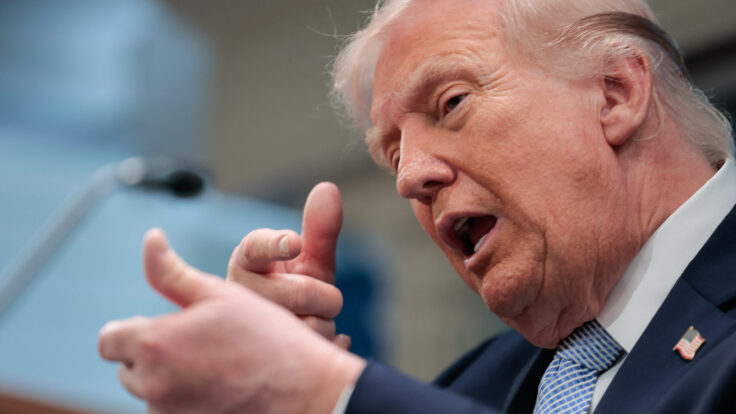
him now, sure. But with Trump, loyalty is rarely a two-way street. More than a few Republicans I’ve chatted with lately have told me that Trump could easily sour on his vice president at any point between now and the first primary of 2028, for reasons only he would know. Still, whatever happens, it’s hard to see Trump sitting quietly on the sidelines as the race to replace him kicks off after next year’s midterms. Our poll found that if Trump does decide to endorse a candidate, it would
be almost decisive: 69 percent of Republicans said a Trump endorsement in 2028 would make them more likely to vote for a candidate in a primary, versus 12 percent who said it would be a turnoff.
And there’s this (shock poll alert!): Almost half of Republicans would be content to see Trump run for a third term at the ripe old age of 83. Echelon found that 44 percent of Republican voters would support amending the Constitution to allow Donald Trump to do so, while 51 percent said
they opposed the idea. |
|
|
Join Puck’s chief political columnist, John Heilemann, as he roams the corridors of power and influence in America on this
twice-weekly interview show, taking you beyond the headlines with the people who shape our culture: icons and up-and-comers, incumbents and insurgents, moguls and machers in the overlapping worlds of politics, entertainment, tech, business, sports, media, and beyond. The conversations are rich and revealing, unrehearsed and unexpected… and reliably impolitic. A Puck-Audacy joint, new episodes drop every Wednesday and Friday. |
|
|
The industry’s go-to source for unflinching reporting on the trillion-dollar business of artificial intelligence - perhaps the
single most important technology of our time. Ian Krietzberg, the powerhouse journalist behind The Deep View, delivers twice-weekly insights into the latest dealmaking and breakthroughs in A.I., and how the intersecting worlds of finance, entertainment, media, and politics are being transformed in its wake. |
|
|
Need help? Review our
FAQ page or contact us for assistance. For brand partnerships, email ads@puck.news.
You received this email because you signed up to receive emails from Puck, or as part of your Puck account associated with {{customer.email}}. To stop receiving this newsletter and/or manage all your email preferences, click here.
|
Puck is published by Heat Media LLC. 107 Greenwich St., New York, NY 10006 |
|
|
|


_01KC5C4Q5EPZZ2305F23RE8BYK.jpg "Wells Fargo")
_01KC5C4P5K8BYS34NWZS83XAN9.jpg "Wells Fargo")