
Join Puck to listen to this article
Last week, with their eyes on this year’s World Cup and the 2028 Olympics, Los Angeles officials celebrated a major new expansion of the city’s subway line—yes, we have a subway!—opening three new stops along Wilshire Boulevard and extending the rail line west toward UCLA. The D Line is a much-welcomed addition to the traffic-addled city, and a source of pride to the many civic leaders who took part in a victory lap.
But the project, which arrived years overdue and overbudget, has also stood as an emblem of L.A.’s slow-moving civic culture. It was originally conceived almost six decades ago, broke ground in 2014, and only came to life after years of tedious construction headaches, environmental reviews, labor issues, and jurisdictional conflicts between the various political fiefdoms that occasionally manage to govern the region. For Karen Bass, though, the subway opening was a sign of something else: plodding but tangible progress for the city of Los Angeles—a theme that happens to rhyme with that of her troubled reelection campaign this year. “This is the kind of infrastructure that shapes a city’s future,” Bass said of the opening.
Spencer Pratt, one of Bass’s opponents in the mayor’s race, visited the D Line the same day and saw something different: Poop. “Transportation is a beautiful idea when there is no human urine, human poop on there. A drug addict’s butt hanging out!” Pratt said on the All In podcast this week, one of his many stops on the anti-woke audioverse circuit. “Who cares how many Metro lines it connects to? It could connect to the moon right now. But if drug addicts are smoking fentanyl next to your kid, you aren’t going to the moon on it.” Pratt said he can’t even open his phone anymore because “every single person in L.A.” now sends him photos of drug addicts, fentanyl “zombies,” human feces on the street, homeless people sleeping next to school entrances. “I’m like 311 now,” Pratt said. “It’s crazy.”
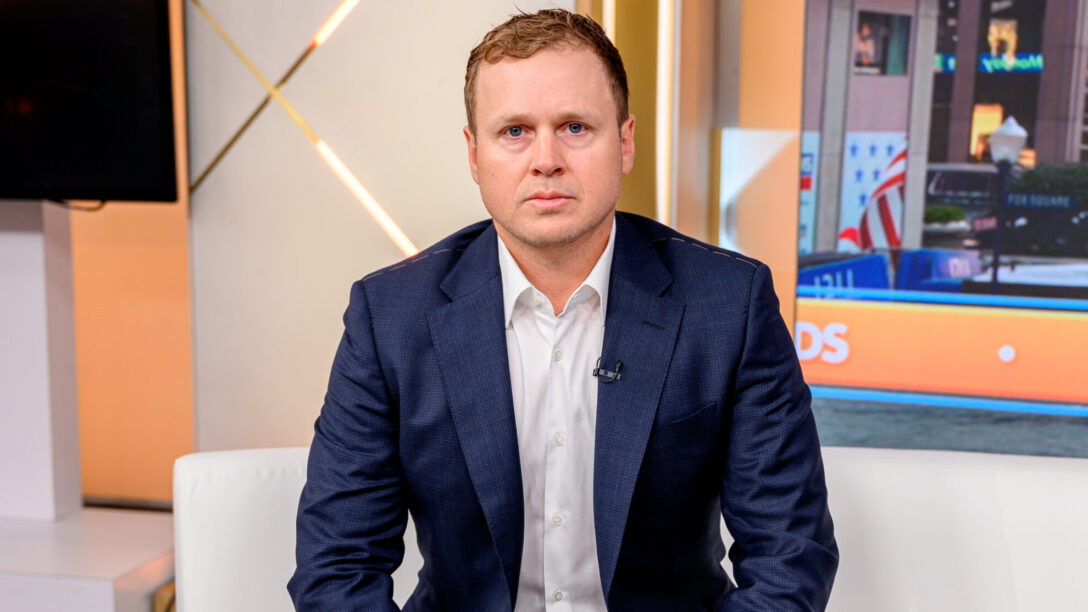
Harsh? Amusing? Trumpy? Sure. All of the above. But this is precisely the kind of unvarnished real talk about L.A.’s visible squalor that has propelled Pratt—the former MTV reality show villain turned hummingbird influencer turned Palisades fire victim—into unlikely contention in the mayoral race this spring. An attention hustler with instinctive Millennial social media talents, he has broken through with straight-to-camera rants and statistics about the city’s most visible pain points—and the failure of polite progressive politicians to do anything about them. For all the talk in Washington about new media tactics, Pratt has arrived on the scene as the country’s most fully formed influencer candidate, running in a political moment when authentic, off-the-cuff content creation has become the coin of the realm.
Pratt films everything on his phone and posts constantly on his social media accounts—2.4 million followers on TikTok and 1.5 million on Instagram, many more on X and Snapchat—which is how he managed to stay quasi-relevant long after MTV packed up its cameras. In his endless stream of videos documenting the city’s various tent encampments and open-air drug dens, Pratt often calls the mayor “Karen Basura”—basura being the Spanish word for trash. As anyone who has followed him on social media since the Palisades fire knows, Pratt’s contempt for city leadership, and their inability to save his house from the blaze, is deeply personal. He blames Bass for a range of managerial sins and absentee leadership, including leaving the Santa Ynez reservoir empty before the wildfire, depriving the Palisades of precious water to fight back. Like many fire victims, Pratt blames city and state leaders for mishandling recovery funds and failing to accelerate the rebuilding process. And he blames Democrats for even more: slow police response times, animal abuse on Skid Row, homeless drug addicts showing up next to schools and playgrounds. Angry moms, he says, are the backbone of his campaign.
At some point over the last year, more and more people in Los Angeles started listening to Pratt instead of the mayor. The attention he garnered from angry locals, as well as Republicans on Capitol Hill who brought him to testify about the fire response, soon blossomed into his campaign to “Save Los Angeles.” And when billionaire developer Rick Caruso decided not to run again against Bass, leaving the law-and-order lane wide open, Pratt decided to flip a switch and turn his social media accounts into a new kind of political campaign. “I was hoping someone else would step up and fix this mess,” Pratt told the crowd at his February announcement event. “But now you have entrusted me to do the job. I take this responsibility seriously.”
The Guy You Loved to Hate
It might sound discordant for people who know him from his dickhead star turn on MTV’s The Hills alongside his now-wife, Heidi Montag, or as the guy who spent years posting videos of hummingbirds buzzing around his old house, but Pratt’s audience takes him quite seriously. Yes, it’s dominated by wealthy white people on the city’s Westside with nannies and gardeners and anti-woke tendencies galore. But for all the Trump comparisons, Pratt is more likely to invoke San Francisco’s popular Democratic mayor, Daniel Lurie, who has won centrist plaudits for cracking down on homelessness, than the culture warrior in the White House.
Pratt is a registered Republican, but the race is officially nonpartisan, and he is aggressively reaching out to Democrats as he yaps his way through interviews and campaign stops. “The progressive left paints anyone that wants to vote for Pratt as MAGA,” said one well-connected Democrat who is rushing to organize a fundraiser for Pratt. “That could not be further from the truth. We are doing it for our kids and our safety. It’s personal. It has nothing to do with politics.”
Still, like plenty of moderate Angelenos I talked to for this story, this person didn’t want me to attach their name to a quote. At least not yet. “It’s easier to quietly vote for Pratt than convince our friends that it’s time to wake up,” this Democrat told me. Pratt might be surging in the polls, and the city’s left is dangerously divided heading into an open primary on June 2. But Los Angeles remains overwhelmingly liberal—Bernie Sanders outran Joe Biden in the city back in the 2020 primary—and the city is spectacularly diverse beyond the Westside whites and Republican base gravitating toward Pratt.
Some of Pratt’s big (and vague) ideas around public safety sound draconian and impossible. Last weekend, for instance, he told a small gathering in Brentwood that his plan for homelessness included building a massive “campus” on the outskirts of the city, funded by a friendly billionaire, where people on the street could be moved. The person who was there and recounted this story to me rolled his eyes. But to other voters, Pratt is speaking with a much-needed dose of common sense. Which is why a lot of people in Los Angeles are starting to wonder whether Speidi can really make it to City Hall.
All About That Bass
It was Pratt’s surprising performance in an NBC4 debate last week that confirmed his status as the change candidate in a race against two status-quo Democrats on the stage next to him. There was Bass, the beleaguered incumbent mayor whose approval ratings tanked after her hapless response to the wildfires, forever defined by her trip to Ghana despite very public warnings about the fire threat. And there was Councilwoman Nithya Raman, the homelessness advocate and progressive darling from Silver Lake.
Raman, backed by friends in the entertainment industry (Adam Scott, Mindy Kaling) and some qualified support from the local Democratic Socialists of America movement, was supposed to be this year’s exciting alternative to Bass. The New York Times heralded her as the next Zohran Mamdani when she jumped into the race in February. But Raman has stalled out, failing to clearly articulate why she’s running beyond her own ambition, and looked unprepared on the debate stage while Pratt razzed her as a “random city councilwoman” whose tolerant solutions for street homelessness are out of touch with reality. “Councilwoman Raman’s plan for ‘treatment first’?” Pratt said. “I will go with her below the Harbor Freeway tomorrow and we can find some of these people she is going to offer treatment for. She will get stabbed in the neck. These people don’t want a bed. They want fentanyl or super-meth.” Raman looked rattled and never recovered, complaining to reporters after the debate that she was getting attacked by both of her opponents. Pratt, meanwhile, was going viral.
Pratt and Raman are clawing at each other because both are gunning for a second-place finish and the chance to face Bass in a head-to-head race in November. Because of the city’s blue lean, Bass would much rather run against Pratt, a registered Republican, than Raman. It’s now an open secret in L.A. that Bass and her supporters very much want Pratt to lap Raman in the primary—and are happy to join with Pratt in calling out certain Raman votes on the City Council. “Nithya Raman is running a citywide campaign for mayor like it’s just a big Silver Lake DSA campaign,” Bass strategist Doug Herman told me. “She’s doubled down, voting recently to cut the police force and to allow homeless encampments near schools.”
If Bass wins again, it won’t exactly be a political comeback—it will be a miraculous feat of survival. The mayor’s support in the city collapsed after the fires, and most prognosticators (including me) figured her career was toast. A UC-Berkeley/Los Angeles Times poll in March put her job approval at just 31 percent, close to her share of support in recent horserace polls. A Bass victory—whether against the outsider rascal or the upstart progressive—will be testament to the power of Democratic coalition politics. Both of her rivals have a certain appeal with educated white people of different political stripes, but neither has much of a reputation in Black or Latino communities outside of their home turf. Bass has been a fixture in South Los Angeles politics and organizing since the 1980s. “The most common question I get about the mayor’s race in South L.A. is, ‘Who are these people running other than the mayor?’” said Marqueece Harris-Dawson, the City Council president, who has endorsed Bass. “’Who is this city councilwoman? Who is this guy from the Westside?’ The mayor has been there.”
Despite her overall unpopularity, Magic Johnson re-endorsed Bass this week, a reminder that nonwhite voters might feel squeamish about kicking the city’s first Black female mayor out of office. Major unions and activists from the Latino community are also backing Bass, along with big names like Kamala Harris and Adam Schiff, as well as the police union that opposed her campaign four years ago. Bass has started to air television ads during Dodgers and Lakers games, pointing to her successes: a two-year reduction in homelessness, hiring more police officers, reducing violent crime, and standing against ICE raids. But as she approaches the primary, Bass is stressing to voters that she hears their concerns about public safety. “Statistics are great,” she said Tuesday at an event flanked by LAPD officers. “But what is important is how people feel in their communities. We still have work to do.”
Raman, meanwhile, called Pratt a fascist this week as her allies began to ramp up their attacks on social media, hoping to make him unpalatable to voters. Given that Pratt has been on camera for more than 20 years, there is material to work with. The Hollywood writer Travis Helwig recently surfaced clips of Pratt palling around on a beach with conspiracy-monger Alex Jones after the Sandy Hook shooting. And TMZ reported this week that Pratt has been staying part-time at the pricey Hotel Bel-Air, not in the Airstream trailer on his Palisades property that he featured in his first campaign ad. (Pratt FaceTimed into TMZ to joust with Harvey Levin after the story posted, saying that he’s been working nonstop during the campaign and reminding viewers that yes, his house burned down.)
Jon Favreau of Crooked Media, who is supporting Raman, has been groaning at the Pratt hype machine. “There’s nothing especially new or impressive about a rich celebrity looking to get even more fame and attention by preying on people’s legitimate anger with the political establishment,” Favreau told me. “It’s a lot harder to actually fix shit, which he’s demonstrated zero ability to do, which is why the most plausible outcome of his campaign could be reelecting Karen Bass.”
Raman has a lot of work to do. She lacks much of a political base beyond her district, stretching herself thin as she tries to appease the various factions of the city’s left: pragmatic moderates fed up with Bass, Abundance reformers and YIMBY housing advocates, and the DSA purists who think Raman isn’t enough of a class warrior. As for the Zohran comparisons? It turns out Pratt is the one with Zohran’s skill set, not Raman.
The Long Shot
The previous mayor’s race between Bass and Caruso, in 2022, captivated the press with a running storyline about a divided Tinseltown. Celebrities and Hollywood power players were choosing sides, raising money, and available for comment on why Bass or Caruso was better prepared to confront the city’s many challenges. Ari Emanuel, J.J. Abrams, Jeffrey Katzenberg, Donald Glover, Magic Johnson, and Steven Spielberg lined up for Bass—the lifer Democrat who ultimately won the race with Barack Obama’s endorsement. Caruso, the independent-turned-Democrat and self-styled reformer, had the backing of Ted Sarandos, Kim Kardashian, Gwyneth Paltrow, Katy Perry, Scooter Braun, Bryan Lourd, and Dana Walden.
This year, few A-listers want to be anywhere near what has become a joyless campaign. A few big names are back again for Bass, but Katzenberg, who ran an independent expenditure campaign for her in ’22, and also defended Joe Biden until the bitter end, is licking his political wounds. Last year, Emanuel told me Bass was guilty of “dereliction of duty” for traveling abroad just before the fires. But he didn’t respond this week when I reached out to him to get his latest thinking. Elsewhere, Bass is just too unpopular—borderline toxic—among the many well-connected people who lost homes in the Palisades.
Raman, meanwhile, has connections with a younger generation of entertainment types—her husband is a screenwriter—but none of the megastars who played ball in the 2022 campaign. And Pratt is too Republican and too populist for many rich libs in Hollywood, even the ones who may privately agree with his crusade. It’s not hard these days to find Pratt-curious Democrats who are done with Bass—but many of them just don’t want to say it publicly. Here’s what one quite famous person said when I texted over the weekend asking if they, or anyone they know, would want to be quoted supporting Pratt: “Nobody who would go on the record. But everyone hates Bass.”
Pratt’s schedulers have been telling new donors interested in hosting events that his fundraising itinerary is booked up through the primary, reflecting the surge of new interest. In the last week, Pratt has raised nearly half a million dollars from small donors online, an eye-popping sum for a long-shot mayoral candidate in a liberal city. Among Pratt’s recent donors: filmmaker and Trump wingman Brett Ratner, former Activision C.E.O. Bobby Kotick, Lakers owner Jeannie Buss, hedge fund manager Dan Loeb, the father-son music executives Lucian and Elliot Grainge, Tinder co-founder Sean Rad, L.A. nightlife honcho John Terzian, and John Shahidi of Nelk Boys fame.
Another big name surfaced this week in Pratt’s donor reports: Haim Saban, the entertainment magnate and friend of the Clintons who, along with his wife Cheryl, has given tens of millions to Democratic candidates and causes over the years. Saban is also a major supporter of Israel and pro-Israel causes in a city where Jewish voters have drifted rightward since the Hamas attacks of October 7, with many citing rising antisemitism on the left. Support for Trump, for instance, surged in many Jewish neighborhoods in Los Angeles in 2024.
While Pratt plainly doesn’t have Bibi on speed dial, he recently called antisemitism “a mind virus” and promised to put more LAPD officers near synagogues. Several Jewish Democrats have told me that their friends and colleagues were quietly backing Pratt. “In this post-October 7 world, many of my otherwise politically sophisticated Jewish cohorts would not usually be taken in by Spencer Pratt,” said one prominent Jewish entertainment executive active in political circles. “Now, he is the choice du jour of every Jew from south of Pico to the Hollywood Hills.”
Pratt has been working the Westside H.N.W.I. circuit hard lately, holding gatherings in backyards and living rooms, hoping to capitalize on his new momentum and convince skeptics that he can pull off a miracle and unseat Bass. At a recent small event in Brentwood with about 20 wealthy Westsiders, I’m told, Pratt acknowledged his long odds against Bass in a head-to-head race, but expressed some hope that he could catch Democrats by surprise by winning outright on June 2. (That’s far-fetched, of course. A candidate would need to reach 50 percent of the vote to avoid a runoff. In the most recent Emerson poll, Pratt is sitting at 22 percent.) With early voting underway in California—ballots are sent out by mail—Pratt told the group that campaign supporters are helping to chase down ballots and get them in before the primary.
But it’s a heavy lift. Back in 2022, Caruso also ran against Bass by promising to “clean up L.A.,” funding his campaign with his own billions, supported by celebs, and campaigning alongside validators in Black and Latino neighborhoods where he has long done philanthropic work. Unlike Pratt, he ran as a Democrat—and still came up 10 points short in the runoff. “I don’t think Spencer is going to win, but Karen has been feckless,” one person who attended the Brentwood gathering told me. “The question is whether people in East L.A. are as mad at her as rich people in Brentwood. But it’s also crazy we are having this conversation. Spencer Pratt?”