
Join Puck to listen to this article
The Democratic Party’s long-overdue embrace of new media, after their electoral drubbing last November, has had mixed but entertaining results. Plenty of Dems have gone viral in the wrong way. There was Chuck Schumer’s weird, off-brand, full-caps tweet last week that read, “Is Epstein the real reason Trump had Kimmel Canceled?!” There was the group of House Dems who posed for an awkward “choose your fighter” TikTok video during the height of the DOGE wars, leaping on a hot trend from two years ago. And who could forget Elizabeth Warren’s ill-conceived foray into the unpredictable podcast waters back in April, where she stumbled repeatedly when Talk Easy host Sam Fragoso asked multiple times why she defended Joe Biden’s fitness for office in 2024.
There have also been bright spots. Senate Dems racked up millions of views with a synchronized vertical video response to Donald Trump’s State of the Union earlier this year, winning the battle for attention against Republicans for a precious few hours, at least. In Michigan, Senate candidate Mallory McMorrow went mega-viral across platforms when she dropped a video on NFL opening weekend attacking Republicans over rising prices for gameday snacks. In New York, Zohran Mamdani took off in the mayor’s race thanks to his cheery explainer videos about the cost of living. Ro Khanna recently dialed into a gamer livestream to talk about child safety concerns on Roblox. And, of course, Gavin Newsom, the California governor/podcast host, has catapulted to the top of the 2028 polls by waging a social media troll war against Trump on the heels of local ICE raids and his own crusade to gerrymander California in response to G.O.P. redistricting elsewhere.
But whether they stumble or succeed, all of these efforts amount to a healthy round of batting practice for Democrats, who squandered their onetime dominance on the internet during Trump’s three campaigns. After the 2024 loss, I talked to Brian Tyler Cohen, the progressive content maven, who told me that “hopefully the silver lining out of this will be that Democrats finally recognize the media environment that we actually live in, and operate accordingly.” Democrats and their staffers might not be winning the attention wars right now, but it’s inarguable that they finally got the message. Now they’re taking important risks after too many years of booking hits on cable shows with vanishingly few viewers.
The Martin Chronicles
Last month, a Democrat I’d never heard of appeared on one of my various timelines. He was blasting Trump in unusually harsh terms for a congressional hopeful, calling the president “sick, sadistic, and senile” during a candidate forum at a South Houston Baptist Church, then telling an audience at another forum that Republicans “are literally trying to make sure that we don’t ever have an election again.” The videos were chopped up and blasted out across platforms, collecting hundreds of thousands of views in the process.
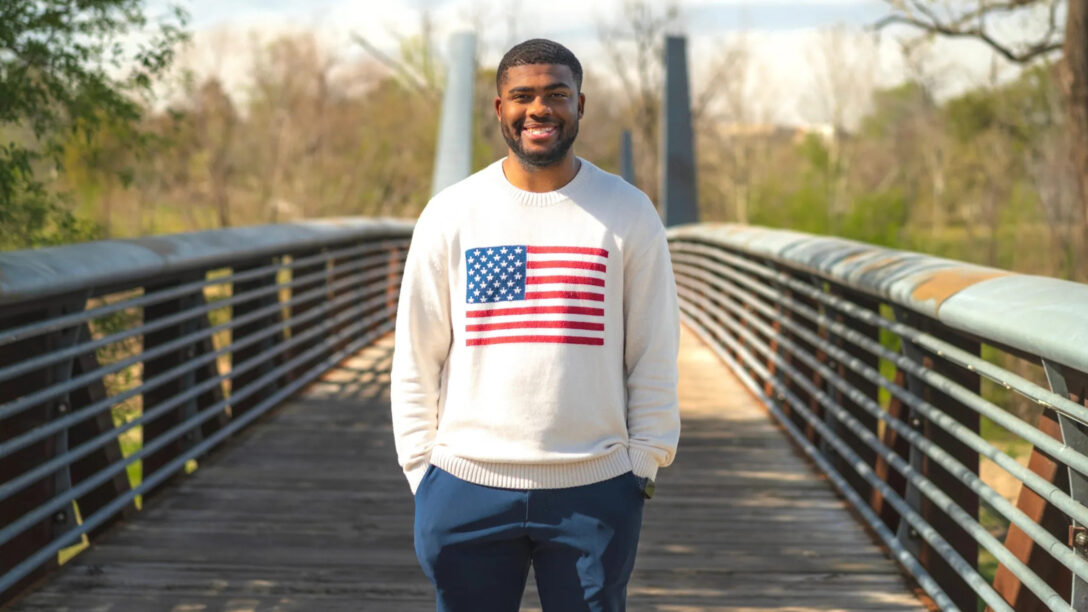
The orator’s name is Isaiah Martin, and he’s one of several Democrats vying to replace the late Sylvester Turner in Texas’s 18th congressional district. He’s only 27, a political organizer, and a former aide to the late Rep. Sheila Jackson Lee, with a perspective informed by a contempt for traditional politics shared by many in his generation. He’s urging Democrats to stop talking about bipartisanship while Trump seems to be gleefully abandoning every norm and tradition. “When they go low, we go to the ditch,” Martin told me recently over Zoom. “You can’t just sit back and be a punching bag while Republicans are just literally jabbing at us left and right.”
To be sure, his candidacy is not a sure thing in a crowded and wide-open primary for a special election this November. While Martin is the youngest candidate in the field—one of those Zoomer/Millennial cuspers—there are other young, compelling candidates, including Harris County Attorney Christian Menefee, energy lobbyist Zoe Cadore, and former Houston City Council member Amanda Edwards.
But Martin’s approach to new media is a differentiator, and worth watching. He’s gambling that he can win a campaign by thinking like a content creator first and a traditional candidate second, by producing a weekly avalanche of straight-to-camera vertical videos with or without production help from his staffers. “This is organic reach that we’re getting,” Martin told me. “It’s not like we have a bunch of folks boosting our stuff. It’s just people in the algorithm seeing what we do.” He said he doesn’t keep a content calendar; sometimes he’s scripted, sometimes he isn’t. “I pick up a $70 microphone—it’s literally right here—and I just talk to people directly.”
In August, Martin said, his campaign collected 40 million views across platforms. He has half a million followers on TikTok and almost a quarter million on Instagram. He also hosts nightly live chats on TikTok, which he said average around 30,000 viewers. “I have a lot of non-college folks in particular that watch my TikTok Lives,” he said, including people who say they’re joining from a job site in Houston on their break just to say hello. “I think a majority of those people voted for Trump, but then they’re also really excited about my campaign.”
Any reasonable campaign professional would respond to Martin’s enthusiasm with a simple critique: Okay, but how many of these viewers actually vote in your district? Martin acknowledged that many of his viewers aren’t in his district or even his state, but he maintains that his online efforts only complement his offline campaigning. “We take high-school football games really seriously, for instance,” he said. “Games are just a really big meeting of people that live in the district. I promise you for a fact that people come up to me and say, I see you on Instagram, or, I like your content because they want somebody that’s going to be aggressive against Trump. That’s literally one of the top things that’s on people’s minds. People of all ages. Older voters too.”
When They Go Low…
Martin’s success online is a useful case study for other Democrats. Because gaining ground on the internet isn’t only about testing new digital tactics—it’s also about pushing into those spaces with fresh-faced talent, and content that somehow appeals to the powerful recommendation algorithms fueling what voters see on their phones. It’s both the media and the message. It would be much harder, for instance, for an aging senator to go viral with an explainer video about Trump’s meddling with the Bureau of Labor Statistics. But Martin’s clips and his language are clearly primed to generate outrage and virality, and they’re having offline effects: He told me he’s raised money from roughly 33,000 individual donors this quarter, a respectable number for a first-time candidate in a crowded House race.
When I talked to Martin, he insisted that Democrats must give up on the idea that Republicans are worth saving, or even being polite to. He views Trump’s Republican Party as simply a threat to the nation that must be stopped—and, in the meantime, mocked. “Trump can barely form sentences,” he said. “You got Stephen Miller, this guy was probably bullied in high school. J.D. Vance is a scrub. Why are we letting people who, frankly, are dorks feel as if they have some superiority complex over anybody? It’s just laughable. Republicans love to rage bait, but instead of getting angry, I just turn it around and say, ‘I think you’re really a loser.’ You have to play at the level they’re at.”
All of this is a modern departure from the hopeful Democratic politics of Barack Obama and, later, Joe Biden, who won in 2020 promising to restore the “soul of America.” In Texas, Martin’s approach also makes for a stark contrast to his fellow Democrat James Talarico, a clean-cut pastor running for Senate with a vow to bridge political divides and summon our better angels. Admittedly, a statewide campaign in Texas requires a very different tone than the one Martin is taking in a safe Democratic district. But both approaches these days seem to have an audience. There are voters in the country who want to return to a less polarized era, and voters who want Democrats to fight harder.
When I asked Martin about Talarico’s warm, conciliatory tone versus Newsom’s scorched-earth oppositional approach, Martin declared himself personally in the Newsom camp, adding that Dems needed to get away from the idea of “shushing” the base in favor of throwing out some red meat. But, he noted, “Gavin is not just posting memes of Stephen Miller being Voldemort. He is also communicating that Republican policies have had really terrible effects on your life: Here’s an alternative vision to that.” Throughout our conversation, in fact, Martin emphasized that Democrats can’t rely only on playing to voters’ emotions—grabbing people’s attention is just the first step in a larger process of convincing voters that Democrats will actually help them in their everyday lives, and explaining how.
Martin said this was an obvious failure of Biden and Kamala Harris during their campaigns for president—that the anti-Trump messaging had to come with a recognition that America is unaffordable, and Democrats have ideas to fix it. “We are really good at communicating themes, whether that’s freedom or whatever,” he said. “But I think in this new environment, we’ve got to mock the Republicans relentlessly—but then also, after we beat them, turn and say, ‘Look, here’s what we are for.’ We are for guaranteeing healthcare or guaranteeing childcare or wiping out medical bills, building more housing—all of these things. I think we’ve got to communicate that very directly.”