
Join Puck to listen to this article
Everyone in town seems to be talking about Stephen Colbert’s impending exit from CBS—and whether His Orangeness is ultimately behind the cancellation of The Late Show. I’ll get to that. But first, a big behind-the-scenes name may be about to join the company.
David Rhodes, the onetime CBS News head and current executive at Sky in the U.K., is in talks to take over CBS News if/when the Skydance acquisition of Paramount closes, per three sources familiar with the negotiations. As with all of these things, talks could still fall apart. But if David Ellison and his Skydance team sign Rhodes and close a pending deal to acquire The Free Press, the center-right media brand founded by Bari Weiss, the plan would call for Rhodes to manage and operate CBS News day-to-day alongside Weiss as an ideological guide of sorts. (Skydance declined to comment. Rhodes didn’t respond when I DM’d him.)
Are you surprised? The Rhodes negotiation is a closely held secret within the Skydance-RedBird acquisition team (or so they thought), but he kinda represents the perfect mix of what Ellison seems to want at CBS News: a credible centrist journalism manager who can handle the idiosyncrasies of CBS (there are many) and likely won’t cause an exodus of talent, but will also signal to Donald Trump, F.C.C. chair Brendan Carr, and many Republican skeptics that the overseer of 60 Minutes at least has conservative bona fides on his résumé. Rhodes, who is currently executive chair of Sky News, ran CBS News from 2011 through 2019. Before that, he worked at Fox News for 12 years, albeit running the news shows, not the opinion programming. (That was back in the ’90s and 2000s under Roger Ailes, when there was a much clearer distinction.) Before joining Sky, Rhodes also worked for the Murdochs on media initiatives in the U.K. His name came up in the speculation around who would take over CNN after Chris Licht was ousted in 2023. (His brother is Ben Rhodes, the former top Obama aide.)
Given the size of Sky News, I could see how running CBS News, if the deal comes together, might seem like a step down. But Rhodes is American, the CBS News brand still matters a great deal here, and the ambition (and checkbook) of the Ellisons may be especially appealing. Plus, things didn’t end great for Rhodes during his first stint at CBS News—ratings were falling and he had to fire star anchor Charlie Rose after Rose was accused of sexual misconduct by multiple women. Rhodes also caught heat for replacing Scott Pelley at CBS Evening News with Jeff Glor, who lasted only two years before being chased to a weekend slot by Norah O’Donnell. Some talent at CBS News found Rhodes awkward in the role, and he had a few clashes with the 60 Minutes team, according to sources.
But that was then, and Ellison, who I’m told has met personally with Rhodes, believes he possesses the even-keeled temperament to steer the plane through the current turbulence and balance Weiss, who can be… less even-keeled. And that’s the ultimate question, here: How would a Rhodes-Weiss partnership work? Would she consult broadly on overall coverage strategy, or sit in morning news meetings and suggest specific story ideas? Would she appear on 60 Minutes? Bigfoot experienced news executives? CBS News has been tossed and turned by the Trump litigation and the concessions forced upon it by this Paramount sale—which isn’t over, by the way. And like I said, CBS News is a particularly prickly operation, with a current president, Tom Cibrowski, who is experienced and trusted internally. Bringing in a new leader is never easy, but it would be doubly complicated by adding Weiss, who carries an explicit ideological perspective.
The Colbert Conundrum
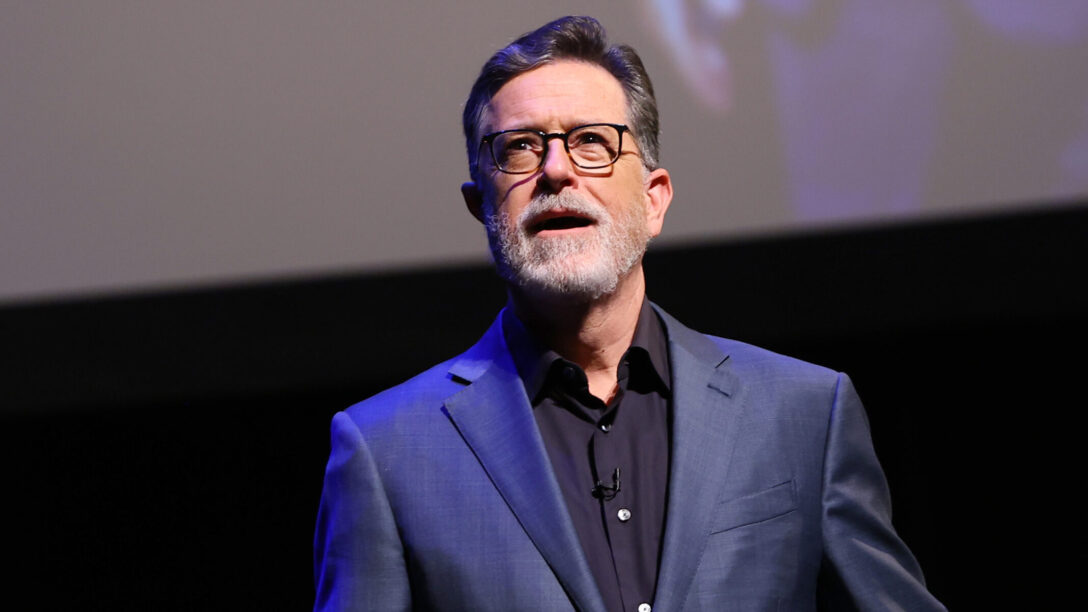
Speaking of complicated: Today’s announcement that CBS will end Late Show With Stephen Colbert at the end of the 2026 season came as a shock to you, me, and those who’ve worked on the program for years. Paramount co-C.E.O. George Cheeks pulled the trigger on this one, though sources tell me CBS executives have been discussing the future of the Late Show franchise for months. The Colbert team was notified around July Fourth that the show was in jeopardy, and Colbert himself was told of the final decision last night. CBS did not plan to announce the move so soon, per sources, but Colbert decided that to avoid leaks, he wanted to reveal it this afternoon to his staff and discuss it on his show tonight, which he did. You can tell from the clips he’s still kinda in shock, and backstage, I’m told he was resolute and matter-of-fact with his top staff, thanking them and “not angry, actually,” per one source in the Ed Sullivan Theater.
For those keeping track of Paramount merger politics, Cheeks did not consult Ellison, Jeff Shell, or the incoming Skydance team in advance. Canceling a money-losing program does not rise to the level of a “material decision” that must be run by the new regime, and Late Show has been losing more than $40 million a year for CBS (though that doesn’t include some ancillary revenue). While the show still garners an average of 2.47 million viewers a night, leads its 11:35 rivals in total audience, and just this week scored its ninth consecutive Emmy nomination for outstanding talk/variety series, its ad revenue has plummeted precipitously since the 2021-22 season.
Linear ratings are down everywhere, of course, and as the Times reported, the network late-night shows took in $439 million combined in ad revenue in 2018. By last year, though, that figure had dropped by 50 percent. Measure that against the more than $100 million per season it costs to produce Late Show. By contrast, the CBS primetime and daytime dayparts are still profitable, and that programming is supported by robust license fees for streaming and other off-network viewing. Late Show, with its topical humor and celebrity interviews pegged to specific projects, has struggled on Paramount+. And of the three network late-night shows, Late Show has by far the smallest digital footprint on YouTube and other platforms.
So from a business perspective, the cancellation makes sense, and Cheeks and his underlings said in a carefully worded press release that “it is not related in any way to the show’s performance, content or other matters happening at Paramount.” But… nothing is just business these days, right? Only three days ago, Colbert unleashed on his parent company for paying a $16 million “big fat bribe” to settle the Trump 60 Minutes litigation. And Colbert, who initially struggled on CBS before rising to first place after he positioned Late Show as a key voice of the Trump 1.0 resistance, regularly attacks the president and often hosts fire-breathing left-wing guests like Sen. Adam Schiff and the Pod Save America guys. If Trump has an enemies list, Colbert is on it.
The president himself has said there are additional conditions attached to the settlement of the 60 Minutes litigation (though Paramount has denied that), and we know Ellison and Trump have spoken privately about the transaction at two separate UFC matches. So it’s beyond fair to ask whether Colbert is simply another slab of sacrificial lamb tossed to Trump and Carr to get this $8 billion deal approved.
Nobody can know for sure. All I can tell you is what I’m hearing. Several sources at both CBS and Skydance insist the decision was based on economics, not politics. After all, if this was about appeasing Trump, they argue, Cheeks would have pulled Colbert off the air ASAP rather than giving him 10 more months in the chair. “Trust me, there’s no conspiracy,” a very good source close to Colbert told me tonight. Still, two other people with deep ties to CBS and Late Show suspect otherwise. After all, when a network decides that a show is too expensive, executives typically go to the key talent and ask them to take pay cuts, fire people, or otherwise slash costs. That didn’t happen here—though with Colbert said to be making between $15 million and $20 million per year, a pay cut wouldn’t have solved the problem on its own. And given the company’s willingness to fold to Trump, there’s no reason for you or me to think they would stand up to any political pressure, or resist any specific demand (which, of course, is the reason to not settle frivolous litigation…). If Chris McCarthy, Cheeks’s counterpart on the cable TV side, cancels The Daily Show in the next couple weeks, I think we’ll have a good idea what’s going on. But for now, I cautiously (and skeptically) believe that this was mostly an economic decision.
The bigger TV question: Is this the dam bursting? We’ve known for a while that the guys who host these late night shows—Colbert, Jimmy Kimmel (ABC), Jimmy Fallon (NBC), and Seth Meyers (NBC)—will likely be the last to do so, at least in the current format. CBS’s Late Late Show was also losing money when James Corden departed in 2023, but it lost less than Colbert because of brand integrations and spinoffs. (Corden was offered a new contract; Taylor Tomlinson, whose much-cheaper After Midnight replaced Corden, was also renewed this year but chose to quit and will be replaced by reruns of Byron Allen’s syndicated show. Exactly how many seconds until Allen calls Cheeks and asks for the 11:35 slot?)
But I’ve sensed that the networks have all been reluctant to be the first to pull the trigger on a cancellation in the historic time slot. CBS has now fired the opening shot, and it’s reasonable to suspect that NBC and ABC will follow. So no, I wouldn’t sleep well tonight if I were Kimmel or Fallon, though both have larger digital footprints and do a lot more for their respective networks. Fallon and Meyers have also been protected by Lorne Michaels, who produces both their shows, though I wonder if even Lorne might recognize that the 12:30 slot is increasingly not viable, and the sacred cows of television are being slaughtered, one by one.