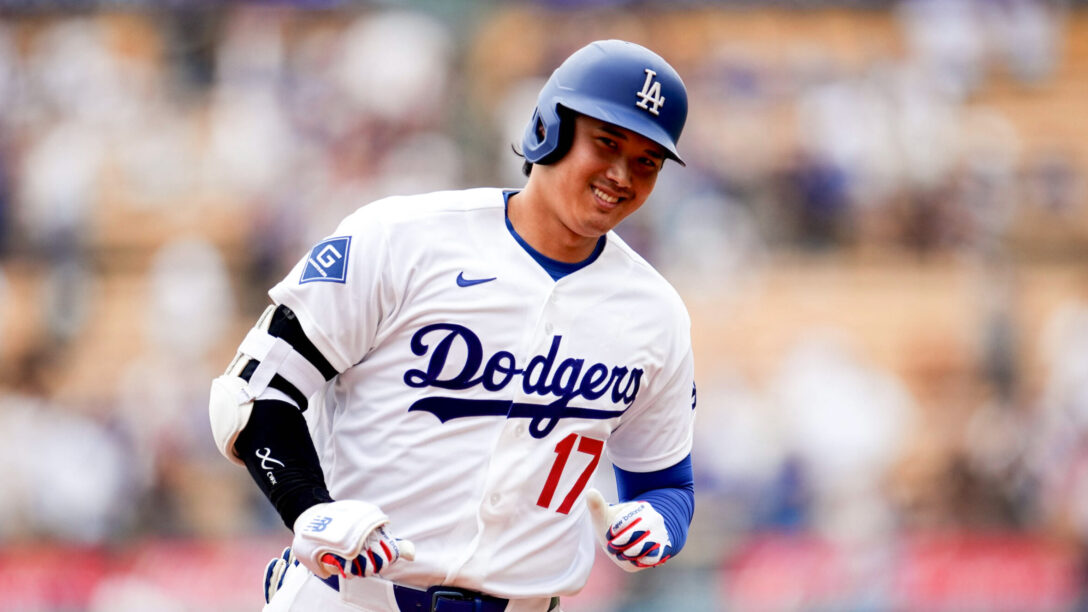

Standing on the field at Citizens Bank Park before Monday’s Home Run Derby in Philadelphia, a media executive marveled at how well baseball was performing this season. TV ratings are up significantly. Attendance has achieved its highest point in a decade. Ad sales and sponsorship rates are soaring. So what about the ongoing cold war between the league and the players union, I asked? You know, the one that had even the sunniest optimists resigning themselves to a 2027 lockout before this season even began? “They’ll figure it out,” was the short answer.
Indeed, the dispute centers on a seemingly intractable issue: MLB’s desire to institute both a salary cap and floor—cost certainties, particularly amid a media reckoning, that will create a more competitive balance and likely increase franchise values. After all, Major League Baseball is the only major sports organization without a salary cap—creating an inequity within the sport that has turned the business into a veritable caste system, in which the very profitable and valuable Los Angeles Dodgers (2026 payroll: $397 million, per FanGraphs) operate in a different solar system than the Miami Marlins (2026 payroll: $75 million, or less than a year of Shohei Ohtani’s annual salary). Alas, players have historically, and perhaps myopically, viewed any kind of spending limit as a third rail of labor negotiations that could lower the average player annual comp beneath $5.34 million.
Anyway, the vibes in Philly were sanguine. I talked to more than a dozen high-level sources this week—MLB officials, media executives, sponsors—and they all sounded similarly resigned to the fact that a lockout was coming after the MLB’s collective bargaining agreement expires on December 1, potentially canceling games in April and May. But MLB’s business partners believe that there’s sufficient enthusiasm around the sport right now—as evidenced by a crop of bankable stars like Aaron Judge and Ohtani, gangbusters ratings for last year’s World Series, and the surprise breakout success of this year’s World Baseball Classic—that the owners and players won’t risk the mutually assured destruction game theory that led to the abortion of the entire 1994 season.
“Everyone just assumes that we’re going to hear a lot of rhetoric from both sides,” one media executive told me. “And then they’ll get a deal done at the eleventh hour because baseball can’t afford to miss a full season, and the players can’t afford to miss paychecks.”
The battle for public opinion has already begun, with commissioner Rob Manfred and interim union chief Bruce Meyer trading on-the-record shots. To wit: MLB recently released “Level the Playing Field,” an ad campaign promoting the value of cap-enhanced competition. And in dueling press conferences this week, Meyer called the MLB’s ad campaign “perverse” while Manfred accused the MLBPA of not being “completely accurate or fair” in its public messaging around the dispute.
And yet, the sports business executives I spoke to still view this level of rancor as a natural byproduct of active labor negotiations. Their surprisingly cool demeanor may be due to the fact that baseball’s media contracts have clauses that provide rebates for missed games. Or they could be simply grinfucking everyone in this imbroglio. Or, notably, it may have to do with the upside of a shorter season where regular-season games matter more than ever. “We know it’s going to be a battle,” a media executive told me. “If they miss a month or two next season, we’re going to be totally fine. I don’t know that it’s the worst thing in the world to miss games in April and May.” Or, as another executive close to this drama put it, “I don’t have to come up with too many contingencies in terms of where we’re reinvesting our money if MLB loses games in April and May. But if baseball loses the whole season, that’s a whole different story.”
As sponsors prepare to negotiate their renewals only a couple of months away from a work stoppage, quite tellingly, some are insisting on opt-out language in their contracts should baseball miss too many games next season. “Everyone’s paying MLB significantly more money than we did a couple of years ago, so we are looking for something to protect us in some capacity,” said a top sponsorship executive.
Two Year Grace
For what it’s worth, baseball has a pretty good story to tell. It’s never going to command the sort of economics bestowed upon the NFL or major college football, but it’s actually a pretty cost-efficient alternative. Viewership for NBC’s Sunday Night Baseball is up more than 40 percent over last year’s version on ESPN; Fox’s numbers are up double digits this year; TBS is up 20 percent. And since baseball’s media deals run through the 2028 season, MLB won’t start negotiating new ones until the league has a new collective bargaining agreement—another reason why the league’s business partners aren’t sweating the pending lockout too much. But in synching all of its national media deals to end at the same time, the MLB has put enormous pressure on its next media deal, which is expected to come to market with a package of local rights—though nobody knows yet how many teams that rollup will include.
And yet, as MLB eventually starts negotiating a new media deal, every media partner will be looking to cut costs so they can afford their precious piece of the NFL pie. The negotiations of football rights, which are now expected to pick up during the NFL’s regular season, stand to take billions of dollars out of the market.
Streamers and broadcasters particularly value the MLB playoffs, and several media companies are expected to vie for the World Series. That includes Fox, which has carried the October Classic for the past 30 years, and ESPN, which has expressed desire to poach it. Netflix has pursued an eventized sports strategy, which suggests that it would also be vying for baseball’s biggest event. The streamer drew around 3 million viewers for its MLB Opening Night game this year, a good number that over-indexed with the younger demos.
Of course, all of this interest could be curtailed—or steeply discounted—if a work stoppage proves to be significant and/or cuts into its precarious popularity. And those vertiginous stakes explain why baseball’s current business partners are so hopeful that the players and the owners won’t screw it up for everyone else. Here’s hoping they’re not left staring at strike three.