Join Puck to listen to this article
Earlier this morning, I led a panel at UCLA’s 50th Entertainment Symposium that grappled with the many questions tormenting Hollywood in the agentic era: how studios can harness A.I. without upsetting the guilds, how to use generative film-production tools without sacrificing artistry, etcetera. Then, of course, there are the legal concerns that arise when you try to copyright I.P. largely generated by machines. These are big questions for the industry, and ones largely without clear answers.
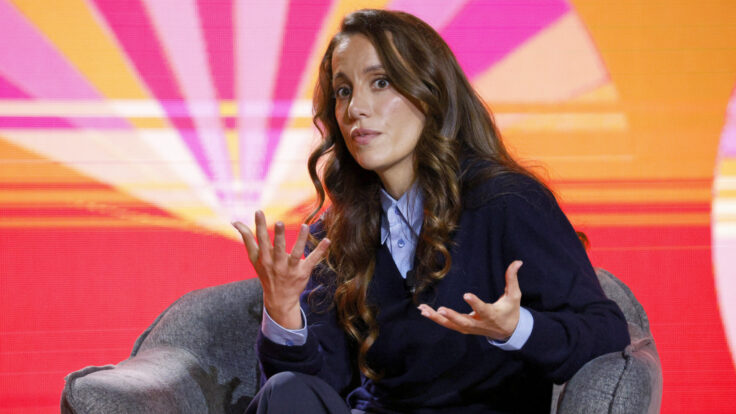
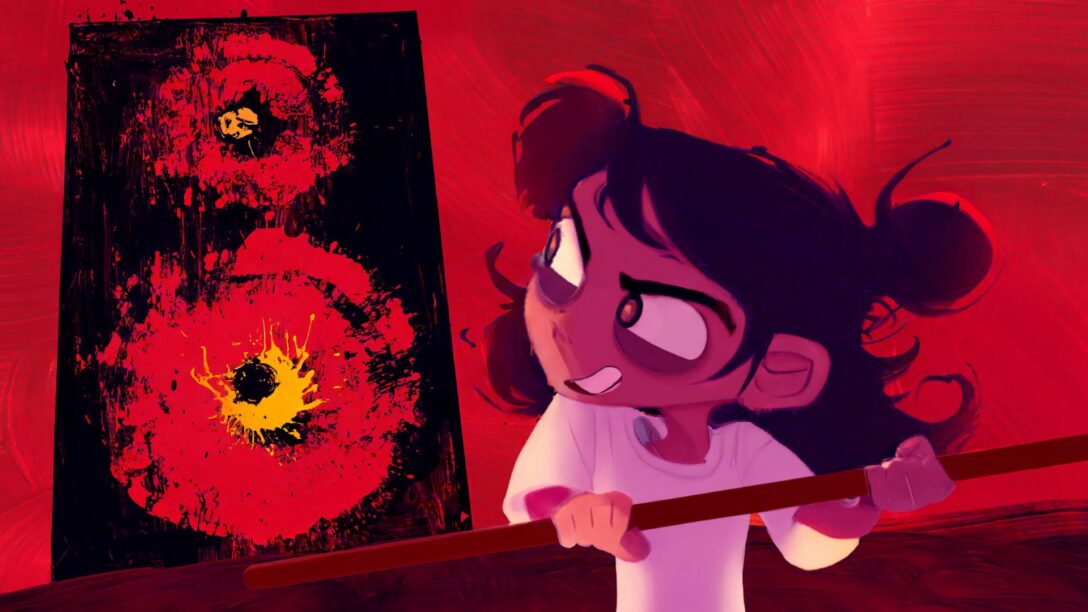
The same philosophical quandaries also bubbled up in my recent conversation with Márcia Mayer, a former Pixar producer and current filmmaker at Google DeepMind who just premiered an A.I.-assisted animated short film, Dear Upstairs Neighbors, at the Tribeca Film Festival. The idea behind the project, according to the team, was to “empower animation artists to benefit from the creative potential of generative A.I. without sacrificing artistic control to its inherent unpredictability.”
Márcia, a fascinating artist in her own right, looks at A.I. in novel ways—as a tool not merely to make things quicker or more cheaply, but to cross new artistic thresholds. (Painting with different brushes, as it were…) Dear Upstairs Neighbors is also a profound representation of the capacity of Google’s latest video-generation models. As always, the following conversation has been lightly edited for clarity.
“This Is What I Need”
Ian Krietzberg: Can you walk me through how this film was made?
Márcia Mayer: [Director Connie Qin He] and I developed this film before we came to DeepMind, actually, so we had already been working on the film for about a year—starting in the fall of 2023, when A.I. was a little baby thought in peoples’ brains. Coming from the animation and filmmaking world, there was so much fear and trepidation, misunderstanding, and confusion around what it was all about. Connie, I always say, is half director, half scientist, so she thought, Okay, let’s just do some experiments. Let’s make a funny story and see what this is all about. We have to learn about it, then we can decide if it’s something scary and we should run away. But first we have to test it.
We wanted a story that would be universally appealing, but not too heavy, so that we could play with the medium and have that experimentation. We hand-animated almost every single shot, and we trained a model on Connie’s actual paintings, because she herself is a painter. So we painted 35 acrylics that we used to train a model, that we then used to overlay her painting style, which was in what we call the “red sequence,” the kind of culmination moment, because that was the ultimate goal—to have this climax where you feel like you’re inside an abstract expressionistic painting come to life. I feel like we definitely got that effect onscreen.
I’m curious what you learned. Is A.I. as scary as you thought it might be? How do you look at it today versus when you began the project?
We had a day-to-day crew of 45 humans on the project, but if you count everyone who touched the film, we had 79 people. The way I look at it, I feel like this is just another tool we can use to expand our art, and it’s really interesting to think of ways we can use the models to open doors that weren’t possible before. In the case of Connie, she couldn’t have achieved that look—the thick, gritty brushstrokes, the feeling of paint glopping off the screen—in traditional animation, because C.G. smooths everything out. Instead of painting 35 acrylics, she could have painted 7,200 to really get that texture. There are shorts that have done that, but it takes years.
I love sitting in the space of: Okay, what can these models bring to the table that we wouldn’t have had before, so that we’re talking not about replacing humans, but about adding to what we can do together.
Does it feel different to produce a film with this technology?
It honestly did not. Production was very traditional in that we had dailies, we had our crew meetings; Connie did her shot briefings to the animators, we had full-time animators that did most of the shots, and we had a regular post-production process. The difference was that we were also doing a number of research problem-solving projects on the side to get the models to work; over the course of this production, we developed some of our very first video-to-video workflows within [Google DeepMind], which was very cool because we were brought to GDM to help make the models and capabilities better for artists. When Connie said, This is what I need to make the best film possible, nobody batted an eye.
For many people, the fundamental pitch of A.I. is that it makes things cheaper and faster. What’s the role of these tools in filmmaking for you? It’s not difficult to imagine the tech being used in ways that are less purposeful than what you’re describing.
I think we’re living in a bit of an analogous moment to when we had the switch between 2D to C.G., and people said, Oh my gosh, there’s no soul in C.G. animation. And then everybody watched Toy Story, and they were like, Oh my god, this is the most soulful thing I’ve ever seen. On the other hand, we’ve all seen terrible C.G.
What excites me about these models is that they meet the artist where they are in a very precise way. So, Connie is a painter and used them to simulate her painting. We also just produced a film called Goodnight Lamby, which was selected for the Cannes Film Festival as the first A.I.-assisted animation at Cannes. The director, Dustin Yellin, is a sculptor. He used the same models we used, but to bring a sculpture to life, and it’s a completely different style of animation; it looks like stop motion and puppeteering.
What I think is really cool is how A.I. meets different artists—and it doesn’t have to be a visual artist, it can be somebody who thinks more in terms of movement or story structure or music—where they are, and allows them to apply their very specific art to their creations.
The Human Touch
Over the past couple of years, we’ve seen that if a piece of art is described as “A.I.-generated,” audiences tend to avoid it. What kind of reactions have you seen to this film, and do you think we’re approaching a point where it won’t even be mentioned anymore—the same way movies don’t provide a disclaimer with the type of C.G. software that was used?
That’s what I’m hopeful for. We are really proud to be in competition at Tribeca alongside a number of other animated short films that are regular animated short films. We made this with the intention to be an animated short film, not an A.I. short film. So we will see. I’m hopeful. The responses when the trailer came out were overall really positive, and I think it’s because we have been super intentional about how we used A.I., and I think it comes across.
The audience reaction at Tribeca was better than we could have expected. There were so many laughs, gasps, and even spontaneous cheers when Ada finally lets her emotions out. It was really fun to experience the film with a crowd and see people connect with the character and story in real time. There’s a great quote by Björk: “I find it so amazing when people tell me that electronic music has no soul. You can’t blame the computer. If there’s no soul in the music, it’s because nobody put it there.” We are bringing the soul, the rest is just a tool.
When I joined Puck, my partner Matt Belloni asked me: “How long do you think until a fully A.I. film or TV series breaks through and finds an audience comparable to traditional movies or shows?” I was skeptical that it would be soon; I think audiences connect to people and intentionality. But there’s been a lot of model progress since then, and I have to put that same question to you.
I lean toward where you’re coming from. I feel like in my post-Dear Upstairs Neighbors work, but also as head of production for GDM’s media and entertainment research unit, we are definitely thinking about how to bring new capabilities to artists. Our North Star is always to help artists make great art, so we are not in the vein of, Let’s replace everybody and make movies with one click. I think people like our film because of the story. People see themselves in Ada.
Will there be an audience if somebody one day makes a one-click movie? I mean, we all love to look at things that are weird and crazy. Someone’s gonna watch it, but I don’t know if it will be the same type of audience we’re talking about when we say that people watch films to connect with them and have an emotional moment.