Inside Puck’s Second Annual Stories of the Season: Emmys Event
At Puck’s second annual Stories of the Season: Emmys event, the writers, showrunners, and stars behind this year’s most-watched shows—from ‘The Handmaid’s Tale’ and ‘Shrinking’ to ‘The Traitors’ and ‘Pluribus’—gathered with Matt Belloni, Kim Masters, Julia Alexander, and Peter Hamby for a night of candid conversation about craft, casting, and what it takes to keep audiences coming back.
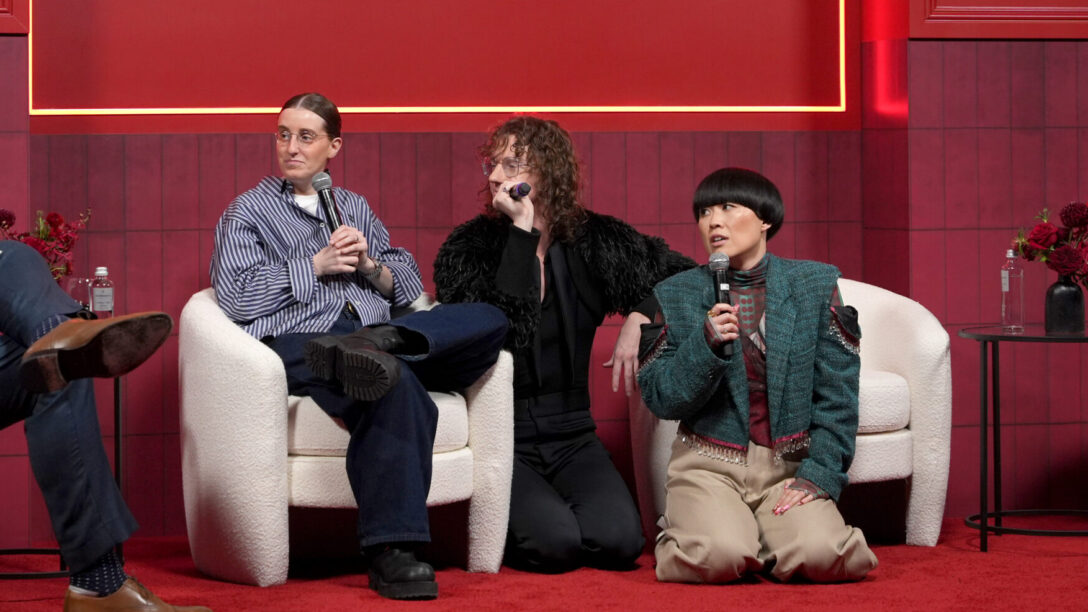
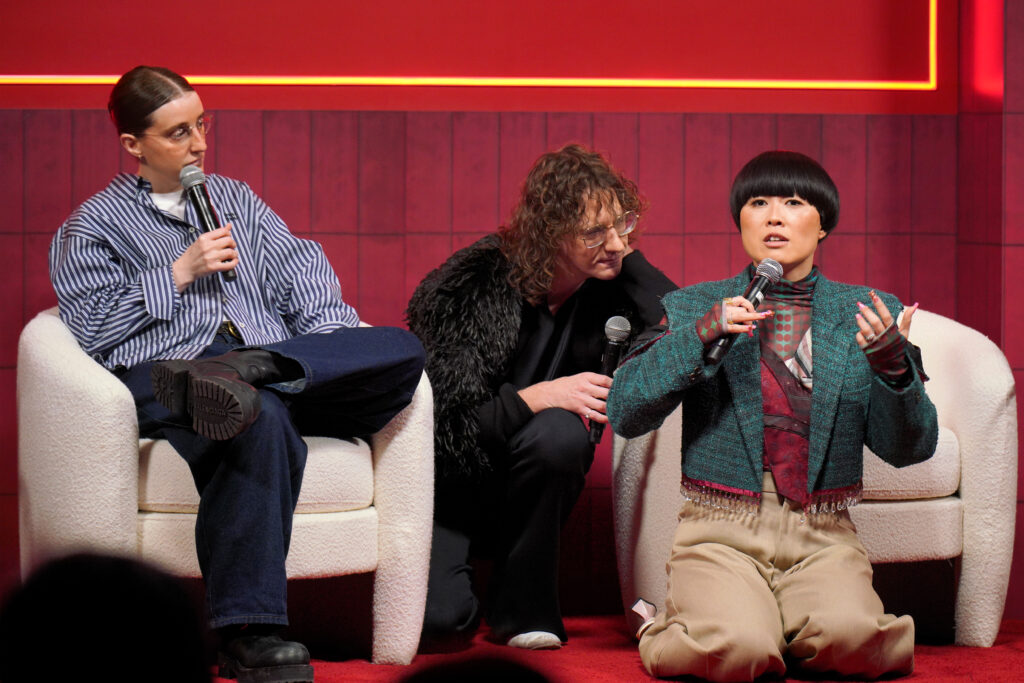
Chris Fleming, Robby Hoffman, and Atsuko Okatsuka warmed up the crowd with off-the-cuff bits interwoven with some great introspection about their long careers, the challenge of crafting a filmed special, and what it means to be a comedian in the digital age.
Photo: Gonzalo Marroquin/Getty Images for Puck
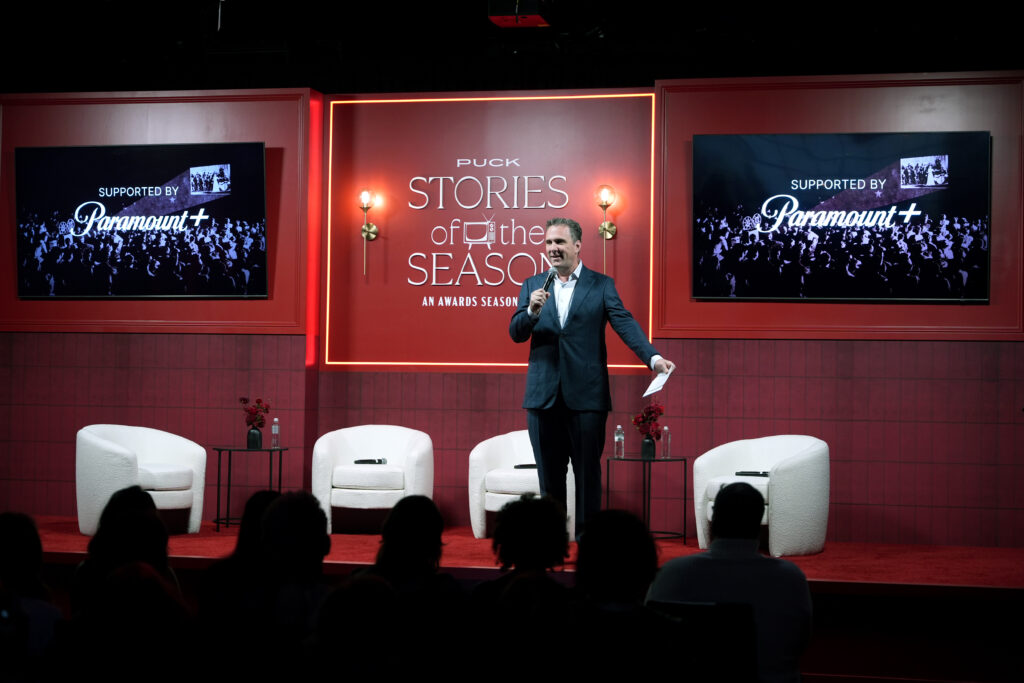
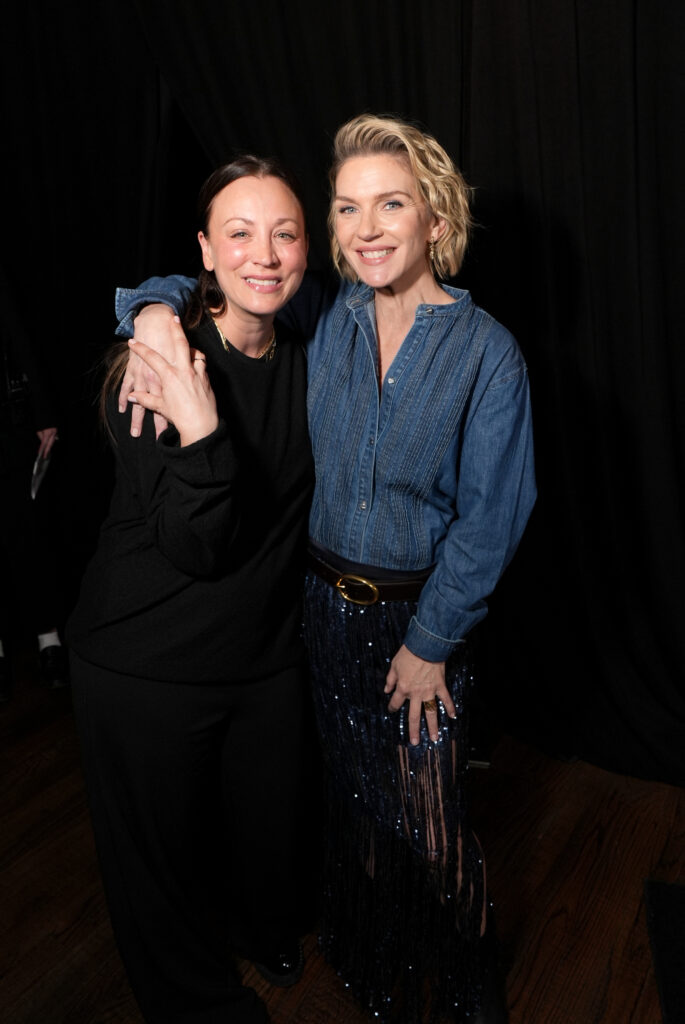
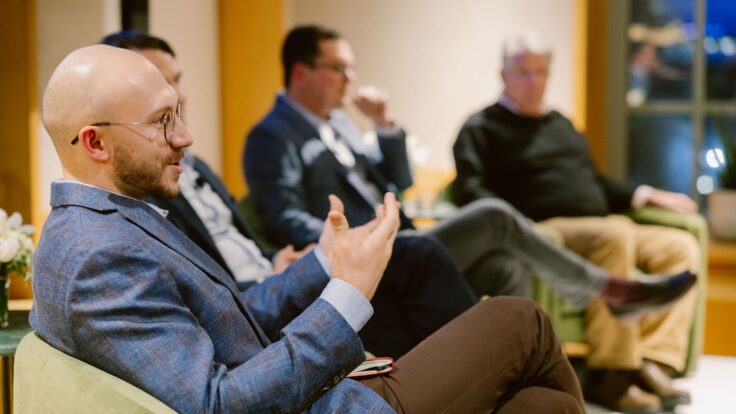
Last week, Television Academy members, executives, and Puck subscribers from across Los Angeles gathered at the Sunset Room in West Hollywood for an exclusive, intimate evening featuring the stars and creators of some of the biggest shows of the year at Puck’s second annual Stories of the Season: Emmys event.
As always, What I’m Hearing author Matt Belloni served as host and keynote moderator for the night. He kicked off the event by explaining the genesis of the series. “We started doing this two years ago because we saw a hole in the experiences of Emmy season and Oscar season—there wasn’t something that was curated by actual journalists,” he told the crowd. “An event where we would pick the people who come up to talk about their projects, talk about their careers, talk about their process.”
Before the first panel was introduced, legendary Survivor host Jeff Probst welcomed the audience with a video message from the Survivor 50 set in Fiji. From a beach in the tropics, he held a virtual toast and encouraged guests to try a Survivor 50–themed, coconut cocktail onsite, courtesy of the show.
The Kelley Keynote
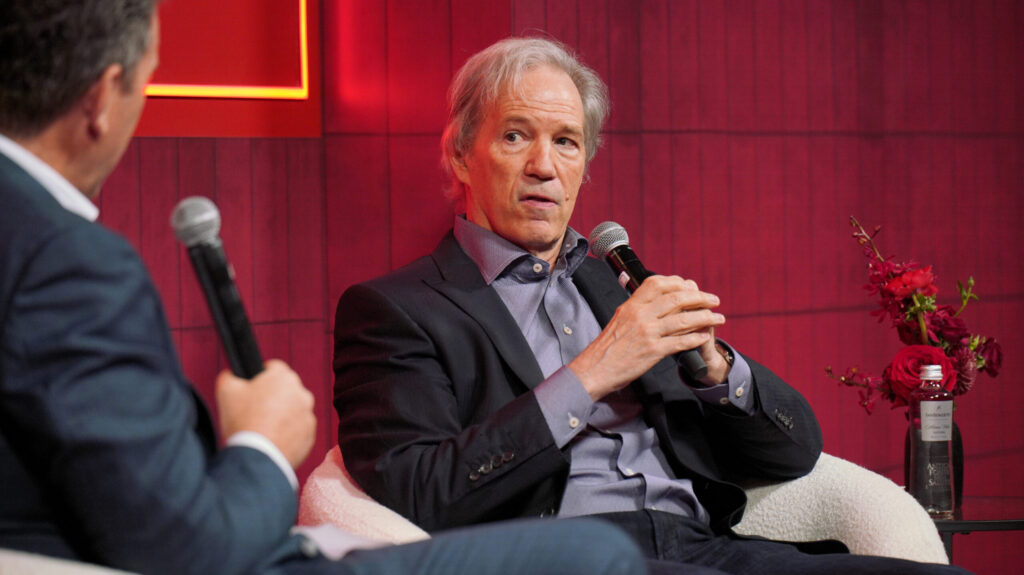
For the final conversation of the evening, which was captured in a live taping of The Town, Matt brought out the incomparable showrunner David E. Kelley to reflect on his four-decade-long career, his creative process (he still writes his scripts by hand on a legal pad!), his press aversion, lessons from mentors like Steven Bochco, and his newest venture, Apple TV’s Margo’s Got Money Troubles, co-starring his wife, Michelle Pfeiffer.
Surprisingly, despite 30 years of marriage, this is the first time they’ve worked together. Pfeiffer, after all, has mostly focused on film, while Kelley has lived in TV world. After falling in love with the source material (Rufi Thorpe’s bestselling novel), he asked Pfeiffer to check it out. “When I had read the character of Shyanne, I could only think of her as doing it,” he said. “I gave her the book and said, ‘You should take a look at this.’ And she read it, and connected with Shyanne as well. And off we went.”
Then, Matt asked Kelley about what makes a good TV executive. He received a straightforward answer. “Find the best writers and creators that you can, try to land on a project that they’re passionate about, and let them go,” he said. “Get out of the way.” He also explained how streaming has changed the development process, including the relationship between executives and creatives. “Twenty-five years ago, if you went into a restaurant and didn’t like the food, they’d ask, What kind of food do you like? Now, that same buyer wouldn’t just ask for something different—they’d want to go into the kitchen and pick out the seasoning, and show you how to cook it,” he said.
Perhaps because of his long career in the industry, in which he’s seen countless revolutions of one sort or another, Kelley seemed relatively undaunted by the looming threat of A.I. “I’m wary like everyone is about A.I., and skeptical of it,” he said. “But I don’t think it’s going to replace the good writing. I could be wrong, but I think it will be a tool that we can use. I’m less worried about the use of A.I. than the misuse of it, because obviously there’s a potential for abuse.”
He also reflected on lessons Bochcoimparted during their time together on L.A. Law. “Respect the audience—they’re smart. Do not dumb down the plot so they can follow along,” he said. “Count on them to be ahead of you, and write after them, not down to them.”
Stand-Up’s Rising Stars: The Art of the Hour-Long Special
To start the night’s programming, Matt introduced a trio of incredible stand-up comics for Puck’s first-ever comedy panel. Chris Fleming, Robby Hoffman, and Atsuko Okatsuka warmed up the crowd with off-the-cuff bits (including a dissection of Mike Birbiglia’s texting habits) interwoven with some great introspection about their long careers, the challenge of crafting a filmed special, and what it means to be a comedian in the digital age.
Photo: Gonzalo Marroquin/Getty Images for Puck
While discussing his process for editing a comedy special, Hoffman was blunt. “I don’t think about it at all. Whatever I was doing in that time period, that [becomes the] set.” Fleming, meanwhile, explained how early creative visions are often derailed. To wit, he cut an entire visual sequence with a motorcycle in the edit room. “I thought it looked like I was on a motorcycle, but it didn’t at all, because I’d never seen it until we edited it. So we had to cut all of it,” he said.
Hoffman also reflected on her relationship with veteran comedians like John Mulaney, who directed her special for Netflix: “How did he get me? He called me begging to direct. [Laughs.] He’s just been such a doll. I mean, this is a guy in a suit. It’s John fucking Mulaney. He’s backing me. It was unbelievable. Like winning the lottery.”
Matt also asked the group about the landscape for comics on scripted series. Okatsuka mentioned that stand-ups are given some unique freedom as writers and actors. “They let us write our own shit, that’s the fun thing,” she said. Hoffman then mentioned her plan to get more stand-ups in front of the camera—starting with herself. “I’m on Rooster and Hacks, and I have my own show in development at HBO. I’m bringing it back,” she said. “Don’t worry, I’ll fix it.”
Finally, the comics considered the idea that we’ve entered a new golden era for comedy. Okatsuka, for one, thinks we have, “because the people are speaking for the first time. It’s not just the 10 deciders who decide,” she said. “Back in the day, I felt like only 20 stand-ups could be stand-ups. Now, we do want to see people of color more, we do want to see more queer voices. The people are speaking, and that’s why it’s a golden era.”
The New Reality of Unscripted TV
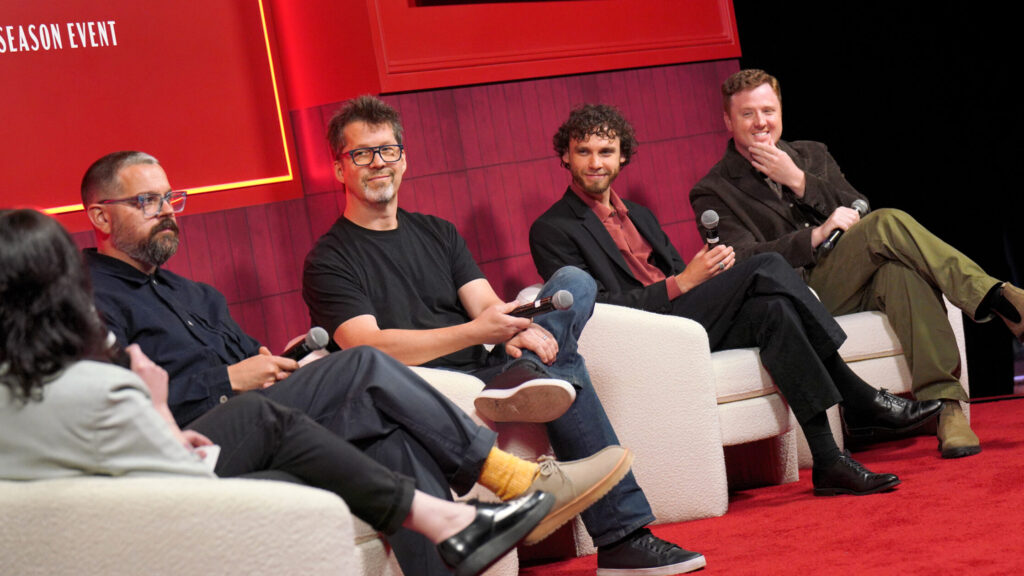
Shortly after, Puck’s media correspondent, Julia Alexander, peppered the unscripted panel with insightful questions. The group consisted of Dylan Redford and Harrison Fishman from HBO’s Neighbors, Love Is Blind executive producer ChrisCoelen, and The Traitors producer Jack Burgess. They chatted about the challenges of casting for authenticity, the surprises that come with documenting real people, and how their subjects act as a mirror for the audience.
Photo: Gonzalo Marroquin/Getty Images for Puck
Julia started by asking the group how they approached casting subjects when so many contenders are focused on personal opportunities to go viral. For their part, the Neighbors panelists said they worked with their casting director to look outside the box—and Fishman’s approach immediately turned heads. “We find people in small claims court databases,” he said.
Redford also chimed in. “At a certain point, our subjects are living in such a nightmare with their neighbor that it’s hard to fake,” he said. “When we’re on a Zoom with them and they’re like, I am a normal person but I feel insane, you can feel that intensity. Someone who just wants to push their TikTok would have to be an incredible actor to capture that intensity.”
Love Is Blind producer Chris Coelen said the authenticity found in people looking for love acts as its own vetting mechanism—and that the show’s success is dependent on subjects trusting their producers. “Love is hard, and it’s hard in real life. It’s hard in the context of a show. And so in order to create an environment where that has an opportunity to flourish, you have to have complete trust,” he said. “They have to know exactly what you’re planning to do, that you’re not manipulating them in any way.”
After 10 seasons, he said, they’ve landed on a process that actually works. “We’ve had 25 couples meet and are still married on our shows. 18 babies have been born to the people who have met on our shows. And of the people who’ve gotten married on Love Is Blind—75 percent of those couples are still together to this day.”
Meanwhile, Jack Burgess explained why producers can’t really interfere on a show like The Traitors. “Our game relies on the players feeling like they have autonomy. If you go in and tell MichaelRapaport or LisaRinna what to do, they don’t love it,” he said. “We spend tons of time in preproduction coming up with a series of missions and twists. That’s the sandbox. We’re constantly crossing our fingers that it works out well.”
The Showrunners Summit
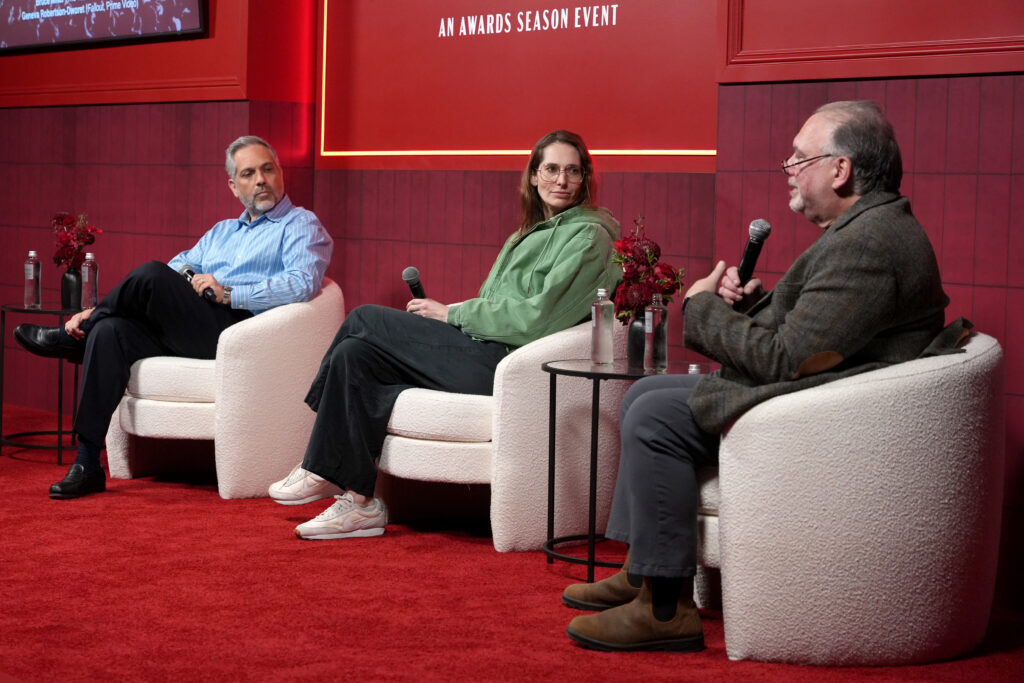
Later, the legendary Hollywood journalist and What I’m Hearing author Kim Masters convened a powerful group of showrunners to discuss the challenges and rewards of being the creative voice behind a beloved series. The panel featured Bruce Miller from The Handmaid’s Tale and The Testaments, Geneva Robertson-Dworet from Prime Video’s Fallout, and Lee Eisenberg of Jury Duty and Company Retreat. The insightful discussion focused on world-building, inheriting an established fictional universe, and how to keep audiences coming back for more.
Miller, whose show arrives at a cultural moment that MargaretAtwood saw coming decadesago, noted the tragedy of being right about things you wish weren’t: “I mean, [Atwood] fortunately wasn’t right about the extremity of things—but she was absolutely right.” As a result, he said, The Testaments doesn’t require the same suspension of disbelief that the original novel did in 1985—which, undeniably, is a grim commentary on the state of things.
Photo: Gonzalo Marroquin/Getty Images for Puck
Robertson-Dworet spoke about the challenges of adapting a beloved video game series for television and balancing fan service with storytelling to create something fresh. She said the cast and crew enjoy listening to fan perspectives and ideas her production designer even listens to Fallout podcasts while falling asleep), but added that her team relies heavily on the source material when it comes to charting the series’ direction.
Finally, Lee Eisenberg, who brought Jury Duty to Amazon and expanded its world with Company Retreat, explained how the difficult premise—the subject doesn’t realize that everyone around them is an actor—complicated the initial pitch and filming processes. Even after the success of Season 1, he said the uneasy feeling didn’t fade with Company Retreat. “Every day, there’s just the chance that the entire season will stop working,” he said, adding that at one point, one of the actors showed up in a Super Bowl commercial. “With every other show, you’re desperate for your actors to be everywhere. WithJury Duty, you want no one to be recognized.”
Fearless Performances
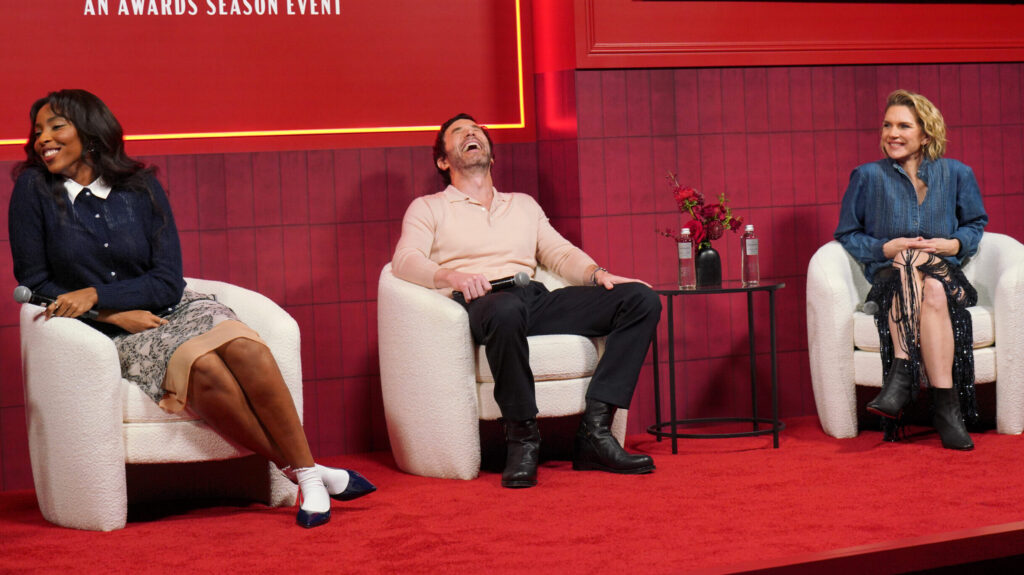
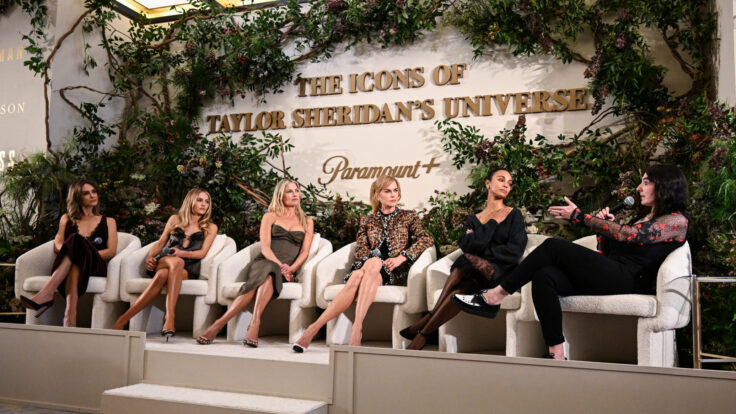
Puck political columnist Peter Hamby convened three remarkable actors to discuss, among other things, what united their performances: portraying the experience of fighting to keep things together when everything is falling apart. Rhea Seehorn (Pluribus), Tom Pelphrey (Task), and Jessica Williams (Shrinking) all brought humor, tears, and bewilderment to their performances, and offered candid reflections on their journeys in the penultimate panel of the night.
Photo: Gonzalo Marroquin/Getty Images for Puck
Seehorn revealed how she channeled her character’s identity—even though Carol mostly appears alone onscreen. “In the scenes where I’m alone, my character is often thinking about the last conversation she had or the [possibility] of seeing someone again.” She also credited the production with bringing the character to life. “I’m never alone. I’m doing a dance with about 250 people on the other side of the camera,” she said. “The best way I can describe it to you is if you were to show up every day in the office with, like, 200 people that honestly think you should jump off that cliff because you can do it, and they are cheering for you. I’m not afraid to take risks with them.”
Peter turned the conversation to Pelphrey’s excellent accent work while portraying his character, Robbie—a native of Delco, Pennsylvania, on the show Task. For the role, he closely studied the Philadelphia metro-area experience, and even got a fake Allen Iverson tattoo. “I was like, if I don’t do this right, then nothing else I do will matter,” he said.
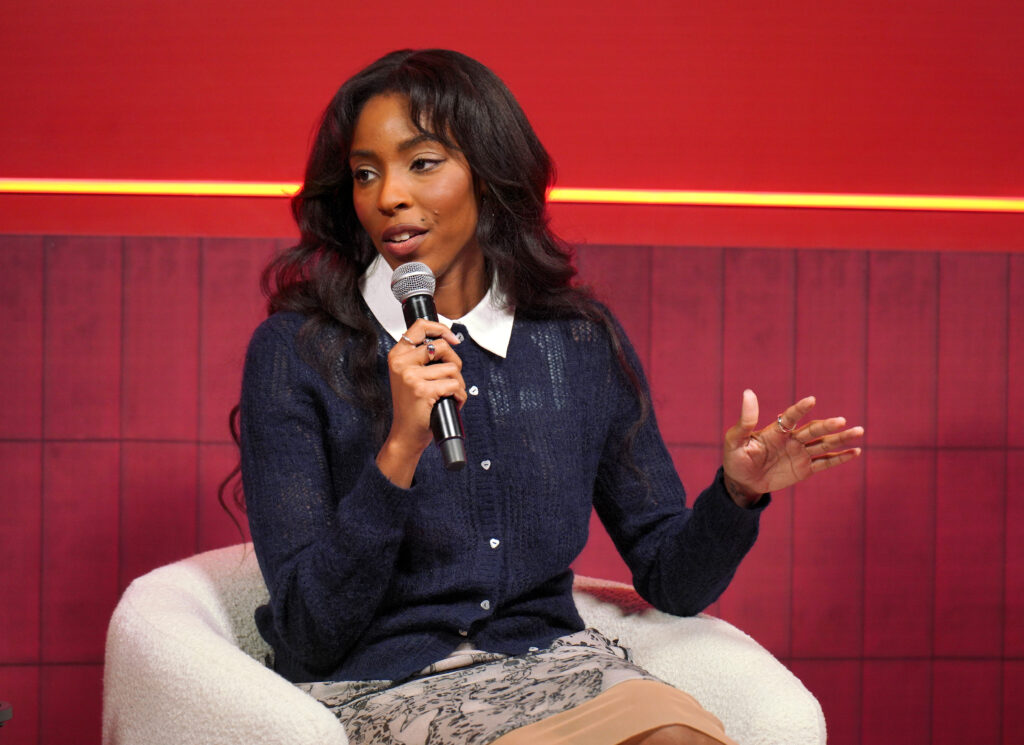
Finally, Jessica Williams enraptured the audience by recounting her favorite scene from Shrinking—a moment between her character, Gaby, and Harrison Ford’s character, where he’s comforting her after the loss of a patient. The legendary actor, she said, brought the appropriate emotional weight to the moment. She compared watching him work to the anticipation of watching a plane take off. “He’s the guy,” she said. “All I had to do was listen to him, and the tears fell.”
Didn't get an email? Check your spam folder and confirm the spelling of your email, and try again. If you continue to have trouble, reach out to fritz@puck.news.
Didn't get an email? Check your spam folder and confirm the spelling of your email, and try again. If you continue to have trouble, reach out to fritz@puck.news.
Member Exclusive
Get access to this story
Create a free account to preview Puck’s full offering, including exclusive articles, private emails from authors, and more.