 |
 |
| Welcome back to Wall Power, I’m Marion Maneker. Greetings from the shores of the Long Island Sound, where I’m enjoying Labor Day weekend on the water.
Market activity restarts next week as we finally exit the summer doldrums. In the meantime, today’s issue focuses on the upcoming auction of dealer Eberhard Kornfeld’s collection. A Swiss auctioneer, art dealer, and scholar, Kornfeld was friends with artists as diverse as Alberto Giacometti and Sam Francis, and he wrote definitive works on artists like Ernst Kirchner. The Kornfeld estate is being auctioned by—no surprise here—the Swiss house Kornfeld. I’ll get into the details of the sale below.
But first… |
| A MESSAGE FROM OUR SPONSOR |
 |
| Iconic Collection welcomes you to the cutting-edge world of luxury brands and experiences. More than just shopping centers, these are destinations for the next generation of consumers where traditional retail is reimagined through innovation, sustainability, community partnerships, and one-of-a-kind experiences. Each Iconic Collection property provides visitors with high-profile retailers, eclectic culinary feats, and cultural concepts in inspiring settings. Furthermore, Iconic magazine extends this mission and commitment to print. Every issue examines the world of fashion, tech, retail, and beyond. Uncover upcoming trends, meet industry game changers, learn the art and story behind each Iconic Collection property, and so much more. |
|
|
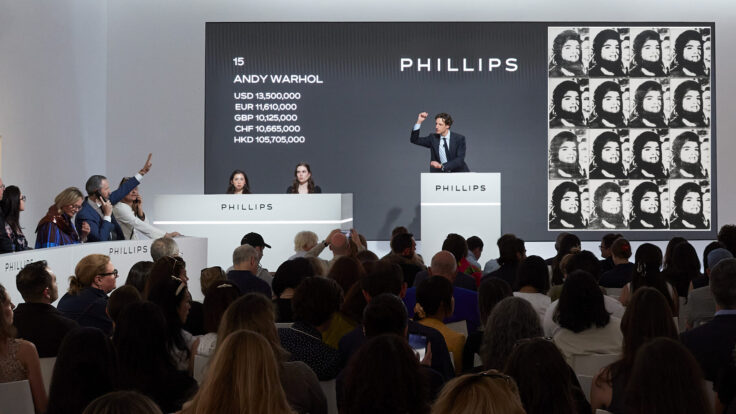
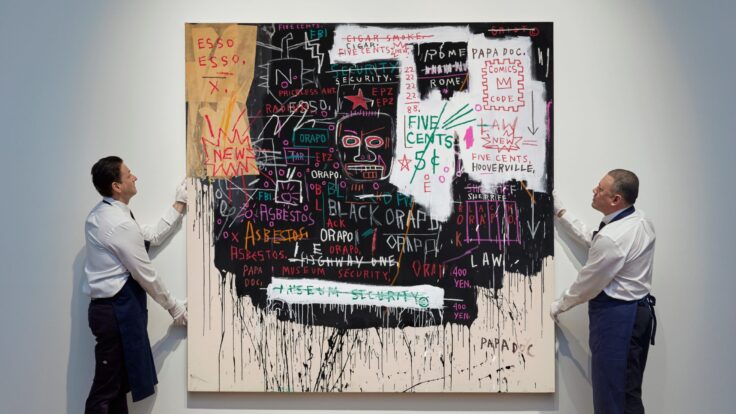
- More on the Ultra-Contemporary crash (or lack thereof): Last week, Christie’s C.E.O. Guillaume Cerutti put together some numbers in response to the New York Times story about four artists whose markets had frozen after a sharp rise in post-pandemic trading. (I wrote a rebuttal to the Times story on Sunday). The Times indirectly blamed the auction houses for revealing the weakness in demand for these artists in 2023 and 2024, since it’s the auction houses that are taking these consignments for sale.In response, Cerutti marshals data showing that young artists have actually performed better in the downturn than the broader market for Modern and Contemporary art. These young artists also fared better than their Post-war counterparts, who saw a greater drop against estimates. All of which is to say: It’s unfortunate that some artists saw demand for their work evaporate—and that the gripes of four such artists found their way into the Times—but the market isn’t toast. There are still young artists whose work is selling.
Here are some of the stats that Cerutti posted on LinkedIn.
—“From 2019 to 2022, the market for artists under 45 [years old] saw remarkable growth. The number of works sold at Christie’s increased from 263 in 2019 to 773 in 2022. The average price of artworks by these artists also increased significantly, rising from $69,300 to $162,100 during this period.”
—“In 2023 and continuing in the first half of 2024, the market for these artists did experience a downturn, but it is in line with the broader trends: in 2023, 659 works by artists under 45 were sold, with an average price of $123,500—a 24 percent drop in average price compared to 2022. However, this trend is not unique to young artists; the entire art market saw similar declines. For 20th and 21st century art as a whole, average prices dropped by 39 percent from 2022 to 2023.”
—“Despite the overall market challenges, many young artists have shown resilience. Compared to the broader post-war art segment, works by artists under 45 did not underperform. The sell-through rate remained strong at 84 percent in 2023. In terms of sales price relative to presale low estimates, works by these young artists held up well, with a decrease from 125 percent to 107 percent between 2022 and 2023, compared to a drop from 115 percent to 100 percent for all Post-war works. ”
—“The most represented artists under 45 during this three-year period include Nicolas Party, Shara Hughes, Stik, Aboudia, Ayako Rokkaku, Mr. Doodle, Salman Toor, Jia Aili, Amoako Boafo, and Avery Singer.”
- A reshuffling in the U.K. museum sector: London’s National Portrait Gallery has donated its respected director, Nicholas Cullinan, to the British Museum, which is badly in need of new leadership in the wake of its embezzlement scandal. Somewhat surprisingly, Cullinan will be replaced at the NPG by former art fair director Victoria Siddall, who has been out of action for a couple years. During her 18-year career at Frieze, Siddall established Frieze Masters, the historically oriented companion fair to Contemporary art-focused Frieze, and she became the director of all of Frieze’s fairs in 2014. She relinquished her role at Frieze in early 2022.
|
| Christie’s Brings $30 million van Gogh to Hong Kong |
|
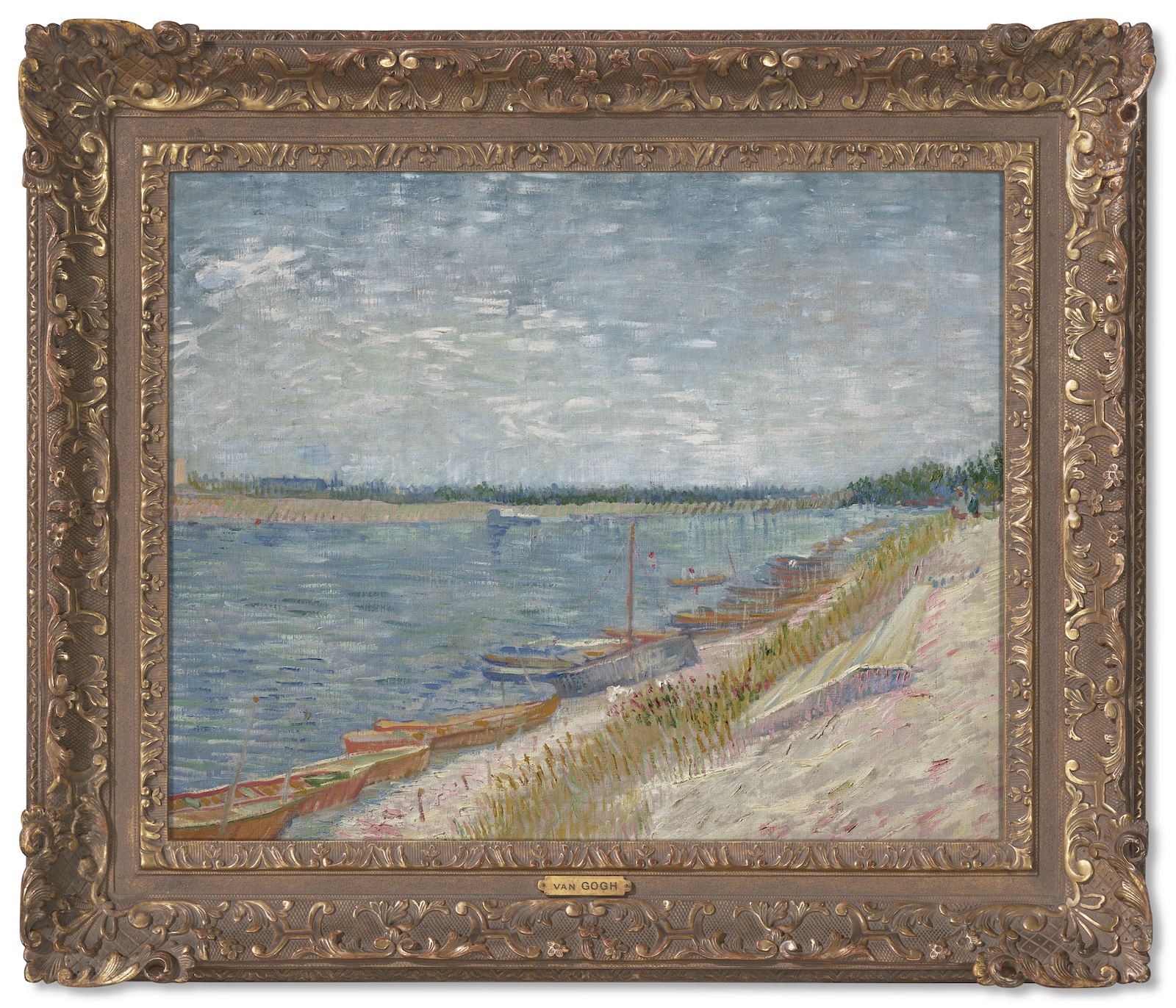 |
| Vincent van Gogh, Les canots amarrés (1887) estimated at $30 million |
|
|
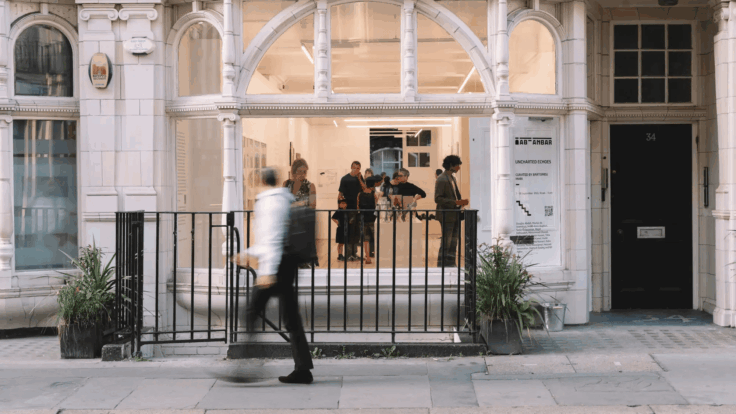
| Late last month, Christie’s announced that a $25 million Monet will lead its inaugural Hong Kong sales at The Henderson. Now, the auction house is announcing that it will also be selling a Vincent van Gogh painting from the artist’s pivotal two-year stay in Paris, where he learned from the Impressionists and began to imbibe the ethos of Post-Impressionist color theory. The seascape on offer, painted in 1887, is entitled Les canots amarrés. It carries a $30 million estimate, and is being offered by the Royal House of Bourbon-Two Sicilies.In addition to the two late 19th century works, Christie’s has a late Zao Wou-Ki triptych from 1980 with a $10 million estimate, a Sanyu Nu Blanc with a nearly $4.5 million estimate, and a Pierre Soulages abstract in the desirable black-over-red palette, priced at a little more than $4 million. Of course, other works will be revealed in the weeks before the late September sales.
Even though Asian buyers have become cautious during this broader market downturn, Christie’s seems to be trying to jump-start trading with this first sale in its new venue. (Or, at least, trying to make an impression…) Presumably, these high-value works, though hardly once-in-a-lifetime opportunities, already have buyers that Christie’s has identified or secured third-party guarantees from. Otherwise, these sales will be fraught with a different kind of drama. |
 |
| The Kornfeld Stimulus Plan |
| I wouldn’t say that the immediate future of the art market depends entirely on the forthcoming sale of the late auctioneer’s extraordinary personal collection—Munch, Monet, Mondrian, Klee, Seurat, Degas, Kirchner, Giacometti, etcetera—but it should be a harbinger. |
|
|
|
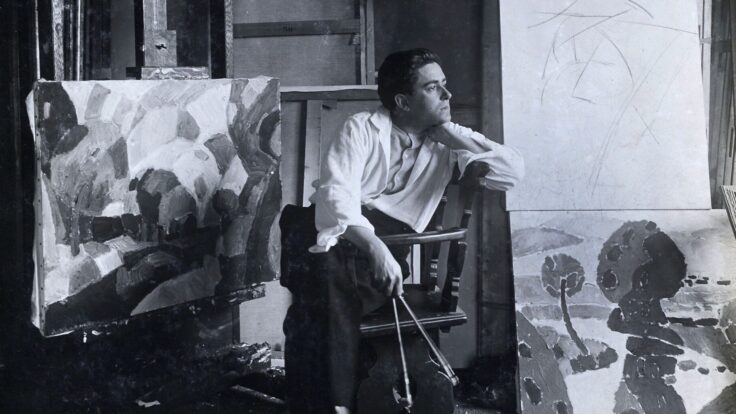
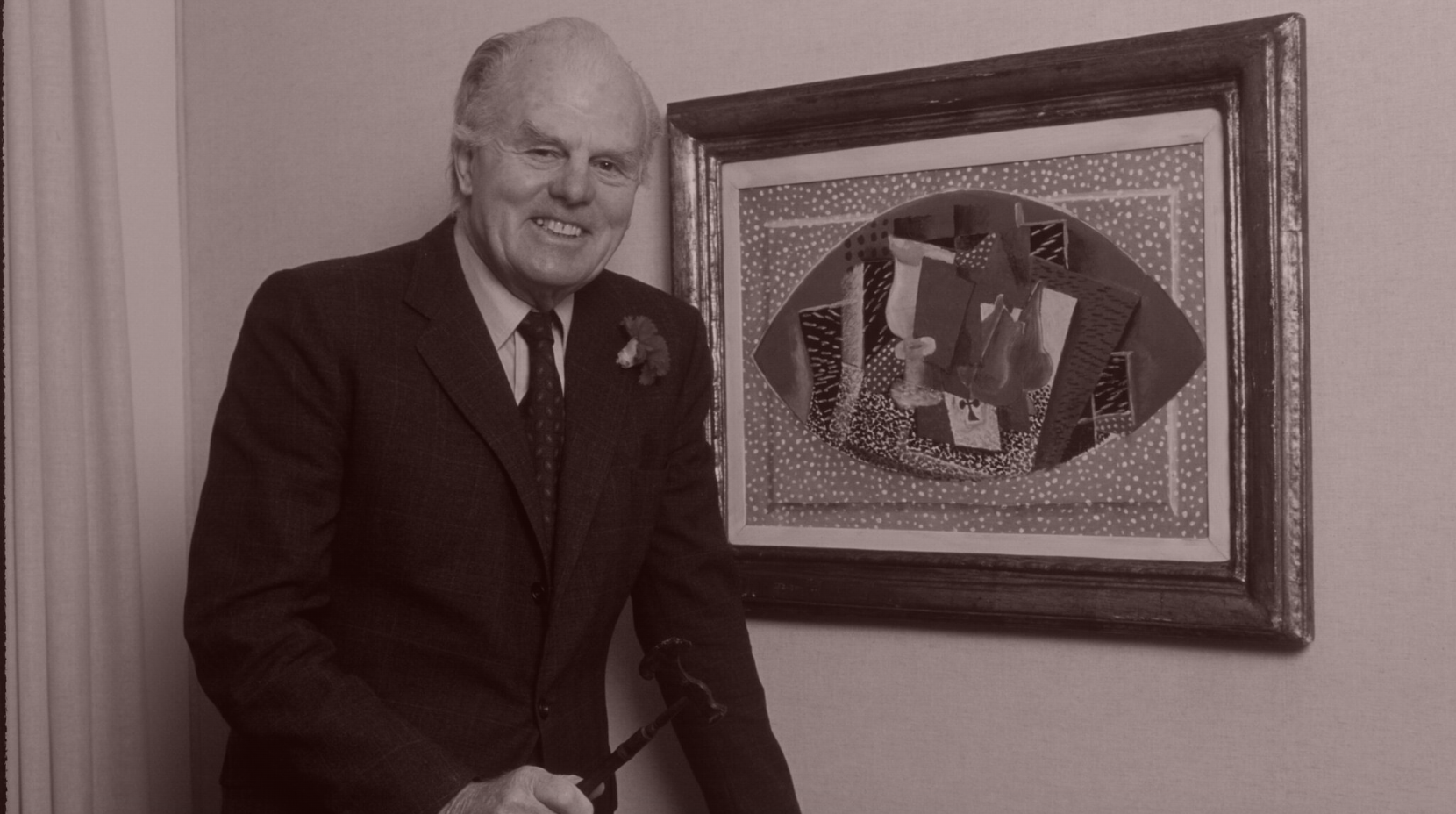
| For nearly 75 years, Eberhard Kornfeld, the determined auctioneer and thoughtful scholar, was the gravitational center of the European art trade. He died last year, just shy of his 100th birthday. Kornfeld made his mark early, taking over the leadership of an auction house in 1951, before he turned 30, that would eventually be called Galerie Kornfeld. In 12 days, that auction house will sell his personal collection of Modern art—including works by Edgar Degas, Edvard Munch, Paul Klee, Claude Monet, Georges Seurat, Marc Chagall, and Egon Schiele—into a global art market starved for high quality works.Among his other accomplishments, Kornfeld was known for his scholarly works and preservation efforts around the life and career of Ernst Kirchner. He also had friendships with Alberto Giacometti and Sam Francis. Works by each of these artists are among the highlights of the sale, which arrives at a time when the auction market continues to turn toward historical works, and away from the most-contemporary artists. Indeed, the arrival of a high-quality supply of 20th Century works should be an exciting opportunity for collectors. |
| A MESSAGE FROM OUR SPONSOR |
 |
| Iconic Collection welcomes you to the cutting-edge world of luxury brands and experiences. More than just shopping centers, these are destinations for the next generation of consumers where traditional retail is reimagined through innovation, sustainability, community partnerships, and one-of-a-kind experiences. Each Iconic Collection property provides visitors with high-profile retailers, eclectic culinary feats, and cultural concepts in inspiring settings. Furthermore, Iconic magazine extends this mission and commitment to print. Every issue examines the world of fashion, tech, retail, and beyond. Uncover upcoming trends, meet industry game changers, learn the art and story behind each Iconic Collection property, and so much more. |
|
|
| But for all the prestige that attaches to Kornfeld’s name, there is a dark side to his legacy. Throughout his career, Kornfeld stubbornly resisted campaigns to restitute works he had sold that were once owned by Holocaust victim Fritz Grünbaum. These include an Egon Schiele that the Art Institute of Chicago is now challenging in court. (My partner Bill Cohan has also covered the Schiele restitution incisively.)Kornfeld was also implicated in the Gurlitt scandal. Nearly 15 years ago, a German customs official discovered an elderly man, Cornelius Gurlitt, on a train carrying €9,000 in cash. Gurlitt’s Munich apartment was raided, and a large hoard of German art was discovered. Gurlitt had never had a job. His father, Hildebrand Gurlitt, had been an art dealer to the Nazis, and all the works found in his apartment were by artists Hitler had declared degenerate. It was later revealed that the younger Gurlitt had been selling art works through Kornfeld, whom he visited every four to six weeks to exchange art works for cash he needed for living expenses. When Gurlitt died, he donated the remainder of his trove to the art museum in Bern, Kornfeld’s hometown and base of operations. |
|
|
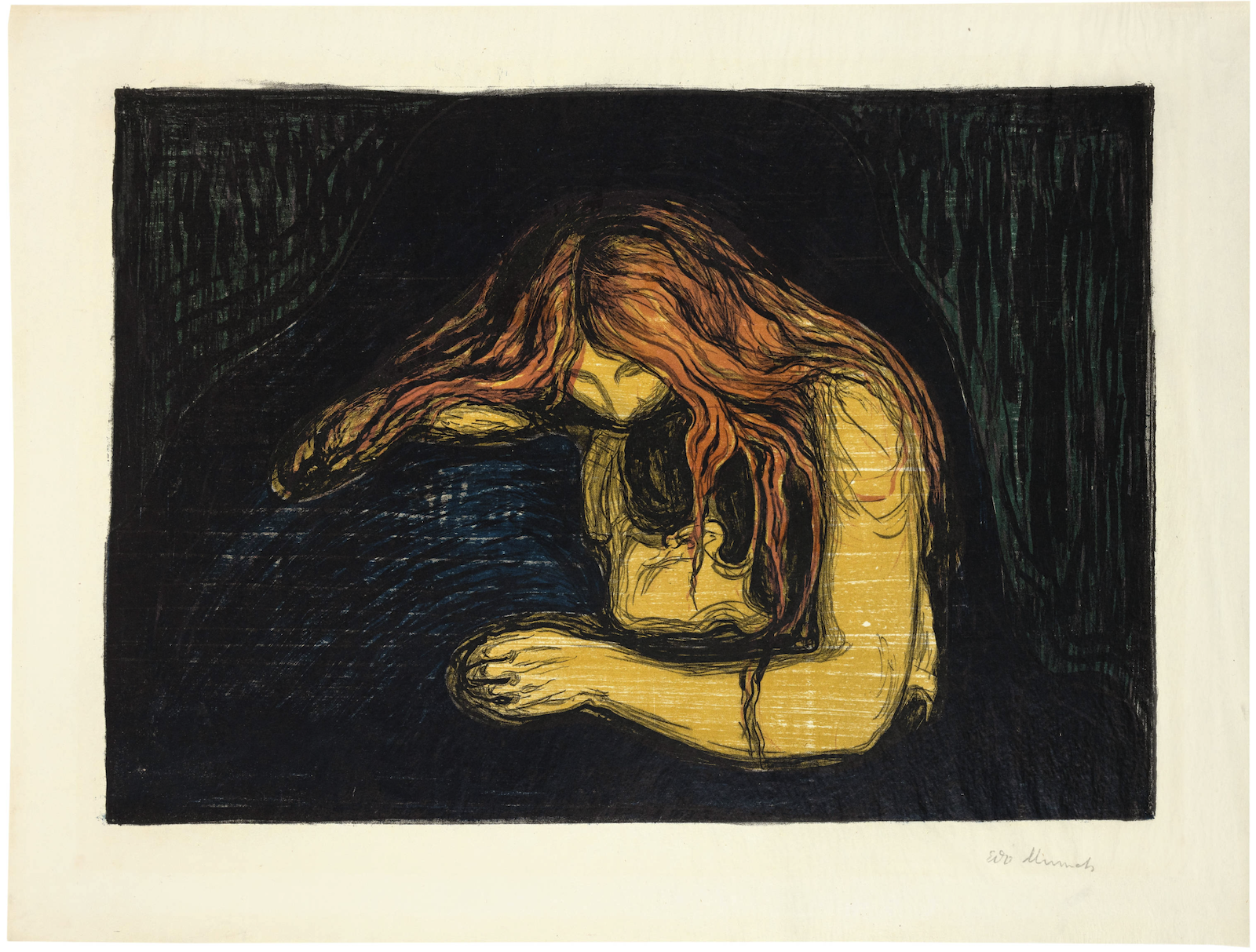 |
| Edvard Munch, Vampire II (1895-1902) 500,000 CHF ($588,000) |
|
|
| Whatever Kornfeld’s willingness to step close to the line (or across it), there is no doubt about the quality of the works on offer. Kornfeld donated several works by Alfred Sisley, Kirchner, Henri Matisse, Sam Francis, Alberto Giacometti, and his father, Giovanni Giacometti, to the Kunstmuseum Bern that filled holes in that institution’s collection.Because of Kornfeld’s long history with Kirchner, there is a separate catalogue of works by the German expressionist painter. Many of the lots are works on paper. (You tend to find works on paper in the collections of connoisseurs because they are usually considered more intimate, showing the artist’s process, or detail a specific idea that is important to the connoisseur but might seem too arcane to the average collector.)
In the Kirchner sale, there are five important works ranging from a 1910 painting of a windmill, estimated at 2.25 million Swiss francs, or $2.65 million, to a self-portrait from 1925-26, estimated at 800,000 Swiss francs ($940,000). The self-portrait is the cover lot of the Kirchner sale, which also includes a painting on cardboard of two nudes made in 1910 that is estimated at 1 million Swiss francs ($1.19 million).
The 50-lot sale of various artists’ works has a number of surprises. The most expensive lot by estimate is a Giacometti, Stèle III, estimated at 7.5 million Swiss francs (more than $8.8 million). Two Giacometti paintings—one of his studio from 1951, estimated at 6 million Swiss francs ($7.06 million), and a 1960 portrait of Aiko estimated at 5 million Swiss francs, or nearly $6 million—follow down the estimate scale. There is also a plaster bust of his brother Diego, which is estimated at $2.5 million Swiss francs, or nearly $3 million.
Diego was a frequent sitter for Alberto, but he was also an important artist and artisan in his own right. Diego’s furniture pieces are must-have decorative objects for the global cognoscenti these days, and the sale includes a chandelier and a table by the artist, with a combined estimate of 1.25 million Swiss francs, or nearly $1.5 million.
Sam Francis’s Paris Summer painting from 1958 is also included in the sale, with a 3 million Swiss franc estimate, or more than $3.5 million, along with one of his works titled Blue Balls from two years later, which has an estimate that is one-tenth of the earlier painting. A ghostly Paul Cézanne from 1904, once owned by Ambroise Vollard, has a 1.5 million Swiss franc ($1.76 million) estimate. Juan Gris’s very good example of cubism, Le Journal from 1915, is estimated at 1.25 million Swiss francs ($1.47 million). |
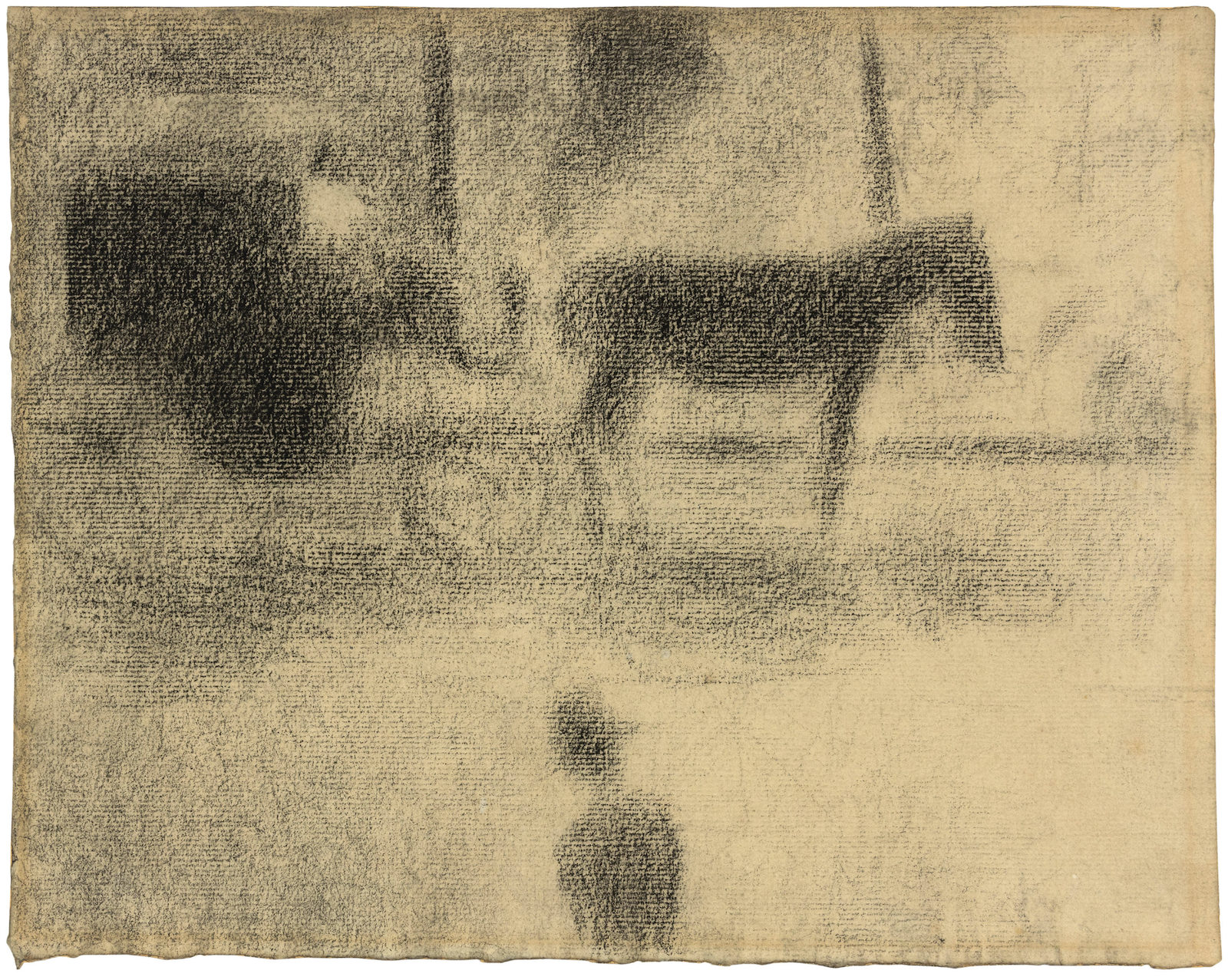 |
| Georges Seurat, Le Fiacre (1885) 1.5 million CHF ($1.76m) |
|
|
| Not all of the gems in the sale are paintings. Kornfeld had exquisite works on paper by Seurat, Chagall, Klee, and Piet Mondrian, among others. Two Seurat Conté crayon works—shadowy black-on-black drawings that have a seemingly miraculous sense of depth and volume—are offered at 2 million and 1.5 million Swiss francs, respectively.A 1912 Chagall gouache, Le marchand de bestiaux, estimated at 1.75 million Swiss francs, comes from the period that excites collectors, especially Chinese collectors. And there are four of Edvard Munch’s prized prints, which can sell for very substantial prices depending upon the condition of the works. These are Munch’s Madonna, from the late 1890s, estimated at 800,000 Swiss francs, or $940,000; The Lonely Ones, a woodcut from 1899, estimated at 600,000 Swiss francs, or a little more than $700,000; Vampire II from 1895, a vivid example of one of Munch’s most famous images, estimated at 500,000 Swiss francs ($588,000); and, finally, The Sick Child, from 1896, estimated at 300,000 Swiss francs.
Two Klee watercolors from 1914 are both estimated at 1 million Swiss francs ($1.19 million). And Mondrian’s charcoal on paper Ocean 4, from 1914, comes to market at the same estimate. |
|
|
|
|
| In cases where there is going to be interest in a single-owner collection due to the consignor’s strong reputation, an auction house will often set the estimates at very attractive levels. This is a signal to anyone who might assume the works would be out of their reach. The strategy is used to maximize participation, which is usually the key to strong sales, especially in a market where prices have needed to come down to attract bidders.Galerie Kornfeld has taken the opposite approach. Many of the works are estimated near the selling prices of comparable pieces from the past decade of the modern market. Estimates are not reserve prices, so the auctioneers may be setting the numbers at aspirational levels—or they could be calculating that buyers have begun to accept that inflation, especially in the European market, has to be priced into everything.
Normally, this would just be a strategic choice of the auction house. But in the current market, the estimate level could be the difference between a sale that generates momentum and one that merely meets expectations. I won’t say the future of the art market depends upon this small sale in Switzerland. But it could be a stepping stone toward bringing more of these works to market and educating a new generation of buyers. |
|
|
| I hope you’re enjoying these final days of summer. On Friday, the Financial Times published some leaked numbers from a Sotheby’s bond report. Although there’s a fair bit of extraneous background information, the gist is that EBITDA in the first half of 2024 declined 88 percent, to $18.1 million, which is tough for a company with a lot of debt. (The numbers look a little better without some one-time costs and would have been down 60 percent, to $67.4 million.) All of this was on $558.5 million in revenue for the first half of 2024, down 22 percent from the previous year, when it was $712.3 million.The FT also reveals the not-surprising plan to use $700 million of the approximately $1 billion that is supposed to be injected into the company by the end of the year to pay down debt, which should reduce the overall debt burden from $1.8 billion to closer to $1 billion.
Sotheby’s majority owner, Patrick Drahi, has become a recurring character in the Puck cinematic universe, and we’ll delve more into this ongoing drama throughout the fall season.
Until then,
Marion |
|
|
|
| FOUR STORIES WE’RE TALKING ABOUT |
 |
|
 |
| Powder Trip |
| Lessons from Givenchy’s hero product nightmare. |
| RACHEL STRUGATZ |
|
 |
|
 |
|
|
|
|
|
 |
|
|
| Need help? Review our FAQs
page or contact
us for assistance. For brand partnerships, email ads@puck.news. |
| You received this email because you signed up to receive emails from Puck, or as part of your Puck account associated with . To stop receiving this newsletter and/or manage all your email preferences, click here. |
| Puck is published by Heat Media LLC. 227 W 17th St New York, NY 10011. |
|
|
|