Welcome back to Dry Powder. I’m William D. Cohan. And greetings from Puck’s
Nantucket bureau, where I’m dutifully holding down the fort.
We’re living through strange times, indeed. In particular, we’re living through the year of the I.P.O., as Blackstone’s Jon Gray recently noted. In today’s issue, I take a look at two companies—one that just went public, another that’s about to head out—that together neatly articulate this phenomenon. I also have some news and notes on Elon Musk’s greenshoe and an update on the
Bankman-Fried clan.
One last thing before we get started: My partner Marion Maneker, who writes the incomparable art world newsletter Wall Power, is bringing back our Art of Influence conference, co-produced with the FLAG Art Foundation, for year two. It’s taking place September 23 at the Bowery Hotel. You—or your art advisors—can buy tickets here.
|
Also mentioned in this issue: Barbara Fried, Luca Ferrari,
Barry Diller, Matteo Danieli, Tomasz Greber, Danny DeVito, Francesco Patarnello, Steve Schwarzman, Luca Querella, and more. |
-
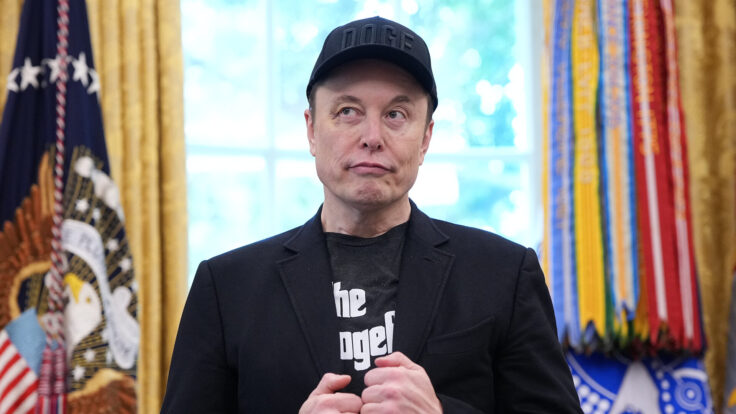
The greenshoes: At $75 billion, as we all know, the recent SpaceX I.P.O. was the largest on record, and the underwriters hoovered up more than $555 million in fees. (Goldman Sachs and Morgan Stanley, which led the process, took down $111 million each.) Less appreciated is the fact that the overallotment option granted to the underwriters—known in Wall Street argot as the greenshoe—resulted in the sale of an additional 83 million SpaceX shares, valued at $11.25 billion. So the
SpaceX I.P.O. therefore also led to the largest greenshoe ever.
Assuming the same roughly 67 basis-point fee that the underwriters received for managing the I.P.O., the exercise of the $11.25 billion greenshoe normally would have reaped another $75 million or so in fees to the underwriters. But that crafty Elon Musk actually negotiated with the underwriters that there would be no fee on the subsequent sale of the greenshoe stock. Although unusual, it was probably
not such a bitter pill for the underwriters since the main I.P.O. created a half-billion-dollar windfall.
In fact, Goldman and Morgan Stanley had a little fun with the whole greenshoe freebie for Elon. On June 12, as a Goldman team gathered to watch the first trades at 200 West Street, the bank’s HQ in Lower Manhattan, they were all wearing the customary banker habillement, along with something a little unusual: green shoes! (Custom green Nikes, to be precise.) The moment was
lovingly captured on Instagram.
Not to be outdone, the bankers at Morgan Stanley followed up with their own Instagram post of its massive banking team—it takes a big village—all wearing their own green Nikes. (Everyone looks so young in both photos!)
Maybe this year of massive I.P.O.s has launched a new Wall Street fashion trend? I can’t wait to see my first pair of Air Solomons in the wild.
|
|
|
|
A MESSAGE FROM OUR SPONSOR |
INSPIRE AWE
Revered by all. Driven by those who lead by example. Elevate every move you make in a Range Rover.
EXPLORE
|
|
|
|
-
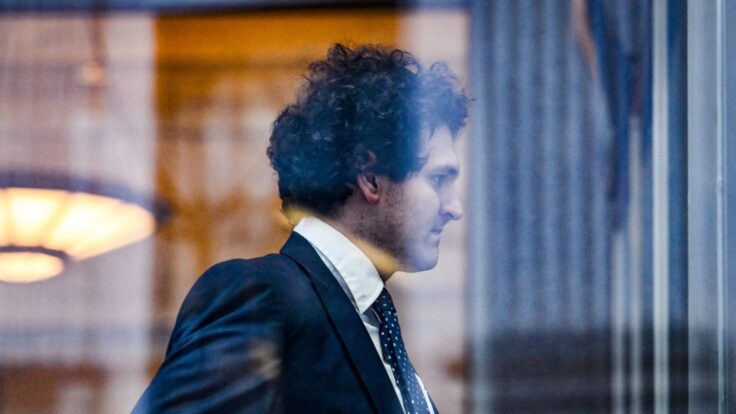
A lament for S.B.F.’s mom: While the rest of us were celebrating the country’s 250th birthday, Barbara Fried was decrying the recent decision by the Second Circuit Court of Appeals to reject her son’s appeal. Barbara was particularly peeved by the court’s failure to remove the $11 billion penalty judgment against Sam, which is payable when he is released from prison in 2044.
As I have previously written, Sam proved to be one of the best venture
capitalists of all time, with savvy investments in Anthropic, the aforementioned SpaceX, and Cursor, which SpaceX just bought for $60 billion. “To be clear: Sam will owe the $11 billion even if all the FTX ‘victims’ are repaid in full out of assets of the FTX estate, as it is now clear they will be,” Barbara wrote on her Substack the other day. “The forfeiture is, in short, purely punitive in purpose, as if a 25-year prison sentence for a nonviolent, first-time offender weren’t punitive
enough.”
During the hearing about Sam’s appeal last November, according to Barbara, the justices asked specifically about the “legal and constitutional basis” for the $11 billion fine—which led her to think that “the panel was going to strike down the forfeiture order as excessive.” But it was not to be. “The fact that the panel could have affirmed it with such equanimity says a great deal about the institutionalized, mindless cruelty of our criminal justice system,” she wrote. I have to
say, I’m with Barbara on this one. Confining S.B.F. to a lifetime of poverty even after he serves his ridiculous 25-year sentence is cruel and unusual punishment.
The next day, Barbara wrote about the trip she and her husband made to see Sam at the Lompoc Federal Correctional Complex on July 4. “No need to comment on the irony of visiting him on Independence Day,” she wrote. While visitations are allowed in federal prison, she explained, the inmate must sit on one side of a meeting table
while the rest of the family has to sit on the other. She then shared a poignant story from their visit to see Sam. “It was a beautiful day yesterday, and Sam, Joe, and I sat at one of the outside tables, a hawk lazily circling overhead,” she wrote. “At a nearby table there was an inmate and four family members—mother, wife, and two young children. When they first greeted each other, the inmate had swooped the kids up in his arms, the kids squealing with happiness and hugging
him for dear life. Now, mother, wife and kids were squeezed on a bench on one side of the table and the inmate was sitting alone on the other. A guard came outside and headed for their table. We watched, curious. We couldn’t hear what the guard said, but as she turned to leave, the two children jumped up and ran around the table to sit on either side of their dad, who put his arms around them. Joe and I looked at each other, both tearing up. Even in hell, there are moments of grace.”
|
And now, onto Blackstone’s latest windfall… |
|
|
|
During the Year of the I.P.O., as declared by Blackstone’s Jon Gray back in
February, two recent entrants into the canon stand out—one just completed and the other still to come. And neither has anything to do with space. |
|
|
|
Back in February, Blackstone’s Jon Gray dubbed 2026 the Year of the I.P.O., and he was
clearly onto something. Of course, I don’t need to tell you about SpaceX, or Anthropic, which is still on schedule to debut in the fall (though OpenAI is looking shakier). But believe it or not, these are not the only three private companies in the world. In fact, two other I.P.O.s—one from earlier this month, one planned for later this year—should further solidify this year’s reputation precisely because they are attracting lofty EBITDA multiples despite having nothing to do with A.I.
or space.
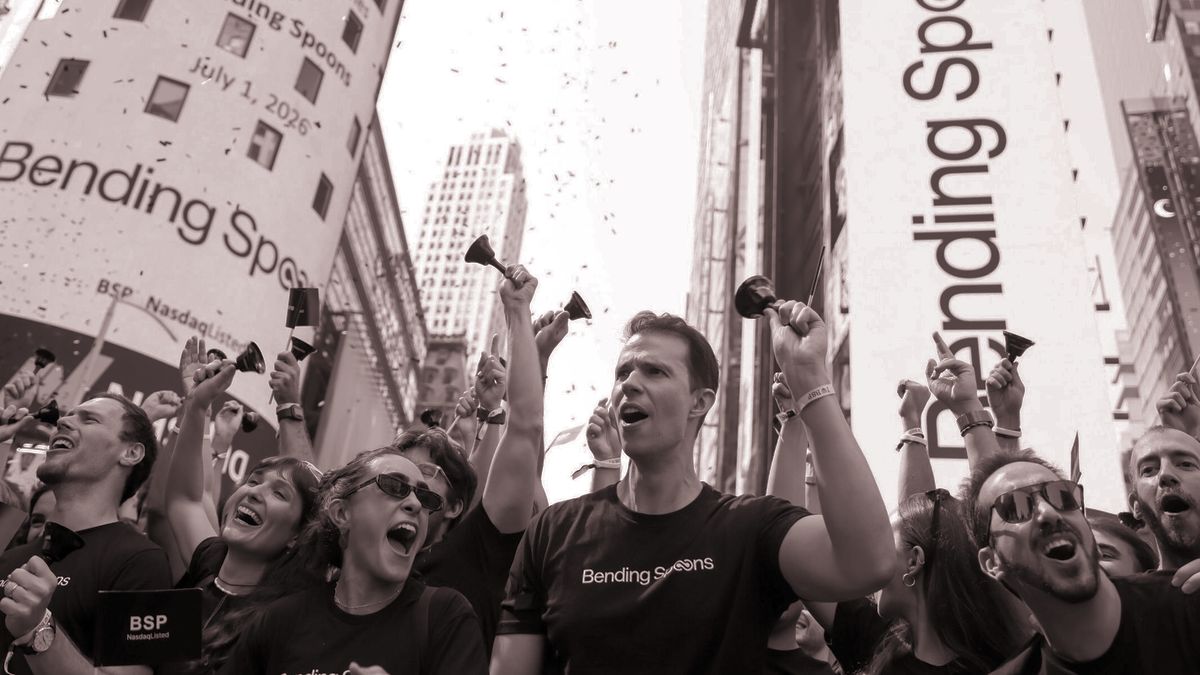
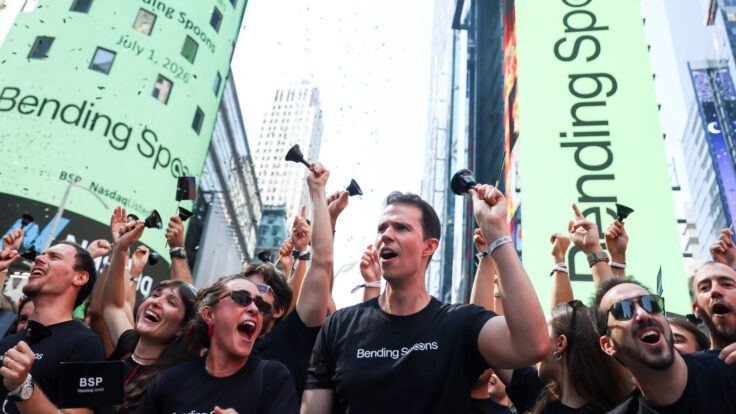
On July 1, a Milan-based holding company with the funky name Bending Spoons completed its successful I.P.O.—raising $1.7 billion through underwriters led by Goldman, JPMorgan Chase, and Allen & Co. The I.P.O. price per share was $29, above the marketed range. On its first day of trading, the stock rose nearly 40 percent and closed at $40.50, giving the company a market capitalization of nearly $26 billion. Bending Spoons’ four Italian founders—Luca
Ferrari, the C.E.O. and no relation to Enzo; Matteo Danieli; Luca Querella; and Francesco Patarnello—together control around 55 percent of the company and 83 percent of its voting shares. Each of them is now worth roughly $3 billion each. A fifth founder, Tomasz Greber, owns less stock but is probably also a billionaire (tough break, Tomasz).
The company—whose name, according to the I.P.O.
prospectus, is “a nod to the fictional concept of bending spoons with the mind”—was conceived on a backpacking trip in Lombok, Indonesia, of all places, in the summer of 2010. In the familiar startup narrative, three of the founders, exhausted yet exhilarated by their adventure, decided to create a smartphone app that used artificial intelligence to generate a user’s diary. They raised $1 million to hire a “scrappy team” of 10 to build the app, dubbed Evertale—but three years later, alas, the
company had no revenue, four months of remaining runway, and “a hard truth to reckon with.” So they liquidated Evertale and used the remaining $40,000 to start Bending Spoons, a holding company with a business plan to acquire and rehabilitate forlorn, once-promising tech companies. |
|
|
|
A MESSAGE FROM OUR SPONSOR |
INSPIRE AWE
Revered by all. Driven by those who lead by example. Elevate every move you make in a Range Rover.
EXPLORE
|
|
|
|
Bending Spoons has since made roughly 50 acquisitions, starting around 2022 with Filmic, a video and
photography app, for an undisclosed amount. In February 2023, the company acquired Evernote, a note-taking app that was once valued at $1 billion. In 2024, it acquired Brightcove, a video infrastructure company, for $233 million, as well as Meetup, WeTransfer, and a bundle of apps once owned by Barry Diller’s IAC. Last year, the company acquired Komoot, a navigation app, for around $325 million; MileIQ, a mileage tracking app, for $233 million; and then three biggies: Vimeo for
$1.4 billion, the old AOL (yes, it still exists…) for roughly $1.5 billion, and Eventbrite for $500 million. In sum, Bending Spoons spent some $5 billion buying up these fallen angels—and probably more, given how many of the acquisitions were done without disclosing the purchase price. The company has total liabilities of $6 billion.
Has the alchemy worked? With its $26 billion market cap, Bending Spoons trades at 93.5x its 2025 operating income of $278 million, or 20x its 2025
revenue of $1.3 billion. That’s pretty good for a bunch of tired internet companies! And with a little non-GAAP financial engineering, the multiples don’t look so outrageous, which is for sure the point of the adjustments contained in the prospectus. Bending Spoons’ “adjusted operating income” for 2025 was $613 million, and its “adjusted” operating margin was a dreamy 47 percent, thereby rendering the operating income multiple a mere 42.4x by this sort of banker math. Updating the numbers
through the first quarter of 2026 yielded an “adjusted operating income” for the last 12 months (of what is available) of $826.2 million and a multiple of 31.4x.
No matter how you slice it, the post-I.P.O. valuation of Bending Spoons represents some nutty Wall Street alchemy. By comparison, Alphabet is trading at roughly 15x trailing EBITDA. Would you rather own Alphabet at 15x EBITDA or AOL at 31x EBITDA? This is not investment advice. |
Another I.P.O. in the pipeline that similarly confirms the enthusiasm of the Year of the I.P.O. comes from
Gray’s Blackstone itself: the decidedly analog Jersey Mike’s, a collection of more than 3,200 submarine sandwich shops across all 50 states. Blackstone purchased a majority stake in Jersey Mike’s in early 2025 at an enterprise valuation of around $8 billion. (Blackstone’s precise ownership percentage will be revealed when the 580-page I.P.O. prospectus, filed July 2, gets updated.) And I’m sure you’ve seen both the Jersey Mike’s commercials featuring Danny DeVito and the
photographs of Blackstone founder Steve Schwarzman digging into a Jersey Mike’s sub.
Like Bending Spoons, the Jersey Mike’s I.P.O. will also be a bonanza for its owners. The hoped-for enterprise valuation of Jersey Mike’s is around $12 billion, a 50 percent jump since Blackstone bought in. That should add a pretty penny to Schwarzman’s nearly $50 billion net worth.
But just like at Bending Spoons, Blackstone’s bankers at Morgan Stanley, Jefferies, and JPMorgan
Chase have some outsize expectations for what truly is—no offense—a rather mundane business. In 2025, Jersey Mike’s generated $328 million of “adjusted EBITDA,” which makes the $12 billion enterprise value a 36.5x multiple of 2025 adjusted EBITDA. If you use the adjusted EBITDA of $343 million for the 12 months ended March 2026, the EBITDA multiple contracts slightly, to 35x.
Look, I get it. Wall Street underwriters must push for the highest valuation possible at which to sell stock,
while also allowing for that coveted first-day pop. I.P.O.s are, of course, designed to benefit the company selling stock (or its selling shareholders), while also leaving enough on the table for the institutional (and lucky retail) investors to get a first-day increase. It’s more art than science. You don’t want the first-day pop to be too big for investors buying in at the I.P.O. price, or the client will be pissed about selling stock too cheaply. But the converse is also true: You don’t want
to price the I.P.O. too richly so that the first-day bounce is a bust, or worse, trades down below the I.P.O. price. That will leave institutional investors and retail investors with a very sour taste, indeed.
We are quite obviously in a very, very frothy market, which is why ludicrous companies like Bending Spoons are not only coming to market but also trading above their I.P.O. price. Jersey Mike’s is not a ludicrous company. It’s been around since 1956 and, at the store level,
has been consistently profitable, with corporate profitability really ratcheting up during the Blackstone ownership period. Whether that merits a 35x EBITDA multiple will be something for investors to judge. In this market, though, I suspect it will probably fly right out the door. |
|
|
|
Need help? Review our
FAQ page or contact us for assistance. For brand partnerships, email ads@puck.news.
You received this email because you signed up to receive emails from Puck, or as part of your Puck account associated with {{customer.email}}. To stop receiving this newsletter and/or manage all your email preferences, click here. |
Puck is published by Heat Media LLC. 107 Greenwich St., New York, NY 10006 |
|
|
|
|