Welcome back to Wall Power. I’m Marion Maneker, writing to you from the
East Coast again and hoping the weather finally breaks tomorrow as predicted.
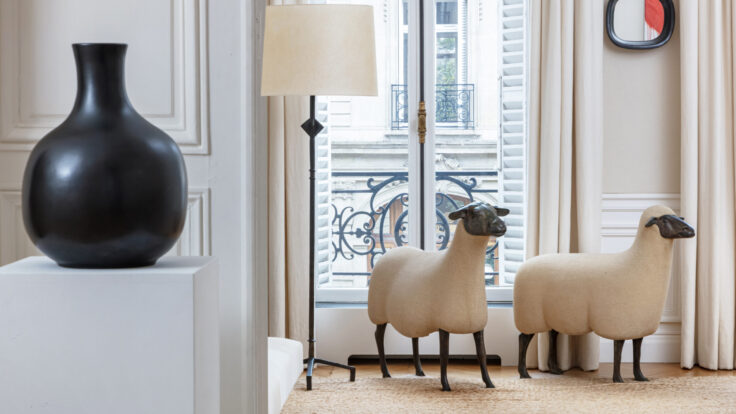
Tonight, I indulge in art advisor Hugo Nathan’s suggestion that the art market could be made more attractive to new buyers if we approached collecting from a different vantage point—the pure enjoyment in surrounding yourself with great and beautiful things. Nathan calls that decoration, and he’s campaigning to reclaim the often misunderstood word. Up top, a big career move for
Anicka Yi, impressions from my visit to the Frederick R. Weisman Art Foundation in Los Angeles, and more.
Mentioned in this issue: Anicka Yi, Frederick Weisman, Norton Simon, Roy Lichtenstein, Yves Saint Laurent, Pierre Bergé, Giancarlo Giammetti, Valentino Garavani, Jean-Michel Basquiat, Francis
Bacon, Richard Prince, Sarah Stein-Sapir, and more…
Let’s get started… |
-
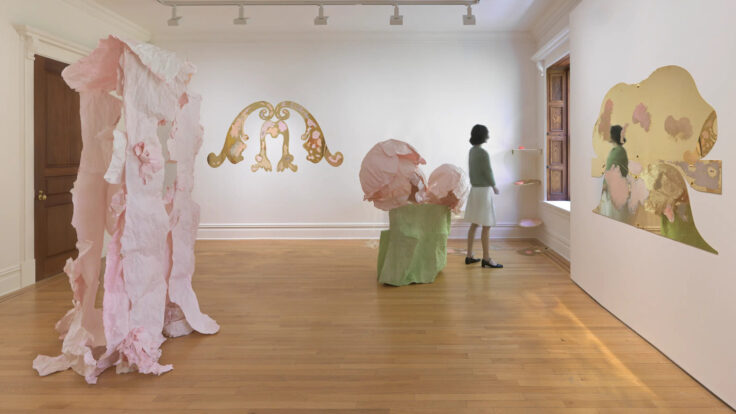
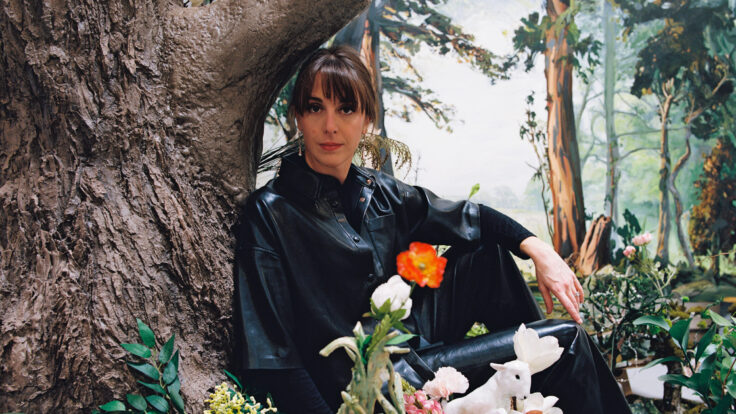
Anicka Yi joins Pace: Late March will be a busy time for Anicka Yi. Her work will appear in the New Museum when it reopens on March 21 with the show New Humans: Memories of the Future. Then, on March 27, another new Yi work will appear at Pace Gallery’s booth at Art Basel in Hong Kong, inaugurating the artist’s representation by the global gallery. (Yi will continue to be represented by Gladstone Gallery, 47 Canal, and Esther Schipper.) If that’s not enough, in
May, the artist’s first large-scale outdoor project will debut at Storm King Art Center in Mountainville, New York. That work will create a “complex microbiological portrait of the genetic, bacterial, and geological makeup of the local landscape.” Using soil and water samples drawn from the ponds on Storm King’s expansive site, Yi will try to present a “prehistoric biofiction” of the area’s history.
- Inside the Frederick Weisman sanctum sanctorum: While
I was in Los Angeles last week, I finally got a chance to see the Frederick R. Weisman Art Foundation, which is the former Beverly Hills home of the namesake art collector and businessman. The foundation had been closed for several years as the house was repaired. Weisman, his first wife, Marcia, and his brother-in-law, Norton Simon, were all important Los Angeles collectors who gave a lot of art to LACMA. Norton also donated the bulk of his
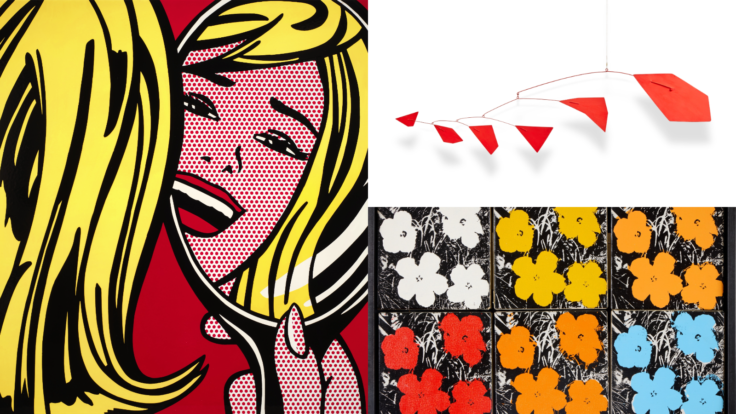
works to the museum in Pasadena that now bears his name. Even after a divorce and the donations, the house contains some 400 artworks by a wide range of artists, including Roy Lichtenstein, Alberto Giacometti, Diego Giacometti, François-Xavier Lalanne, Andy Warhol, Donald Judd, Frank Stella, Isamu Noguchi, Yves
Klein, Jackson Pollock, Sam Francis, Tom Wesselmann, Francis Bacon, Keith Haring, and Helen Frankenthaler.
How a collector lives with their art is very different from the way we experience it in a museum, gallery, or auction house setting. In Weisman’s case, the art
overpowers the house, even the bright yellow chintz in the primary bedroom. The high points of the collection are in the living room, where works by Clyfford Still, Mark Rothko, Jean Dubuffet, and Picasso hang near two very important works by Willem de Kooning. One is Dark Pond, from 1948, which is among the artist’s breakthrough pieces that are now known as the black-and-white
paintings. The other is Pink Angels, from around 1945, which de Kooning’s biographers Annalyn Swan and Mark Stevens call “the work in which de Kooning comes into his own as a mature artist,” an estimation they believe the artist himself shared. - And finally… Tracey Emin at the Tate: Late last week, the Tate opened its
retrospective of Tracey Emin’s career from provocative confessional artist to grand dame, literally. Titled Tracey Emin: A Second Life, a reference to her status as a cancer survivor, the show gathers together her installations, neons, photographs, paintings, and bronzes as she seems to be poised for what she describes as the peak of her career.
|
Now, let’s get to the main event… |
|
|
The London art advisor has called for a return to “decoration”—meaning collectors
buying what they want, reflective of their tastes and personality, rather than treating art as just another asset class. Will the art world listen? |
|
|
One question above all others has been nagging the art market as it trudges through its three-year
slump: What will it take to attract more potential buyers? A possible answer was proposed earlier this year by Beaumont Nathan co-founder Hugo Nathan, who declared in a newsletter at the start of the year that “speculation is out, decoration is in.” He went on to say that while “decoration” was “a term long reviled by many in our industry,” it was the very thing that would prompt a return to “an earlier era of collecting, when individuality, personality, [and] pleasure” were the
guiding principles.
Since the global financial crisis, two dominant themes have attracted new buyers to art, each with its own implications. The first was the discovery that art was a real asset class. Rising values across top artists from 2009 to 2015 gave the impression that works could be bought and held until they inevitably appreciated in value, sometimes at rates faster than financial investments. But though there are often periods when the value of art rises, it does not do
so steadily or evenly across artists and categories. Since then, speculating in art—buying it to hold or store in order to resell but not to hang on one’s walls—has been fading. Yes, there are still a few players in that game, but the payoffs aren’t what they were just a decade ago.
Sometime around 2018, another theme emerged: the discovery of underrepresented talent. Art-buying became a legitimate venue for celebrating diversity, and buyers of all persuasions were able to widen
their aperture for artists. Through the pandemic, and fueled by the liquidity of that moment, art as a reflection of changing social and cultural values drew in new buyers and activated more seasoned collectors. Of course, all of these cycles run their course and tend to merge, and eventually there was speculative buying in emerging talent as well—with artists often defined more by their background and attributes than by their work itself.
I’m not suggesting there is anything wrong with
either of these reasons for becoming engaged or enamored with art. Over time, the best art does go up in value. And, if you’re lucky enough to spot work that is undervalued, the financial gains of art collecting can be very real and very gratifying. But no one who collects, even legendary collectors who’ve sold their holdings for a fortune, buys art to make money. They buy it to live with it, to have the distinct pleasure of forming a personal attachment to it. And the best collectors often
become as attached to their most valuable and important works as they do to the quirkier ones that the market doesn’t quite hold in the same regard. |
Before you look down your nose at the idea of decoration, remember that much of the world’s great
art was commissioned with that very purpose in mind. Nathan pointed out that most works now considered masterpieces were a product of the patronage of the “extremely wealthy” looking to decorate private and public spaces. “You know,” Nathan, an Old Masters expert, reminded me, “the Sistine Chapel ceiling is decoration.”
No one is suggesting that we need the pope to save the art market. But buying art for a financial return or to demonstrate one’s social awareness doesn’t really hold much
attraction these days. In place of those motivations, Nathan suggested, we should be emulating some of the great collectors who bought art primarily to be excited and inspired by the objects around them, to show their taste and sophistication, and to express their individuality by adding art—sometimes in surprising or jarring juxtapositions—to their homes. For Nathan, this kind of collecting has been best exemplified by fashion designers like Yves Saint Laurent,
who, with his partner Pierre Bergé, “was collecting at the very upper echelons of the market—every single thing he bought was great enough to be in a major museum.” But the pair were also “layering” their apartment in Paris. “He didn’t stop at pictures,” Nathan told me, “and didn’t stop at the walls—because he had paintings on easels and littered around.” Y.S.L.’s maximalist approach integrated great furniture with a wide variety of design objects and historical
treasures that simply excited or intrigued him. “And I rather like that,” Nathan summed up. “If you’ve got it, show it.”
The other notable attribute of collectors who decorate is a certain democratic interest in the visual appeal of a work of art or object over an artist’s name recognition or art-historical ranking. This point was brought home for me when I saw a picture of another fashion industry collector’s bedroom. Giancarlo Giammetti has owned many great and
expensive works of art, with his partner, Valentino Garavani, as well as on his own—including important works by Jean-Michel Basquiat, Francis Bacon, and Richard Prince. But Giammetti chose this Philip Taaffe painting to sit above his bed. It’s beautiful, but hardly a trophy work. His goal
was merely to live in a great room.
Nathan is always prospecting for new clients, and he suggested that decorating is a great way to get new buyers into art collecting. It usually starts with a major real estate purchase followed by a desire to make the new home a reflection of the owner’s aspirations. “Now not every decorator becomes an impassioned collector who then carries on collecting even though they’ve got no wall space,” Nathan cautioned. “But they may have quite often started as
a decorator. Very rarely will someone start as a speculator and become a collector. In fact, almost never, because they usually end up getting their fingers burned and having to sell everything.” |
Hugo made a very compelling case. And while I was taking it all in, I read on Friday a Bloomberg
story about a phenomenon: the supposed uniformity of everybody’s art collections. Citing some marginal figures as authorities while casting about for a cause, the article asked, “Why does everyone’s art collection look the same?” We don’t have to accept the article’s premise—that collectors all have works by the same
artists because of Instagram or too many art fairs—to suggest that the issue is rooted in too many collectors buying art without thinking about where they will hang it, or with what. (This isn’t a new consideration: See my note about the Frederick Weisman collection.) The problem Bloomberg is groping to describe could be solved if more collectors bought pieces to suit their own self-expression and taste, and that can be fitted together as a cohesive whole. In other words, it
would be better if they were trying to decorate, not collect.
That’s not to say there isn’t a culture of sameness in art collecting that can easily reach Succession levels of parody, sparking complaints about people who are not serious. Decorating won’t solve all the world’s problems, but it puts the whole of the experience above the individual parts even as it allows collectors greater freedom to indulge in peculiar interests with offbeat works or artists or unexpected
accent pieces.
To get a better sense of how the decorating process works, I spoke to Sarah Stein-Sapir, an art advisor who often works with literal decorators. Her clients have included a number of property developers looking for art to help define a real estate project. The market for decorating lobbies in super-luxury condo buildings in New York and Miami with art has cooled in the past seven years, but the appetite among a new group of wealthy professionals for buying
second and third homes has not. Stein-Sapir, echoing what another art advisor told me last year, told me that she’s had a lot of new clients come to her because they made a real estate purchase. “Decorating doesn’t have to be a four-letter word,” she said.
But Stein-Sapir has also had the “soul-crushing” experience of being siloed away from the client by the designer and receiving only dimensions as a guide. That said, she described the ideal client as one who “wants to spend a lot of
money but is also interested in the art”—even if it’s usually a process to get anywhere close to that ideal. Some clients like the idea of going to an art fair and picking out a few nice things; still, over time, Stein-Sapir tries to inculcate an appreciation for the entire process, from education to exploration to the experience of living with things that are continually engaging. “You get the experience—and the thing,” she said. “It’s the gift that keeps on giving.” |
Before I go, just one note regarding this New York Times
story about how wealth inequality is warping Jackson, Wyoming. I’m not here to comment on the decline of civic culture in the face of aggressive rich people. But the statistics about the growing number of billionaires as a product of Trump’s tax cuts—the Times estimates that the number of American
billionaires jumped by 50 percent after 2017, to more than 900, or more than twice as many as there were before the financial crisis—are a reminder that we have not seen this trend impact the art market, even with the pandemic boom, as might have been expected.
Also, and bear with me here, I noticed this Wall Street Journal
story about micropublishers, who mail out monthly newsletters to subscriber bases of thousands and are making meaningful incomes from old-fashioned, hard-copy publishing. Some portion of the population continues to crave physical objects that are also experiences. Maybe that’s a counterpoint to the
billionaires who are bypassing art?
I’ll leave you with that thought. Back again tomorrow with detailed results from the New York midseason sales.
M |
|
|
Finally, a media podcast about what’s actually happening in the media—not the oversanitized,
legal-and-standards-approved version you read online. Join Dylan Byers, Puck’s veteran media reporter, and Julia Alexander, a longtime media analyst, as they sit down with TV personalities, moguls, pundits, and industry executives for raw, honest, sometimes salacious conversations about the business of media and its biggest egos. New episodes publish every Tuesday and Friday. |
|
|
The ultimate fashion industry bible, offering incisive reportage on all aspects of the business and its biggest
players. Anchored by preeminent fashion journalist Lauren Sherman, Line Sheet also features veteran reporter Rachel Strugatz, who delivers unparalleled intel on what’s happening in the beauty industry, and Sarah Shapiro, a longtime retail strategist who writes about e-commerce, brick-and-mortar, D.T.C., and more. |
|
|
Need help? Review our FAQ page or contact us for assistance. For brand partnerships, email ads@puck.news. You received this email because you
signed up to receive emails from Puck, or as part of your Puck account associated with {{customer.email}}. To stop receiving this newsletter and/or manage all your email preferences, click here. |
Puck is published by Heat Media LLC. 107 Greenwich St., New York, NY 10006 |
|
|
|