Hello, and welcome back to The Best & The Brightest. I’m Leigh Ann
Caldwell.
In today’s issue, Abby Livingston reports on the spicy Democratic primary for Michigan’s open Senate seat, where the heated competition is making Democrats nervous and Republicans cautiously optimistic about their chances in an otherwise tough year. Plus, news and notes on some blockbuster hearings coming up on the Hill—including a very rare exercise in Republican oversight.
Mentioned in this issue: Rodney Scott,
Todd Lyons, Joseph Edlow, Andrew Garbarino, John Thune, Abdul El-Sayed, Mallory McMorrow, Haley Stevens, Mike Rogers, Rebecca Katz, Zohran Mamdani, Gary Peters, Bernie Sanders, Gretchen Whitmer, Elissa Slotkin, and many more…
|
- Deportation
nation: There will be three potentially explosive House hearings tomorrow, starting with a rare exercise in executive branch oversight from the Republican-led Congress. Rep. Andrew Garbarino, the chair of the Homeland Security Committee, called for a public hearing after federal immigration agents killed two U.S. citizens in Minnesota. Todd Lyons, the acting director of ICE, is scheduled to testify alongside Rodney Scott and
Joseph Edlow, the directors of Customs and Border Protection and U.S. Citizenship and Immigration Services, respectively. Cook Political Report ranks Garbarino’s Long Island district as solidly R+6, but the lawmaker could be vulnerable in a blue wave election—which may be a reason he’s decided to conduct some oversight now.
|
|
|
Science fuels farmers ability to grow healthy, abundant food for Americans. That’s why companies like Bayer depend on
rigorous, predictable, science-based standards to bring new tools to market for farmers. Innovation isn’t a buzzword, it’s the lifeline that gives growers more options and keeps America’s food supply secure.
At Bayer, we succeed when farmers succeed.
Learn more.
|
|
|
- Freedom250’s
shadowy funds: Also Tuesday, the House Committee on Natural Resources will hold a hearing about celebrating America’s 250th anniversary in national parks. As with many things having to do with Donald Trump, the semiquincentennial—comprising a seemingly innocuous series of events—has been mired in controversy, including allegations of graft and political access-mongering. But Democrats are crying foul over Freedom250, a Trump-created LLC associated with the National
Park Foundation that will hold its own celebrations around the country. The organization has raised unknown millions from unknown individuals, since it’s not required to disclose its donors. Democrats complain that it has an overt religious focus, diminishes aspects of U.S. history including slavery, and has transferred money from America250—the bipartisan entity that Congress created a decade ago to organize the birthday festivities. “Freedom250 allows Trump to hide donors, use foreign money,
and rewrite history,” a Democratic committee aide said.
- The debate over “nationalizing” elections: Finally, the House Administration Committee, which oversees elections, will hold a hearing called “Making Elections Great Again”—the same week that House Republicans vote on the SAVE America Act. Meanwhile, Trump has again doubled down on his ominous calls to “nationalize” elections—the administration of which is constitutionally delegated to the
states. Republicans themselves used to point this out when Democrats tried and failed to pass the John Lewis Voting Rights Act during the Biden administration.The SAVE America Act (essentially an updated version of the SAVE Act) would require people to provide proof of citizenship when registering to vote, and a photo ID when voting—a provision that some say would limit mail-in ballots. Republicans say the bill would eliminate voter fraud and prohibit noncitizens from
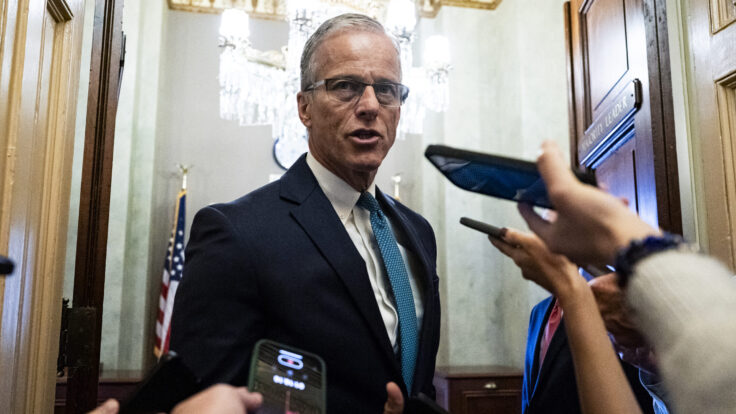
voting, though fraud is incredibly rare, and noncitizens already can’t vote in federal elections. Regardless, the bill has become a top priority of the MAGA grassroots, who are putting a tremendous amount of pressure on Republicans to pass it—even arguing that Sen. John Thune should alter the filibuster to do so in the face of Democratic opposition.
- Epstein redux: The dramatic hearings don’t stop there. Attorney General Pam Bondi will testify Wednesday before the House Judiciary Committee in a general oversight hearing. The Epstein files, of course, will be one of the many things Democrats will grill her about.
|
Now for the main event...
|
|
|
Michigan’s three-way Democratic Senate primary is attracting historic gobs of money, drawing
national talent, and providing an early preview of the sort of swing-state chaos the party can expect in 2028. It might also end up costing Democrats the seat.
|
|
|
Of all the races in all the states in a turbulent midterm year, the battle for Michigan’s open Senate seat is
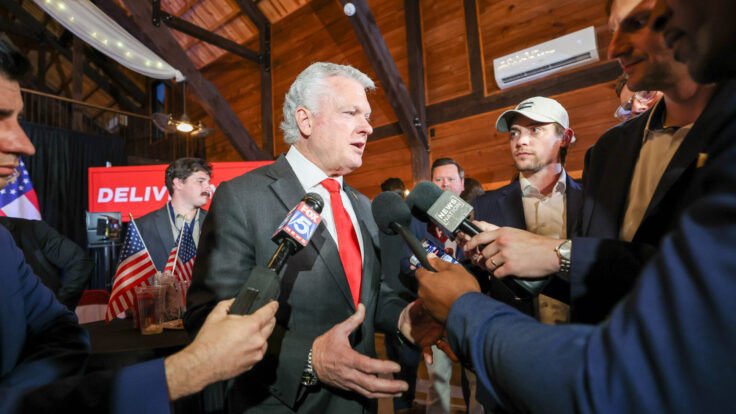
becoming something of an obsession for political operatives in both parties. It’s the highest-stakes, most unpredictable contest on the map in 2026: Dems fret that a vicious primary could cost them retiring Sen. Gary Peters’ seat, while Republicans are salivating over the prospect of a pickup in a pivotal battleground—even in a tough year for the G.O.P.
|
|
|
Science fuels farmers ability to grow healthy, abundant food for Americans. That’s why companies like Bayer depend on
rigorous, predictable, science-based standards to bring new tools to market for farmers. Innovation isn’t a buzzword, it’s the lifeline that gives growers more options and keeps America’s food supply secure.
At Bayer, we succeed when farmers succeed.
Learn more.
|
|
|
The instability of the Democratic side, one Republican strategist told me, is the “X factor” in how the
general ultimately shakes out. Granted, the Republican de facto nominee, former Rep. Mike Rogers, faces the major disadvantage of the political environment—the president’s approval is plunging and signs of a coming Democratic wave are legion. But he at least doesn’t have to worry about a damaging primary, having cleared the field early with an assist from Donald Trump, and he has the structural advantage of being able to spend more than a year
building up his war chest for the fall. (He had no such luck in his last contest, against now-Sen. Elissa Slotkin, when he had to fight through a primary himself and lost narrowly in the general.) His future Democratic opponent, meanwhile, will have to survive a rough three-candidate primary that doesn’t even conclude until August 4, and will be depleted of cash just as the general-election fight begins.
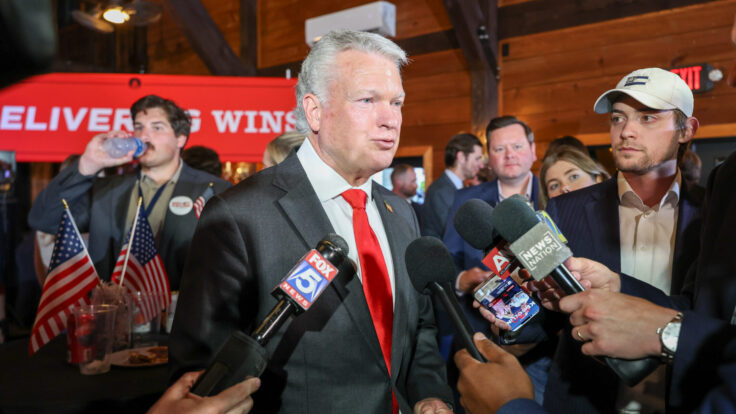
The Democrat with the upper hand in the preseason has been Rep.
Haley Stevens, who is running a conventional, general election–centric campaign, staking her fortunes on the traditional Michigan issue of manufacturing. Stevens, who recently reported a $1 million cash-on-hand advantage over the other Dems, is an ex- Obama staffer with a great deal of institutional support—including donations from Obama campaign manager Jim Messina and Steve Rattner, who was her boss when she worked on Obama’s
2009 auto bailout. She’s historically benefitted from pro-Israel money as well. But while Stevens is also believed to have implicit support from Senate leadership, Michigan’s big-name powerbrokers—former governor Jennifer Granholm, Slotkin, Peters, Gov. Gretchen Whitmer, and former senator Debbie Stabenow, who helped Slotkin last
cycle—remain on the fence.
Then there’s State Senator Mallory McMorrow, who achieved internet stardom with a viral speech in 2022, identifying herself as a “straight, white, married, Christian, suburban mom” and declaring she wanted “every child in this state to feel seen, heard, and supported, not marginalized because they’re not straight, white, and Christian.”
McMorrow has leveraged her name ID to national prominence and viable fundraising, and has moved to the left on certain issues—she now calls Israel’s actions in Gaza “a genocide.”
Indeed, that specific issue is expected to be among the most divisive in a state with a large Muslim population that
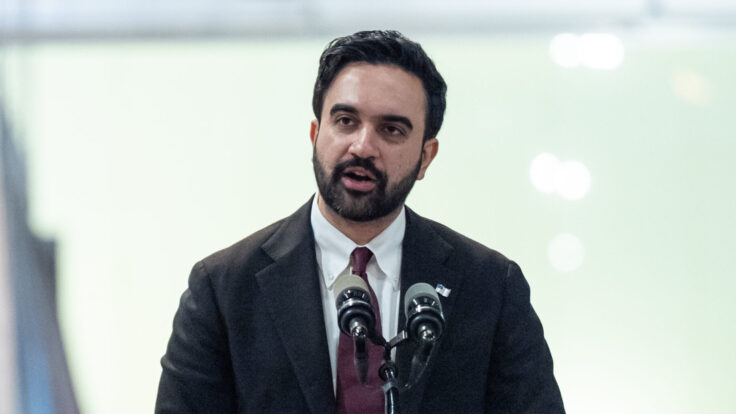
turned on Biden, and then Kamala Harris, in 2024 over their support for Israel, helping cost Democrats the state. The third candidate, Dr. Abdul El-Sayed, is the most progressive of the bunch. A Muslim who hails from the Bernie branch of the party, El-Sayed has campaigned on
a version of Medicare for All, abolishing ICE, and support for Palestinians.
|
Perhaps the biggest fear of establishment Democrats, and a ray of hope for the G.O.P., is the idea that
El-Sayed could win in the primary but lose in the general. Several top Democratic strategists told me they worry that McMorrow and Stevens might carpet-bomb each other with negative TV ads, clearing a path for El-Sayed. “He’s going to spend all that money on positives while we beat the shit out of each other,” said one. El-Sayed spokeswoman Sophie Pollock said in response: “Abdul’s going to keep talking about what people actually care about and what we can deliver for working
people. We’re betting that is going to be the key to success in 2026.” In any case, McMorrow and El-Sayed have been attacking each other, rather than Stevens, with El-Sayed accusing McMorrow of co-opting his policy positions on issues like regulating data centers and ICE.
|
|
|
This level of competition and complexity in a Senate primary has become rare in Democratic politics over the
last 20 years, mainly because Chuck Schumer has been so successful in recruiting and clearing the way for his favored candidates. When competitive Senate primaries do happen, they rarely shed light on the presidential primaries that follow. But Michigan, with its national consultants, endorsements, and money, is the closest thing to a presidential primary dry run we’re likely to see ahead of 2028.
Many of the Democratic consultants involved will undoubtedly be first-round
draft picks among ambitious presidential candidates next year. The Stevens campaign roster includes communications consultant Caitlin Legacki and pollster Brian Stryker of Impact Research, one of the most sought-after firms in presidential contests. McMorrow’s lineup includes Lis Smith and Andrew Mamo, media consultants Brad Elkins and Isaac Baker, and pollsters Andrew Baumann and
Melissa Bell. The firm employed by El-Sayed, Fight, is headed by Rebecca Katz, who has moved candidates including New York Mayor Zohran Mamdani, Pennsylvania Sen. John Fetterman, and Arizona Sen. Ruben Gallego through primaries to general-election victory. Then there’s an entire other ecosystem of Democratic consultants who will work for outside groups backing the candidates, meaning more major Democratic firms
than not will probably get their fingerprints on this campaign before it’s over.
The consultant wars are already playing out on social media, where campaign advisors and supporters are already sparring hourly six entire months before the voting starts—despite working as colleagues on campaigns elsewhere in the country. “I am working with all of them,” one of the Democrats involved in the race told me of his operative rivals. “It’s all so 2028.”
|
|
|
Join Emmy Award-winning journalist Peter Hamby, along with the team of expert journalists at Puck, as they let you in on the
conversations insiders are having across the four corners of power in America: Wall Street, Washington, Silicon Valley, and Hollywood. Presented in partnership with Audacy, new episodes publish daily, Monday through Friday.
|
|
|
Unique and privileged insight into the private conversations taking place inside boardrooms and corner offices up and down Wall
Street, relayed by best-selling author, journalist, and former M&A senior banker William D. Cohan.
|
|
|
Need help? Review our
FAQ page or contact us for assistance. For brand partnerships, email ads@puck.news.
You received this email because you signed up to receive emails from Puck, or as part of your Puck account associated with {{customer.email}}. To stop receiving this newsletter and/or manage all your email preferences, click here.
|
Puck is published by Heat Media LLC. 107 Greenwich St., New York, NY 10006
|
|
|
|