{{ 'now' | timezone: 'America/New_York' | date: '%b %d, %Y' }}
|
|
|
Welcome back to Dry Powder. I’m Bill Cohan.
Now that Saks Global
has declared bankruptcy and is making the required court filings, we can finally look under the hood and figure out how this thing collapsed so spectacularly—and so quickly. As I’ve been reporting for months, a restructuring seemed pretty much inevitable given the $4 billion-plus debt load that Saks Global took on after financing its acquisition of Neiman Marcus Group with a $2.2 billion junk bond.
Below, I’ll unpack a fascinating document contained in the company’s filings: a
signed declaration by newly appointed chief restructuring officer Mark Weinsten, which should be of interest to loyal readers—and, of course, to the creditors who are now poised to own Saks Global.
Also mentioned in this issue: Gunnar Wiedenfels, the Ellisons, Geoffroy van Raemdonck, Richard Baker, Michael Gross, and more…
But first…
|
-
Is it time for David to see Dad in Florida?: Now it really is all about the value of Gunnar Wiedenfels’s Global Networks business. On Tuesday morning, Netflix and Warner Bros. Discovery entered into a revised merger agreement that values WBD at $27.75 per share, all cash, plus the value of the Global Networks equity stub. Meanwhile, the Netflix stock has been removed from consideration and replaced with another $11 billion-plus in cash. So, dear WBD
shareholder, it’s now up to you—barring any new “best and final” bid from the Ellisons. You can either take the Netflix deal or the Ellisons’ all-cash, $30-a-share bid for all of WBD.As I’ve written for months, it’s all coming down to how shareholders value the stub equity of Global Networks. If they believe it’ll be worth more than $2.25 a share when it starts trading in the third quarter of this year, the Netflix deal prevails. If not, it’s an easy decision: The
Ellisons win. The Paramount Skydance team, of course, thinks $2.25 is pure fantasy, and is valuing Global Networks at anywhere between $0 and $1.40 a share.
For the first time—and despite the Delaware judge’s ruling against PSKY—WBD has included copies of the Allen & Co. and JPMorgan Chase fairness opinions in its just-filed 520-page proxy. These fairness opinions go into considerable detail about the value of Global Networks, but do not come to a clear conclusion on what the stub equity
will be worth. Instead, they get into the usual Wall Street analyses of comparable public companies, similar M&A transactions, and a discounted cashflow analysis.
As a result, WBD served up a wide range of values for the Global Networks stub equity in its proxy: The public company analysis yielded a value range of between $1.33 and $3.24 per share, and a sum-of-the-parts value range of between $2.41 and $3.77 per share; the comparable M&A deals analysis yielded a value range of
between $4.63 and $6.86 per share, and the banks’ discounted cashflow analyses yielded a value range of between 72 cents and $1.65 per share. There is also the relatively unhelpful “whole company” valuation of $2.28 per share for Global Networks, and $3.09 per share for the “midpoint” of the sum-of-the-parts valuation. So it’s a big range.
At this point, with the two offers virtually the same from an economic point of view, I guess it comes down to which deal is more likely to get the
needed regulatory approvals. This is going to get even more interesting.
|
Now on to the main event…
|
|
|
Amid a torrent of bankruptcy filings, a blunt declaration by Saks Global’s newly
appointed chief restructuring officer lays out precisely what went wrong and when, and who got screwed hardest—plus which risk-hungry investors are likely to call the shots moving forward. As it turns out, the company’s capital structure became “unsustainable” almost immediately after its $2.7 billion acquisition of Neiman Marcus Group in December 2024.
|
|
|
One week after Saks Global filed for bankruptcy, a picture is emerging of how the
American department store conglomerate—a luxury retail behemoth encompassing Saks Fifth Avenue, Neiman Marcus, and Bergdorf Goodman—collapsed so quickly. Until recently, most of its financial information was private: With the exception of Saks Global’s debt, which was publicly traded, the company was not required to make any public filings with the S.E.C. Now, as part of the bankruptcy docket, hundreds of filings—more than 350 already—are shedding light on the financial difficulties
that Saks experienced throughout 2025, starting just months after its $2.7 billion acquisition of Neiman Marcus Group. One document, in particular, stands out.
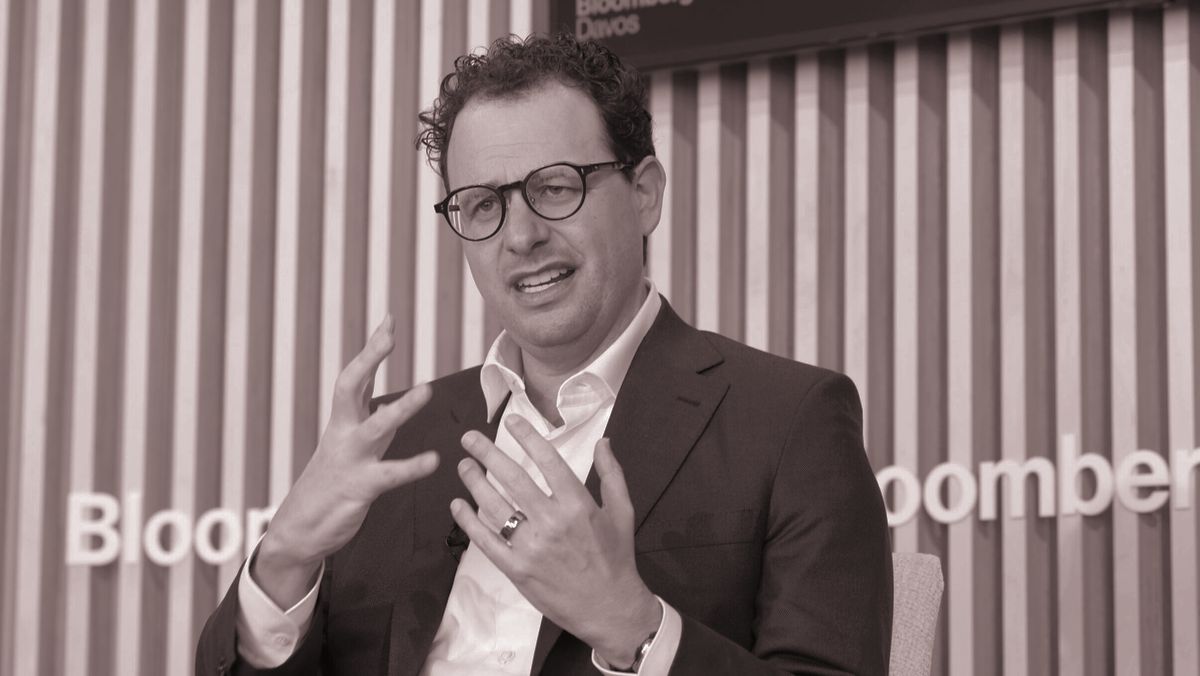
On January 14, Mark Weinsten, the newly appointed chief restructuring officer of Saks Global, wrote and signed a “declaration” that laid out in stark terms precisely what happened to Saks. Weinsten presumably knows the company as well as anyone: He was the chief restructuring officer at Neiman Marcus during its own 2020 bankruptcy
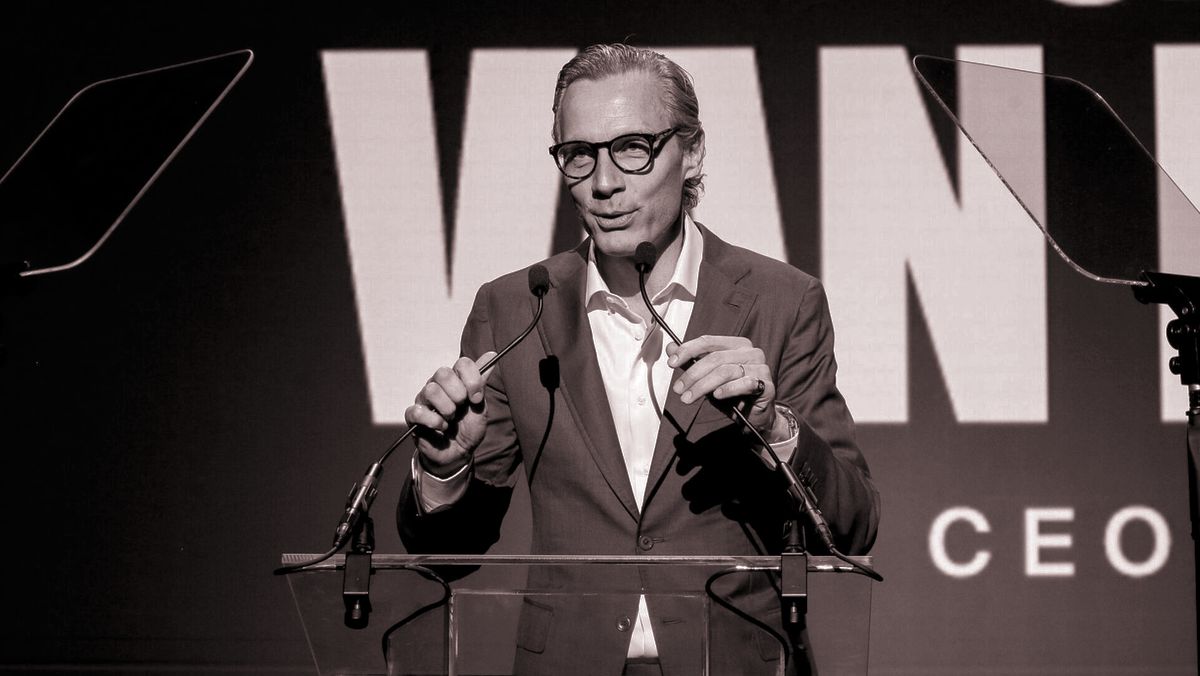
proceeding, and most recently served as the interim C.F.O. of Saks Global. In his new role, he’ll be working closely with Geoffroy van Raemdonck, the new C.E.O. of Saks Global and former C.E.O. of Neiman Marcus. Weinsten will essentially be running the bankruptcy process for Saks Global while van Raemdonck operates the business.
|
|
|
Every so often you reach a moment that demands an important conversation. When it arrives, Glenmede is ready
with sophisticated wealth and investment management solutions delivered with the personalized service you deserve.
LEARN MORE
|
|
|
The fall of Saks Global, in Weinsten’s telling, was primarily the consequence of
leverage and liquidity issues. Despite the promise of the Neiman Marcus Group merger, as laid out in the $2.2 billion bond prospectus from December 2024, Weinsten wrote that “following the Acquisition, the Company faced immediate liquidity challenges, and the capital structure became unsustainable.” In the fiscal year and sales performance ending February 1, 2025, Weinsten revealed, Saks Global’s consolidated total revenue fell nearly 14 percent compared to the previous fiscal year, and was “softer than expected” in the
second quarter of 2025. “Sustained liquidity issues” made it increasingly difficult to purchase the inventory to meet customer demand.
Some of these challenges might have been foreseeable. To fund the acquisition of Neiman Marcus Group and refinance its debt, Saks Global used the proceeds from the $2.2 billion junk bond, underwritten by Jefferies, plus $1.54 billion of new equity from the likes of Amazon and Richard Baker, among others, and a new asset-based
lending facility, or ABL, and then some so-called “seller financing” from the former Neiman Marcus creditors. But problems beset Saks Global nearly immediately, Weinsten explained. Saks Global struggled to pay vendors on time, which “strained relations with brand partners.” In turn, he wrote, “Vendors were less willing to ship goods to the Company, leaving the Company unable to build an adequate amount of seasonal inventory leading into Spring of 2025.” It was a vicious cycle: The lack of
inventory also led to a reduced “borrowing base” and reduced availability under the ABL facility, further exacerbating Saks’ liquidity issues.
Last February, two months after closing the Neiman deal, Saks Global began “considering strategies to address these challenges,” Weinsten wrote. It made changes to its business model, such as extending payment terms to vendors from 30 days to 90 days. The company also worked to identify synergies—Weinsten says Saks Global still expects to “realize”
$600 million in total “run-rate” synergies over the next four years—and began looking for “a new money financing solution” to “provide it the flexibility necessary to catch up on vendor payments” and “address” its first interest payment ($120 million or so) on the $2.2 billion junk bond, which was due June 30.
Saks hoped to arrange for the new financing by mid-May 2025. On April 28, the company announced it had secured commitments for a package of $350 million in a new money financing facility from SLR Credit Solutions, a private
credit provider founded by Michael Gross, an early partner at Apollo. Alas, it turned out, “the SLR financing could not be executed on the terms of the commitments previously obtained from SLR.”
That’s when Saks embarked on its liability management exercise, or L.M.E.—otherwise known around Wall Street as “creditor-on-creditor violence”—which pitted some holders of the $2.2 billion Saks junk bond against others. In late June, some creditors agreed to provide Saks Global
with up to $600 million of new financing in exchange for improving their position in the Saks capital structure. It was a coercive process: Participate in the new financing and get a leg up on your fellow creditors in the event of a bankruptcy, or don’t participate and become a junior creditor to those who did provide the new financing. But the L.M.E. was fully allowed by the covenants in the bond indenture. (Disclosure: Earlier this year, Saks sued Puck over our coverage of its financial condition.)
|
Armed with commitments for the new money, Saks successfully completed an exchange offer in August
that converted its $2.2 billion junk bond into $762.5 million of first-lien notes, $1.4 billion of second-lien notes, and $440.8 million in third-lien notes. Holders of some $51.2 million of the original $2.2 billion bond did not participate in the exchange offer, and that amount of the original bond remains outstanding, shoved down to near the bottom of the Saks capital structure. As part of the exchange, Saks Global was able to capture a $115 million discount when it bought back most of the
original bond.
But the new financing failed to stem the liquidity concerns, Weinsten wrote. As a result of a “significant second quarter EBITDA loss,” Saks had to use the bulk of the new money for “working capital purposes” and could use only $244 million to pay vendors what it owed them. In addition, Weinsten explained, there was a “merchandising system” integration problem that “disrupted inventory receipts” at both Neiman Marcus and Bergdorf Goodman, resulting in a
“significant reduction” in Saks’ borrowing base under the ABL line. “With less liquidity to continue paying brand partners and other vendors,” he wrote, “the benefits of the $244 million vendor paydown were negated. These liquidity issues and the continued backlog of past due trade payables caused the Debtors to lose out on opportunities for ‘chase’ inventory—in-season replenishment of in-demand items—and the downward trend in the Debtors’ business and liquidity continued.”
At the end of
the second quarter of 2025, Saks’ inventory levels were 9 percent below the previous year. “Liquidity was stretched in a way that did not allow the Debtors to restore inventory receipts to normalized levels,” he wrote. As a result, vendors continued to pull back from shipping inventory to Saks. In the second half of 2025, inventory receipts were $550 million below a July 2025 forecast, further curbing Saks’ access to its ABL line. At the end of December, Saks faced interest payments totaling
some $126 million, which, Weinsten wrote, it was “unable to pay.” The 2025 EBITDA, he declared, “will be a loss.”
|
|
|
Every so often you reach a moment that demands an important conversation. When it arrives, Glenmede is ready
with sophisticated wealth and investment management solutions delivered with the personalized service you deserve.
LEARN MORE
|
|
|
But it wasn’t all bad news: “Company data indicates that when stores have inventory, the
inventory sells,” Weinsten continued. The run-rate “synergies,” expected to come in at $150 million by the end of 2025, were actually around $300 million. Since August, Saks has had one unified “merchandising platform,” allowing the company to “maximize its working capital efficiency.” He also explained that Saks’ customers are loyal, with “retention rates” for customers spending at least $10,000 a year exceeding 90 percent. (You know who you are…) “However,” he wrote, the company “needs debt
relief and substantial additional funding to take advantage of these positive indicators.” (A spokesperson for Saks Global did not respond to a request for comment.)
After “intense negotiations,” Saks determined that the “best path forward” was to obtain a DIP—a debtor-in-possession facility—from a group of existing creditors, who will provide $1 billion in “new money” during the course of the Chapter 11 proceedings, as well as an additional $500 million in financing if and when Saks
exits bankruptcy protection. Weinsten offered a note of optimism: “This vital liquidity boost, along with the benefits of the chapter 11 process, will give the Company critical debt relief and cash for its operations, allowing the Debtors to emerge from bankruptcy with a stronger financial foundation,” he wrote. Once all this mishegas is behind it, Saks can “reestablish its credibility and relationships with key brand partners and other important business partners, to play a central role in
shaping the luxury retail industry well into the future.”
|
As of the bankruptcy filing, Saks Global had borrowings totaling $3.4 billion, plus another nearly
$1.7 billion in “nonrecourse” debt related to the Saks Fifth Avenue store on Fifth Avenue as well as its 62 percent stake in a real estate joint venture with Simon Property Group. Saks also owed its vendors some $712 million collectively: Chanel is owed $136 million. Kering is owed $60 million. Rosen-X is owed $41.4 million. Saks also owes its accounting firm, PricewaterhouseCoopers, some $31 million. LVMH is owed around $26 million.
In his declaration, Weinsten
wrote that he had hoped there might be a different outcome for Saks Global than a bankruptcy filing. But it was not to be. “In late 2025, the Debtors explored the possibility of consummating one or more potential value-maximizing transactions outside of chapter 11, including with key equity holders and third-party investors,” he wrote. “These potential paths included sales of certain assets, financing alternatives with new and/or existing lenders, and holistic restructuring transactions.
Although the Debtors were hopeful that they could identify a transaction or series of transactions that would enable them to obtain much-needed liquidity and consensually recapitalize their balance sheet outside of a chapter 11 process, they ultimately were not able to reach agreement on the terms of any transactions with these constituents.”
Saks has said it intends to emerge from bankruptcy “later this year.” That timeline might be optimistic, given that no deal has yet been struck with
creditors regarding how the smaller Saks Global pie will be divided, who will own the company, and what kind of recovery those creditors will receive. It’s clear that the equity investors—among them Baker, Amazon, Salesforce, Authentic Brands, and the Rhone Group—will need to face the harsh reality of the situation, and that the new owners of Saks Global will probably be among the creditors who improved their position in the capital structure during the August exchange offer.
Existing
bondholders Pentwater Capital Management, which has around $9 billion in assets under management, and Bracebridge Capital, also with billions of dollars under management, provided the bulk of the new DIP financing to Saks—and it is generally assumed, at least at the moment, that these two creditors will end up having the largest ownership positions in Saks Global once all is said and done. But whether that amounts to a hill of beans depends on whether van Raemdonck and his management team can
make Saks Global profitable, at least on the EBITDA line, in 2026. If not, watch out below. There may be little to reorganize around.
|
|
|
Puck fashion correspondent Lauren Sherman and a rotating cast of industry insiders take you deep behind the scenes of
this multitrillion-dollar biz, from creative director switcheroos to M&A drama, D.T.C. downfalls, and magazine mishaps. Fashion People is an extension of Line Sheet, Lauren’s private email for Puck, where she tracks what’s happening beyond the press releases in fashion, beauty, and media. New episodes publish every Tuesday and Friday.
|
|
|
Puck’s daily political newsletter from Washington on what’s really happening in this town, from the White House to
the Pentagon to Capitol Hill, K Street, and the campaign trail.
|
|
|
Need help? Review our FAQ page or contact us for assistance. For brand partnerships, email ads@puck.news.
You received this email because you
signed up to receive emails from Puck, or as part of your Puck account associated with {{customer.email}}. To stop receiving this newsletter and/or manage all your email preferences, click here.
|
Puck is published by Heat Media LLC. 107 Greenwich St., New York, NY 10006
|
|
|
|