Welcome back to Wall Power. I’m Marion Maneker.
In today’s
issue, I’ve got another fun Sunday read from our friends at Air Mail. Bianca Bosker goes deep on van Gogh truthers who see murder in the artist’s suicide. Find out who the culprit is and why the wacky theory persists. Plus, up top, a number of galleries shared their Frieze Los Angeles sales with us so we can share them with
you.
Also mentioned in this issue: Njideka Akunyili Crosby, Lynette Yiadom-Boakye, James Turrell, Ewa Juszkiewicz, Lisa Yuskavage, Hugh Hayden, David Salle, Liza Lou, Barbara Kruger, Friedrich Kunath, Joan Snyder, Lucy Dodd, Leiko Ikemura, Louis
Fratino, and more…
Let’s see what sold in L.A.… |
As I mentioned on Friday and reiterated on Instagram throughout the weekend, the mood in Los
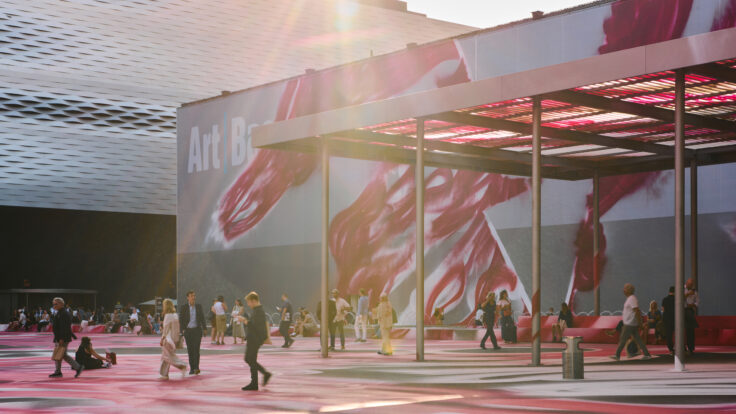
Angeles was good. The sales were pretty solid, too, according to the handful of galleries at Frieze Los Angeles that told us what they sold. The following is not a comprehensive list, and remember that selling art often takes a long time. That means that many of these sales came at the end of a longer process between the gallery and the buyer. At the same time, the fair could also have initiated a sales process that might culminate a few weeks or months from now. |
-
Almine Rech: Reported selling paintings by Ewa Juszkiewicz ($800,000), Joe Andoe ($100,000), Alexandre Lenoir (€75,000), and Chloe Wise ($65,000), as well as sculptures by Aaron Curry ($210,000) and Dustin Yellin ($70,000).
- David Zwirner: Wrote an invoice to a European foundation for a 2016 work by Njideka Akunyili
Crosby, Grandmother's Parlour ($2.8 million). They also sold a 2020 painting by Lynette Yiadom-Boakye ($1.5 million), a work on paper ($280,000) and a small painting ($180,000) by Lisa Yuskavage, and four paintings by Louis Fratino ($35,000–$75,000).
- Gagosian: Reported selling works like Ed Ruscha’s Heaven (1988) and
Hot Sparks (2025), Frank Gehry’s Fish on Fire (2023), Alex Israel’s Paramount Pictures (2025); and new works by Jonas Wood and Mary Weatherford (no prices announced).
- Lisson: Released sales of works by Olga de Amaral—Aqua 14, from 2016, and Estudio 12, from 2007 (no price announced);
Carmen Herrera’s Red Dot #38, from 1953 ($380,000); Hugh Hayden’s The Blughs, from 2026 ($300,000); Leon Polk Smith’s Reversible, from 1965 ($200,000); and Leiko Ikemura’s Blue Mom, from 2025 (€110,000).
- Pace: Sold James Turrell’s 2021 installation Carat and
Schtik ($950,000); a 1938 Jean Dubuffet painting ($475,000); a painting by Emily Kam Kngwarray, Transition, from 1990 ($450,000); one sculpture and two works on paper by Robert Longo ($175,000, $90,000, and $90,000); a Friedrich Kunath ($155,000); a sculpture by Leo Villareal ($125,000); and two works on paper by David Hockney (no prices available).
- Sprüth
Magers: Sold Lucy Dodd’s The 13th Moon, from 2016 ($130,000), and two works by Barbara Kruger: Untitled (Your misery loves company), from 1985 ($95,000); and Untitled (You do what you can to get what you want), from 1984 ($95,000).
- Tina Kim: Reported selling two Ha Chong-Hyun paintings ($250,000 and $180,000), two Lee
ShinJa textile works ($180,000 and $70,000), and a Kim Tschang-Yeul painting ($70,000).
- Thaddaeus Ropac: Announced sales of Alex Katz’s Purple Split 3, from 2022 ($700,000); David Salle’s The Green Vest, from 2025 ($280,000); Liza Lou’s Hypotaxis, from 2025 ($225,000); Joan Snyder’s
Howl/Heart, from 2011 ($140,000); Georg Baselitz’s Ohne Titel, from 2025 (€85,000); Martha Jungwirth’s Untitled, from 2025 (€75,000); and Adrian Ghenie’s Self-Portrait, No. 3, from 2010 (no price available).
|
Now, let’s go to van Gogh… |
|
|
A handful of tenacious art sleuths believe the Dutch painter’s suicide was
staged—by his killer. |
|
|
Irv Arenberg, an 85-year-old retired ear surgeon, lives in Arizona and counts
among his patients the late artist Vincent van Gogh. Arenberg was a teenager when he first encountered van Gogh, in the guise of the 1956 biopic Lust for Life, and he became fascinated by the Dutch artist, whom he gradually got to know through undergrad art history classes and the posters he hung in his dorm room.
In 1990, after years of practicing medicine and reviewing van Gogh’s case history via his hundreds of letters, Arenberg published a paper in
JAMA diagnosing van Gogh as suffering not from epilepsy, as the artist’s physician claimed a century earlier, but from Ménière’s disease, an inner-ear affliction that can cause vertigo, of which van Gogh complained, and tinnitus, a persistent ringing in the ears. Ménière’s, to Arenberg, could better explain van Gogh’s decision to slice off his ear. After retiring, in 2017, Arenberg recommitted himself to studying van Gogh and became convinced that art historians had made an even more
alarming mistake: Van Gogh had not committed suicide. He’d been murdered.
Over the past decade, Arenberg has thrown himself into exposing what he describes as “the art world’s biggest cold-case homicide and cover-up.” In addition to co-authoring eight papers on van Gogh, he has written two nonfiction books—and is shopping a third—to disprove the “false narrative” of van Gogh’s suicide and finger the true killers. “Anyone interested in truth, accuracy, history, justice, romance, and art
rather than blasphemy should know all the details in this provocative controversy and draw their own conclusions,” wrote a curator at the Denver Art Museum in the foreword to Arenberg’s first book on van Gogh, Killing Vincent, which was published in 2018.
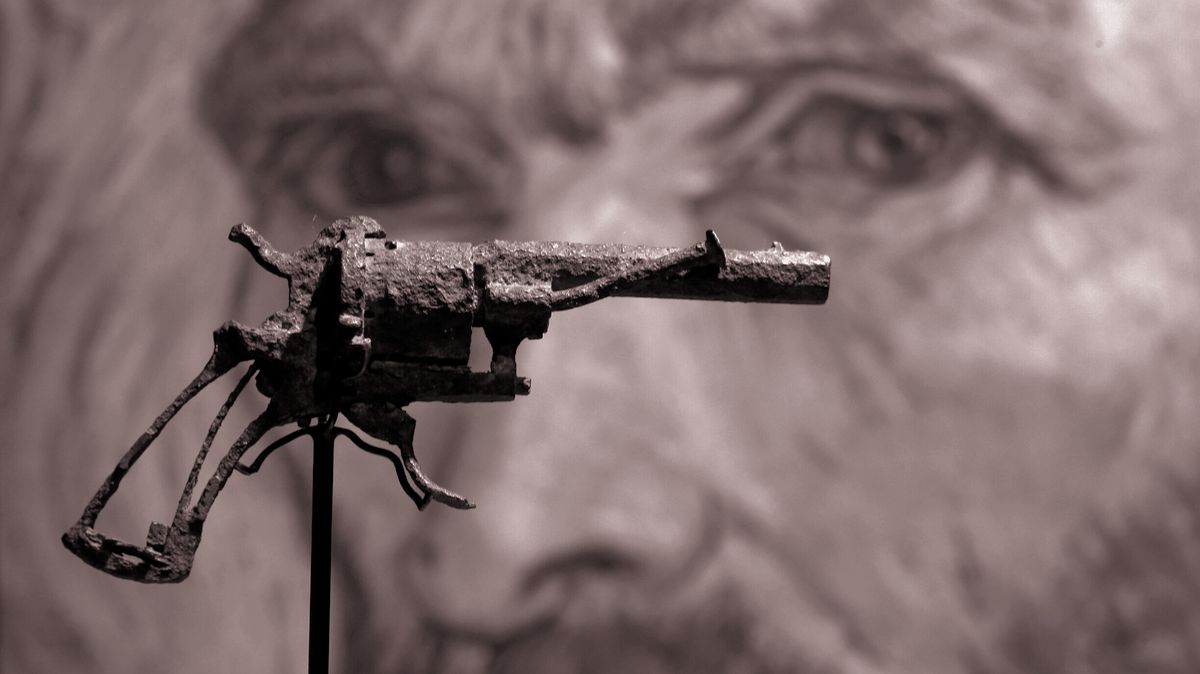
Arenberg has traveled to France multiple times to do research, performed ballistics tests with forensics experts using the same model 19th-century revolver with which van Gogh is thought to have shot himself in 1890, and is
currently working on both a novel and a screenplay about the artist’s final months. “I feel like I channel the guy a little bit,” he said. “I like talking to him in a sense.”
Arenberg’s theory of the case puts him in the company of a handful of van Gogh truthers who argue that art historians have overlooked the homicide of one of history’s most influential artists, a man whose paintings have sold for more than $100 million and are so beloved they adorn everything from oven mitts to Barbie
dolls. Within the canon of art history, van Gogh has come to embody the archetype of the tortured genius, but the murder hypothesis puts forth a radically different figure that threatens to upend long-held interpretations of his work.
Rumors about the circumstances of van Gogh’s death have circulated since at least the 1950s, when an artist claimed van Gogh’s killer confessed to him in a waking dream. But the murder theory got its biggest boost in 2011 when the Pulitzer Prize–winning
authors Steven Naifeh and Gregory White Smith published an authoritative biography of van Gogh in which they argued that he was accidentally shot and killed by a 16-year-old who occasionally hung around (and pestered) the late artist.
Arenberg contends Naifeh and Smith had the wrong guy, and is determined to correct the record while proving the “murder deniers” wrong. “It upsets me sometimes to see so much misunderstanding accepted,” he said. “I’m just
trying to do the right thing.” |
The standard account of van Gogh’s death goes like this: The artist—who had admitted himself to a
psychiatric hospital after suffering a series of “crises” during which he variously lost consciousness, hallucinated, ate paint, and sliced off his ear—left the asylum in the spring of 1890 for Auvers-sur-Oise, a farming village north of Paris that was a favorite destination for artists including Paul Cézanne and Camille Pissarro. Van Gogh’s brother, Theo, his sole patron and closest confidant, introduced him to Dr. Paul-Ferdinand
Gachet, a physician, amateur painter, and art collector friendly with many artists in the area.
Throughout the early summer, van Gogh worked at a furious pace, averaging more than a painting a day. But he grew increasingly despondent. In addition to worrying about his health, he felt isolated from his brother (a newlywed with an infant son who was ill), and was disturbed by news of Theo’s professional turmoil. All of this, van Gogh wrote in a letter several weeks before his
death, made him feel his life was “attacked at the very root.”
In a wheat field on the evening of July 27, van Gogh shot himself just below his left nipple and staggered back to the inn where he was staying. Thirty hours later, he was dead. “One of his last words was: ‘This is how I wanted to go,’” Theo wrote to his wife. “It took a few moments and then it was over and he found the peace he hadn’t been able to find on earth.”
All this is “historical crap,” Arenberg told me. “Any
good gumshoe would say, ‘Something’s not right.’” As a doctor who has treated gunshot wounds and suicide victims, Arenberg said he’s long been skeptical of this official narrative. But it wasn’t until seeing Loving Vincent, a 2017 film that explores Naifeh and Smith’s theory of the killing, that he decided to conduct his own investigation.
Arenberg found it suspicious that van Gogh, a prolific letter writer, had left no suicide note. And none of the witnesses to his death noted a
powder burn on van Gogh’s skin, which, according to a former medical examiner and a pathologist Arenberg enlisted, would be expected if the gun was fired at close range. (A retired homicide detective who reviewed some of the forensic evidence writes in Killing Vincent that it is “unlikely” that van Gogh shot himself, and that “murder, whether accidental or intentional, must be considered.”) After trying to re-create the supposed trajectory of the bullet with tape, wire, and an antique
revolver, Arenberg concluded it was “not physically possible” for van Gogh’s gunshot wound to have been self-inflicted. Plus, he doubted someone intent on death would shoot himself “in the belly, of all places.”
Van Gogh, he contends, wanted to live. He was painting productively and placed a paint order in his final letter to his brother, sent four days before the shooting. He also appeared cured of the disorienting attacks from which he’d previously suffered, and—according to a
psychologist with whom Arenberg evaluated van Gogh’s state of mind in Auvers—he was at a low risk for self-harm. An artist staying in the same inn as van Gogh recalled many years later hearing him cry out for someone to remove the bullet, reportedly demanding, “Is nobody going to cut on my belly?”
Arenberg also dismisses van Gogh’s own admissions of culpability—“Did I miss?” the artist is recorded as saying after he returned to the inn—arguing that one of the prime sources for these
deathbed confessions may be none other than the murderer himself.
Piecing together evidence from interviews with Auvers residents, Arenberg began to suspect the artist had been embroiled in a love affair with Dr. Gachet’s 20-year-old daughter, Marguerite. Van Gogh socialized with the Gachet family and is known to have painted Marguerite twice, although Arenberg, in a forthcoming paper, asserts that three portraits of unnamed women are also of Marguerite—something, he
said, Van Gogh hid to avoid upsetting her father. Her romance with van Gogh was an open secret in Auvers, Arenberg maintains: Marguerite confessed to a friend that she and the artist “had fallen in love and Vincent wanted to marry her,” according to a Dutch journalist’s interview with the friend’s daughter nearly a century after van Gogh’s death. And, in 1954, an artist told another reporter that, according to Dr. Gachet’s son, his father and van Gogh had had a “rift” because the artist had
spoken to Marguerite “about love.”
Dr. Gachet was by all accounts an eccentric individual. He belonged to the Mutual Autopsy Society, collected death masks of guillotined murderers, and gathered human bones, disinterred by erosion, from a nearby cemetery. “He’s iller than I,” van Gogh confided to Theo in an unsent letter. Yet Arenberg sees Dr. Gachet and his son, Paul Gachet Jr., as the ultimate super-villains: “Wicked, evil, depressed, and mentally
unstable sociopaths” who stole and then forged van Gogh’s artwork after murdering him.
Arenberg accuses Dr. Gachet of looting paintings from the artist’s room at the inn, while scholars said Theo gave them to Dr. Gachet, a noted collector of Impressionist and Post-Impressionist artworks whose standing Theo hoped would boost his brother’s reputation. In a recent paper, Arenberg makes the case that Dr. Gachet (and his son) suffered from antisocial and narcissistic personality disorders on
the basis that, among other sins, Dr. Gachet made his mistress’s daughter live with him in anonymity and committed malpractice by not rushing van Gogh to get medical care in Paris.
Killing Vincent, which Arenberg revised in 2019 to “make a better book-to-movie-script transition,” includes storyboard illustrations showing the crime Arenberg believes took place: Several hours after van Gogh visited Dr. Gachet’s home to announce his and Marguerite’s plans to marry, the doctor and
his son confronted van Gogh outside a barn near a wheatfield. The three men argued, then Dr. Gachet’s son—though it could have been the physician himself, Arenberg concedes—pulled a gun and shot the artist. Dr. Gachet, who was later summoned to treat van Gogh’s injuries, covered up the crime by attributing it to suicide, a story van Gogh went along with to protect Marguerite. “It was an honor killing,” Arenberg said.
Arenberg has so far failed to elicit a response from the art world,
which he suspects of closing ranks against an outsider who dares to question the orthodoxy. He said the Denver Art Museum curator who wrote the foreword to Killing Vincent was “hammered” for publicly going against the accepted narrative, and refused any further involvement with Arenberg’s research. (The now-retired curator did not respond to multiple interview requests.) “It’s like they can’t deal with it,” Arenberg said. “The word’s out on the street: this would be the end of your
career if you touch this.” |
The Van Gogh Museum in Amsterdam houses not only the world’s largest collection of van Gogh
paintings but also a phalanx of scholars focused on parsing the minutiae of his life and work. These include Teio Meedendorp, a researcher who, among other undertakings, has examined van Gogh’s fascination with painting bedrooms, rediscovered one of his lost paintings, and scrutinized his final months in Auvers. Meedendorp has also read Killing Vincent, which is in the museum’s library collection. “When I came to the conclusion and I read about Paul Gachet Jr.
protecting his sister, I thought, ‘Oh, come on! This is simply too much,’” Meedendorp told me. “It’s ludicrous.”
Not a single art historian I spoke with put any credence in the murder hypothesis, which scholars have variously dismissed as “crazy,” a “conspiracy theory,” and “on the edge of fraudulence,” but which has captured the public’s imagination. “I have to deal—every day, really—with people coming after lectures, reacting on the Internet, writing e-mails to me and my fellow
researchers making us somehow responsible for hiding the truth, like we wanted to cover up the murder,” said Dr. Wouter van der Veen, an independent researcher and the founder of the Van Gogh Academy. “And there is no single reason to believe that van Gogh did not commit suicide.”
Art historians, including Meedendorp, fault the murder theorists for cherry-picking evidence and failing to fact-check their own sources. The teenager that Naifeh and Smith fingered in their
biography as Van Gogh’s killer, for instance, said he left Auvers days before van Gogh’s shooting. And Marguerite was hardly van Gogh’s type, van der Veen told me: She was 17 years his junior, while van Gogh had a history of dating women nearly a decade his senior; he wrote to a friend that he liked women who were “labourer par la vie”—“plowed by life.”
Far from distancing themselves from the van Gogh family after the artist’s death, as might be expected if they’d killed the
Dutchman over his immoral behavior, Dr. Gachet and his son were unusually attentive. Dr. Gachet paid homage to van Gogh by sketching him on his deathbed; sobbed so much during his eulogy for van Gogh that he “could only bid him an extremely confused farewell,” per one funeral attendee; and spent the rest of his life working on an unrealized book about the artist. His son bequeathed money to the town of Auvers to care for van Gogh’s grave in perpetuity.
None of van Gogh’s close friends
seemed to have doubted that he killed himself, even though, given the period’s strong religious stigmas against suicide, they might have been more incentivized to accuse a killer than to cover up a murder, scholars said. (Van Gogh dismissed the police who visited him on his deathbed, reportedly telling them, “I am free to do what I like with my own body.”) Through a private collector, van der Veen recently discovered a yellowed scrap of paper on which Dr. Gachet scrawled his diagnosis of van
Gogh’s condition: “Lypémaniaque avec idées de suicide. Et nunc erudimini… qui de falsientinibus [sic],” it reads. Or roughly translated, as Dr. Gachet’s Latin was shaky: “Lypemaniac”—an antiquated term for a depressed person—“with suicidal thoughts. And now, be instructed…who are of false beliefs.”
People have a tendency to read what they want into van Gogh’s life, just as they bring their own interpretations to Starry Night or Sunflowers.
Nowhere is this more evident than in ongoing attempts to pinpoint exactly what ailed van Gogh, given that epilepsy could sometimes be a catchall diagnosis in the late 19th century. Each modern-day specialist sees the artist as having suffered from an illness in their own domain. Psychiatrists are convinced he was bipolar. The chemist suggests he had lead poisoning from his paint pigments. The ear surgeon believes he had Ménière’s disease.
Van Gogh scholars worry that people such as
Arenberg are muddying the artist’s legacy and trivializing his death. “It’s offensive,” said Meedendorp. “It’s like you haven’t taken the man’s life seriously.” And yet, even if the truthers are wrong, the debate over van Gogh’s final months, which has forced researchers on both sides to comb through the evidence anew, has brought to the fore aspects of his personality that add nuance to his life, complicating the stereotypical portrait—one which haunts artists to this day—of the painter as an
unstable, antisocial misanthrope throwing color on a canvas to the exclusion of all else. Van Gogh liked to laugh, was quick to make friends (he fancied Dr. Gachet “something like a new brother”), felt protective of Theo and his family, and was sweet with children. (His kindness charmed the innkeeper’s teenage daughter and, on his nephew’s visit to Auvers, he “insisted on carrying the baby himself,” Theo’s wife wrote.) He networked with his peers and wrote wistfully about having his own
offspring.
The truthers, meanwhile, are convinced they are the ones who will safeguard van Gogh’s memory. Steven Naifeh told me that his thinking on the murder theory “has only grown more certain.” Besides finishing his two books, Arenberg has visions of curating a van Gogh exhibition focused on the artist’s relationship with Marguerite, and is planning a return to France in the spring. “This is consuming,” he said of his work on van Gogh. As he’s done on each trip to Paris since his
first, in 1966, he plans to visit van Gogh, whose self-portrait hangs in the Musée d’Orsay, a donation by Marguerite and her brother. |
Thanks, Bianca. I’ll be back on Tuesday with some news.
M |
|
|
Finally, a media podcast about what’s actually happening in the media—not the oversanitized,
legal-and-standards-approved version you read online. Join Dylan Byers, Puck’s veteran media reporter, and Julia Alexander, a longtime media analyst, as they sit down with TV personalities, moguls, pundits, and industry executives for raw, honest, sometimes salacious conversations about the business of media and its biggest egos. New episodes publish every Tuesday and Friday. |
|
|
The ultimate fashion industry bible, offering incisive reportage on all aspects of the business and its biggest
players. Anchored by preeminent fashion journalist Lauren Sherman, Line Sheet also features veteran reporter Rachel Strugatz, who delivers unparalleled intel on what’s happening in the beauty industry, and Sarah Shapiro, a longtime retail strategist who writes about e-commerce, brick-and-mortar, D.T.C., and more. |
|
|
|
|
MATTHEW BELLONI & WILLIAM D. COHAN |
|
|
Need help? Review our FAQ page or contact us for assistance. For brand partnerships, email ads@puck.news. You received this email because you
signed up to receive emails from Puck, or as part of your Puck account associated with {{customer.email}}. To stop receiving this newsletter and/or manage all your email preferences, click here. |
Puck is published by Heat Media LLC. 107 Greenwich St., New York, NY 10006 |
|
|
|