 |
|
Happy Sunday. Welcome back to Dry Powder.
|
|
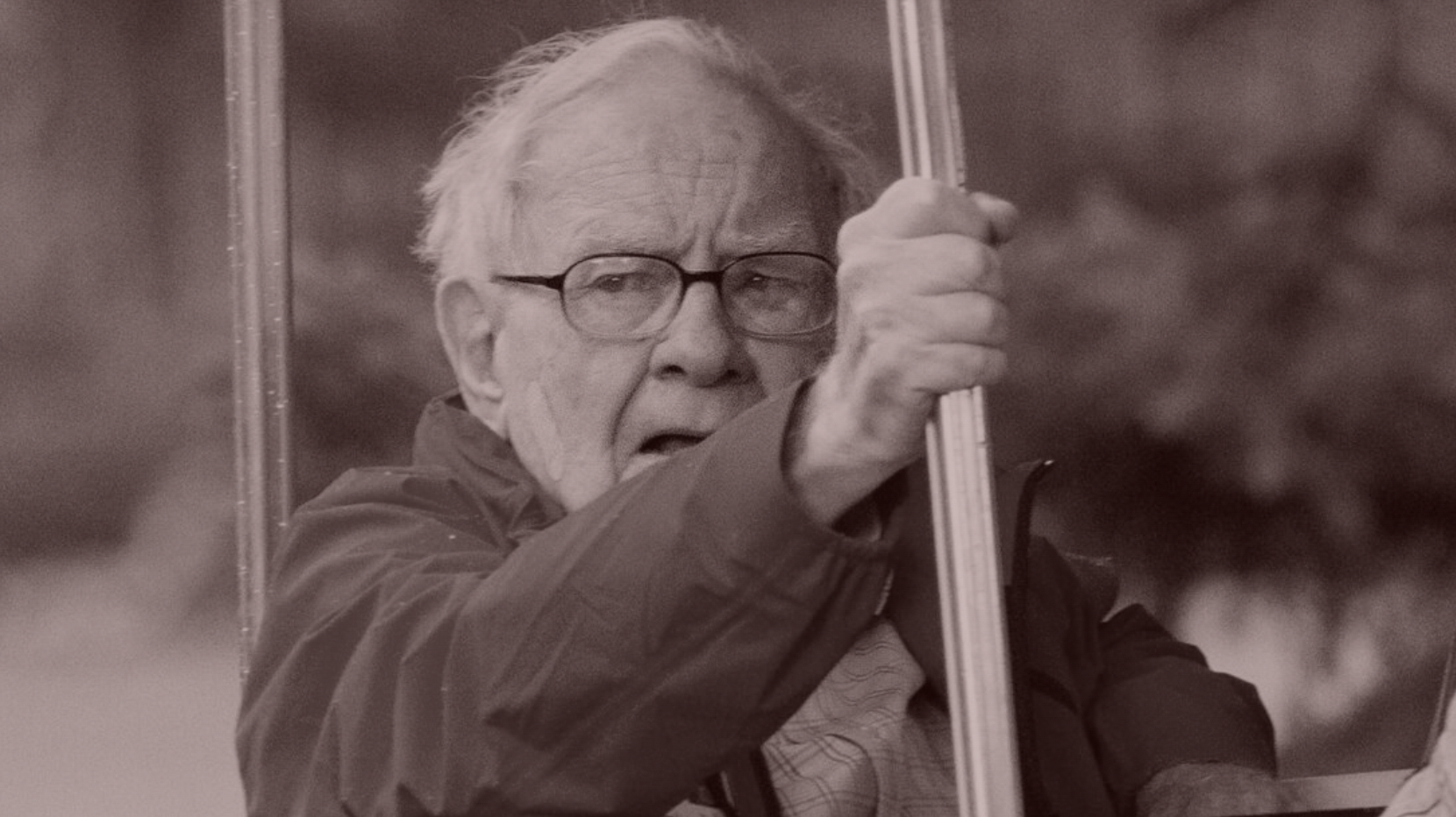
One rarely sees Warren Buffett on his heels. But earlier this week, the Oracle of Omaha was pressed over the wisdom of his investment in Paramount Global after the company shed nearly one quarter of its value after a dreadful Q1. In today’s issue, a careful consideration of Warren’s angle, notes on the troublesome Goldman-SVB partnership, and some sideline commentary on the Icahn-Hindenburg showdown.
|
 |
| A Warren-Shari Mystery & Ackman’s Icahnfreude |
| News and notes on the rumblings inside Wall Street C-suites, the Sconset set, and the Gin Lane mafia: the Berkshire Hathaway-Paramount mystery, a Goldman curiosity, and the latest Icahn controversy. |
|
|
|
| Paramount Global shed about a quarter of its market value this week after reporting a huge first quarter loss, which it is attempting to reverse with drastic actions to blunt the hemorrhaging and restore investor confidence: slashing the dividend by 80 percent; selling off BET, as had already been announced; restarting talks to offload Simon & Schuster again; “significant” cost saving measures, etcetera etcetera, as the company tries to pivot to the streaming age. C.E.O. Bob Bakish said this year will represent peak losses for Paramount—the company took a one time impairment charge of $1.67 billion for combining its two streamers, Paramount+ and Showtime—but the stock keeps selling off.
Questions abound: Is this healthy retrenchment? A prelude to the chop shop? Is Aryeh on speed dial? But here’s the one that most fascinates me: What does Warren Buffet make of all this?
I’m not exactly sure what our friend Warren was thinking when he invested in what is now known as Paramount Global, becoming the largest shareholder last year with a stake of around 15 percent—even more than Shari Redstone’s economic interest, although she still controls the company through her ownership of nearly 80 percent of the voting shares. Nevertheless, he’s probably in it for the long haul, given that the stock has given up about half its value since he started accumulating shares. When he was asked about the wisdom of the investment on Saturday, at the annual meeting of Berkshire Hathaway shareholders, in Omaha, Buffett got defensive. “We are not in the business of giving stock advice to people, and people who don’t know anything about stocks can make a lot of money doing that,” he joked. “But it’s not good news when any company cuts its dividend dramatically.”
The trouble, he continued, is that there are “a bunch of companies who don’t want to quit,” and ultimately, for the streaming business to be profitable, you need fewer competitors and higher prices and better margins. He went on to compare the streaming dilemma to what it was like for him to own a gas station in Omaha when he was in his 20s: There was one station across the street that kept cutting prices every time he did and sold more gas, and there was no way for him to raise prices, either.
Okay, sure. Buffett is always at his most delightful—and often at his most insightful—when dispensing folksy wisdom about the basic mechanics of capitalism. He is also, of course, one of the sharpest and most visionary investors in the history of the business. So what’s his angle with Paramount? It’s hard to say, because he’s never directly explained his thinking about why he bought some 94 million shares of the company.
There are two threads of conventional wisdom about why he did it. The first is that Berkshire is simply betting on a future acquisition, and at a healthy premium. But, as I have noted before, the M&A market for this kind of corpus isn’t what it was when controlling shareholder Shari Redstone recombined the companies back in 2019. Netflix, Apple, Disney, Comcast, Amazon… not happening. And I’m sticking with my theory that David Zaslav and Brian Roberts will see beyond any of their differences and find common ground with a 2024 combination of WBD and NBCU, which would truly provide the market’s first Franken-streamer competitor to make Disney and Netflix sweat.
In the meantime, I’ve always thought the best buyer of Paramount Global at this point would be a private equity firm, such as Apollo Global Management, which already owns a large network of local television
stations and would know how to milk a fading linear TV network and temper a capital-hungry streaming business. But at $20 billion, or so, that would be a big bite, even for Apollo. And I don’t see Shari, after years-long battles with her father and the girlfriends, to say nothing of Les and Phillipe, selling her family heirloom to Apollo. That’s not the Hollywood ending she’s hoping for, I don’t think. So I don’t see a sale in the near term.
Notably, the other theory out there about why Warren bought Paramount Global is that he and his partner Charlie Munger actually didn’t want to buy it. In a CNBC interview from Japan a few weeks ago, Warren said that streaming is “not really a very good business” and has been able to attract customers but only “at a terrible price.” He alluded to the same problem for the streaming business yesterday in Ohama, too. So, it sounds like he’s not a fan of Paramount Global. But, the theory goes, his two underlings, and likely successors as chief investment officers, Ted Weschler and Todd Combs were the ones who fancied the stock. If that’s the case, I’m a little worried, as a longtime Berkshire shareholder, that the stewards of the Buffett legacy may not have the same stock-picking prowess as the Great Man himself. (Say it with me now: this is not investment advice.) It’s probably way too early for that judgment, of course. But if they picked Paramount Global over the objections of Warren and Charlie and this is their first rodeo, it’s not off to a very promising start.
Don’t get me wrong, Paramount Global is not without some virtues (the movie studio; CBS, even in its dotage; Showtime) and I think Bakish, Shari’s handpicked C.E.O., is probably doing all he can with the assets the company has, although how and why it let both MTV and Comedy Central fade into oblivion I’ll never understand. Shari should have sold it all off years ago when the macro environment for such businesses was looking a lot better than it does now. She should have done what AT&T did with WarnerMedia—get rid of it while she could. But Shari is not one to listen to that kind of advice, not when she fought most of her adult life, against all odds, to get to the untenable position she has now. |
| A Goldman Scandal or Non-Scandal? |
|
| Buried on page 87 of Goldman’s latest quarterly report, filed with the S.E.C. on Thursday, was this little nugget about services that the firm provided, in March, for the failed Silicon Valley Bank. According to the report, Goldman is “cooperating with and providing information to various governmental bodies in connection with their investigations and inquiries” into Silicon Valley Bank and its affiliates “when SVB engaged the firm to assist with a proposed capital raise and SVB sold the firm a portfolio of securities.” Goldman has declined to comment further about the investigation into its dual role as a buyer and an advisor.
As my faithful readers know, on March 19, I did a deep dive into Goldman’s involvement in the final days of SVB, both as a principal buying some $24 billion of SVB assets, for 89 cents on the dollar, and then as an underwriter, pretty much at the same time, of a fresh $2.5 billion equity offering for the flailing bank. Goldman’s purchase of the securities did happen and a bit of a mystery remains about how much money Goldman made on the trade—some sources have told me Goldman has made, or will make, some $200 million, but other sources inside the firm suggest that the number will be much lower, somewhere between $50 million and $100 million. Still a nice payday, either way. The equity offering, of course, did not happen. The SVB knife was falling way too fast for a new equity deal to happen. Instead, the bank filed for bankruptcy and some of its parts have since been sold off to Citizens Financial, in Raleigh.
Goldman isn’t always a basilica of saints, but based on my understanding of the firm’s dual roles for SVB, I don’t think they did anything wrong here. It seems to me that Goldman was able to keep apart the Goldman principal traders working for SVB and the Goldman investment bankers working for SVB, and that one side of the firm did not know what the other side of the firm was doing, even though they were both working for the same client at pretty much the same time, in what clearly was an existential moment.
Did C.E.O. David Solomon know that Goldman had been asked by SVB to act as both a principal on the $24 billion securities portfolio and as an agent on the equity underwriting? I have to believe that he did. How could he not? It’s his job to know, as the person ultimately responsible for the activity of the firm. (A Goldman spokesman declined to comment on the S.E.C. disclosure or whether Solomon knew about Goldman’s two SVB assignments.) But, in theory, anyway, if the two parts of the firm are kept separate from one another—as they most certainly are—then there is no reason to suspect anything untoward occurred here. And I suspect that the “governmental bodies” will quickly come to that conclusion, and this little investigation will soon fizzle and not even merit a footnote in a future S.E.C. filing.
Readers who don’t work on Wall Street may wonder how it can be possible for Goldman to engage in two seemingly contradictory assignments for the same firm at the same time. But as I wrote in my 2011 book about Goldman, Money and Power, the bank is in the business of managing conflicts. The joke around Goldman used to be, “If you have a conflict, we have an interest.” Managing conflicts, or thinking it can, is one of the firm’s superpowers, in fact. Other firms, with different business models, wouldn’t dare to be involved in the kinds of conflicts that Goldman believes it can manage. Sometimes it pulls it off, without too much collateral
damage, as it did in and around the 2008 financial crisis when it marked down its large portfolio of mortgage-backed securities at the same time it was shorting the mortgage market, setting off a chain reaction that exacerbated the collapse of Bear Stearns, Lehman Brothers and the near-collapse of Merrill Lynch. Goldman made a fortune—something like $4 billion on its short bet and nary a finger was waved. (It’s an amazing story that I tell in the book.) Sometimes, Goldman flubs it bigtime, as it did say in the whole 1MBD fiasco and when it manufactured and sold Abacus, the synthetic collateralized debt obligation, for which Goldman paid a $550 million fine (although I’m still not convinced Goldman did anything wrong that time, except fail to read the room properly).
Goldman’s business plan since its start, in 1869, has been to take as much prudent and calculated risk as it possibly can, and to try to make as much money for itself and its clients as possible. It’s become very, very good at managing risk, probably better than any other firm on Wall Street. So, of course, it’s going to get investigated when it takes on dual assignments during an existential crisis at a high-profile bank failure. But, this time, I feel highly confident, as Mike Milken would say, these are not the droids you’re looking for. |
|
|
| Hindenburg Research, the feared short seller firm, is now targeting Carl Icahn’s publicly traded conglomerate, which Hindenburg says is vastly overvalued, unlike similar publicly traded companies run by my pals Bill Ackman and Dan Loeb. Ackman, who has lots of history with Icahn, called the situation “karmic.” Icahn, of course, is a legendary investor and Wall Street activist himself and won’t shy from a fight.
As a spectator, I am really enjoying this one. This is schadenfreude central. And I share Bill’s view that there is a certain ironic element to the Hindenburg report against the feared corporate raider turned “activist investor” who has been plying his craft longer than anyone still around these days. Worth nearly $24 billion at the start of the year, according to Bloomberg, Uncle Carl is now down to around $14.3 billion, thanks in large part to the Hindenburg report, which argues that Icahn inflated the value by more than 75 percent of some of the company’s assets—its less liquid and private securities—and that it was overvalued and overleveraged. The report is a fascinating read and includes such nuggets as, “Icahn has been using money taken in from new investors to pay out dividends to old investors. Such ponzi-like economic structures are sustainable only to the extent that new money is willing to risk being the last one ‘holding the bag.’”
The report also suggests that Jeffries, the independent investment bank, has been aiding and abetting the shenanigans at Icahn Enterprises, acting as both an underwriter of the Icahn Enterprise stock units and one of the few investment banks that writes research on Icahn. “It has continuously placed a ‘buy’ rating on IEP units,” Hindenburg wrote. “In one of the worst cases of sell-side research malpractice we’ve seen, Jefferies’ research assumes in all cases, even in its bear case, that IEP’s dividend will be safe ‘into perpetuity,’ despite providing no support for that assumption.” (Jeffries has not commented on the Hindenburg allegations.) Not surprisingly, Icahn finds Hindenburg to be reprehensible and “self-serving,” since it was shorting the Icahn Enterprises stock while at the same time publishing a negative report that was bound to get a lot of media attention (and it did). “We stand by our public disclosures and we believe that [Icahn Enterprises’] performance will speak for itself over the long term as it always has,” Icahn told Reuters.
Before the Hindenburg report appeared, Icahn Enterprises, Carl’s publicly traded holding company, was valued at around $18 billion; the day after the report, the stock tanked, reducing the company’s value to around $11.3 billion. Icahn controls around 85 percent of the company’s shares and around 60 percent of those shares are pledged as collateral for personal loans that Icahn has taken out, raising the specter of margin calls on those loans if the stock keeps falling. On the other hand, the stock rebounded sharply on Friday, up 27 percent on the day, along with a smart move up generally in the markets. Still, for the week, Icahn Enterprises was down 25 percent, wiping billions off of Icahn’s net worth. But, let’s face it, at 87 years old, losing a few billion here and there is not going to change Carl’s lifestyle one iota.
As high drama, however, it’s hard to beat. And I love that Bill Ackman has weighed in. Of course, most people will remember the public fight on CNBC with Scott Wapner that Ackman and Icahn had, way back in 2013, over Ackman’s high-profile attempted $1 billion evisceration of Herbalife, the publicly traded vitamin supplement company. (Their CNBC segment may be the greatest business TV clip of all time.) In a very public display of shorting Herbalife—initiated at the annual Sohn Conference at Lincoln Center—Ackman essentially accused the company of being a fraud and a multi-level marketing scheme that preyed on the defenseless immigrants who thought selling Herbalife products might be a good way to make some extra money and in some cases to get rich. Ackman hired two Bloomberg reporters to research and to write a massive tome illustrating all of Herblaife’s alleged wrongdoings and then made a big stink about it all on the stage at Sohn and, subsequently, in a myriad of television appearances and follow-up press releases. He even was the subject of a 2016 documentary, Betting on Zero (in which I had cameos), about his battle against Herbalife.
But what the usually quite savvy Bill Ackman hadn’t counted on was that Carl Icahn, with whom he’d had a long simmering feud (as I wrote about in a 2013 profile of Bill), along with Dan Loeb, another Ackman nemesis at the time, would join together to put a patented short squeeze on Ackman. In the end, it didn’t end up mattering whether Bill was right or wrong about Herbalife—for what it’s worth, he still thinks he’s right (the company is still around with a market value of $1.4 billion, down 42 percent in the last year). All that mattered is that Icahn and Loeb could put the squeeze on Ackman by buying a whole lot of Herbalife shares, forcing the price of the stock up and forcing Bill to cover his short position, perfecting a loss of around $1 billion. Both Icahn and Loeb made a whole lot of money at Ackman’s expense, even though Ackman was—and is—probably right about the company and its business plan.
I have not spoken to Bill about the Hindenburg report. But I don’t have to talk to him to know that he’s probably enjoying the heck out of the fact that his onetime nemesis Carl Icahn has had the tables turned on him in such a credible way. Like it or not Carl, Hindenburg has its believers in the marketplace of ideas and securities. It made a small fortune earlier this year shorting and then publishing research about India’s Adani Group and it’s probably made another small fortune, at least so far, shorting and then publishing research about Icahn Enterprises. Payback can be a bitch. But it’s also a helluva lot of fun to watch from the sidelines. |
|
|
|
| FOUR STORIES WE’RE TALKING ABOUT |
|
|
|
|
|
 |
|
|
|
Need help? Review our FAQs
page or contact
us for assistance. For brand partnerships, email ads@puck.news.
|
|
|
|
Puck is published by Heat Media LLC. 227 W 17th St New York, NY 10011.
|
|
|
|