 |
|
Hi you,
Happy eclipse day. Don’t stare at the sun! I’m so excited to share this week’s newsletter, but before I dive into that, some professional news… Two of my projects are nominated for Webby Awards! For Branded Content, the second season of my Lenovo Late Night I.T. series; and for Education & Science, the social media for my PBS series, America Outdoors. Please vote. It’s annoying, but do it! Consider it practice for November 5.
Now, let me take you on a tour through my feeds and share what’s been capturing my attention lately:
- Quote of the week: “You cannot win this war by starving an entire population.” That’s Chef José Andrés, writing in The New York Times—a sentiment he also expressed today in an interview with ABC News. Off and on, I’ve found myself compartmentalizing my heartbreak and anger at the way Israel is waging its war against Hamas and collectively punishing millions of people. The AP has a roundup of the numbers at the six-month mark. Sometimes it’s too much to handle, and I recognize that I’m not directly handling much of anything from my relatively safe perch in the United States. But as a friend and fan of Andrés, I was rocked harder than usual by the Israeli military’s targeted strike on World Central Kitchen volunteers. Hamas’s brutal October 7 attack demanded a response, as does the terror group’s ongoing refusal to release hostages, but there is no safety, security, or peace available through this brutal path of bombardment and blockade.
Given the near-famine conditions imposed on Gaza by Israel, I found On the Media’s coverage of the UNRWA aid organization to be an essential listen. Among other discoveries: It was the U.S. that helped form the organization, which was modeled after the Tennessee Valley Authority with a goal of establishing economic ties that would lead refugees to resettle in neighboring countries.
- Other recommendations…: If you need an uplift, check out Shirley on Netflix. The biopic tells the story of Shirley Chisholm, the first Black woman elected to Congress and the first Black person and first woman to seek the Democratic Party’s presidential nomination. Regina King delivers a transformative performance, and this story is just the sort of boost I feel I need in this moment.
For another historical tale, I’ve started watching Manhunt on Apple TV+. The true crime series—created and executive produced by my college friend Monica Beletsky—offers a detailed and dramatic portrayal of the events following Abraham Lincoln’s assassination, and includes the perspectives of Black historical figures whose lives intertwined with the subsequent manhunt and investigation. It’s very hard to stop watching, and I found myself crying in the first episode while also sitting on the edge of my seat wondering what happens next… quite the achievement for a story whose ending we think we know.
- Finally, some good news: Years ago, when I was pursuing my own cable news show, I met with a network executive and pitched him on a radical idea: What if we covered the election from the perspective of voters and their concerns rather than politicians and their promises? It would be dramatic, colorful, different, and radically useful. He passed, of course. But in Colorado, a coalition of 30 newsrooms have come together to do just that! There are many collaborators in the project, but I’m struck by a simple element at the core: a survey created by Hearken to ask members of the public about their interests, not their personality preferences.
|
 |
| Altered Carbon |
| An urgent dispatch from the 35th annual Bioneers conference, where the scientific community underscored a series of novel, and deceptively simple, frameworks for reorienting our societies to address our carbon problem. |
|
|
|
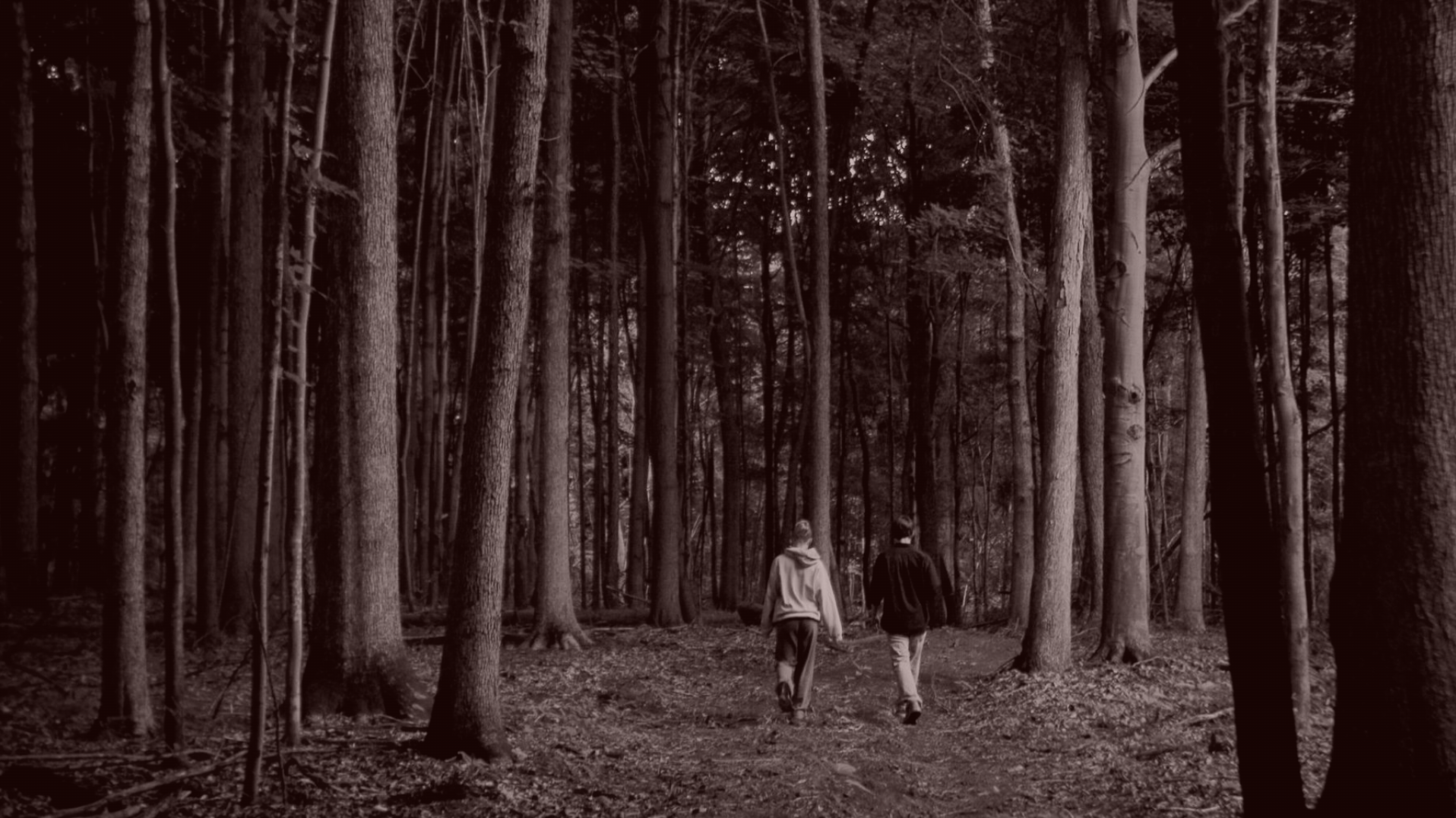
| In the closing days of March, I found myself at the 35th annual Bioneers conference in Berkeley, California. The weather was nearly perfect, such that you could almost forget, for a moment, the drastic transformation of our planet’s climate. Last year was the hottest on record in human history, extreme weather events are on the rise, and our CO2 emissions continue to climb. Just two years earlier, uncontrolled wildfires ripped across this part of California, burning thousands of acres and choking the sky with smoke.
This year’s Bioneers event brought together scientists and academics, of course, but ultimately it was a gathering of planet-loving humans, seeking to restore environmental balance through science, journalism, and activism. I heard from people like Colette Pichon Battle, a lawyer and climate justice organizer for Taproot Earth; Charlotte Michaluk, a 17-year-old scientist and engineer; and Oren Lyons, a Member Chief of the Onondaga Council of Chiefs and the Grand Council of the Iroquois Confederacy. Each delivered powerful seminars addressing our climate and democracy crises, with a special focus on the ways in which human activity produces absurd and ever-increasing amounts of carbon dioxide—we’re all familiar with the hockey stick graph—far more than our natural systems are able to absorb. But these talks also underscored the fact that if we act now, in concert with these systems, we can both decarbonize our economy and begin to restore balance to the ecosystem.
Thus far, humanity’s decades-old efforts at decarbonization have largely focused on a single technological approach—carbon capture and storage (a.k.a. CCS) initiatives, which have been around since the 1970s. But CCS programs are almost never as effective as advertised. Fossil fuel companies have long tried to convince us that their CCS initiatives essentially mitigate the problem, via a process that involves liquifying CO2 and transporting it through pipelines to a place deep beneath the surface of the earth. (The Inflation Reduction Act included record amounts of money to support this industry, thanks to heavy lobbying by Senator Joe Manchin and companies like Exxon and Chevron.) But pipelines leak, and can produce carbonic acid clouds that can asphyxiate humans and other life. As Taylor Brorby, author of Boys and Oil: Growing Up Gay in a Fractured Land, put it at Bioneers, “Instead of just pumping emissions into the endless garbage dump of the atmosphere, we are going to create the nation’s largest sewage system that will then push liquid carbon dioxide under states.”
But as I learned at the conference, recent scientific research has opened the door for more innovative and, frankly, humble solutions to our CO2 crisis. I admit, as someone who really likes technology—I constantly depend on airplanes and cloud services and machine learning—I’m enchanted by the idea that saving our planet will involve some massive technological moonshot based on yet-to-be-invented science. And yet, the best solutions might simply begin with the ground beneath our feet. There are natural processes constantly unfolding that can help us clean up our act, and new research is revealing ways that we can utilize this knowledge to pitch in. |
|
|
| I first met Canadian forest ecologist Dr. Suzanne Simard in 2018 at the TED conference in Vancouver, where I was lucky enough to join a tour she co-led, along with Dr. Teresa (Sm'hayetsk) Ryan, through a forest that surrounded a salmon-spawning reach of the Capilano River. They blew our collective minds by pointing out how salmon-derived nutrients could be detected in trees that sprouted far away from the riverbanks. After spawning, salmon carcasses deposit nutrients in the river bed, and they are absorbed by nearby trees and transported farther away by fungal networks. Three years after that walk, Simard published her award-winning memoir, Finding the Mother Tree, which challenged the prevailing view that the forests are competitive environments, instead arguing that trees are highly interdependent and in constant communication with each other via an underground network of fungi.
At the Bioneers conference, six years after that tour, Simard’s message had grown much more urgent. Due to commercial logging operations, Simard shared that only 2 to 3 percent of tree ecosystems in British Columbia are still intact, an environmental tragedy that has entailed the destruction of biodiversity and natural carbon pools. In response, she and her research team have spent years using DNA sequencing to identify root systems and map the underground forest network—sometimes called the “wood wide web”—that engages in a constant exchange of carbon, energy, and nutrients. The largest trees, she found, effectively “hold about 50 percent of that forest’s energy,” and spread that energy around to 80 percent of the other trees in the forest. This is why she calls them “mother” trees.
These revelations led Simard to found The Mother Tree Project, a large, scientific, field-based research project that identifies sustainable harvesting and regeneration techniques to help forests maintain and build resilience to climate change and human destruction. When we lose forests, we lose our carbon fight twice: The carbon they’ve absorbed is released back into the atmosphere, and their ability to capture new carbon is vastly reduced. To balance this, humans have embarked on widespread tree-planting campaigns, but organized tree plantations aren’t forests. They lack the biodiversity and underground interconnectivity that make ancient forests so effective at carbon capture.
We need to recognize the long-term, hard-to-replace value that these systems offer, instead of prioritizing the short-term economic gains. But the good news is that Simard’s research and similar efforts have led to new approaches to logging, forest management, fire recovery, and forest regeneration. As I discovered when I profiled the Menominee nation’s forest management techniques in Wisconsin, sometimes the best techniques are ancient. The European Union is starting to catch on, and has started looking at trees as urban infrastructure and proposing changes to how its countries plant, measure, and manage them.
Simard’s talk at Bioneers drove these points home with frightening clarity, but also offered a roadmap for how we can reorient our approach to the carbon emissions crisis. And yet another talk at the conference revealed that managing forests is only one part of the equation: Progress can also be made by focusing on a much smaller, ubiquitous organism. |
|
|
| I never imagined a lecture on the remarkable powers of mycorrhizal fungi would move me so deeply that I would feel compelled to write about it. But that’s exactly what happened after I heard Merlin Sheldrake, a biologist and bestselling author of Entangled Life: How Fungi Make our World, address a captivated audience at Bioneers. Sheldrake is a master of framing his complicated research in memorable, pithy ways. He referred to fungi as “ecosystem engineers that underwrite the regenerative capacity of the living world,” “brilliant chemical wizards,” and “brilliant navigators in the Wild West world of the soil.” It’s safe to say he’s a fan.
Unfortunately, according to Sheldrake, fungi is also a “global blind spot,” an overlooked savior missing from climate change agendas, conservation and restoration strategies, and carbon capture. He argued that solving climate change without focusing on fungal networks “would be like trying to perform life-saving surgery without taking into account the circulatory systems in the body.” A recent study found that fungi funnel around 13 billion tons of CO2 into the soil each year, approximately one-third of annual global carbon emissions. “These organisms are stationed at a vital point in global carbon and nutrient cycles, and they make up one of the circulatory systems of the planet, an ancient life-support system that easily qualifies as one of the wonders of the living world,” he said during his conference talk.
Sheldrake and other scientists are working hard to spread this knowledge, and the ways in which we can take advantage of it to address our environmental crises, at both macro and micro levels. He is a member of the Society for the Protection of Underground Networks, a.k.a. SPUN, a scientific initiative dedicated to mapping, protecting, and harnessing the vital role of mycorrhizal fungi in regulating the Earth’s climate and myriad ecosystems. (Advisors for this group include luminaries such as Jane Goodall, Michael Pollan, and Paul Hawken.) When we map something, we can protect it, and SPUN helps us clearly monitor and adjust our behavior in relation to these essential climate allies. As Sheldrake explained, “These maps can help inform climate change strategies, restoration practices, land management, and legal actions.”
In the closing lines of his talk, Sheldrake landed his case: “An understanding of mycorrhizal fungi as dynamic, sensing, information-processing, problem-solving agents can pave the way for new types of collaboration with these ancient life-support systems that have for so long nourished and enriched life on this planet.” But what does “collaboration” with fungi look like, aside from watching the Netflix film Fantastic Fungi and um, appreciating mushrooms? It starts with formal recognition: When referring to the natural world, we commonly use the term “flora and fauna,” but a more comprehensive phrasing would expand that to “flora, fauna, and funga,” and yes, there’s an effort underway to do just that. According to the Fungi Foundation (yes, fungi now have a foundation!), fungi represent only 0.2 percent of global conservation priorities. We can’t protect something if we don’t acknowledge it, and we need to expand our rules and protocols to include the overlooked but critical function fungi play in capturing carbon and making sure the planet remains habitable for us. |
| Environmental Partnership |
|
| It’s safe to say there’s more going on underground than we understood. I even learned that our rivers have their own rivers! Known as hyporheic zones, these are very slow-moving channels, below and beyond the banks of the waters we see, that play a key role in a river’s health. They manage aeration, oxygenation, temperature, pollution cleanup, and nutrient production in ways that have been likened to a human liver, or gut biome, for waterways. And while it seems they don’t directly contribute to natural carbon sequestration the way trees and fungi do, it’s all connected. In her talk, journalist and author of Water Always Wins Erica Gies shared the story of Seattle’s restoration of Thornton Creek. A modest intervention led to a dramatic reduction in flooding, contamination, and even the return of salmon. It’s a reminder that preserving natural features can have outsize impacts on human societies, keeping our cities cooler and mitigating the effects of droughts and floods, while also returning life to our essential waterways.
Yes, we are already suffering from the baked-in temperature increases due to already-emitted carbon. All sorts of species, not just humans, will be forced to migrate in pursuit of stability in a natural world that our actions have destabilized. But we can still limit that suffering, and find ways back toward balance, if we remember that we are part of nature, and that we should view nature as a partner instead of simply a source of profit. Our forests, fungi, and rivers are trying to help us. Peatlands, which cover only 3 percent of the world’s land area but store nearly 30 percent of its soil carbon, are trying to help us. (I saw this firsthand while filming America Outdoors in Georgia’s Okefenokee Swamp, and there’s still time to save it.) Indigenous people, despite repeated attempts to eradicate them, are some of the best stewards of biodiversity and carbon-holding lands on the planet, and they are trying to help us. Will we accept their offer? |
|
|
|
| FOUR STORIES WE’RE TALKING ABOUT |
 |
|
 |
| Ari’s Dividends |
| Digging into the $13 billion Endeavor take-private. |
| MATTHEW BELLONI |
|
 |
|
 |
|
|
|
|
|
 |
|
|
|
Need help? Review our FAQs
page or contact
us for assistance. For brand partnerships, email ads@puck.news.
|
|
You received this email because you signed up to receive emails from Puck, or as part of your Puck account associated with . To stop receiving this newsletter and/or manage all your email preferences, click here.
|
|
Puck is published by Heat Media LLC. 227 W 17th St New York, NY 10011.
|
|
|
|