 |
|
Hi you,
This week I’ve been reflecting on the one-year anniversary of OpenAI’s release of ChatGPT: how much has changed, but also what we’ve learned from the wild ouster and return of Sam Altman.
But first… some public service, solutions-oriented journalism…
- Introducing Bar-Tunde: Personally, the most fun I’ve had with generative A.I. is using it to help me make cocktails. So on the first anniversary of ChatGPT, I built a small custom GPT that does just that. I named it Bar-Tunde because I could. You tell it, “Make me a drink,” and it will come up with a unique cocktail. Tell it, “Step by step, help me decide on a drink to make,” and it will guide you through the process of building a drink. You can even upload a photo of your own bar ingredients and ask it to come up with a cocktail.
I lightly trained the GPT on me, telling it to identify my persona and writing style based on what it found on the internet (and some of my Puck pieces). I provided it with an inventory of my reasonably stocked home bar, as well as my drinking preferences and favorite spirits: savory over sweet; mezcal over vodka. And I told it to make drinks based on my resulting persona, voice, and drinking profile. In the end you’ll get a custom cocktail infused with the spirit of Baratunde along with a toast written in my voice, and an image of the drink generated by DALL-E. If you’re signed up for ChatGPT Plus, you can access and play with the bot here—or just check out my Instagram story highlights.
After all, if you can’t beat ’em, have them design you a cocktail, and drink with ’em. Enjoy the drinks, I.R.L. or virtually, and happy birthday to the precocious, problematic, impressive, fun, frightening, as-yet-undetermined entity known as ChatGPT. I’m sure a year from now, we won’t recognize you.
|
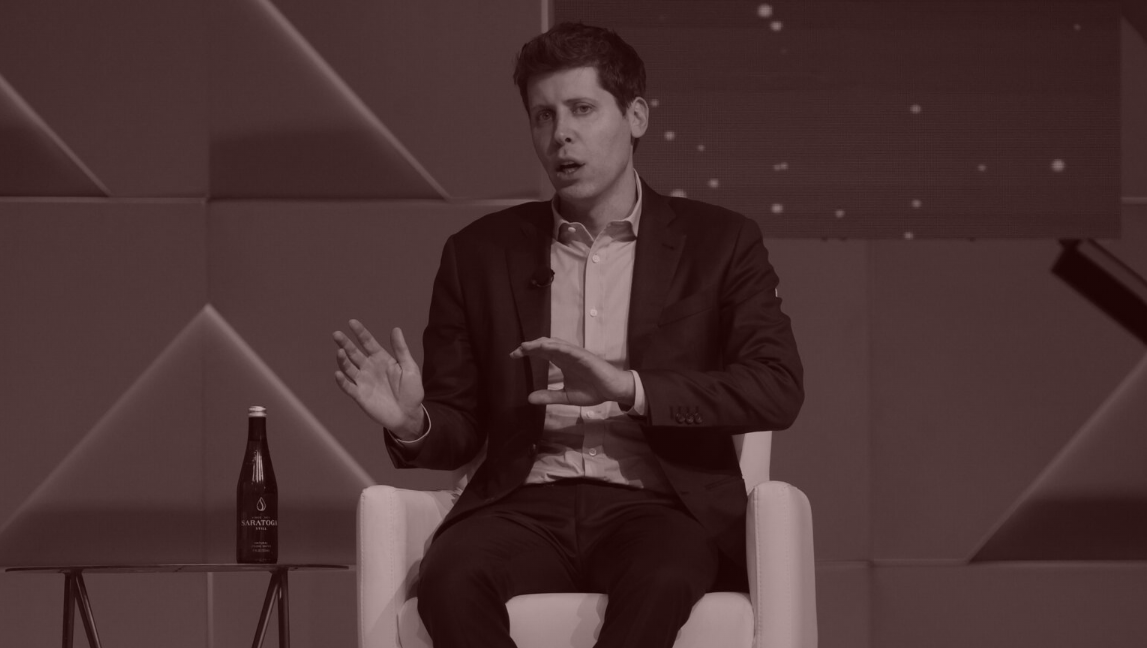 |
| Sam Altman’s Pandora’s Box |
| Reflections on the anniversary of ChatGPT: the Q star breakthrough, Altman’s ouster, A.I. red lines, and why capital is stronger than containment. |
|
|
|
| What do you get a 1-year-old for their birthday? A smash cake? Some learning blocks? A party that’s allegedly for the kids, but really for the parents who sneakily moved their wine threshold to midafternoon? What if that 1-year-old weren’t a human child, but instead a generative A.I. chatbot that’s already consumed terabytes of information and whose parent company has set off an arms race to plug large language models into nearly every aspect of the tech industry? Would you gift it more capabilities? Increased regulation? What about a new C.E.O. who’s actually the old C.E.O. in the fastest executive reinstatement in Silicon Valley history?
This past week marked one year since OpenAI’s launch of ChatGPT. When I wrote my first piece about the technology, in December 2022, most of the perils I considered were speculative—the displacement of knowledge workers, I.P. challenges associated with training models on publicly available but privately owned data, and the implications for human capital and creativity. Now, these impacts are coming to pass. ChatGPT, which used to “hallucinate” its responses and couldn’t cite its sources, has quickly grown up. And the technical advancements of the platform, which has soared to 100 million weekly users, isn’t even the biggest part of the story.
Google, Meta, and Amazon are engaged in a white-hot arms race to integrate similar technologies into their customer-facing products. Microsoft, which has invested some $13 billion in OpenAI for a 49 percent stake, has essentially reinvented itself as a generative A.I. company. Adobe, too, has fully integrated these tools into its creative suite of apps. And it’s not just Big Tech: Generative A.I. is now being woven into consumer and business products across sectors: education, media, travel, fashion, retail… even healthcare and government. Whether your business is handmade clothes or artisanal butter, you’ll soon be using A.I. to manage your books, mock up creative, draft memos, and a dozen other tasks that humans used to do.
The use cases and capabilities of these tools have been growing exponentially. OpenAI’s latest model can browse the web (thanks to Bing, something I never thought I’d write), interpret and generate images, handle far more context for queries, and tell you where it got its information. It also has more stringent guardrails in place, so it’s unlikely to reveal its secret identity or try to get you to leave your spouse. Today, paying subscribers to ChatGPT can even create their own GPTs, built on their own repositories of information, and offer them up to the public. (I recently did just that, creating a custom GPT to design cocktails, which is literally the most useful thing I’ve been able to use this technology for.) This is a bigger deal than it might seem: Remember, the most important day in the history of smartphones wasn’t January 9, 2007, when Steve Jobs announced the iPhone, but March 6, 2008, when Apple released the iOS software development kit, allowing third-party app developers to truly unlock the device’s power.
ChatGPT is now poised to achieve a similar level of ubiquity. It’s incredible to consider that, less than a month ago, it all seemed on the verge of disappearing. |
|
|
| OpenAI is a strange beast, with a Russian nesting doll structure containing a for-profit company inside a nonprofit organization with a mission to “build artificial general intelligence that is safe and benefits all of humanity.” Set aside for a moment that there is no general technology that benefits literally all of humanity. The governance of such an entity was always going to be complicated, and contradictory, even before C.E.O. Sam Altman was fired and rehired (a saga that has been well covered elsewhere).
There have been two existential moments in OpenAI’s history. The first was in 2018, when Elon Musk, one of the original co-founders, decided to leave the nonprofit and take his promised funding with him. As Semafor reported, Musk stopped writing checks just when the need for checks was growing. The company’s early transformer models needed massive compute power, and to fund that, the organization created the for-profit most of us know today. Would OpenAI have done this if Musk kept the money flowing? I don’t know, but we do know what happened instead: OpenAI moved more quickly into the commercial realm, setting up the for-profit subsidiary, taking on massive outside investment (including $13 billion from Microsoft), and launching its infamous arms-race-initiating chatbot.
The second moment was last month, when the board unceremoniously fired Altman, presumably over differences of opinion about how to commercialize ChatGPT. If the decision was indeed made to slow the company’s aggressive deployment of A.I. tech, or at least prioritize safety over profit, it appears to have had the opposite effect. Nearly all of OpenAI’s employees—with some $86 billion in equity on the line, thanks to Thrive Capital’s tender offer—rallied to Altman’s defense and pledged to follow him to Microsoft if he wasn’t immediately reinstated. And so, in the end, the money won: All but one of the board members involved in firing Altman were subsequently removed. Microsoft just won itself an observer seat on the OpenAI board, with talk of more governance restructuring to come.
Many of the details behind last month’s board action to remove Altman remain unclear, but there’s strong intimation that it had to do with a lack of trust in Altman’s leadership, and his communication with the board, perhaps surrounding OpenAI’s rapidly evolving technical capabilities. There are reports that a breakthrough in ChatGPT’s mathematical problem-solving abilities—a project called Q* (pronounced “Q star”)—may have alarmed the OpenAI board enough to fire him. But there is another, possibly simpler theory: that former board member Helen Toner’s co-authorship of a recent research paper containing criticism of OpenAI’s safety measures may have just pissed Altman off. According to The New York Times, Altman saw the report as a “danger to the company” and sought to remove Toner from the board.
Out of curiosity, I provided ChatGPT with the report Toner co-authored and asked how Altman should have responded. I had already verified that the chatbot spotted the criticism of OpenAI in the report (and its praise of a competitor, Anthropic) on the issue of A.I. safety. Naturally, it offered up a bunch of high-minded recommendations regarding the “value of diverse perspectives,” using criticism as an “opportunity for self-reflection” and to enhance safety and ethics protocols. “In summary,” it concluded, “as C.E.O., I would view Helen Toner’s involvement in the report as an asset, providing critical insights that can help guide OpenAI toward more responsible and ethically conscious A.I. development. It would be important to embrace the report’s findings as an opportunity for growth and improvement, rather than a challenge to the company’s standing.”
The full log of my chat is online, but the upshot is this: “While a C.E.O. might have concerns about critical perspectives from board members, removing a board member like Helen Toner for their involvement in such a report would not be a reasonable or advisable response. Instead, leveraging her insights for the betterment of the company’s practices would be a more constructive approach.”
Apparently, Altman isn’t using his own revolutionary product to augment his capabilities. Maybe everyone should just run their next strategic business move by ChatGPT first. |
|
|
| There is a possibility, of course, that generative A.I. is entering the peak of a hype cycle—like we just went through with crypto and Web3—which leads to a massive over-investment and over-correction by leaders in business, government, labor, education, and more. We could look back and laugh at the weird window during which we thought we needed a global A.I. policy, or when it seemed like we’d need to start teaching “prompt engineering” in school. Yes, it could be Pets.com all over again, but I doubt it. And for the sake of preparatory speculation (Prep-Spec?), let’s imagine this is a really real thing.
The leap in capabilities from one year ago to today is astounding. Speaking from personal experience, ChatGPT used to make up facts about me when I looked myself up. Last week, when I asked it again to find out everything it could about me from the internet, it did as good a job as I could in describing what I do—and sometimes better. As I was recently discussing with my friend Peter Loforte, who helped me build the bartender GPT, generative A.I. is no longer just something we use directly—it’s something that’s infused into the digital tools which already accelerate and enable us to an extraordinary degree. It’s as if our steroids are taking steroids. These tools don’t just enhance us and our tools. These are tools that may someday soon have the ability to enhance themselves.
The implications for regulation are profound. And governments around the world are reacting at record speed, at least compared to their usual lethargic pace. The European Union has a draft A.I. Act which would rein in foundation models and generative A.I. tech, though there are recent signs that consensus is slipping. Senate Majority Leader Chuck Schumer has hosted more than half a dozen bipartisan A.I. forums. Meanwhile, the Biden administration’s efforts have focused on balancing an appreciation for the benefits of A.I. with outlining steps to limit potential harms, while involving the public in decision-making about how such power should be wielded. The new AI.gov website offers an overview of the White House’s actions so far, including a recent executive order, which surprised me with its thoughtfulness on issues including bias in A.I. training data and discriminatory outputs. (If you care about how the federal government uses A.I. in its operations, you have until December 5 to weigh in on a draft policy.)
Of course, executive orders aren’t long-term solutions, and we need to get beyond administration-specific rules in order to have a chance of determining how this rising power is wielded for our collective benefit. I don’t have a grand sweeping theory of how we integrate and restrict A.I. in society. Sorry! But I’m thinking about the following three areas as a light framework for questions we need to address or notions to integrate.
First: How do we maintain control when regulatory mechanisms develop at a linear rate, but A.I. advances exponentially? How does a slowly rising line keep pace with an accelerating curve? We need to define rules and regulations at the level of core principles, rather than specific capabilities, because the capabilities are changing too fast.
Second: What does it mean for the web traffic and activity to be driven by bots, rather than humans? This shift threatens to undermine the business model of advertising, the incentives of unpaid creators, and the trustworthiness of information. When a web user is a large language model, designing for “user experience” becomes designing for “machine experience,” trading UX for MX. We’re still in the early innings, but we desperately need a legal framework to determine what information bots can scrape, whether there should be limitations on training data, and how to compensate and credit people (filmmakers, photographers, musicians, and yes, journalists) for creative work that risks being appropriated by A.I. platforms. Transformations in the financial markets, where algorithmic trading now accounts for a majority of equity trades on Wall Street, offer lessons. The ability to manipulate markets through black-box, high-frequency automated trading is a small taste of the disinformation dystopia that could result from a bot-dominated web.
Finally, and most profoundly: What are the core assumptions motivating executives, like Altman, who are pushing to deploy A.I. more aggressively, and how do we balance and challenge them? Altman, who claims his equity stake in OpenAI is “immaterial,” said in a recent interview on the Hard Fork podcast that he is “a believer that all real, sustainable human progress comes from scientific and technological progress.” He also articulated the view that it’s hard to say where the “red lines” are, or will be, without seeing how technology and culture evolve—that we need to “confront the risks so that we get to enjoy the huge rewards.” A.I., he said, will surely be “the most important and beneficial technology humanity has yet invented.”
I think that’s far too simplistic. For one, it ignores the incredibly strong financial incentives of those promoting a high-speed embrace of technology. And two, human progress isn’t solely dependent on technological progress; it also requires an upgrade in our emotional, psychological, and spiritual capacity. We need to improve our capacity to engage with each other at least as much as our capacity to engage with scientific and technological tools. Without progress in these areas, the exponential boost in power from technology won’t be accompanied by the exponential growth in wisdom required to responsibly wield it. We only need to look at the very recent case of a regulatory body (the OpenAI board) trying to contain a profit-driven machine to see how easily the money won. |
|
|
|
| FOUR STORIES WE’RE TALKING ABOUT |
|
|
|
|
|
 |
|
|
|
Need help? Review our FAQs
page or contact
us for assistance. For brand partnerships, email ads@puck.news.
|
|
You received this email because you signed up to receive emails from Puck, or as part of your Puck account associated with . To stop receiving this newsletter and/or manage all your email preferences, click here.
|
|
Puck is published by Heat Media LLC. 227 W 17th St New York, NY 10011.
|
|
|
|