{{ 'now' | timezone: 'America/New_York' | date: '%b %d, %Y' }} |
|
|
|
Happy Wednesday everyone, and welcome back to The Best & The Brightest. I’m Peter
Hamby in Los Angeles.
Tonight, a meditation on Benjamin Netanyahu’s remarkable, self-inflicted political collapse in the United States, with even Donald Trump scolding the Israeli leader and kicking him to the sidelines as he negotiates a shaky ceasefire deal with Iran. Bibi has inflicted serious reputational damage on Israel, too—and we have new polling from our partners at Echelon Insights that shows just how much American voters have turned on
our ally.
Plus, news from Leigh Ann on a startling new poll of white women in swing districts (the soccer mom bloc is not happy with Trump) and Dylan Byers on The Bulwark’s post-NeverTrump future.
Also mentioned in this issue: Marco Rubio, Megyn Kelly, Barack Obama, Candace Owens, Nikki Haley, George W. Bush, Joe
Biden, Lindsey Graham, Qassem Soleimani, Tucker Carlson, J.D. Vance, and more. |
|
|
|

| Leigh Ann Caldwell
|
|
- Another midterm warning:
A new survey of moderate white women, one of the country’s most consequential swing-voting blocs, suggests that their growing economic anxiety is no longer working in Trump’s favor. Galvanize Action, which regularly surveys and convenes focus groups of ideologically moderate white women in suburban and rural communities, found that respondents felt notably worse about their finances than they did in January. Forty-nine percent reported that their financial situation was “much worse” or
“somewhat worse” than at the beginning of the year. A majority—52 percent—characterized the economy as “bad,” while 31 percent called it “terrible.”
When those respondents were asked who they blamed most for the current economic conditions, 59 percent pointed to Trump.
|
|
|
|

| Dylan Byers
|
|
- Bulwark buy-in: The
Bulwark, the digital media business launched by Sarah Longwell and her merry band of #NeverTrump conservatives, has attracted investment interest from Melinda French Gates and Laurene Powell Jobs, among others, per The Wall Street Journal. James and Kathryn Murdoch, who
are already investors, also expressed interest in acquiring the business. Sarah, a recent Grill Room guest, said that the site brought in more than $20 million in revenue last year and is on track to increase that by around 50 percent this year. Obviously, this seems like one of those for-sale shingle stories amid a moment of increasing activity in
affinity-driven digital media. If Bari Weiss got $150 million for potentially less revenue, and the TPBN guys did even better, then maybe it’s time for Sarah to shoot her shot. After all, how much can the company grow when Trump is a lame duck who will eventually be out of office?
|
|
|
|
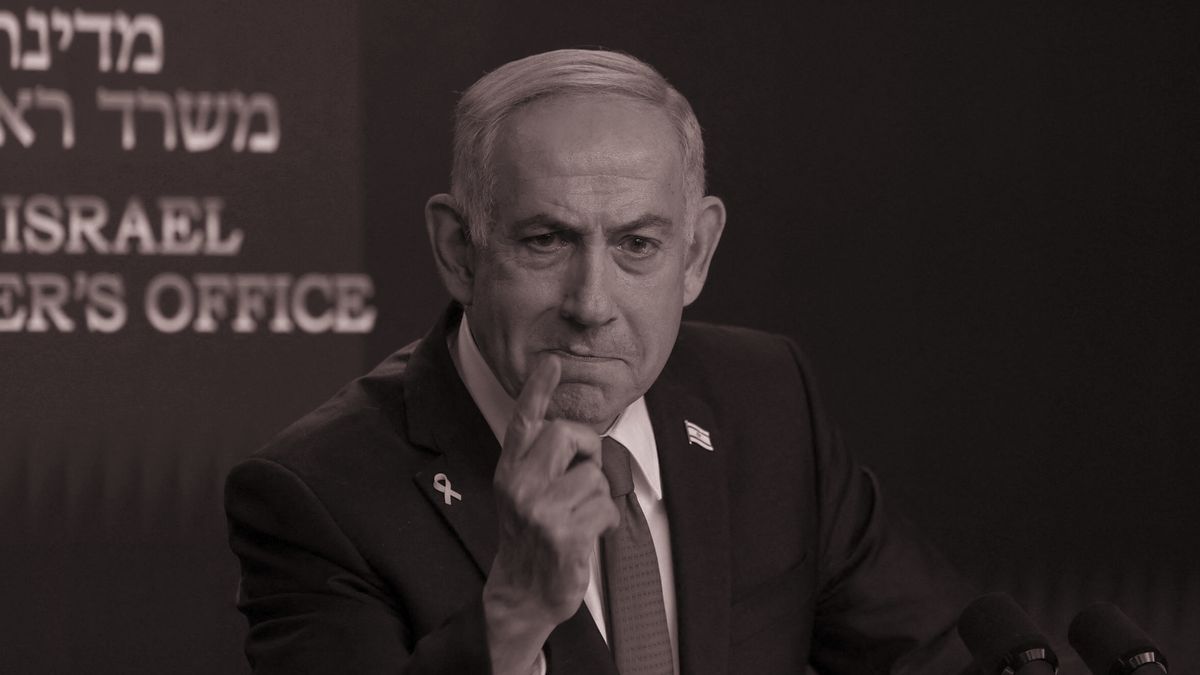
The biggest casualty of Trump’s Iran détente may be Benjamin Netanyahu, whose
once-considerable sway in Washington has faded just as Americans’ support for Israel has fallen sharply, according to exclusive new polling for Puck. |
|
|
|
Back in 2015, at a time when Benjamin Netanyahu had far more sway
with American politicians, the Israeli prime minister flew to Washington in an attempt to scuttle Barack Obama’s nuclear deal with Iran. “I want to thank you, Democrats and Republicans, for your common support for Israel, year after year, decade after decade,” Netanyahu told a joint session of Congress, before unleashing a point-by-point takedown of Obama’s Joint Comprehensive Plan of Action (JCPOA), designed to restrict Iran’s nuclear program in exchange for sanctions
relief.
In a sharp break with tradition, Netanyahu had been invited to Congress by House Republicans, who had been raging about the negotiations for months. “Why would anyone make this deal?” Netanyahu told them. “Because they hope that Iran will change for the better in the coming years, or they believe that the alternative to this deal is worse?” He said JCPOA would only be a Band-Aid, arguing that Tehran would simply develop nuclear weapons once the deal expired. The bigger point, he
argued: Iran should not be trusted. “I’ve come here today to tell you we don’t have to bet the security of the world on the hope that Iran will change for the better,” Netanyahu thundered in the trademark baritone that had charmed so many U.S. politicians over the years.
Netanyahu, of course, failed to disrupt Obama and JCPOA. But at least Bibi, a right-winger to his core, could stop pretending to play nice with the Blue Team. He decided, from then on, that the Democratic Party was mostly
useless to him, and he made his bed with the G.O.P., even in the Joe Biden years. That decision somewhat paid off when Donald Trump eventually undid Obama’s deal and later took out Iranian General Qassem Soleimani with a drone strike in 2020. But now, much to Netanyahu’s chagrin, Trump is the American president giving Iran the benefit of the doubt—and Bibi can do little to fight back, having traded away most of the political capital he
once had in the United States. After the horrors of Gaza and his damn-the-torpedoes military campaigns in Lebanon and Iran, it’s hard to imagine Netanyahu being welcomed on the House floor, in the same way, ever again.
Trump is now on the cusp of signing a memorandum of understanding that would give Iran more money and running room to seek out nuclear weapons—Israel’s worst nightmare—while simultaneously telling Bibi that he needs to get on board, shut up, and stop killing civilians. “You
don’t have to knock down an apartment house every time you are looking for somebody,” Trump said Tuesday. “There are a lot of people in those houses, and they are not all Hezbollah, that I can tell you.” Almost no one in the diplomatic world thinks this Trump deal is a good one.
But it’s remarkable to see Netanyahu, once an untouchable hot stove in U.S. politics, so emasculated on the sidelines. Bibi himself recently told associates that he is losing influence over Trump, according to
Reuters. The military campaign with Iran, after all, was launched in tandem with Israel. Now Trump doesn’t seem to want Netanyahu’s input at all: He’s praying that Netanyahu doesn’t detonate the terms of the deal with more attacks in Lebanon, warning him before the TV cameras assembled in Europe for the G7 summit. On Monday, Trump said that Israel should simply let Syria deal with Hezbollah, the Iranian-proxy group operating in Lebanon, “because to be honest with you, I think they’d be doing a
better job of doing it.”
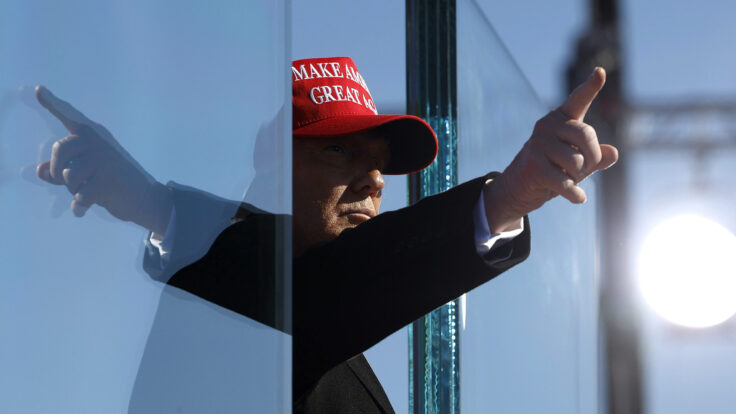
Netanyahu is facing significant cross-pressures inside his county, too—Trump’s popularity in Israel is collapsing, and right-wingers are urging Bibi not to abandon his military push in Lebanon—making him the Middle East’s monkey with a hand grenade as Trump tries to solidify a deal with Iran. Trump, though, is daring Bibi to test him. At the G7, he told reporters, “Without me there would be no Israel.” He even said today, on a tarmac in Paris, that he wouldn’t
mind if Iran had a few ballistic missiles, as a treat. It’s obvious that Trump has started to view Netanyahu as something of an annoyance. Trump seems to know that most Americans do, too. |
The
Generation Gaza Divide
|
Most American politicians still stand with Israel, and AIPAC still plays hardball during
campaign season. But the American political consensus on Israel—the “common support for Israel” across parties that Netanyahu invoked back in 2015—now feels close to extinct. Bibi himself is the reason. His spiraling campaign of violent retribution against Israel’s enemies, launched in retaliation against Hamas after their nihilistic killing spree on October 7, 2023, has turned American public opinion firmly against Israel.
Our polling partners at Echelon
found this week that only 40 percent of voters have a favorable view of Israel, a sagging number that tracks with other polls showing declining support for our historical ally in the Middle East. Last July, Echelon had Israel with a +22 net favorability rating. Now it’s three points underwater. Netanyahu himself is deeply unpopular with American voters,
too. In March, Pew found that 60 percent of U.S. adults had an unfavorable view of Israel, up from 53 percent the previous year. About the same number (59 percent) had little to no confidence in Netanyahu “to do the right thing regarding world affairs.”
Israel’s declining stature here in the U.S. is a remarkable, once unthinkable political story. In February of 2021, for instance, a full 75 percent of Americans held a favorable view of Israel, according to Gallup.
Even in February of last year, a year and a half into the bloody war in Gaza, 54 percent of Americans still maintained a favorable view of the country, Gallup found. But today Israel is about as popular as George W. Bush was after Hurricane Katrina.
Opinions on Israel are split on political and generational lines. Echelon found that a large majority of Republicans (62 percent) had a favorable view of Israel, compared to just 23 percent of Democrats and 31 percent of
independents. Younger voters are the most likely to hold their noses when asked about Israel: A lowly 15 percent of 18 to 34 year olds have a positive view of Israel, compared to half of voters over 50.
On the left, support for Israel has become a litmus test in Democratic primaries. Eighty percent of Democratic voters now hold a negative opinion of Israel, a remarkable 30-point swing from just three years ago, according to Gallup. Still, many Democratic politicians are loath to criticize
our longtime ally, choosing instead to focus their critiques on Netanyahu and his apparent contempt for human rights and the rule of law.
On the right, the question of Israel is tugging at the seams of the conservative coalition. G.O.P. hawks and Christian voters remain committed to Israel’s security—and skeptical of Trump’s new Iran agreement—pitting them against MAGA nationalists who have long questioned why the U.S. blindly sends billions of dollars to Israel every year. Uniting all
the Israel-haters is Netanyahu, who is blamed for dog-walking Trump into an expensive and useless war against Iran. Yappers like Tucker Carlson and Candace Owens have condemned the Iran campaign from the beginning, accusing Trump of doing Netanyahu’s bidding. Trump recently fired back, calling them “losers” and “not MAGA.”
After news of the memorandum broke over the weekend, security hawks like Lindsey Graham and Nikki
Haley came out against any sanctions relief, or even carrots, for Iran. Secretary of State Marco Rubio, who hails from the same neocon quarters, has been at the president’s side but also relatively quiet. Meanwhile, Vice President J.D. Vance has been on a media tour to sell both his new memoir and also the Iran agreement. After the ladies of The View boxed his ears on Tuesday morning, he sat down with Megyn Kelly,
loudly anti-Bibi and anti–Iran war, on her SiriusXM show in an attempt to pull the feuding Republican factions together. “You can’t just quit politics because the leader of a country of 330 million people makes a decision you disagree with,” Vance told Kelly, who described the divided G.O.P. base as going through “sort of a sad, tumultuous, stressful time.”
The cable and podcast chatter about Trump, Netanyahu, and Iran might be dominating media storylines this week for politics
addicts. But what do everyday Americans think? Echelon happened to be in the field surveying voters just as news of the memorandum of understanding—whatever it looks like in the end—started to percolate. They found that Americans continue to be pessimistic about the war itself. Only 42 percent of voters approve of military operations against Iran, support that is mostly unchanged from one month ago.
The numbers also show that Americans don’t believe Trump’s claim that the war will end
anytime soon, despite his insistence that the “excursion” will end in a matter of weeks. Only a paltry 13 percent of voters said they think the Iran conflict will end “in less than a month.” But 41 percent of voters think the war will take another six months or more to conclude.
But despite the flaring coalitional divides over Israel in this week’s headlines—and the pitched debates over whether the United States is too cozy with Bibi—Echelon found that most Americans believe that the
geopolitical interests of the U.S. and Israel are usually aligned, 52 percent to 27 percent. There is also overwhelming consensus among Trump-first Republicans (67 percent) and party-first Republicans (69 percent) that Israeli and U.S. interests are in tune. So, while loud MAGA voices howl at Trump and Netanyahu on their podcasts, Americans generally see Israel as an ally, whether they’re familiar with the finer details of Middle East policy or not.
|
|
|
|
Join Emmy Award-winning journalist Peter Hamby, along with the team of expert journalists at Puck, as they let you in on the
conversations insiders are having across the four corners of power in America: Wall Street, Washington, Silicon Valley, and Hollywood. Presented in partnership with Audacy, new episodes publish daily, Monday through Friday. |
|
|
|
Unique and privileged insight into the private conversations taking place inside boardrooms and corner offices up and down Wall
Street, relayed by best-selling author, journalist, and former M&A senior banker William D. Cohan. |
|
|
|
Need help? Review our
FAQ page or contact us for assistance. For brand partnerships, email ads@puck.news.
You received this email because you signed up to receive emails from Puck, or as part of your Puck account associated with {{customer.email}}. To stop receiving this newsletter and/or manage all your email preferences, click here.
|
Puck is published by Heat Media LLC. 107 Greenwich St., New York, NY 10006 |
|
|
|
|