 |
 |
|
Welcome back to The Best & The Brightest. I’m Peter Hamby.
In tonight’s edition, my analysis of the first set of exclusive survey data from Puck’s new partnership with Echelon Insights, the savvy polling firm founded by Kristen Soltis Anderson and Patrick Ruffini. We asked Echelon to investigate how Americans are consuming political news—and what, exactly, they’re hearing about Joe Biden and Donald Trump. The answers aren’t exactly great for Trump, but they don’t bode well for the White House either.
But first, a quick update on the Republican primary race from Tara Palmeri, fresh off the campaign trail in New Hampshire:
|
- For months, the conventional wisdom pushed by Nikki Haley supporters has been that she would benefit if her rivals dropped out. Alas, in New Hampshire at least, it appears that the opposite is true. Haley was just 7 percentage points behind Trump two weeks ago, according to CNN’s latest poll, even before Chris Christie exited. But without strong momentum out of Iowa, and without DeSantis or Ramaswamy in the race to absorb Trump-curious voters, Haley has only suffered from being the last candidate standing.
The latest WaPo-Monmouth poll, conducted before DeSantis dropped out, shows Haley 19 points behind Trump, who is polling at 52 percent—a gap that will almost certainly widen given how DeSantis’s 8 points are likely to be divvied up. (Polling shows DeSantis and Ramaswamy voters were more likely to choose Trump than Haley as their second choice.) As with this year’s abbreviated G.O.P. primary, the expectations game continues to favor Trump. Haley, on the other hand, essentially has to win New Hampshire outright to sustain donor and media interest. Remember, she’s expected to get crushed by more than 30 points in her home state of South Carolina when voters go to the polls there next month. Just ask Marco Rubio how that worked out for him. —Tara Palmeri
|
| And a dispatch from Abby Livingston on Capitol Hill… |
|
A MESSAGE FROM INSTAGRAM
|
| |
 |
| Parents should be able to decide which apps are right for their teens.
Giving parents a say in which apps are right for their teens helps them support their teens in having a positive experience online.
That’s why Instagram wants to work with Congress to require parental approval wherever teens under 16 download apps.
Learn more. |
|
|
| The Louisiana Mean Girls & Schiff vs. Porter Philosophizing |
|
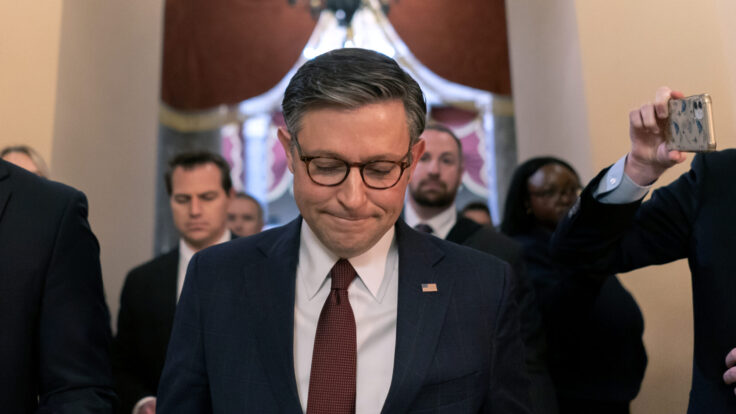
| This week, the House is recessing while the Senate is scrambling. But a week off is not the worst thing for Mike Johnson & Co., given that Hal Rogers is rehabbing from a car wreck and Steve Scalise is undergoing cancer treatment, decreasing the House Republicans’ already slim majority by two more votes. Over the weekend, Ohio Republican Bill Johnson followed through on his announced resignation, further tightening the official House margin to 219-213.
It’s my understanding, however, that House Republicans are hoping their relentless drama will temporarily recede now that energy and attention are shifting toward elections. (Of course, the spending battles are not over.) In the meantime, here’s the latest from the campaigns:
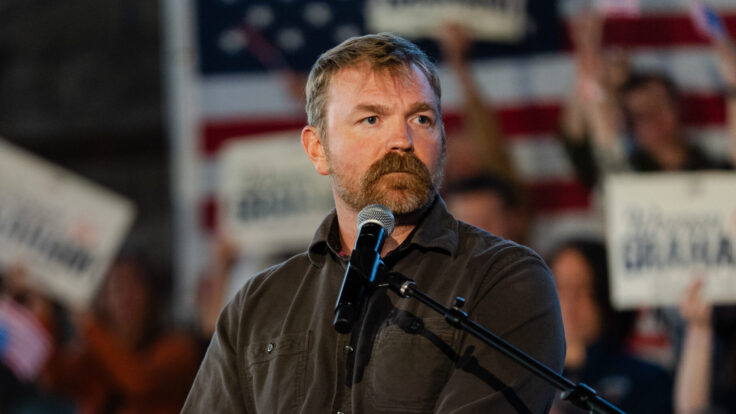
- Crossing state lines: Louisiana state Republicans officially screwed over Rep. Garret Graves with their newly drawn congressional lines. Graves, a former Kevin McCarthy ally, no longer has any discernible path to reelection. Of course, the Louisiana delegation’s lunch table is now the power center of the House G.O.P. conference thanks to Johnson and Scalise. (Amid the McCarthy vs. Scalise fallout, it’s become the clique with the most intense Mean Girls vibes.) Typically, the Texas Republican and New York Democratic delegations are the epicenters of intra-party House drama.
- Dean’s frenemies: While the political class will fixate on Nikki Haley’s performance in New Hampshire tomorrow night, House Democratic sources tell me that their main concern is how Dean Phillips will fare in the state. So far, he has alienated his caucus colleagues in just about every possible way, and the schadenfreude is real.
- The Dems’ Republican dark horse: Over the weekend, Politico’s Ally Mutnick had some pretty wild reporting on certain Democrats privately rooting for Republican (and former Dodger) Steve Garvey to make it through California’s top-two jungle primary to the general election. Here’s the logic: Adam Schiff and Katie Porter are raising gobsmacking sums of money. Should Garvey win the primary, the thinking goes, it would put the race to bed for Democrats in March, thereby avoiding a costly general election battle.
Fundraising envy has been a recurring theme in Democratic Senate circles since the online spigots opened for fan-favorite candidates. But the difference here is that it’s House Democratic sources who are charging that Schiff, in particular, is exhausting the California Democratic donor class at the expense of down-ballot candidates. It’s important to remember that the Democratic march to the majority runs through California: There are nine House seats that Inside Elections rate as at least marginally competitive, and seven of those districts are held by Republicans.
This runs counter to the argument that a Dem vs. Dem general election could actually help House Democrats. Sure, two Democrats in the general election means tens of millions of dollars would be spent driving up TV ad rates in California’s already-expensive media markets while they kick the crap out of each other. But two would-be Democratic candidates would also likely marshal massive G.O.T.V. armies, which could help down-ballot candidates. Of course, the wisdom of this kind of game theory is never clear until after votes are cast in November.
|
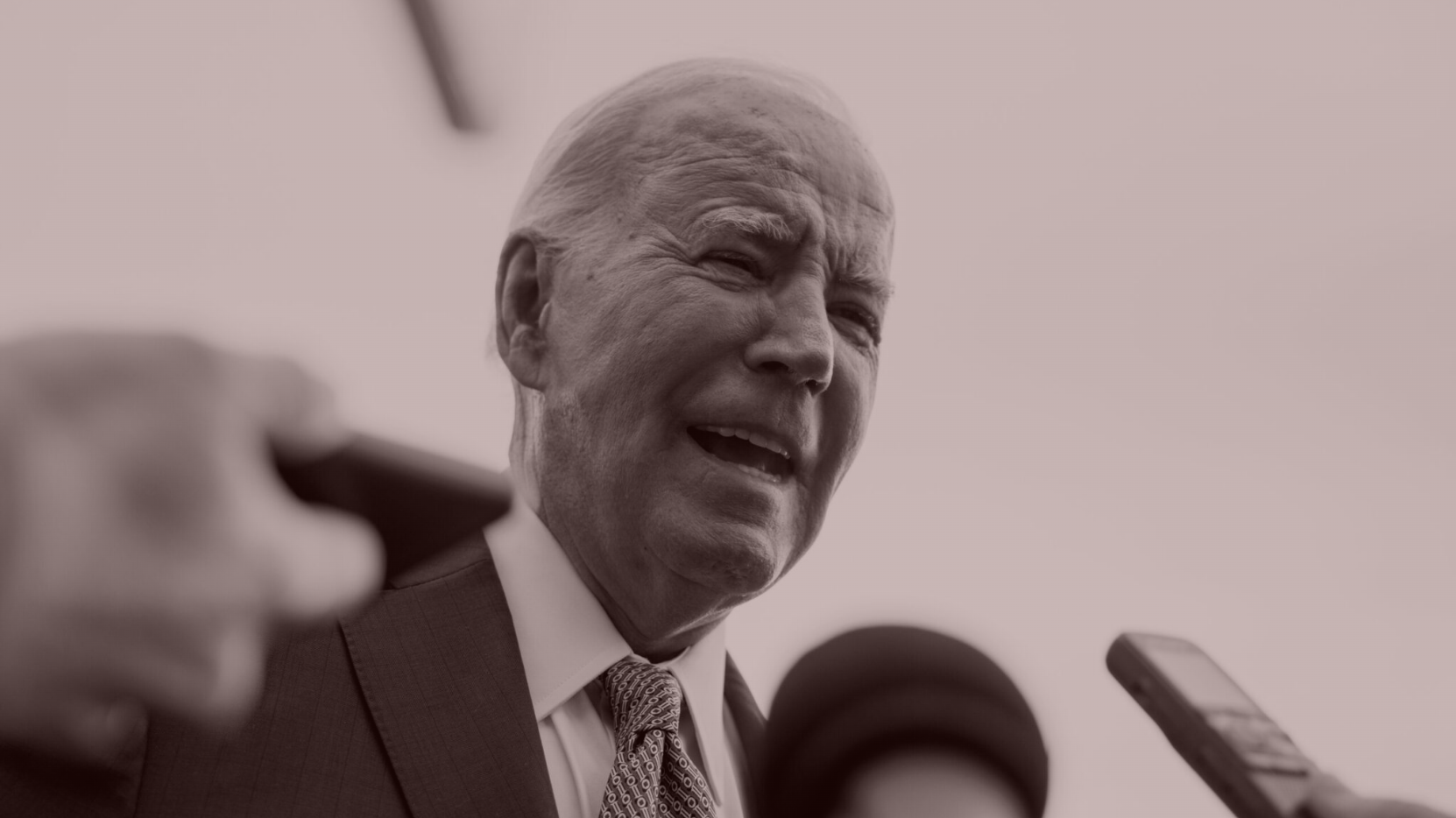 |
| Biden’s Attention Deficit Disorder |
| An exclusive new poll from Echelon Insights, in partnership with Puck, offers up some spooky results for the Biden messaging machine. Likely voters are paying attention—but they are paying attention to Trump. |
|
|
|
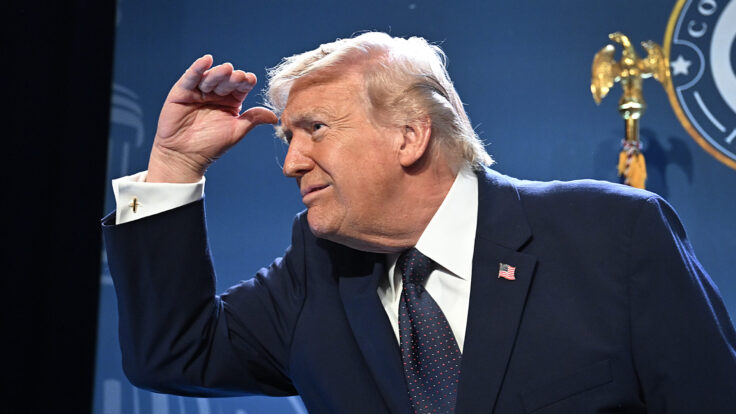
| As a new presidential campaign year begins, Donald Trump is once again saturating news cycles, with his statement win in the Iowa caucuses and cameras following him to his myriad court appearances. As he skates to the Republican nomination and prepares to face President Biden in November, Trump’s exotic attentional powers are flipping the usual challenger-incumbent dynamic on its head—American voters are currently hearing more in the news about Trump than about Biden.
That’s according to an exclusive new poll from Echelon Insights, which is partnering with Puck this year to deliver proprietary data about the 2024 presidential election. The Echelon poll surveyed 1,029 voters in the likely electorate, matched the L2 voter file, and was conducted online between January 14 and 16. It has a margin of error of ±3.4 percentage points. |
|
A MESSAGE FROM INSTAGRAM
|
| |
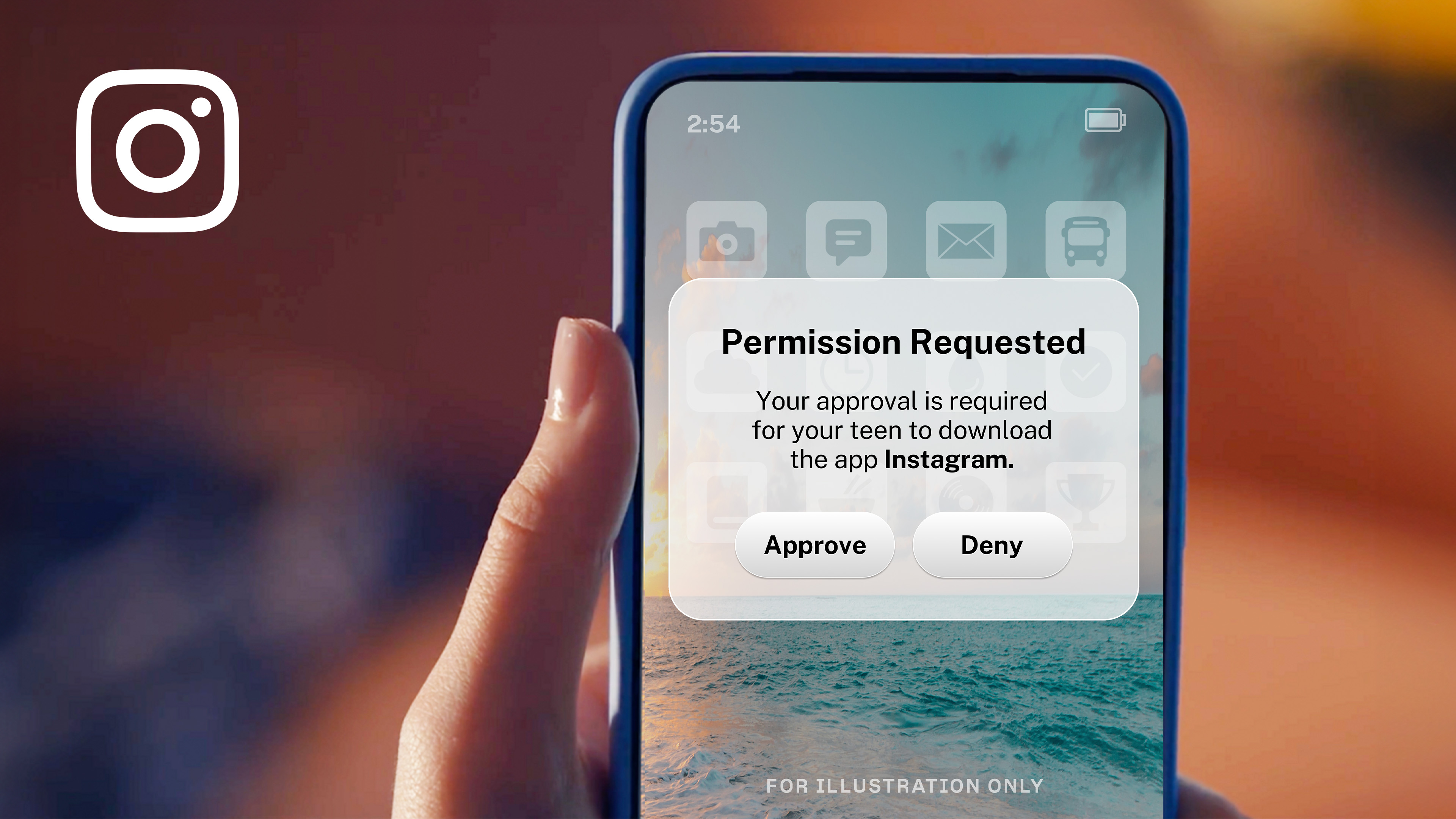 |
| Parents should be able to decide which apps are right for their teens.
Apps can teach teens skills or ignite their creativity. But with access to so many apps, parents should have a say in which ones their teens download.
That’s why Instagram wants to work with Congress to require parental approval wherever teens under 16 download apps.
Learn more. |
|
|
| Echelon found that 91 percent of likely voters say they’ve heard or read “a lot” or “some” news about Trump in recent weeks compared to 80 percent of voters who said the same about Biden. While Trump might have receded from the spotlight a few years ago, he is once again an inescapable figure in 2024: Strikingly, only 3 percent of likely voters said they had not heard news about Trump in recent weeks.
Those results don’t totally square with recent messaging from Biden’s reelection campaign, which posits that the president is losing to Trump in early polls because voters aren’t paying close attention to the news and haven’t woken up to the fact that Trump will be on the ballot again come November. Sure, it’s true that not all voters believe Trump will be the Republican nominee, the poll found, nor are they following the nitty-gritty details of every Trump-focused news story. But they are at least well aware that the former president is back on the political scene. “The idea that Trump is doing all right in general election polling because people aren’t hearing about him isn’t quite right,” said longtime pollster Kristen Soltis Anderson, a founding partner at Echelon. “Independent voters are just about as likely as partisans to have heard about Trump in the news lately.”
The news about Trump isn’t all good, of course. Asked to name what they had heard about Trump in the news lately, almost half of respondents—48 percent—named “legal issues.” Another 37 percent mentioned “Iowa,” and 9 percent said “removed from ballot”—referring to decisions in Colorado and Maine to remove Trump from the presidential ballot for his involvement in the January 6th riot at the Capitol.
The Echelon poll doesn’t contain much good news for Biden, either. While a huge majority of voters at least have a sense of what Trump is up to, that’s not the case with Biden. In open-ended questions, when asked what they had heard about Biden in the news recently, voter responses were all over the place. The most common response category was “age/confusion/absence” (15 percent of voters), followed by “foreign policy” (14 percent), “economy/student loans” (9 percent) and “Hunter Biden/impeachment” (8 percent). Only 7 percent had heard something about Biden running for re-election, and a plurality of voters (35 percent) could not or would not describe a single thing about Biden at all.
Yes, Biden ran for president in part on the promise that voters wouldn’t have to obsess daily about the chaos in Washington. But he also ran as a bridge candidate, and that was long before the specter of a putative post-J6 Trump candidacy loomed as a viable option. Public indifference and poor communication now looks to be a real danger for Biden, especially in an election year when the public is distracted and media platforms are more fragmented than ever. “Love Trump or hate him, people know what’s going on in his world—the primary and his legal drama,” Anderson told me about the results. “They may not have tons of detail in their responses, but voters have those two points clear. Biden, in contrast, doesn’t have a clear narrative at all.”
The problems for Biden are compounded among key constituencies that comprise the traditional Democratic coalition. The usual suspects—partisans and college-educated voters—reported hearing a lot about Trump and Biden lately. But Black voters and under-30 voters were less likely to say they’ve heard or read political news in recent weeks. That correlates with other research showing that young people and Black people are either harder to reach or just more likely to tune out political news—a continuing vulnerability for Biden as he struggles to communicate with and impress the core Democratic groups that helped elect him in 2020. |
|
|
| The lack of public awareness and media engagement surrounding the 2024 campaign might simply be ascribed to the depressing binary choice before voters, who appear to be in a state of denial. While Biden (81 years old) and Trump (four years younger but facing 91 criminal charges) and are all but guaranteed to be their party’s nominees for president this year, many voters said they’re still unsure that rematch will actually happen—a data point that jibes with the Biden campaign’s assertion that voters aren’t paying close attention to the election.
Only 67 percent of likely voters said Trump will definitely be the G.O.P. nominee, while 20 percent said they were unsure if he will be the nominee, and 14 percent said he will not be the nominee. (Meanwhile, a whopping 84 percent of Republicans said Trump will be the nominee—unwelcome news for Nikki Haley as she hopes for a miracle upset in New Hampshire tomorrow). Among those who said Trump won’t be the nominee, 39 percent said he will withdraw for legal reasons, while 37 percent said he will lose to another candidate in the primary.
On the Democratic side, only 59 percent of voters said Biden will be the nominee, while 20 percent of voters said he will not, and 21 percent were unsure. Among voters who said Biden won’t be the nominee, 40 percent said he will lose to another candidate in the primary—an unlikely prospect. After that, 37 percent said Biden will withdraw for health reasons, and 13 percent said he will withdraw “for some other reason.”
Republicans were much more likely to say that Biden won’t be the Democratic nominee—perhaps an echo chamber effect stemming from conservative media’s obsession with Biden’s age and health. At the same time, only 77 percent of Democrats think Biden will become the Democratic nominee—a majority, yes, but far from what you’d normally expect for an incumbent coasting to re-election without a serious primary challenge. Black voters and young voters were even less likely to say Biden will be on the ticket. |
|
|
|
|
| Puck also partnered with Echelon for insights into how voters are following the campaign and where they are getting their news. Likely voters were asked which news organizations “do you listen to, read, or watch to stay informed about current affairs and political news?”
Local television news was the top response: 53 percent of voters said it was their preferred method of getting political news. Almost half of voters said they got news from national or local newspapers, either in print or online. Broadcast news is also a heavy hitter, with 36 percent of voters naming ABC News as their top news source, followed by 34 percent naming NBC News, and 31 percent naming CBS News.
In the cable world, Fox News is the dominant player, with 33 percent of voters calling it their top news source, including 50 percent of Republicans. CNN was named by 32 percent of voters, followed by MSNBC (20 percent), Newsmax (11 percent), and OANN (5 percent). And in what might be a small victory for CNN’s new C.E.O., Mark Thompson, as he tries to steer the network back to the political center, CNN was cited by independent voters as their top cable news network.
As for social media, Echelon asked voters which social media platforms they had used in the past week. Facebook was the top answer, with 79 percent of voters saying they used the platform recently, followed by Instagram at 51 percent. The poll also found that Twitter Still Isn’t Real Life, even in the Elon Musk era. Twitter (X) and TikTok—two platforms that have outsize influence on media coverage and elite conversation—continue to be used by only a small segment of American voters. Just 32 percent of voters used Twitter in the past week, the poll found, with higher use rates reported among urban and college-educated voters, as well as Black voters and young people. TikTok was used by only 35 percent of voters in the past week, with higher use rates among urban voters, young voters, and self-described liberals.
As the 2024 campaign gets underway, the poll results are a reminder that both Biden and Trump will be running in a media environment that’s more disintermediated, partisan, and noisy than ever before. Trump continues to have the earned media powers that he did as president, getting his face on almost every screen at all times—a blessing or a curse for him, depending on the story. And Biden, for now it seems, mostly just gets talked about when the news is bad. His best shot at winning in November is to make Trump look even worse. |
|
|
|
| FOUR STORIES WE’RE TALKING ABOUT |
|
|
|

|
 |
|
|
|
Need help? Review our FAQs
page or contact
us for assistance. For brand partnerships, email ads@puck.news.
|
|
You received this email because you signed up to receive emails from Puck, or as part of your Puck account associated with . To stop receiving this newsletter and/or manage all your email preferences, click here.
|
|
Puck is published by Heat Media LLC. 227 W 17th St New York, NY 10011.
|
|
|
|