{{ 'now' | timezone: 'America/New_York' | date: '%b %d, %Y' }} |
|
|
|
Welcome back to Dry Powder. I’m Bill Cohan.
Today I’m
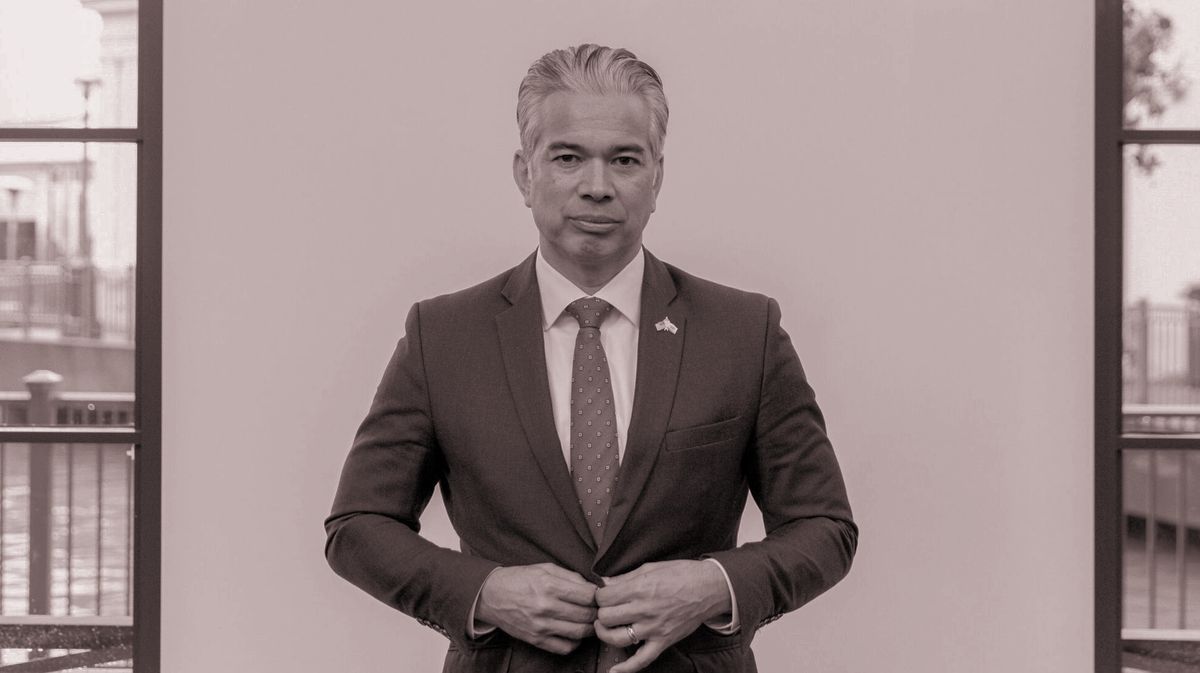
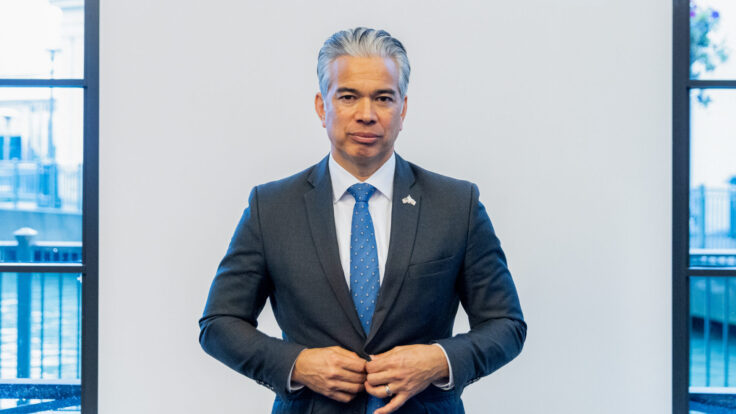
returning to one of my favorite topics: the $110 billion Paramount Skydance–Warner Bros. Discovery merger—in particular, when the deal will be approved. (Alas, Larry and David Ellison can probably wave goodbye to that July 15 deadline.) California remains a wild card, of course: Its politically ambitious attorney general Rob Bonta, whose constituents include the vast cohort of Hollywood actors, writers, directors, and
producers stubbornly opposed to the merger, has been squinting at the horizon and seeing “red flags.” But the Ellisons remain confident that the legal case against their transaction is thin. Even so, investors are pricing in a longer path to closing than many on Wall Street expected. This one may still have a ways to go.
Also mentioned in this issue: Richard Nixon, Larry Ellison, Kara Swisher, John F. Kennedy,
Mike Novogratz, Bill Clinton, Lisa Nandy, George W. Bush, Anthony Scaramucci, Stephen Moore, Donald Trump, Rob Bonta, Teresa Ribera, Barack Obama, Robert Wolf, David Ellison, Katty Kay, Elissa Perez, and more. |
|
|
|
A MESSAGE FROM OUR SPONSOR |
INSPIRE AWE
Revered by all. Driven by those who lead by example. Elevate every move you make in a Range Rover.
EXPLORE
|
|
|
|
- The
Mooch ’28?: Our friend Anthony Scaramucci, a.k.a. The Mooch, has become an unlikely polymath since his legendary—and wholly unexpected—11-day turn as Donald Trump’s White House communications director during the president’s first term. He remains a hedge fund manager and crypto enthusiast, of course. But he has also established himself as a formidable media presence. He hosts, or co-hosts, three podcasts—Open Book With Anthony Scaramucci; The
Rest Is Politics U.S., with Katty Kay; and All Things Markets, with Mike Novogratz, the Fortress Investment Group co-founder. He also appears regularly on cable TV and other podcasts, including a memorable recent turn on Pivot with Kara
Swisher. Along the way, he has written eight books. His ninth, All the Wrong Moves, due out September 22, attempts to diagnose why America elected Trump, twice. The book, which I’m eager to read, examines the long-term consequences of several presidential decisions—Bill Clinton’s trade deal with China; George W. Bush’s decision to cut taxes while simultaneously fighting wars in Iraq and Afghanistan, thus exploding the federal deficit; and
Barack Obama’s bailout of the big Wall Street banks, a decision that, to be fair, Bush initiated. Scaramucci’s argument appears to be that these choices undermined faith in government, widened inequality, and fueled the anger that ultimately carried Trump to the White House.
Does The Mooch have a solution? Of course he does! In a recent essay posted on LinkedIn and X, he outlined a series of proposals. First, he argued that American workers and employees should be allowed
to own more stock in the companies where they work. “Require large public companies to issue a meaningful equity stake into a trust held for their own workers, not a token 401(k) match, but a real, vesting ownership position,” he wrote. He also proposed creating a U.S. sovereign wealth fund tied to the booming A.I. industry and its hoped-for profits, with dividends distributed to every American. “Alaska does it with oil,” he noted. “Norway does it for a whole nation. If A.I. is
going to throw off trillions to whoever owns the compute, the public, whose data trained the models and whose laws protect the firms, should own a direct slice of the upside.”
The Mooch also contended that capital and labor should be taxed at the same rate, eliminating the preferential treatment for capital gains and carried interest—a notable position for someone who readily describes himself as an avowed capitalist. “The current arrangement isn’t a law of economics, it’s a lobbying
victory,” he wrote. Finally, he argued that the cost of the American “aspirational life” has become prohibitively expensive, and that housing, healthcare, and higher education costs need to be reduced drastically and put back within the grasp of the middle class. “Build a zone for abundant housing, break the cartels in health and education, because the fastest way to raise real disposable income is to lower the price of the life people are trying to buy,” he wrote.
I don’t know if All
the Wrong Moves is The Mooch’s version of Richard Nixon’s 1962 classic Six Crises, which he wrote after losing the 1960 presidential election to John F. Kennedy, some six years before he himself became president. I could certainly see The Mooch running for president in 2028, even if he no longer fits neatly into either political party. (If this idea sounds insane, just remember that we are living through something crazier.) He is
whip-smart, articulate, telegenic, and has the populist instincts to appeal to the Great Middle of American politics. He also has a wicked sense of humor. How great would it be to have The Mooch on the debate stage? I’d tune in.
|
|
|
|
As the scheduled close date of the Paramount–Warner Bros. merger nears, the question from
Sacramento to London remains whether local regulators are really going to pull up a seat at the table. And if California A.G. Rob Bonta actually understands his hand. |
|
|
|
It’s becoming increasingly obvious that the merger between Paramount Skydance and Warner Bros. Discovery is
not going to close next Wednesday, despite the hopes of executives at both companies. At best, the closing might happen a week later, on July 22, the new deadline that regulators in the European Union have set for approving the deal. They did so only after PSKY agreed to exit its distribution partnership in five European countries with Universal Pictures, which is still part of NBCU/Comcast. PSKY will now use WBD’s distribution system in Europe. A minor concession, to be sure, though I
gather PSKY would have preferred the preexisting arrangement.
In an interview with Bloomberg TV on June 24, Teresa Ribera, the executive vice-president of the European Commission for a Clean, Just, and Competitive Transition—that’s a mouthful (she’s also the antitrust chief)—said she was worried that the PSKY/WBD merger could curb creative risk-taking or erode Europe’s distinct cultural identities. She also said she wanted to make sure that there are “alternatives that
producers and filmmakers can find” to get their content into movie theaters and homes.
Nevertheless, it seems likely the E.U. will approve the combination with minor tweaks. Whether that happens within the next 10 days remains to be seen. Of course, the U.S. Department of Justice has already approved the deal—didn’t even bat an eyelash—thanks no doubt to the coziness between the Ellisons and Donald Trump. And in case you have lost count, the combination
also needs regulatory approval from some 30 countries, and has recently received those blessings—without much question—from China, Korea, Australia, Brazil, Canada, Turkey, and the COMESA countries. I’m told that approvals from Mexico, Chile, and Colombia are expected soon.
Then there are the concerns voiced by Lisa Nandy, the U.K.’s secretary of state for culture, media, and sport, who
said she is “minded to intervene” in the proposed merger, which she can do under U.K. law if she has “a reasonable” basis to suspect it might negatively impact the public interest. I think “minded to intervene” is a British euphemism for I am thinking about this and I want some answers. (Either way, I intend to adopt the “minded to intervene” locution as
often as I can.) |
|
|
|
A MESSAGE FROM OUR SPONSOR |
INSPIRE AWE
Revered by all. Driven by those who lead by example. Elevate every move you make in a Range Rover.
EXPLORE
|
|
|
|
Nandy had given PSKY and WBD until July 6 to respond. It’s not clear if the companies did so, but what PSKY
has repeatedly said is that “We are confident that our proposed transaction does not pose any media plurality issues in the U.K. and remain confident in our stated transaction timeline.” A person close to the deal told me that he doubted whether Nandy really wants to block the deal, but rather may just want a pound of flesh. As my partner Matt Belloni noted in his own excellent
appearance on Pivot with Kara, there is a WBD Harry Potter studio in the U.K. “They want jobs,” Matt said. The likelihood is that after July 22—assuming the E.U. signs off on the windup of the PSKY/Comcast distribution joint venture—PSKY will have 99 percent of the approvals that
it needs to close the deal. |
That leaves the various state attorneys general, especially California’s Rob Bonta, who may
try to stymie the merger, even if outright blocking it is beyond his reach. The consensus among the people I’ve been talking to is that a PSKY/WBD combination raises no legitimate antitrust issues. “We wouldn’t have put down a $7 billion break fee if we thought there was,” explained one person close to the PSKY action.
While Bonta has told the PSKY folks that he sees “red flags” and that they need to come up with “structural remedies,” he hasn’t been specific. I have been told that PSKY
has offered to “settle” with Bonta to resolve the “political tax” that he is seeking by reiterating its commitment to make 30 films a year and have a 45-day movie theater window, a 90-day S.V.O.D. window, and some sort of fund for the unions. “Maybe they get that in writing,” Matt said to Kara. “I know there is a document that resides at Paramount that has all the things that they are willing to concede.” (Matt has
written about this remedies list.) Indeed, I’ve also been told that PSKY is open to a solution. Elissa Perez, Bonta’s press secretary, sent over a statement: “The Paramount acquisition of Warner Bros. remains an active investigation, and we do not have any updates to share at this time.”
The real problem for the attorneys general
is that they seem to be running out of time. Yes, Bonta can file a lawsuit against the merger instantly—he’s probably prepared the paperwork—but that will only be effective if he can find a federal judge to issue an order stopping the merger, even temporarily. “They need to go to a court, and a court needs to say, ‘Okay, not only do you have a likelihood of winning here, I’m going to enjoin this merger from closing,’” Matt told Kara.
Whether that is good politics for the politically
ambitious Bonta in his home state of California is another question entirely. The PSKY view is that it would be bad politics, resulting in “bad law” and a “backlash” in the antitrust bar. The person close to the deal told me he doubts a federal judge would grant Bonta an injunction. “I have a hard time, honestly, thinking there is a case here,” he said.
I’ve heard people compare state A.G.s to rogue poker players who have lousy hands but don’t know enough about the game to drop out when
the other guy has three aces. “The question is, What are we going to do?” the perpetrator of this metaphor said. “Are we going to go all the way down to the river? We’ll see.” Bonta may still decide that he needs to do something to show fellow Democrats that he’s a real political player. |
Obviously, there are plenty of outspoken opponents to the merger, including thousands of Hollywood actors,
directors, screenwriters, et al., who fear for their jobs even if it may not amount to a hill of beans in the end. Earlier this week, an unlikely bipartisan duo co-authored an essay, taking it to the Hollywood opposition: Robert Wolf, the former C.E.O. and chairman of UBS Americas, who was once described as Barack Obama’s favorite investment banker, and Stephen Moore, a conservative economist and prominent advocate of
Reagan-and-Trump style “supply-side” tax cuts. Let me just say, a stranger pair advocating for this merger you probably could not find.
In their essay, the two men wrote, “The central question under U.S. antitrust law—and for any state attorney general considering a challenge—is not whether a merger creates a larger company, but whether the government can show that it is likely to substantially lessen competition and harm consumers, workers, or the broader ecosystem as a
whole—not just competitors. On the available evidence, the Paramount–Warner Bros. Discovery transaction… would create a stronger competitor in entertainment and media, bringing new investment and dynamism to sectors under pressure while expanding choices and opportunities for consumers, workers, filmmakers, writers, directors, actors, and theater operators who would benefit from a revitalized pipeline of films and increased collaboration across the ecosystem.”
Their argument is hardly a
novel one. The media landscape has been changing so quickly and dramatically in recent years that the combined PSKY/WBD will have plenty of competition from Netflix, Disney, Sony, Universal, A24, and Lionsgate on the studio side, as well as Amazon and Apple on the tech side—to say nothing of YouTube and TikTok. “Given this climate, a combined Paramount–Warner Bros. Discovery would face widespread competition for consumers’ attention,” Wolf and Moore wrote. “Challenging a Paramount–Warner Bros.
Discovery deal simply because the result would be a larger company confuses size with market power.”
So here we are. Even if the merger doesn’t close by the end of September, there are no meaningful consequences for the Ellisons or their equity partners at RedBird Capital and the Middle East sovereign wealth funds. The so-called ticking fee only begins to accrue if the deal has not closed after September 30. That would cost the Ellisons roughly $6.7 million in penalties a day, or roughly
$650 million per quarter. At some point, even if you are Larry Ellison and worth $200 billion, that adds up to severe annoyance, if nothing else. (RedBird is an investor in Puck.)
And yet there is another leading indicator of the collective wisdom on when the deal will close—the WBD stock price. Since PSKY has offered WBD shareholders $31 a share in cash—very easy to value, obviously—if the deal were close to closing and shareholders close to getting their cash, the Wall Street arbs would
be driving the WBD stock price closer and closer to $31 per share. But that’s not where we are. On Friday, the WBD stock price was $26.60, more than a 14 percent discount to the $31 deal price. That is a wide spread at this point. If the deal were truly close to closing, the discounted spread would be nearer to between 2 percent and 4 percent. The implication is that the merger arbs don’t expect the deal to close by September 30—but at best in the fourth quarter of 2026. At worst in
early 2027. That’s pretty surprising, all things considered. But that’s what the market seems to be telling us. |
|
|
|
Join Puck’s chief political columnist, John Heilemann, as he roams the corridors of power and influence in America on this
twice-weekly interview show, taking you beyond the headlines with the people who shape our culture: icons and up-and-comers, incumbents and insurgents, moguls and machers in the overlapping worlds of politics, entertainment, tech, business, sports, media, and beyond. The conversations are rich and revealing, unrehearsed and unexpected… and reliably impolitic. A Puck-Audacy joint, new episodes drop every Wednesday and Friday. |
|
|
|
Ace media reporter Dylan Byers brings readers into the C-suite as he chronicles the biggest stories in the industry: the future
of cable news in the streaming era, the transformation of legacy publishers, the tech giants remaking the market, and all the egos involved. Also featuring a weekly dispatch from Puck’s crack streaming/media analyst, Julia Alexander. |
|
|
|
Need help? Review our
FAQ page or contact us for assistance. For brand partnerships, email ads@puck.news.
You received this email because you signed up to receive emails from Puck, or as part of your Puck account associated with {{customer.email}}. To stop receiving this newsletter and/or manage all your email preferences, click here. |
Puck is published by Heat Media LLC. 107 Greenwich St., New York, NY 10006 |
|
|
|
|